
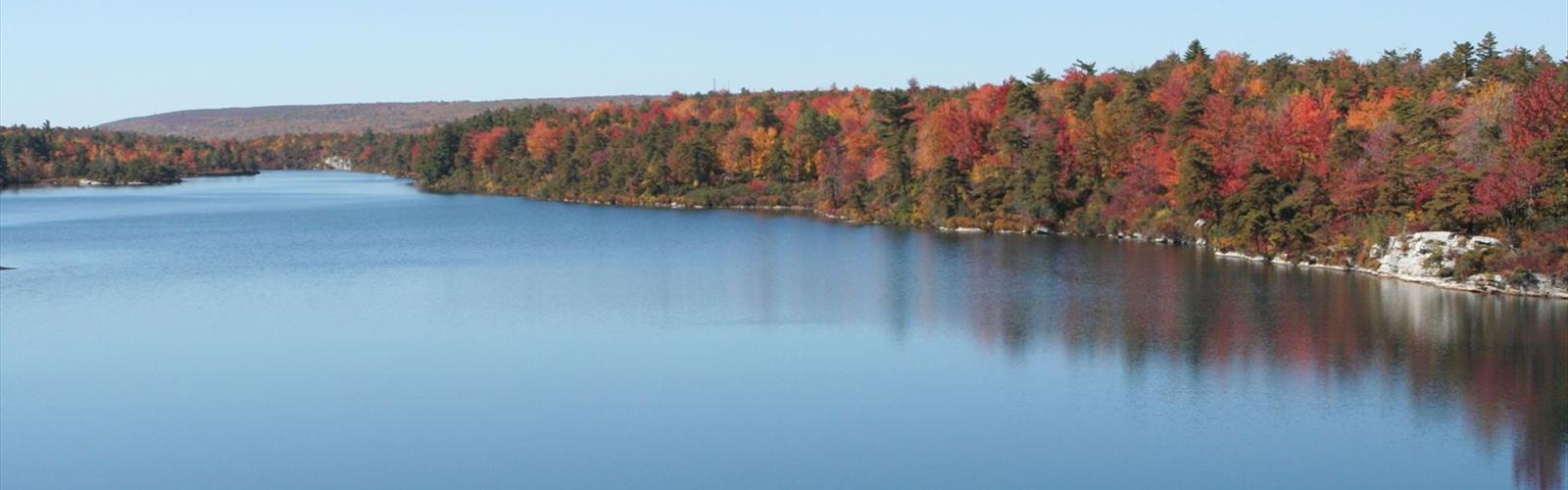

Ready to explore Murray Hill, New York? Here's everything you need to know before you go!
Discover the trail

Trail description
Murray Hill is a rock climbing destination located in the Catskills region of New York. Tucked into one of the Northeast's most iconic mountain ranges, this spot draws climbers looking to get on real rock in a setting that feels genuinely wild — not a roadside crag, not a gym substitute, but a place where you earn your routes.
The Catskills Context
The Catskills have a long history as a destination for outdoor enthusiasts, and the climbing community has quietly built a solid presence here over the decades. Murray Hill fits into that tradition — a crag that rewards those willing to do a bit of research and approach work rather than just pulling off the highway. The region's geology, shaped by ancient sedimentary rock, gives climbers a different experience than the granite found further north in the Adirondacks. Expect rough, featured rock with its own character.
The surrounding landscape is classic Catskills: dense hardwood and mixed forest, ridgelines that roll rather than spike, and a general sense of remoteness that's somewhat surprising given how close you are to major population centers. That contrast — wild terrain within reach of New York City — is a big part of what makes the Catskills climbing scene worth knowing about.
What to Expect at Murray Hill
Murray Hill offers a climbing experience that suits those who appreciate a more adventurous, less manicured crag. This isn't a sport climbing destination with bolts every few feet — the Catskills in general lean toward traditional climbing, and Murray Hill reflects that culture. Come prepared with the right gear, the right mindset, and ideally some local knowledge or a solid guidebook.
The rock itself is the main draw. Catskills sandstone and conglomerate can be grippy and interesting, with edges, pockets, and crack systems that keep things engaging across different styles of climbing. Route quality varies, as it does at most natural crags, so doing your homework before you show up will help you find the lines worth getting on.
The approach is part of the experience. Getting to the cliff involves moving through forest terrain, which means you're already getting a taste of the Catskills before you ever touch rock. Wear approach shoes or trail runners, bring more water than you think you need, and give yourself enough time so you're not rushing the descent in fading light.
Gear and Preparation
Because Murray Hill leans toward traditional climbing, a standard trad rack is the baseline for most routes. Knowing how to place gear confidently and build solid anchors is a prerequisite — this is not the place to learn those skills for the first time. If you're newer to trad climbing, come with an experienced partner who can mentor you on the rock.
- Rack: A full set of cams and nuts covers most situations; double up on mid-sizes for crack climbing
- Rope: A 60-meter rope handles the majority of routes at Catskills crags
- Helmet: Non-negotiable on natural rock — loose material is always a possibility
- Approach footwear: Trail runners or approach shoes for the walk in
- Navigation: Download offline maps before you go; cell service in the Catskills is unreliable
- Water and food: Bring more than you think you'll need, especially on warm days
Seasonal Considerations
The Catskills have four distinct seasons, and each one affects the climbing experience at Murray Hill differently. Spring and fall tend to be the sweet spots — temperatures are comfortable, the forest is either coming alive or turning color, and the rock is generally dry. Summer climbing is possible but can be hot and humid; shaded walls become more valuable, and afternoon thunderstorms are a real consideration. Winter climbing happens, but you need to be comfortable with cold conditions and be aware that snow and ice can linger on approaches and cliff bases well into the season.
Wet rock is a serious concern at any natural crag. Sandstone and conglomerate can take longer to dry than granite, and climbing on wet rock dramatically increases the risk of a hold breaking or a foot slipping. Check the forecast carefully and give the cliff time to dry out after rain before committing to a day of climbing.
Getting There and Access
Access to climbing areas in the Catskills can be a mix of public land and private property, and that situation changes over time. Before heading out to Murray Hill, verify current access status through local climbing organizations or the American Alpine Club's crag stewardship resources. Respecting landowner relationships is critical — the climbing community's ability to use these areas depends on climbers behaving responsibly and following any posted guidelines.
Parking situations at Catskills crags vary. Some have established pullouts or small lots; others require parking along the road and walking further. Avoid blocking driveways or agricultural access points, and don't park in ways that draw negative attention from neighbors or local authorities. Leave no trace principles apply from the moment you step out of your car.
Leave No Trace at the Crag
Natural crags like Murray Hill are sensitive environments. The forest floor around cliff bases takes a beating when climbers congregate, and repeated traffic on the same approach lines causes erosion. Stick to established trails where they exist, and avoid trampling vegetation at the base of routes. Pack out everything you bring in — tape scraps, food wrappers, and chalk bags left behind all add up over a season.
- Use established trails and avoid creating new social paths
- Pack out all trash, including athletic tape scraps
- Minimize chalk use and brush holds clean when you're done
- Keep noise levels reasonable — other users and nearby residents notice
- Follow any seasonal raptor nesting closures if posted
Who This Crag Is For
Murray Hill in the Catskills is best suited for climbers who already have a foundation in outdoor climbing and are comfortable with the self-reliance that natural crags demand. If you're making the transition from gym to outdoor climbing, pairing up with a more experienced partner or taking a course through a local guide service will make the experience safer and more enjoyable. For those who already have the skills, Murray Hill offers a genuine Catskills climbing experience — real rock, real terrain, and the satisfaction of a day spent in one of New York's most compelling mountain regions.
The Essential Hiking Checklist
Everything you need for your next hike. Bilingual, printable, 1 page.
Get your free hiking checklistRecommended gear for this trail
As an Amazon Associate I earn from qualifying purchases.


Ready to go?
Everything you need to know before you goStarting Point
To access the hiking trails, you can start at the main trailhead located at 1 Davis Avenue, White Plains, NY 10605. There is a parking lot available at this location for visitors. Additionally, another possible starting point is at 1000 Pinebrook Boulevard, New Rochelle, NY 10804, which also offers parking facilities.
When?
How much?
As an Amazon Associate I earn from qualifying purchases.
Affiliate links — LGPO may earn a commission at no extra cost to you.
- Hiking shoes Essential
- → Salomon Elixir Tour Mid WP · 203.38 $
- Layered clothing Essential
- Rain jacket Essential
- Trekking poles
- → Black Diamond Trail Ergo Cork · 69.99 $
- Headlamp
- → Petzl Actik Core 625 · 103.95 $
FAQ - Frequently asked questions
Everything you need to knowSimilar hikes nearby
Discover other trails you might enjoy

Old Mill Falls
Catskills
Catskill Scenic Trail
Catskills
Cliff Lake
Catskills
Plattekill Falls
Catskills
Devil's Path Trail
Catskills
Ashokan Reservoir
Catskills
Hiking near Poughkeepsie
0 trails to explore ~31 km away
We work hard to provide the most up-to-date and error-free data possible. If something seems incorrect, let us know! Your contribution helps the whole community.
Hikers' opinions
Be the first to review!
No hiker has shared their experience yet. Share your impressions and help other hikers!