Why Your First Hiking Boots Will Determine Your Passion for the Outdoors
I still remember my first real hike with worn-out running shoes. After 2 hours on the Mont Yamaska trail, my feet hurt, blisters were forming, and I wanted to go home. That's when I understood: the best beginner hiking boots in 2026 aren't luxury, they're survival! Today, after testing dozens of models over hundreds of kilometers, I'm going to share my discoveries so you can choose your first hiking boots without making mistakes. You'll discover the 10 models that will transform your nature outings, how to avoid beginner errors, and my practical advice for making the right choice according to your budget and adventure plans.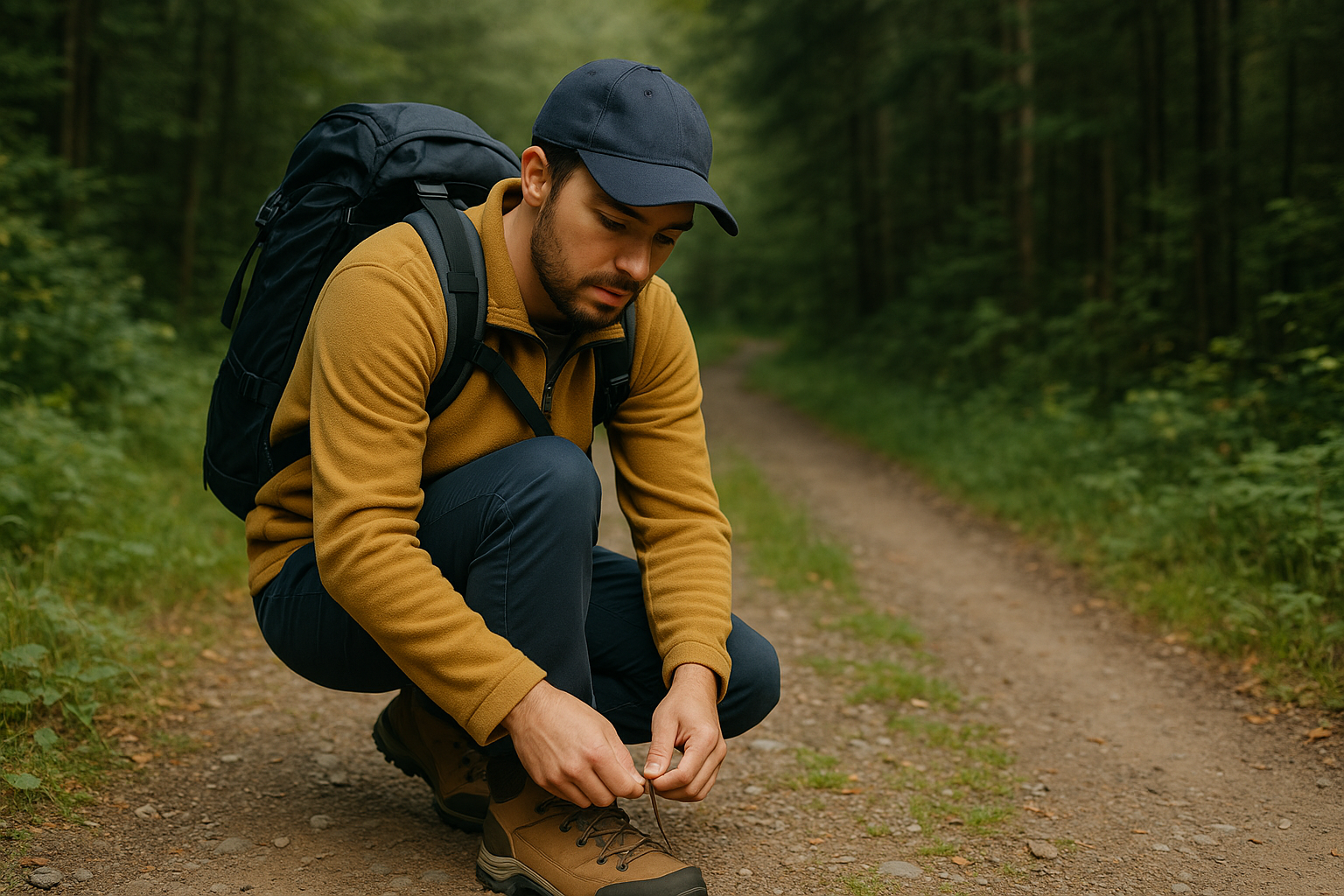
📥 Download our free gifts — Equipment checklists, PDF guides and tips to get started hiking in Quebec.
Get my gifts →
Get my gifts →
The 10 Best Hiking Boots for Beginners in 2026
After covering thousands of kilometers and testing over 50 models, here's my selection of the best beginner hiking boots. I've ranked these models according to three essential criteria: immediate comfort, durability, and value for money.The top 3 to start without breaking the bank
1. Merrell Moab 3 - The beginner reference The Moab 3 is the boot I recommend to 80% of beginners who ask for my advice. Comfortable from the first outing, it forgives beginner mistakes and adapts to most feet. Expect around $140-160. 2. Salomon X Ultra 4 - High-tech comfort If you want to treat yourself from the start, the X Ultra 4 offers exceptional comfort and impressive trail performance. A bit more expensive ($180-200), but it lasts for years. Compare it with the Moab 3 in my detailed test. 3. Columbia Redmond III - The budget option To start without breaking the bank, the Redmond III does the job very well. Perfect for easy trails like Parc du Mont-Royal or Parc Michel-Chartrand. Price: $90-110.| Model | Price | Comfort | Durability | Ideal for |
|---|---|---|---|---|
| Merrell Moab 3 | $140-160 | ⭐⭐⭐⭐⭐ | ⭐⭐⭐⭐ | Versatile beginner |
| Salomon X Ultra 4 | $180-200 | ⭐⭐⭐⭐⭐ | ⭐⭐⭐⭐⭐ | Premium comfort |
| Columbia Redmond III | $90-110 | ⭐⭐⭐⭐ | ⭐⭐⭐ | Tight budget |
7 other models that deserve your attention
4. KEEN Targhee III - Robust and spacious, perfect if you have wide feet. Excellent for Quebec's wet terrain. 5. Adidas Terrex Swift R3 - Light and dynamic, ideal if you come from running and want a smooth transition. 6. Lowa Renegade GTX - German high-end quality. Expensive but indestructible, it will last 10 years. 7. Hoka Speedgoat 5 - Ultra-comfortable thanks to its maximum cushioning. A cloud under your feet! 8. Vasque Breeze LT - Breathable and light, perfect for summer hikes. 9. Oboz Bridger - Excellent arch support. My choice if you have foot problems. 10. La Sportiva Spire GTX - Precise and technical, for those already aiming for more ambitious goals.
💡 Pro tip — Avoid "fashion" hiking boots from big box stores. They look like the real thing, but after 20 km, your feet will curse you. Invest in a real outdoor brand, it's worth every dollar.
How to Choose Your First Boots Without Making Mistakes
Choosing your first hiking boots is like choosing a life partner: it will determine whether you'll love or hate your adventures! After seeing too many beginners give up because of bad choices, here's my foolproof method.Sizing: Beginners' #1 mistake
ALWAYS take a half-size, even a full size above your usual size. Your feet swell during hiking, and you'll wear thicker socks. I learned this the hard way during my first long hike at Parc des Hautes-Gorges - my toes were hitting the front after 3 hours! Pro trick: try your boots at the end of the day when your feet are slightly swollen. And test them with the socks you'll wear hiking.Low, mid or high cut: what to choose?
For beginners, I always recommend mid-cut (up to the ankle). It offers the best compromise:
📌 Good to know — High-cut boots do NOT prevent sprains! That's a persistent myth. They mainly offer protection against debris and a bit more psychological support.
Waterproof or breathable: the Quebec dilemma
In Quebec, with our changing climate, I generally recommend waterproof boots (Gore-Tex or equivalent) for beginners. Yes, they'll be less breathable in summer, but you'll appreciate having dry feet during your first hikes in rain or morning dew.According to your adventure plans
Urban trails and parks (Mont-Royal, Michel-Chartrand):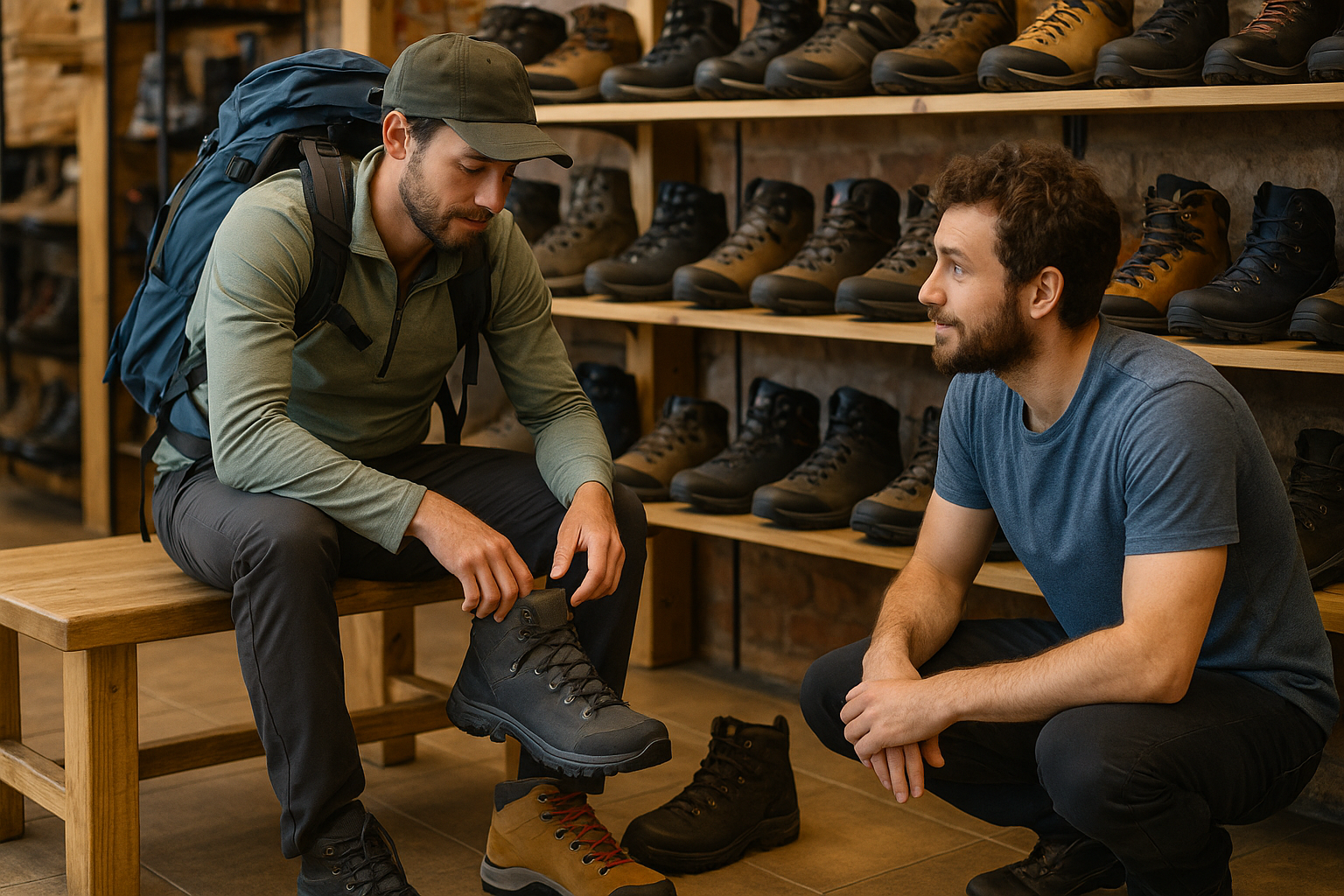
Budget and Value: My Frank Recommendations
Let's talk money! After testing boots from $50 to $400, here's what I learned about value in the hiking boot world.Price ranges that make sense
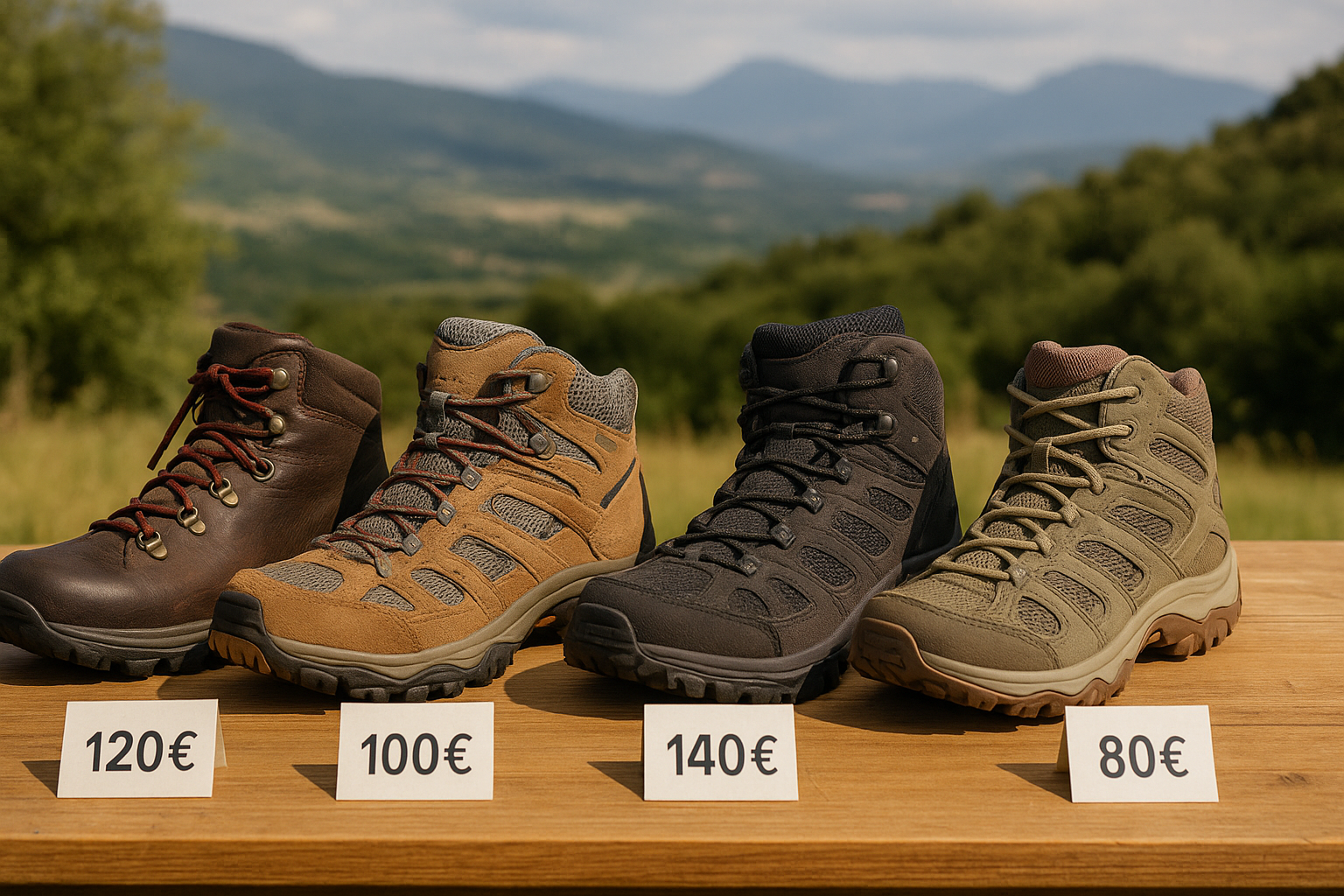
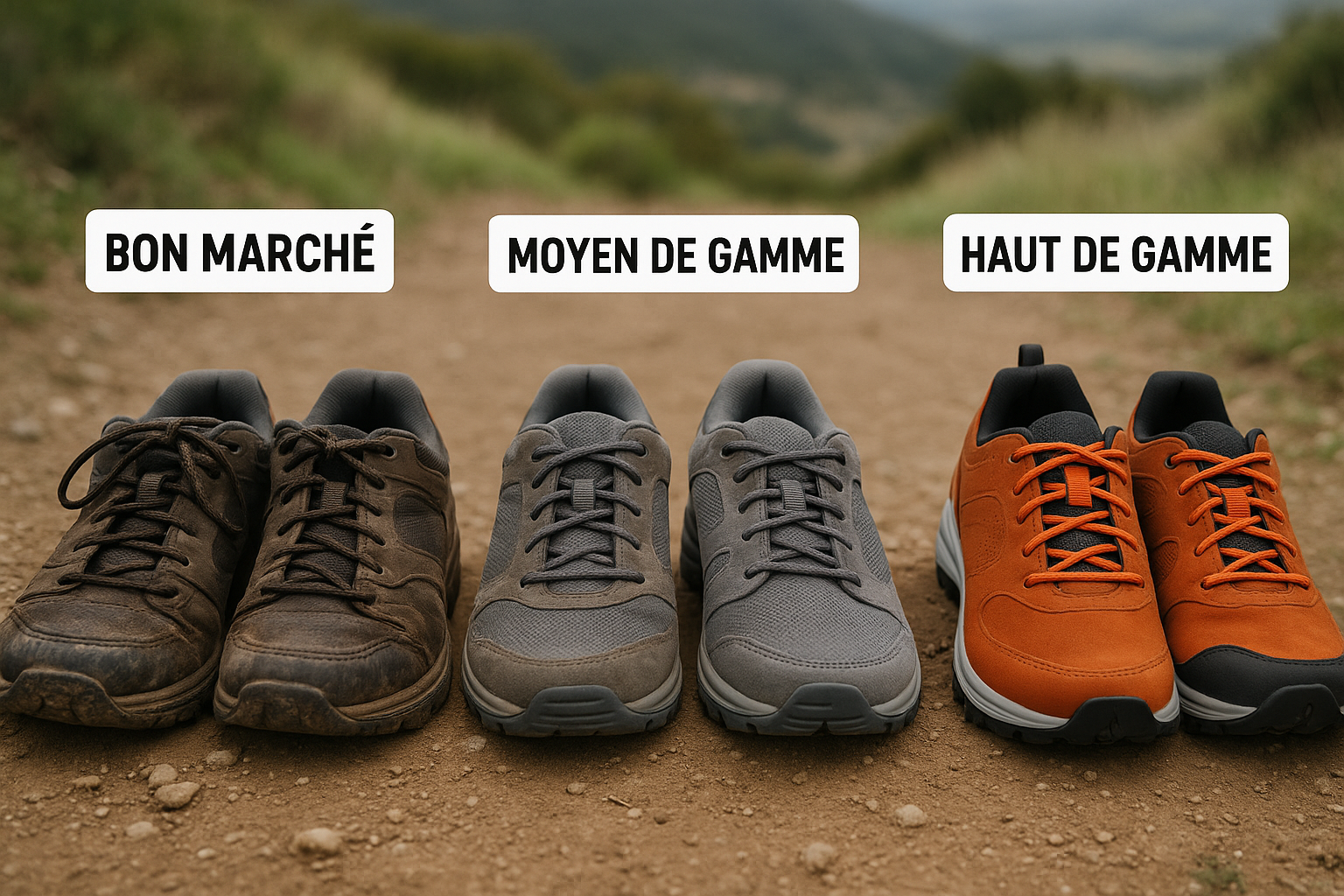
$80-120: Viable entry-level You can find decent boots in this range, but watch out for compromises. They'll do the job for your first outings, but don't expect miracles in terms of durability. $120-180: The beginner's sweet spot This is where you find the best beginner hiking boots. Enough quality to last a few years, decent comfort, proven technologies. This is my recommendation for 90% of beginners. $180-250: Accessible premium If your budget allows, this range offers exceptional comfort and durability that justifies the investment. You'll keep them 5-7 years easily. $250+: High-end Unless you have very specific needs or are aiming for mountaineering, it's probably too much to start with.
⚠️ Warning — Beware of "bargains" under $80. I've seen too many beginners abandon hiking because of cheap boots that destroyed their feet. Better to wait and save for something decent.
My tips to save smartly
Buy at end of season: Previous year models are often 30-40% cheaper in September-October. Watch spring sales: Stores liquidate their winter stock in March-April. Consider outlets: Salomon, Merrell and others often have outlets with recent models at reduced prices. Avoid false economies: A $120 pair that lasts 3 years costs less than an $80 pair that breaks after 1 year.| Budget | Lifespan | Cost per year | My verdict |
|---|---|---|---|
| $80-120 | 1-2 years | $60/year | Acceptable stopgap |
| $120-180 | 3-4 years | $40/year | ⭐ Recommended |
| $180-250 | 5-7 years | $35/year | Excellent investment |
Fit and Break-in: Avoiding Beginner Blisters
Having the best beginner hiking boots is good. Knowing how to fit and break them in properly is better! Here are my secrets to avoid the troubles I experienced when starting out.The art of lacing (that nobody teaches you)
Lacing is like a musical instrument: you need to tune it according to the situation. To start, master these two techniques: "Comfort" lacing for long distances:
💡 Pro tip — Learn the "surgeon's knot" technique: make two loops instead of one before tightening. It prevents laces from loosening during hiking. It saved my life on technical trails!
Smart break-in (not just "walk with them")
Too many beginners go straight for a 10 km hike with new boots. Mistake! Here's my progressive break-in method: Week 1: Wear them 2-3 hours daily at home and for short urban walks. Week 2: First real outing of 2-3 km on easy trail (like Mont-Royal). Week 3: Gradually increase up to 5-6 km. Week 4: You can go for your first "real" hikes!Socks: the detail that changes everything
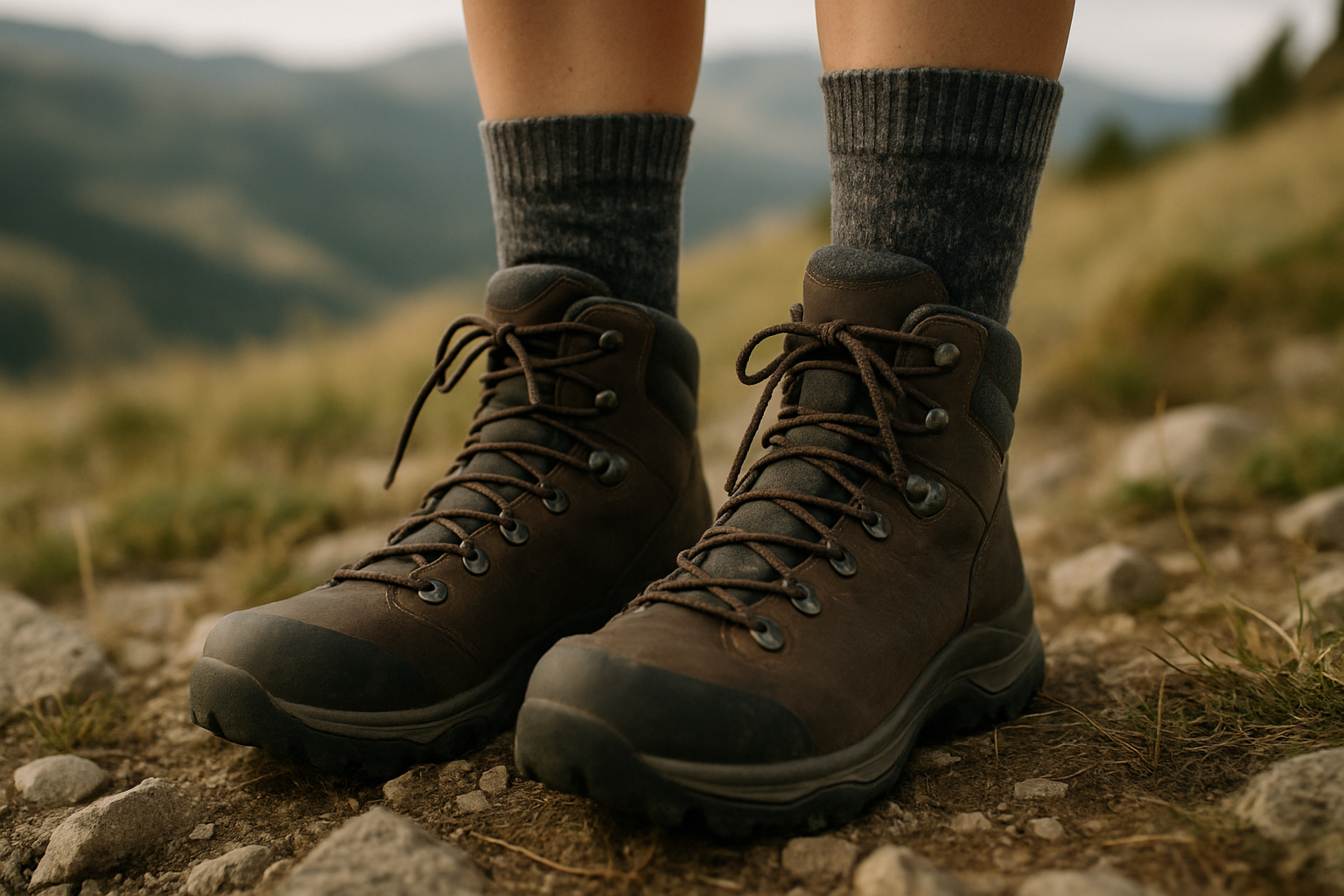
I long neglected socks until an experienced guide showed me the difference. Invest in 2-3 pairs of good hiking socks (merino wool or synthetic):"The best boots in the world with cotton socks is like a Ferrari with cheap gas: it works, but you're wasting the potential!"
Beginner Mistakes That Ruin the Experience (and How to Avoid Them)
In 15 years of advising beginners, I've seen the same mistakes repeated. Here are the 7 most common errors with my practical solutions to avoid them.Mistake #1: Buying too small "they'll stretch"
The trap: Believing hiking boots will soften like dress shoes. Reality: They'll conform a bit, but will NOT get bigger. My solution: Always take a half-size up, test with your hiking socks.Mistake #2: Going straight for a long hike
The trap: "I have good boots, I can do anything!" Reality: Even the best boots need breaking in. My solution: Follow my beginner progression and start with short outings.Mistake #3: Neglecting maintenance
The trap: Leaving boots dirty and wet after each outing. Reality: It destroys materials and reduces lifespan by half. My solution: Clean after each outing, let dry naturally, treat waterproofing 2-3 times per year.Mistake #4: Choosing based on looks rather than function
The trap: "These boots are prettier!" Reality: Comfort and function come before aesthetics. My solution: Define your needs first, then choose among suitable models.
📌 Good to know — An uncomfortable boot will ruin your outings, no matter how beautiful it is. I learned this the hard way with a "gorgeous" pair I wore 3 times before giving it away.
Mistake #5: Buying without trying (or trying poorly)
The trap: Ordering online without knowing your exact size in the brand. Reality: Each brand sizes differently. My solution: Go to a store for your first pair, note the sizes that fit you in each brand.Mistake #6: Ignoring your foot shape
The trap: Choosing based on reviews without considering your foot morphology. Reality: A wide foot in a narrow boot is guaranteed hell. My solution: Identify if you have wide, narrow feet, with high/low arch, and choose accordingly.Mistake #7: Wanting an "all-terrain" boot
The trap: Looking for THE perfect boot for all situations. Reality: It doesn't exist. Each boot has its strengths and weaknesses. My solution: Start with a versatile boot, you'll specialize later according to your preferences.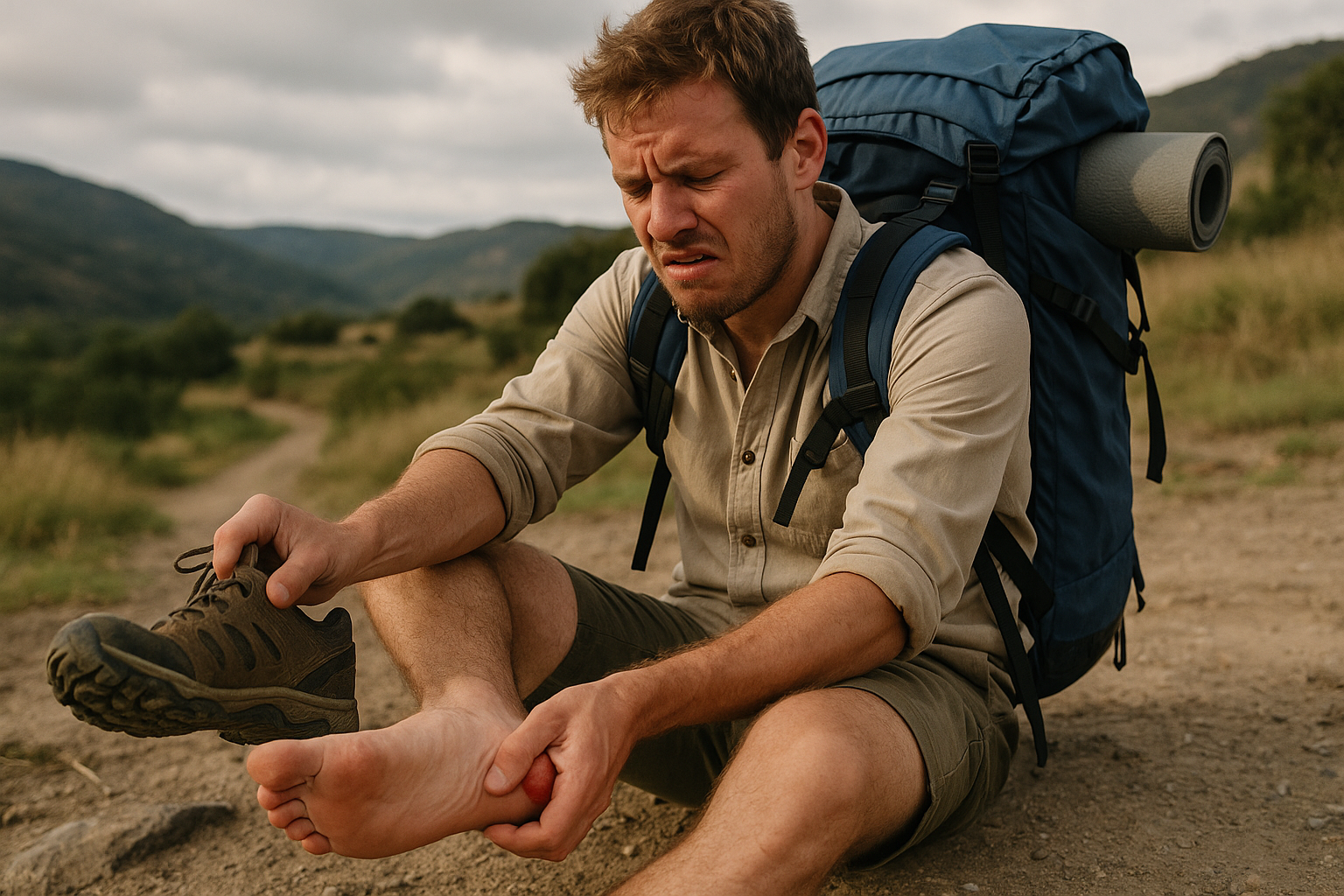
Maintenance and Durability: Making Your Boots Last Years
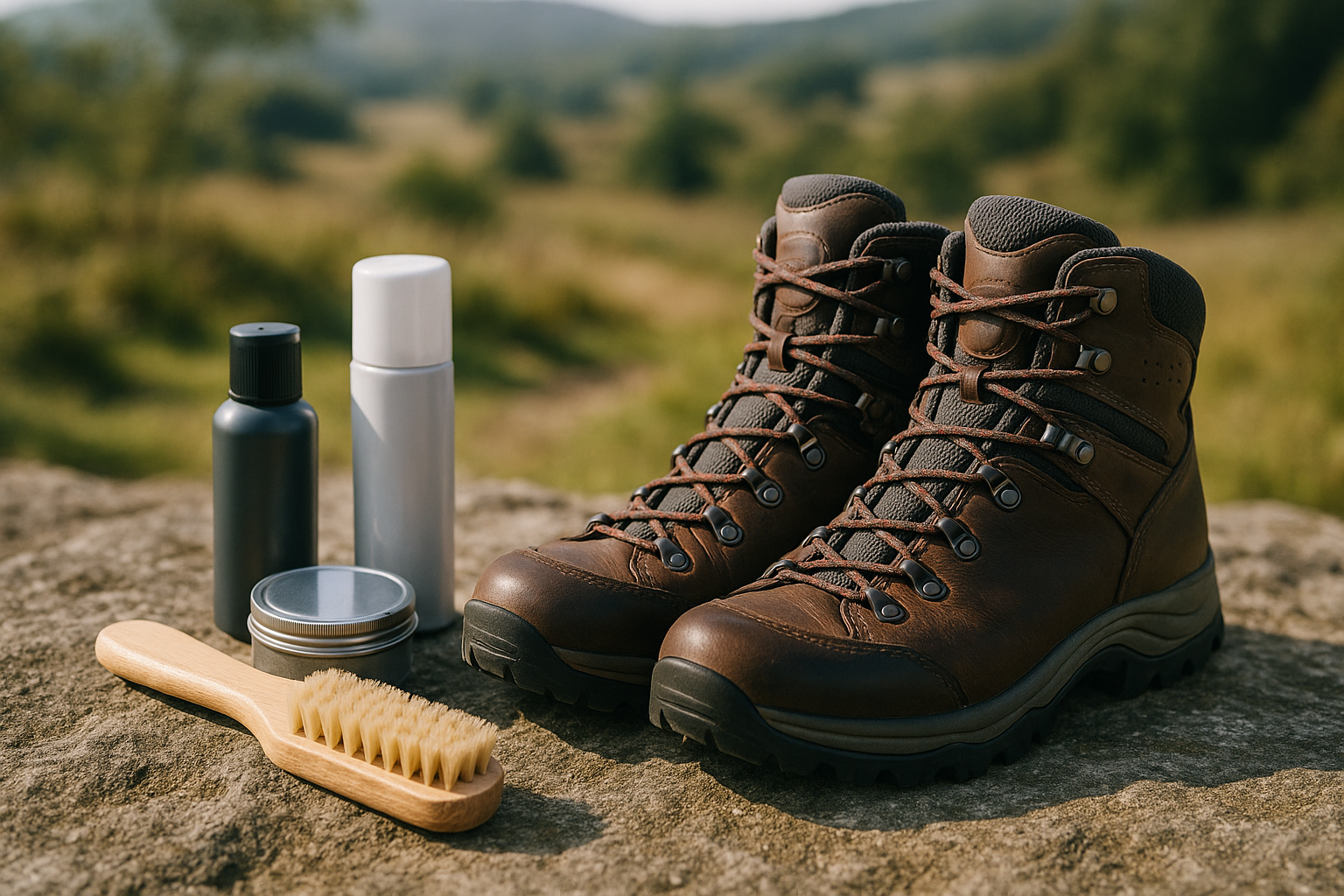
Your first hiking boots are an investment. With proper care, they can last 5-7 years and thousands of kilometers. Here's my maintenance routine, developed after killing a few pairs through neglect!Post-hike cleaning (5 minutes worth gold)
Immediately after each outing: 1. Remove big dirt with a dry brush 2. Remove insoles to dry them separately 3. Stuff boots with newspaper to absorb moisture 4. Let dry at room temperature (NEVER near a heat source!) Once a month (or after dirty outings): 1. Clean with brush and warm water 2. Use mild soap if necessary 3. Focus on seams and accumulation areas 4. Let dry completely before storing
⚠️ Warning — NEVER put your boots near a radiator, in the dryer, or in direct sunlight. Heat destroys glues and deforms materials. I killed my first pair like that!
Renewing waterproofing
Even the best Gore-Tex boots lose their waterproofing over time. Here's how to restore it: Frequency: 2-3 times per year, or when you see water no longer beads on top. Recommended products:When to replace your boots
Even with the best care, nothing lasts forever. Replace your boots when:| Usage | Typical lifespan | Approximate mileage |
|---|---|---|
| Weekend warrior (2-3 times/month) | 4-6 years | 800-1200 km |
| Regular hiker (once/week) | 2-3 years | 1000-1500 km |
| Intensive hiker (several times/week) | 1-2 years | 1500+ km |
My Final Recommendations According to Your Profile
After everything we've seen together, here are my personalized recommendations according to your beginner profile. I've categorized according to the most common situations I encounter.The parent who wants to introduce their family
Your need: Comfortable boots for family outings on easy trails. My recommendation: Merrell Moab 3 - immediate comfort, versatile, reasonable price. Perfect trails to start: Parc du Mont-Royal, Parc Michel-Chartrand. Budget: $140-160 - investment that will last years.The athlete coming from running
Your need: Smooth transition to hiking without losing the "dynamic" feeling. My recommendation: Adidas Terrex Swift R3 or Hoka Speedgoat 5 - light and responsive. Warning: Resist the urge to go too fast on technical terrain! Budget: $150-180 for quality that follows your ambitions.The student on a tight budget
Your need: Maximum quality for minimum money. My recommendation: Columbia Redmond III - does the job without breaking the bank. Strategy: Start with this, save to upgrade in 2-3 years. Budget: $90-110 - perfect to discover if you really get hooked.The ambitious one already aiming higher
Your need: Boots that will follow your progression toward more technical goals. My recommendation: Salomon X Ultra 4 or Lowa Renegade GTX - long-term investment. Advantage: You won't need to buy again in 2 years. Budget: $180-250 - expensive at first, economical long-term.The one with "difficult" feet
Your need: Maximum comfort, support adapted to your specific problems. My recommendation: Oboz Bridger (arch support) or KEEN Targhee III (wide feet). Advice: Don't hesitate to consult a sports podiatrist for custom insoles. Budget: $160-200 + possibly custom insoles.
💡 Pro tip — Whatever your profile, always start with easy trails. The 15 best easy trails around Montreal are perfect for testing your new boots and developing your technique.
Conclusion: Your Feet Will Thank You!
There you have it, you now have all the keys to choose your first hiking boots without making mistakes! Let's recap the essential points: • The best beginner hiking boots in 2026: Merrell Moab 3 (versatility), Salomon X Ultra 4 (premium), Columbia Redmond III (budget) • Sizing: Always a half-size up, test at end of day with your hiking socks • Smart budget: $120-180 for excellent value that will last years • Progressive break-in: 3-4 weeks to avoid blisters and disappointments • Regular maintenance: Clean after each outing, renew waterproofing 2-3 times per year Remember: the best boots in the world are the ones that make you want to get back on the trail! Start with easy hikes, listen to your feet, and adjust as you go. My complete beginner guide will accompany you in your first steps. Now, stop procrastinating and go try some models! Your future adventures await you, and believe me, with the right boots on your feet, you'll discover why we all become addicted to hiking. Happy shopping, and above all, happy hiking! 🥾
About the author
François Dumaine
Founder of Let's Go Play Outside
A passionate hiker, photographer and content creator, François has been hiking the trails of Quebec and Alberta since 2014. He founded Let's Go Play Outside to give you the information he wished he had before heading out.
Newsletter
Content that makes you want to go outside
Every week, a trail idea, a reflection on nature, or a tip worth the detour. Zero spam. Only the essentials.
Joined by 12,000+ outdoor enthusiasts
Read next
Continue the journey