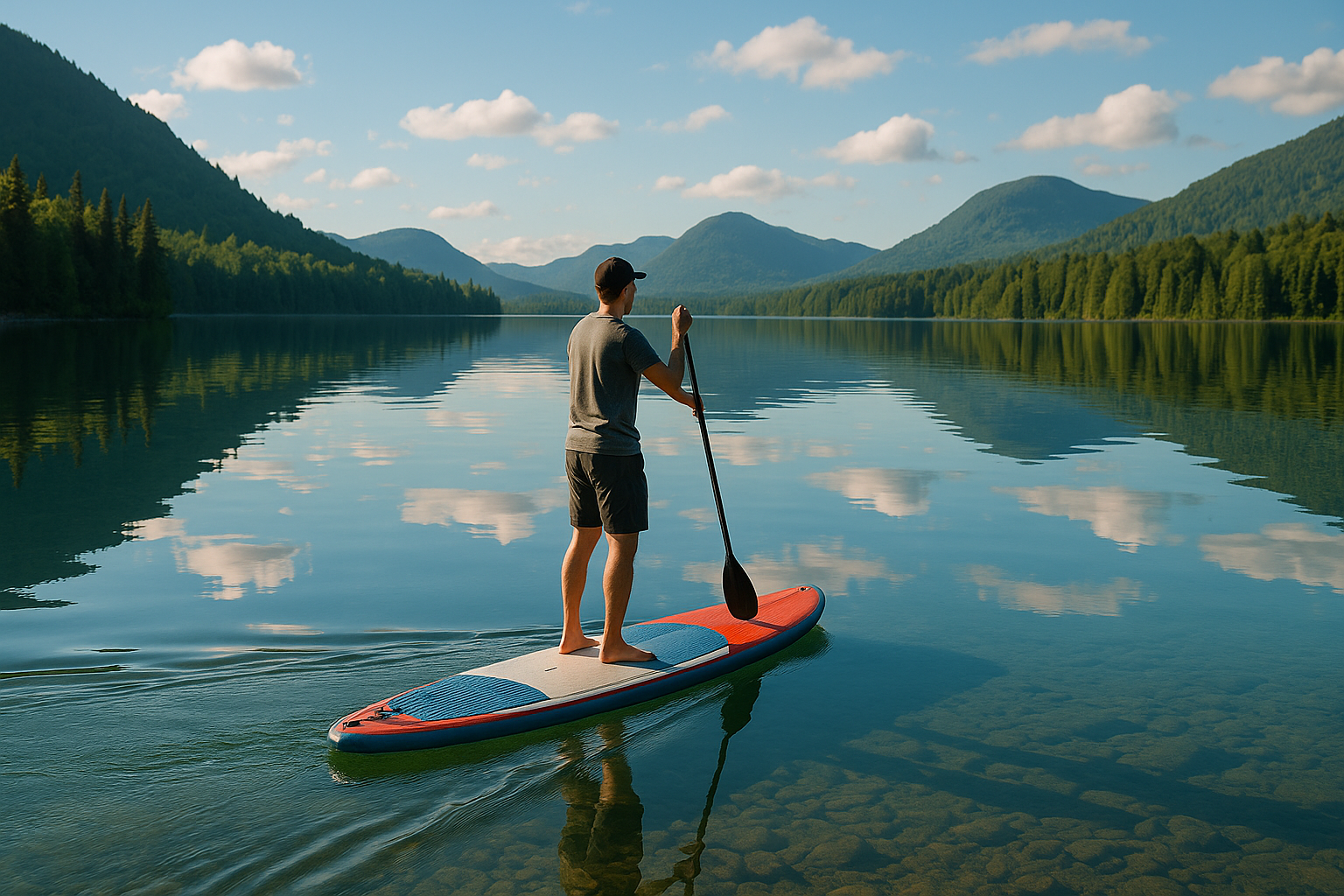
The first time I tried stand-up paddleboarding in Quebec, I spent more time in the water than on my board! But what a discovery it was. SUP is this magical activity that lets you explore our beautiful lakes and rivers from a completely different angle. You don't need to be an Olympic athlete to start — just a bit of curiosity and the desire to experience something new.
If you dream of gliding on water while admiring Quebec's landscapes, but don't know where to start, you're in the right place. I'm going to share everything I wish I had known before my first outing, from technical basics to the best beginner spots, including essential equipment.
Get my gifts →
🏄♀️ What is stand-up paddle and why is it perfect for beginners?
Stand-up paddle, also called SUP, is simply the art of standing on an oversized board and paddling to move forward. It might seem intimidating at first, but it's probably the most accessible water activity that exists.
Unlike kayaking or canoeing, you don't need any particular technique to start. Your first outing can very well be your first experience on water. I've seen people from 8 to 78 years old master the basics in a single session.
What makes SUP so special in Quebec is the diversity of our waterways. You can paddle on a mountain lake surrounded by fir trees, explore a quiet river, or even venture onto the St. Lawrence River. Each outing offers a different landscape.
Benefits of SUP for beginners
- Quick learning: Most people find their balance in 10-15 minutes
- Complete workout: Works the core, arms, legs and balance
- Zen activity: The rhythm of paddling and contact with water are super relaxing
- Accessible everywhere: Almost all calm lakes and rivers are suitable
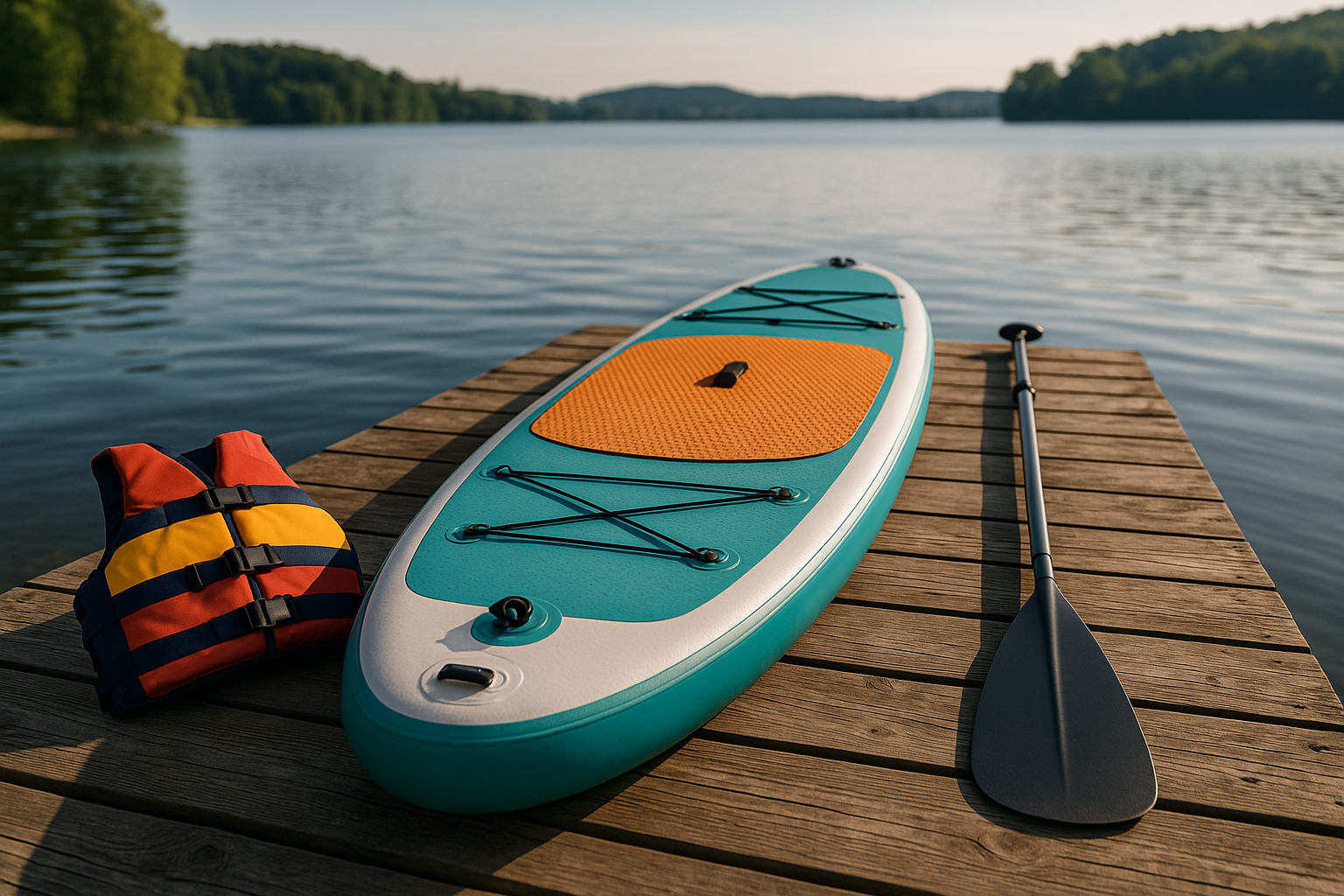
- Simple equipment: A board, a paddle, a PFD, and you're set
🎯 What equipment to choose for starting SUP in Quebec?
When I started, I thought you had to invest a fortune in equipment. Wrong! For your first outings, you can very well rent or borrow the gear. It lets you test different types of boards before buying.
The board: your most important choice
For beginners, I strongly recommend an inflatable board (iSUP). They're more stable, easier to transport and store. And contrary to popular belief, good inflatable boards are very rigid once inflated.
| Criteria | Rigid board | Inflatable board |
|---|---|---|
| Beginner stability | Good | Excellent |
| Transport | Roof rack required | Backpack |
| Storage | Garage/shed | Closet |
| Beginner price | $800-1200 | $400-800 |
| Durability | Very high | High |
The paddle: your engine on water
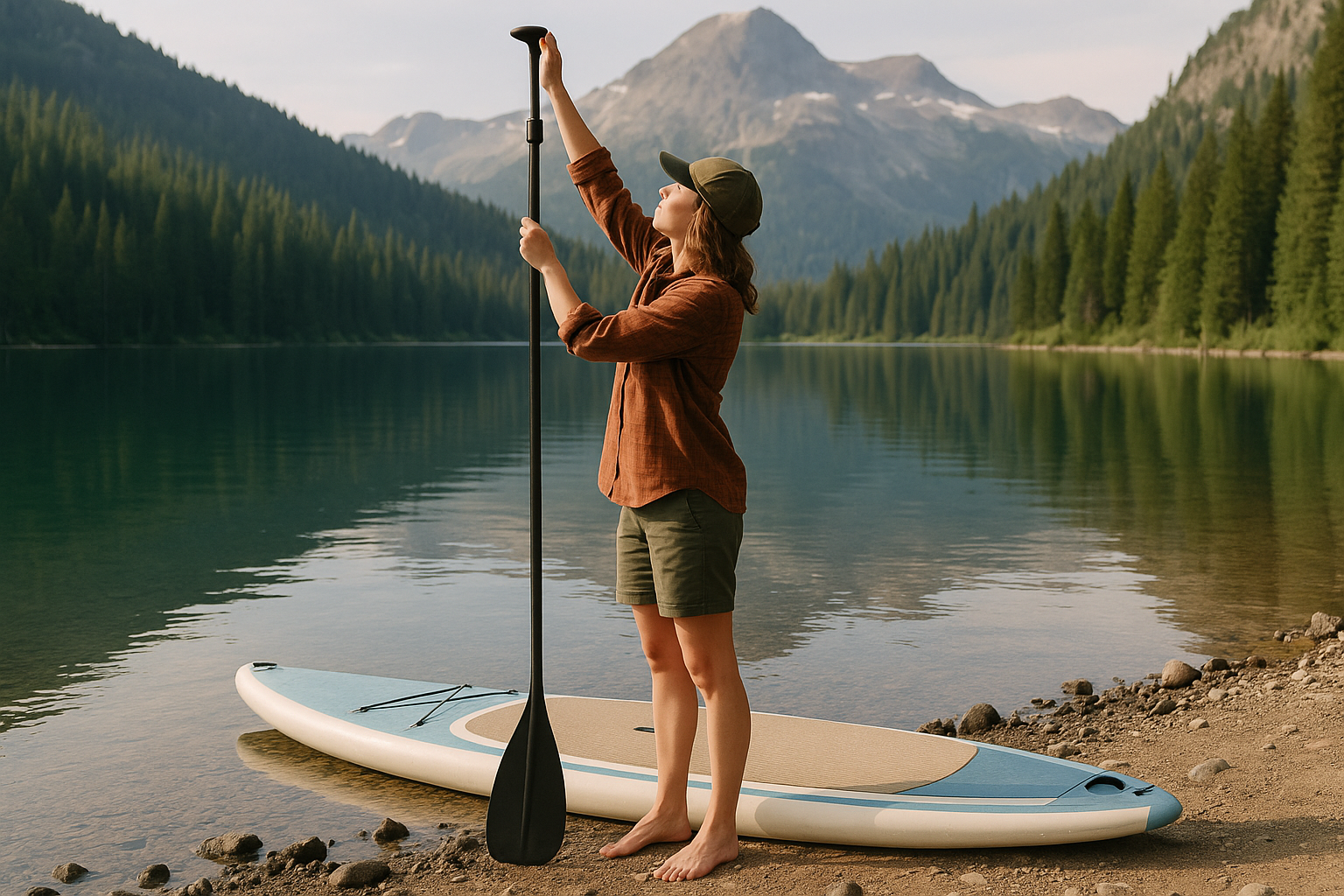
An adjustable paddle is perfect for starting. It lets you test different heights and adapts if other people use your equipment. General rule: your paddle should measure your height + 6 to 10 inches.
The life jacket: non-negotiable
In Quebec, a PFD (personal flotation device) is mandatory for SUP. Even if you're an excellent swimmer, accidents happen quickly on water. Choose a comfortable model that doesn't limit your paddling movements.
🌊 How to get on your board and find your balance?
The first time you get on a SUP board, your brain will panic a little. That's normal! The water moves, the board moves, and you're trying not to fall. But with the right technique, you'll get it faster than you think.
The "crawl" technique to get on
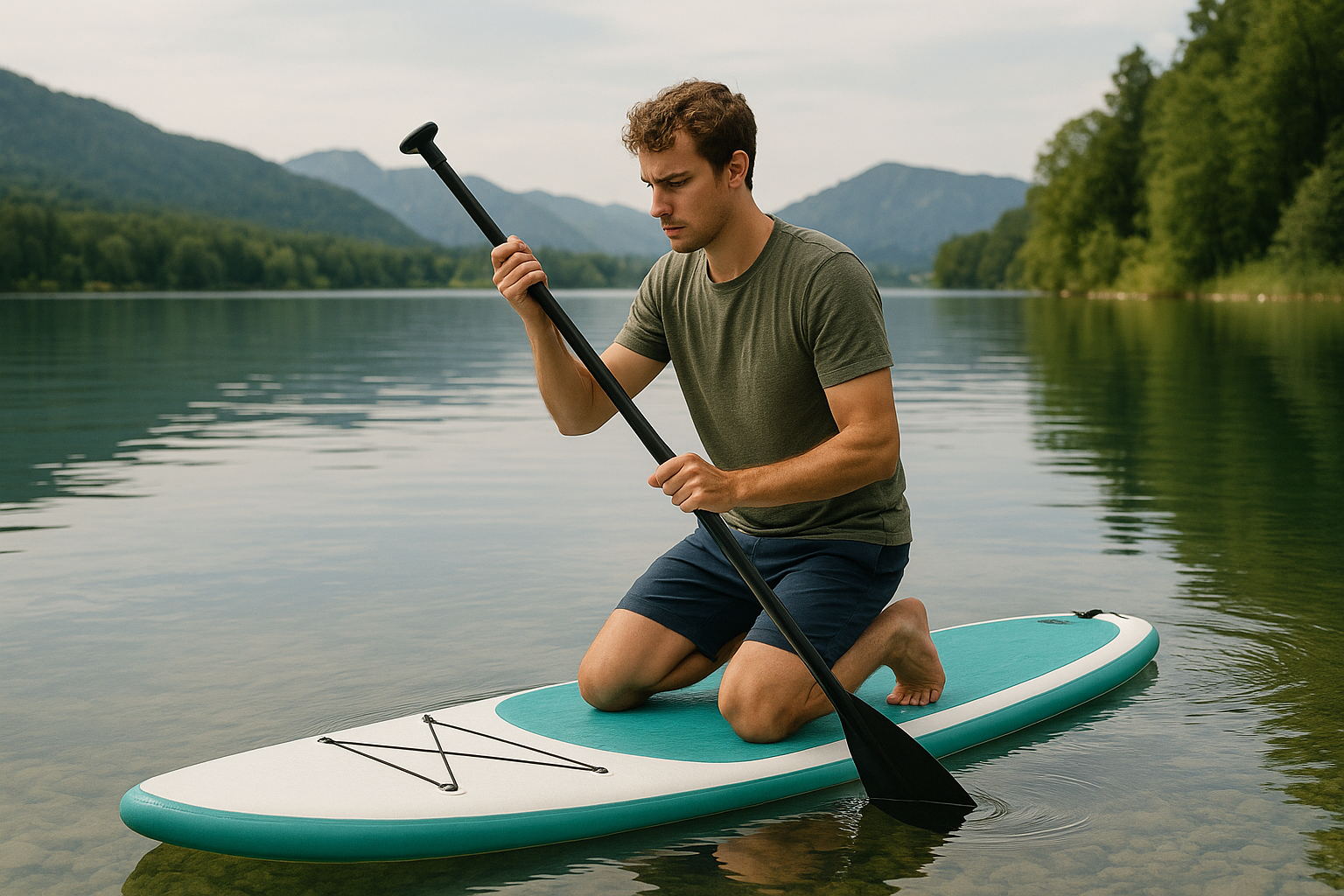
Start in the water next to your board, holding the handle in the center. Place your hands on each side of the handle and pull yourself up like getting out of a pool. Once on your belly, crawl toward the center of the board.
Then, place your hands where your knees were and stand up one foot at a time. Keep your knees slightly bent and look at the horizon, not your feet. This is the most important trick: your balance follows your gaze.
The perfect position once standing
- Parallel feet, shoulder-width apart, centered on the handle
- Slightly bent knees, not stiff as boards
- Straight back, core engaged (imagine someone's going to punch you in the stomach)
- Gaze toward horizon, not at your feet or the board
- Paddle in one hand, the other free for balance
What to do if you fall?
You're going to fall, that's guaranteed! I fell at least 10 times during my first outing. The important thing is to fall away from the board to avoid injury. When you feel things going wrong, jump to the side rather than forward or backward.
To get back on, use the same technique as for getting on the first time. With practice, you'll develop reflexes and fall less and less often.
🚣♀️ Basic techniques for efficient paddling
Now that you're standing on your board (congratulations!), you need to learn how to move forward. Paddling in SUP is quite an art. At first, you'll probably go in circles and get tired quickly. That's normal, we've all been there.
The correct paddle grip
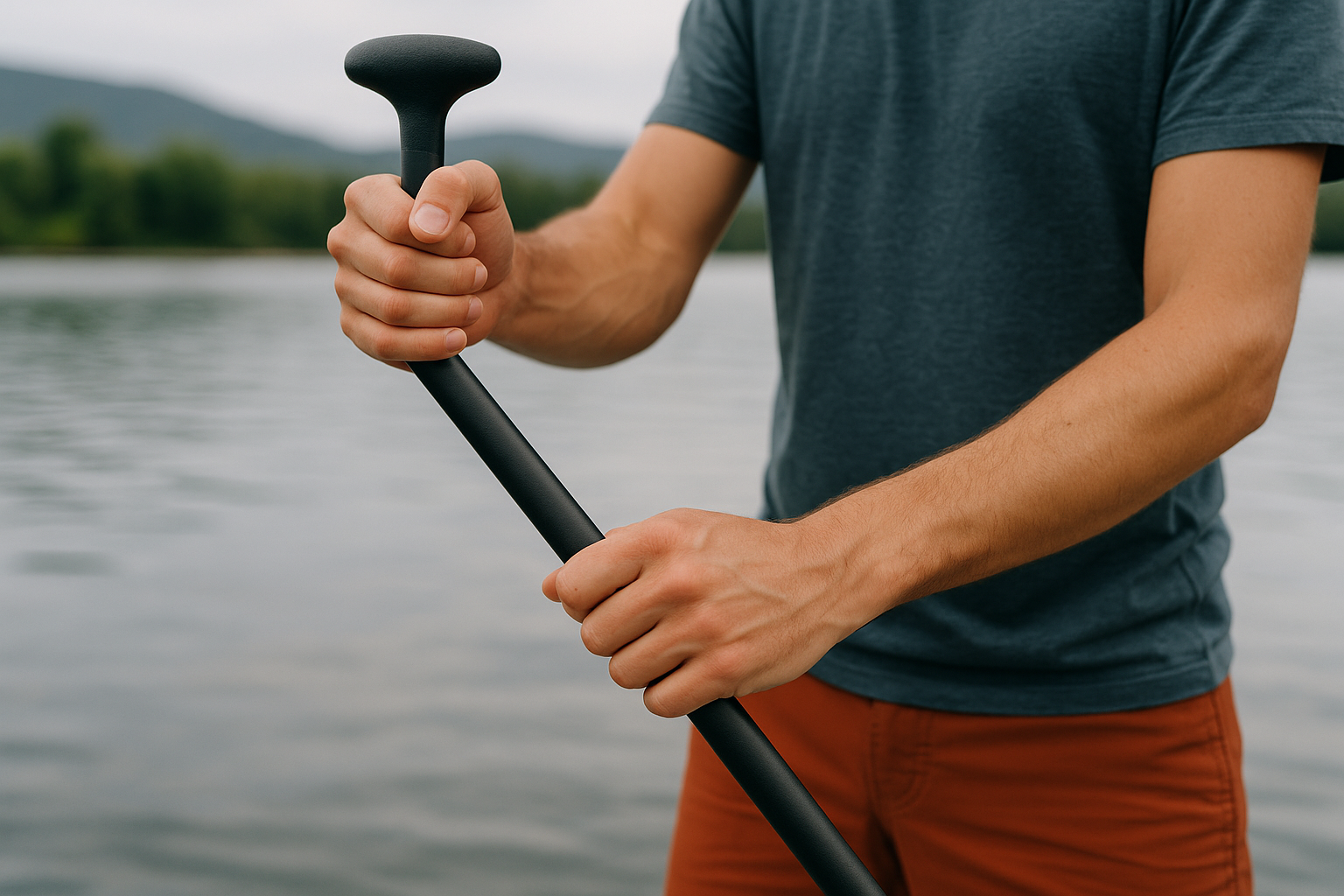
Place one hand on the handle (top of the paddle) and the other on the shaft, about an arm's distance apart. The blade (the part that goes in water) should be angled forward, not perpendicular to the water.
The basic paddle stroke
The movement has three phases: catch, power, and exit. Plunge your blade in the water near your feet, pull backward keeping the paddle close to the board, then exit the water when it reaches your ankles.
The secret is using your core and legs, not just your arms. Rotate your torso slightly and push with the top hand while pulling with the bottom one. It takes some coordination, but once you have it, it's much more efficient.
How to go straight (and stop going in circles!)
If you always paddle on the same side, you'll turn. It's mathematical! Alternate every 3-4 strokes: a few strokes on the right, then a few on the left. At first, count in your head to build the habit.
| Technique | Use | Difficulty |
|---|---|---|
| Alternating paddle | Go straight | Easy |
| Sweep stroke | Turn quickly | Medium |
| Reverse paddle | Back up/brake | Easy |
| Rudder stroke | Subtle corrections | Medium |
Most common paddling mistakes
- Paddling too far from the board: makes you zigzag and tires you out
- Plunging blade too deep: you lose efficiency
- Using only arms: you'll be tired in 10 minutes
- Looking at your feet: you lose balance and direction
- Gripping paddle too tight: creates unnecessary tension
🏞️ Where to SUP in Quebec when you're a beginner?
Choosing the spot for your first outings is crucial. You want somewhere calm, shallow and protected from wind. Avoid rivers with current or large windy lakes to start. The idea is to build confidence, not survive!
Criteria for a good beginner spot
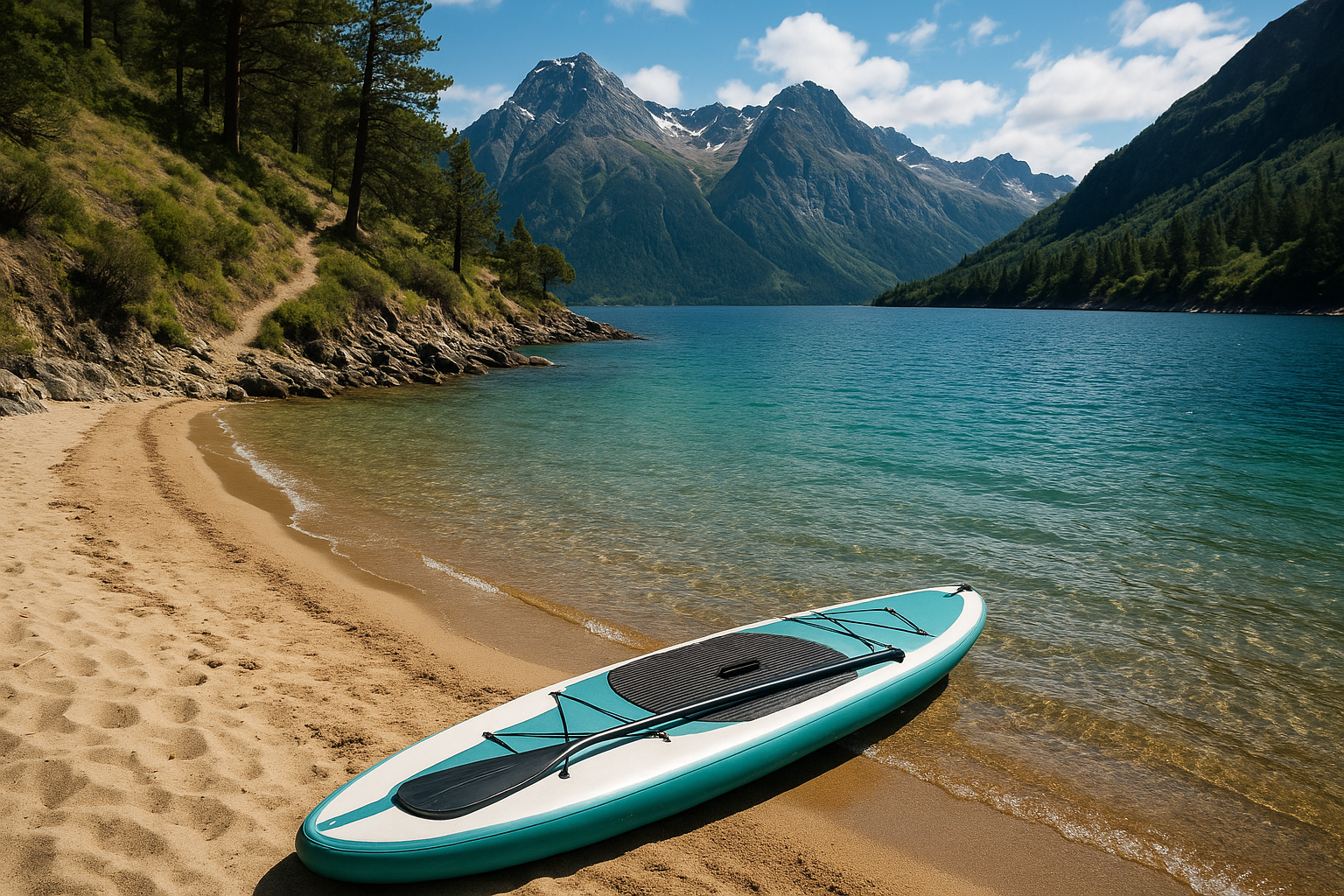
Look for a body of water with little or no current, easy water access (ideally a beach or low dock), and preferably a sandy rather than rocky bottom. Ideal depth? Between 1 and 2 meters (3-6 feet). Deep enough to paddle, but not deep enough to stress if you fall.
Protected bays are perfect because wind is less strong there. And if you can choose, avoid busy weekends for your first outings. The fewer boats and people, the better for your concentration.
Some perfect spots for beginners
In the Montreal region, Parc du Mont-Royal offers small lakes perfect for getting started. Further north, the Laurentides are full of calm and beautiful lakes.
If you're in the Quebec City region, the area around Canyon Sainte-Anne offers several quiet water options. In Montérégie, the Mont Yamaska sector also offers beautiful lakes for beginners.
Rental services and lessons
Almost all resort centers and several outfitters now offer SUP rental. It's perfect for testing before buying. Many places also offer beginner lessons - I strongly recommend taking one if possible.
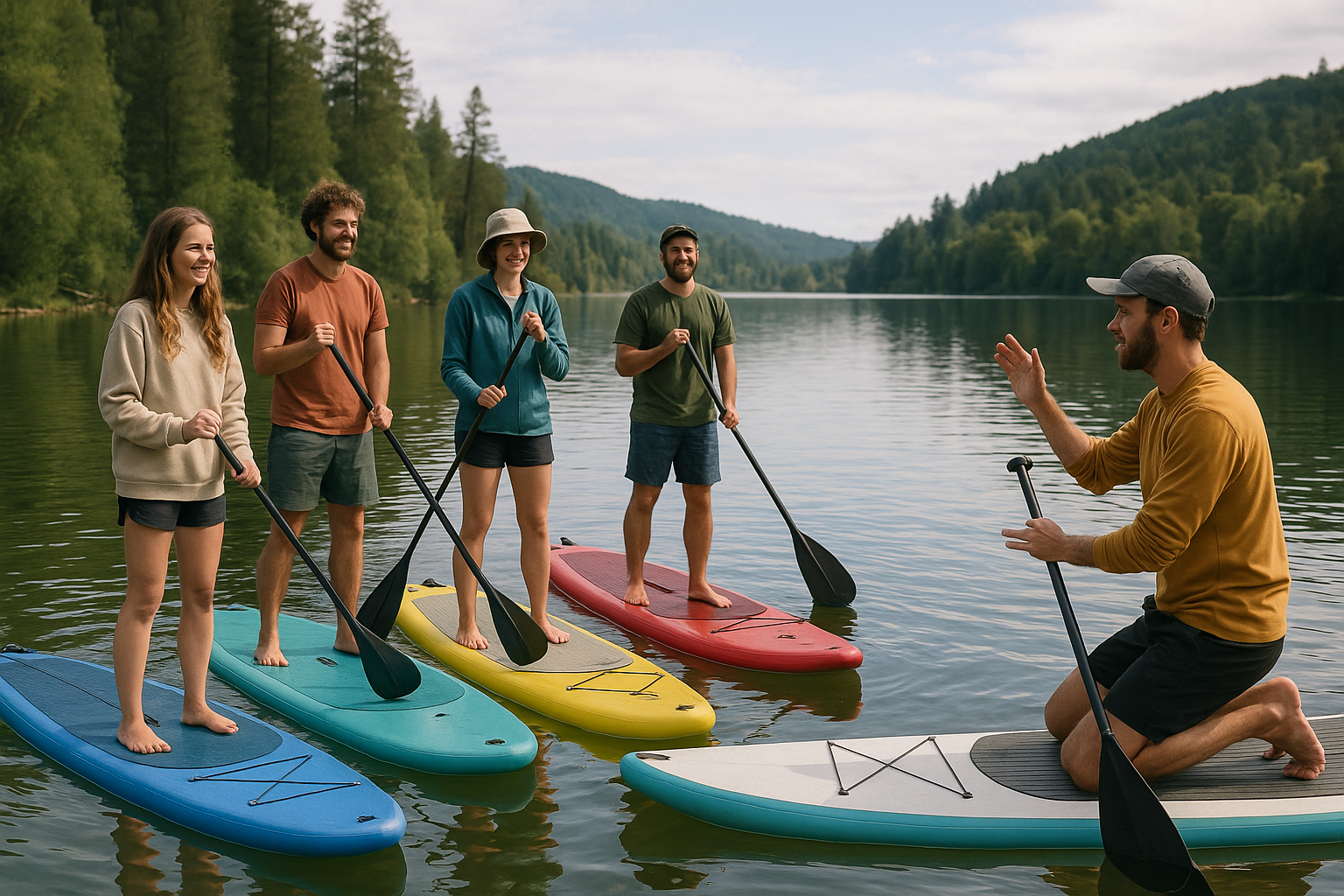
A good 2-hour lesson will save you weeks of trial-and-error learning. And you'll learn basic safety rules, which is valuable on water.
⚠️ SUP safety: golden rules to never forget
I don't want to scare you, but water safety is serious. I've seen too many situations that could have gone wrong due to negligence. The good news is that with a few basic precautions, SUP is a very safe activity.
Mandatory safety equipment
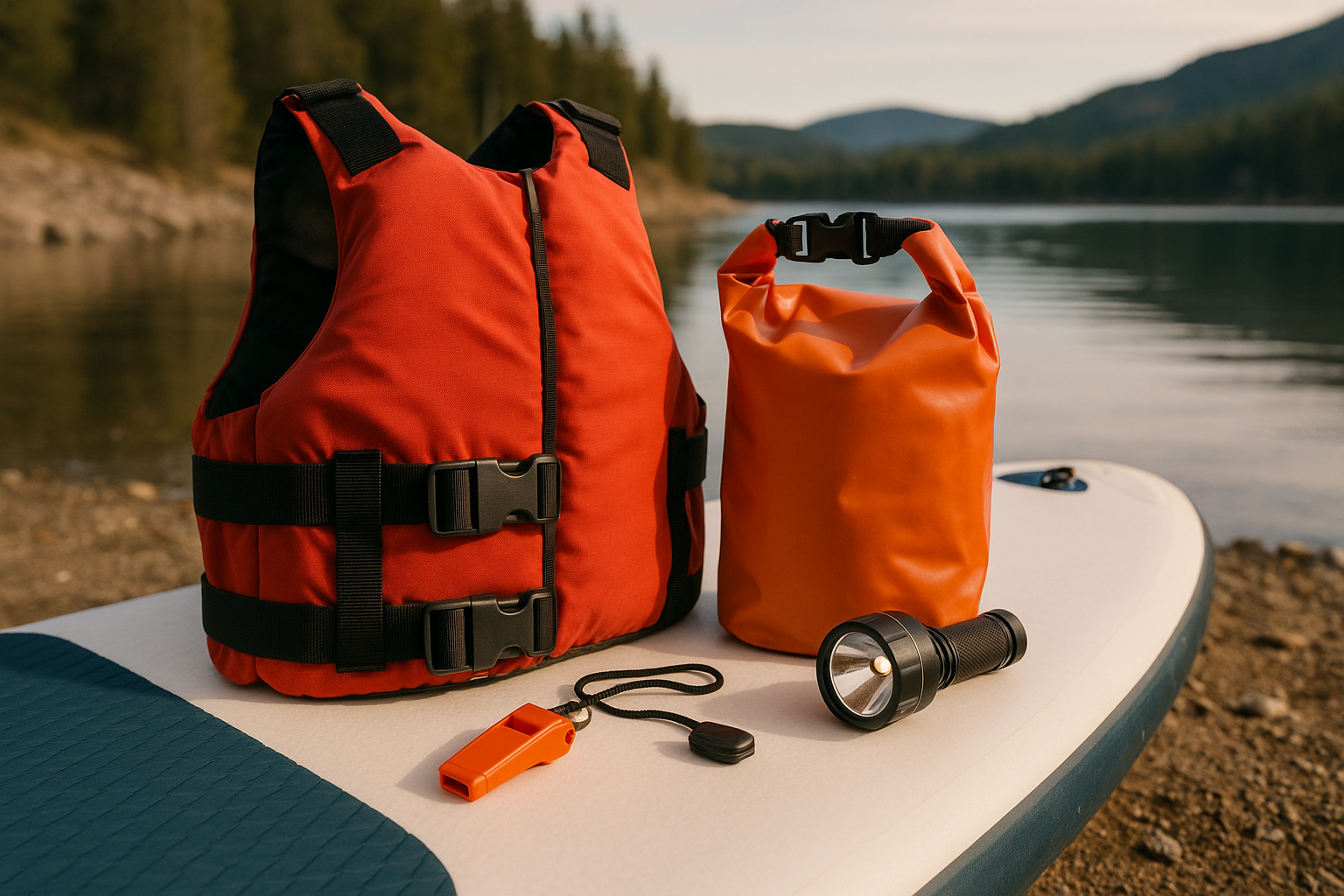
In Quebec, you must have an approved PFD (not just an inflatable pool belt!), a distress whistle and a waterproof card with emergency numbers. If you paddle between sunset and sunrise, you also need a waterproof light.
Conditions to absolutely avoid
- Wind over 20 km/h (12 mph): you'll spend more time fighting than paddling
- Storms forecast: water and lightning don't mix well
- Water temperatures under 15°C (59°F) without wetsuit: hypothermia risk
- Strong currents: save that for when you have more experience
- Heavy boat traffic zones: avoid main channels
The "buddy system" rule
Especially at first, never go alone. Even if your friend stays on the beach, having someone who knows where you are and when you should return is reassuring. And it's more fun to share the experience!
If you don't have anyone to accompany you, join a local SUP group. There are some in almost every Quebec region, and it's an excellent way to meet other enthusiasts.
What to do in case of problems
If you lose your paddle, stay with your board and use your hands to paddle toward shore. If you're too tired to get back on the board, hold on and call for help with your whistle. A SUP board, even inflatable, floats very well and can save your life.
🌟 Your first challenges and how to progress quickly
After a few outings, you'll start feeling more comfortable on your board. This is the perfect time to set small challenges that will accelerate your progress. Nothing too ambitious - just enough to keep it interesting!
Technical challenges for beginners
Start by mastering the turn in place. Use sweep strokes (paddle in an arc) on one side to pivot your board. Once you master that, try paddling in a straight line for 100 meters (330 feet) without correcting your direction.
Then, work on your kneeling position. It might seem regressive, but paddling efficiently on your knees requires good technique. And it's super useful in windy weather or waves.
Distance and endurance challenges
For your first outing, aim for 30 minutes on water. Then gradually increase: 45 minutes, 1 hour, 90 minutes. Progress in SUP is felt quickly - after a month of regular outings, you'll be surprised at your level.
Distance-wise, start with short round trips near shore. Then gradually expand your perimeter. The goal is to be able to do 5 km (3 miles) comfortably before thinking about more adventurous outings.
Integrating other activities
Once you're solid on your board, SUP becomes a gateway to many other activities. You can use it to access isolated fishing spots, do yoga on water, or even camp on islands accessible only by paddling.
Personally, I love combining SUP and hiking. I paddle to a trail accessible only by water, pull my board onto shore, and go exploring. It's like having VIP access to secret places!
If you already love hiking, check out our ultimate guide to start hiking in Quebec to discover how to combine these two passions.
🛒 Buying your first equipment: budget and advice
After a few rentals, you'll probably want your own equipment. That's normal - having your own board is total freedom! But before diving into purchases, let me share my advice to avoid costly mistakes.
Realistic budget for beginners
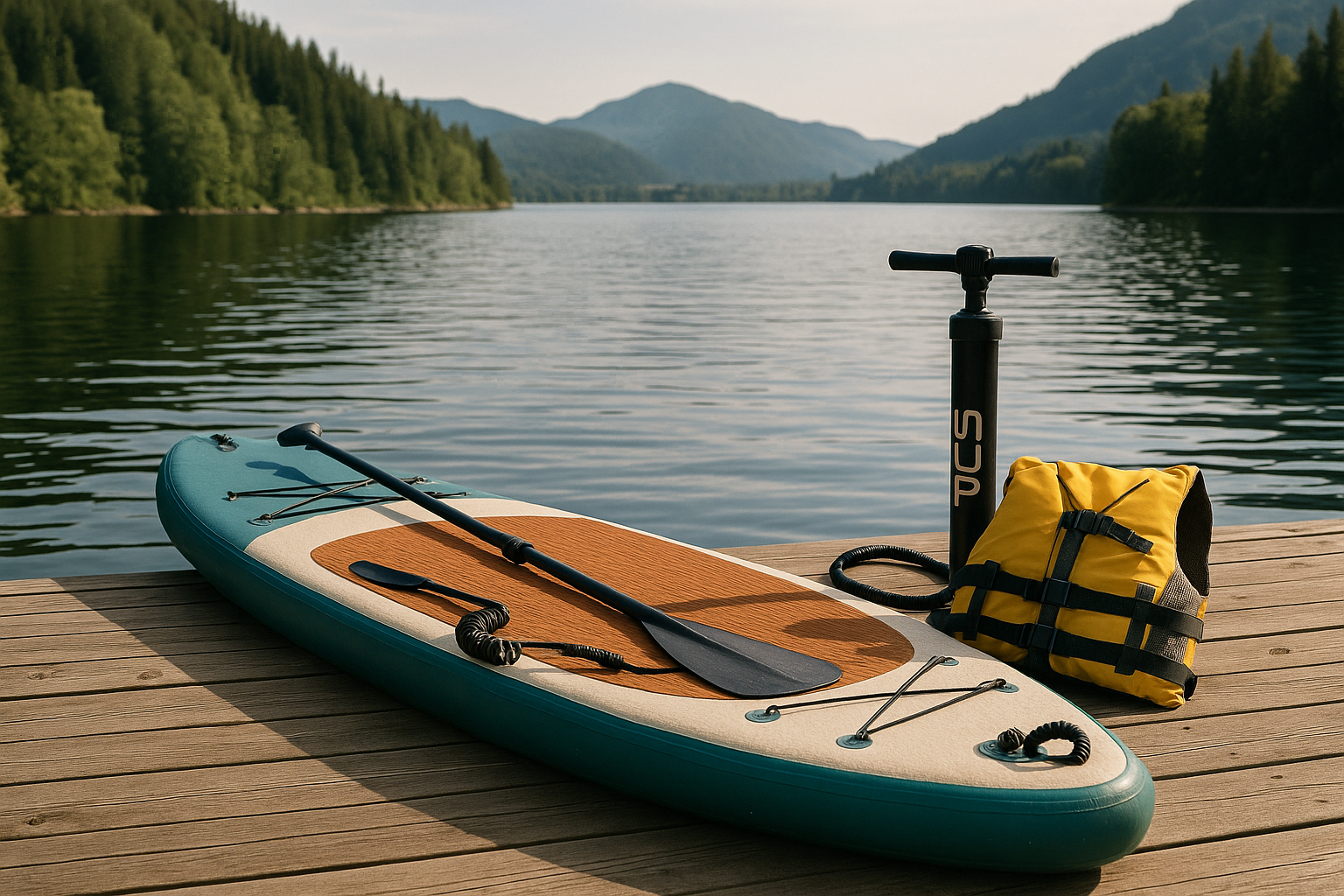
For a complete kit of decent quality, budget between $600 and $1000. That includes an inflatable board, adjustable paddle, PFD, pump and carry bag. Yes, it's an investment, but spread over several years of use, it costs less than rental.
| Equipment | Economy budget | Comfort budget |
|---|---|---|
| Inflatable board | $300-450 | $500-700 |
| Adjustable paddle | $80-120 | $150-250 |
| PFD | $60-100 | $120-180 |
| Accessories | $50-80 | $100-150 |
| Total | $490-750 | $870-1280 |
When to buy: timing and promotions
The best deals are found at end of season (September-October) and early spring (March-April). Many retailers liquidate their inventory or prepare for the new season. You can easily save 20-30%.
Group purchases are also interesting. If you have interested friends, several manufacturers offer discounts for multiple orders.
New vs used: weighing pros and cons
The used market is very active for SUP. Many people buy on impulse and resell after one season. You can find excellent deals, but inspect the board well before buying.
Check the seams, valves and included accessories. An inflatable board with a small repair is okay if the price reflects it. But avoid those with multiple repairs - it's often a sign of intensive use or poor maintenance.
Maintenance to make your equipment last
A well-maintained board can easily last 10 years. Always rinse your equipment after use, especially if you paddled in salt water. Let dry completely before storing, and store in a cool, dry place.
For inflatable boards, avoid leaving them inflated in full sun - heat can damage seams. And invest in a repair kit - small holes are easily fixed with some glue and a patch.
🎯 Conclusion: your SUP adventure starts now
There you have it, you now have all the tools to launch into the stand-up paddle adventure in Quebec! Let me summarize the essential points to remember:
- Start simple: rent your equipment for first outings and choose calm waters
- Master the basics: balance, paddle technique and safety above all
- Invest in quality: good equipment will make all the difference in your enjoyment
- Respect your limits: progress gradually and listen to your body
- Prioritize safety: PFD, weather conditions and never alone to start
SUP is much more than just a water sport. It's a unique way to discover our beautiful Quebec landscapes, reconnect with nature and experience moments of pure happiness on water. Each outing will be different, each lake will offer you a new perspective.
Don't wait to have perfect equipment or ideal conditions. Start by renting a board this weekend and go explore the closest body of water to your home. You might fall a few times, you'll certainly smile, and I bet you'll already be planning your next outing before even getting out of the water!
"The best time to start SUP was yesterday. The second best time is now."
So, what are you waiting for? The water is calling, and your SUP adventure is just waiting for you to begin. Fair winds and good paddling! 🏄♀️

About the author
François Dumaine
Founder of Let's Go Play Outside
A passionate hiker, photographer and content creator, François has been hiking the trails of Quebec and Alberta since 2014. He founded Let's Go Play Outside to give you the information he wished he had before heading out.
Newsletter
Content that makes you want to go outside
Every week, a trail idea, a reflection on nature, or a tip worth the detour. Zero spam. Only the essentials.
Joined by 12,000+ outdoor enthusiasts
Read next