

Ready to explore Carburn Park? Here's everything you need to know before you go!
Discover the trail
Photos: Thank you for visiting my page from Canada — CC BY 2.0 (Wikimedia Commons)
Trail description
Carburn Park sits along the Bow River in southeast Calgary, covering 135 hectares of wetlands, woodlands, and riverside trails that feel genuinely wild for a place that's just minutes from the city core. The downtown skyline is visible from parts of the park, which makes for a striking contrast — you're watching great blue herons fish in a cattail marsh with glass towers in the background. It's one of those spots that reminds you why Calgary's river valley system is such a legitimate outdoor asset.
The park's defining feature is its network of constructed ponds and wetland channels. These water bodies aren't just decorative — they function as serious wildlife habitat, drawing migrating waterfowl in spring and fall alongside year-round residents. The Bow River runs along the northern edge, wide and fast-moving, while the interior ponds stay calm and sheltered. That contrast in water character shapes the whole feel of the park as you move through it.
Trail Network and Terrain
The trail system at Carburn Park covers 6.4 km of interconnected pathways looping through different habitat zones. The main routes are wide, well-maintained gravel paths that handle foot traffic, jogging, and cycling comfortably. Narrower dirt trails branch off into quieter, more secluded pockets of the park where you're more likely to have the place to yourself.
The terrain is flat throughout — zero elevation gain — which makes this accessible for just about anyone. Trails follow gentle contours around the ponds and through poplar and willow groves, with boardwalks crossing the wetter sections. The riverside trail runs along the Bow's edge and offers the longest uninterrupted stretch, with open views across the water.
Navigation is simple. Trail markers are clear and the park's layout is compact enough that first-time visitors rarely get turned around. The loop system lets you dial in your distance easily, whether you want a quick circuit around the nearest pond or a thorough exploration of the full trail network. At a moderate pace, expect to spend around an hour and a half covering the main routes.
Wildlife and Natural Features
The wetlands are the main draw for wildlife watchers. During spring and fall migration — roughly April through May and August through October — the ponds host a wide variety of duck species, geese, swans, and shorebirds. Great blue herons are a reliable sighting year-round, either standing motionless in the shallows or crossing overhead with those slow, deliberate wingbeats.
Beavers are active in several of the ponds. You're more likely to spot their work than the animals themselves during daylight — fresh-chewed stumps, maintained dams, and active lodges are visible from the trails. White-tailed deer browse the grassland areas, particularly in the early morning and evening. They've adapted well to human presence and often hold their ground long enough for a good look. Ground squirrels are common, and coyotes move through the park, though they tend to stay away from busier sections of trail.
The poplar groves shift dramatically through the seasons. Spring green-up happens fast, and fall brings a solid run of golden foliage that makes the park worth visiting even outside of peak migration windows.
Seasonal Use
Summer opens up the full range of activities. All trails are accessible, wildlife activity is high, and the ponds are warm enough for canoeing and kayaking — though you'll need to bring your own watercraft since there are no rentals on-site. Fishing is permitted in designated areas, with northern pike and smaller species present in both the ponds and the river.
Winter changes the character of the park considerably. The trail network becomes a solid option for cross-country skiing when snow conditions are right, with groomed tracks through the wooded sections. Snowshoeing works well across the whole park, and the frozen ponds open up additional routes. Ice fishing draws anglers to certain sections of the river through the colder months.
Spring and fall migration periods are the standout seasons for anyone interested in birds or wildlife photography. The combination of open water, sheltered wetlands, and adjacent grassland creates enough habitat variety to make those windows genuinely productive.
Family and Accessibility
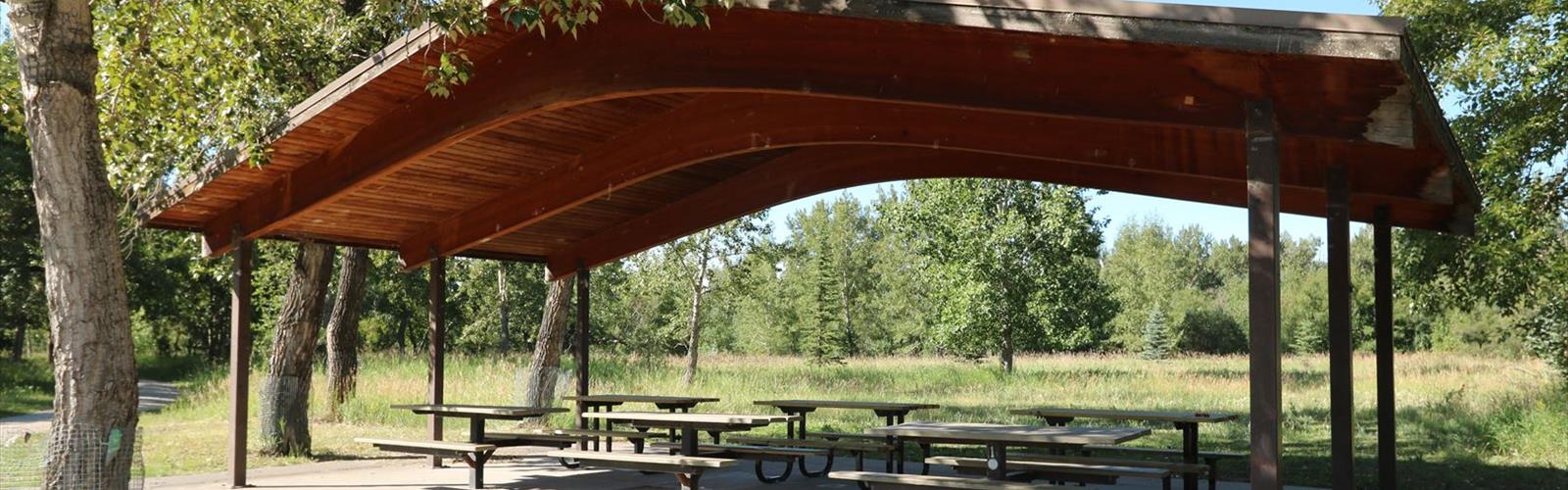
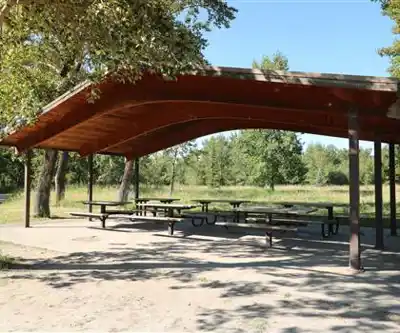
The flat terrain and wide main trails make Carburn Park one of the more practical options in the Calgary area for families with young kids or mixed-ability groups. Strollers move easily on the primary pathways, and benches and picnic tables are scattered throughout the park at regular intervals. Open grassy areas near the parking lots give kids room to run between trail sections.
Picnic facilities include tables and fire pits in designated areas, which makes it easy to turn a trail visit into a longer outing. The wildlife is engaging for younger visitors — ducks, geese, and beavers hold attention in a way that more abstract natural features don't always manage.
Access and Practical Information
Carburn Park is located in southeast Calgary and is easily reached via major city roads. The main parking area is spacious and has room for trailers if you're bringing watercraft. Smaller access points around the park's perimeter offer additional parking options depending on which section you want to start from.
The park is open year-round with no entrance fee. Dogs are welcome but must stay on leash throughout to protect wildlife and keep the experience comfortable for other visitors. Waste stations are available at key locations. The park doesn't have on-site washrooms or water fountains, but its urban location means both are available a short drive away in the surrounding neighborhoods.
No special gear is required beyond footwear suited to the conditions — trail runners or light hikers work well in dry seasons, while waterproof boots are worth it in spring or after rain. Binoculars make a real difference if wildlife watching is part of the plan, and the pond and river views give photographers plenty to work with across all four seasons.
The Essential Hiking Checklist
Everything you need for your next hike. Bilingual, printable, 1 page.
Get your free hiking checklistRecommended gear for this trail
As an Amazon Associate I earn from qualifying purchases.


Ready to go?
Everything you need to know before you goStarting Point
The carburn park trails can be accessed from the east side of the park near the intersection of 17th Avenue SE and 68th Street SE.
When?
How much?
As an Amazon Associate I earn from qualifying purchases.
Affiliate links — LGPO may earn a commission at no extra cost to you.
- Hiking shoes Essential
- → Salomon Elixir Tour Mid WP · 203.38 $
- Layered clothing Essential
- Rain jacket Essential
- Trekking poles
- → Black Diamond Trail Ergo Cork · 69.99 $
- Headlamp
- → Petzl Actik Core 625 · 103.95 $
FAQ - Frequently asked questions
Everything you need to knowSimilar hikes nearby
Discover other trails you might enjoy
Auburn Bay Lake
Calgary & Area
Douglas Fir Trail E
Calgary & Area
Mount Douglas Park
Calgary & Area
Yamnuska Ridge & CMC Valley Trailhead
Calgary & Area
River Park Off Leash Dog Park
Calgary & Area
Mt Lorette Ponds
Calgary & Area
Hiking near Calgary
120 trails to explore ~8 km away
We work hard to provide the most up-to-date and error-free data possible. If something seems incorrect, let us know! Your contribution helps the whole community.
Hikers' opinions
Be the first to review!
No hiker has shared their experience yet. Share your impressions and help other hikers!