
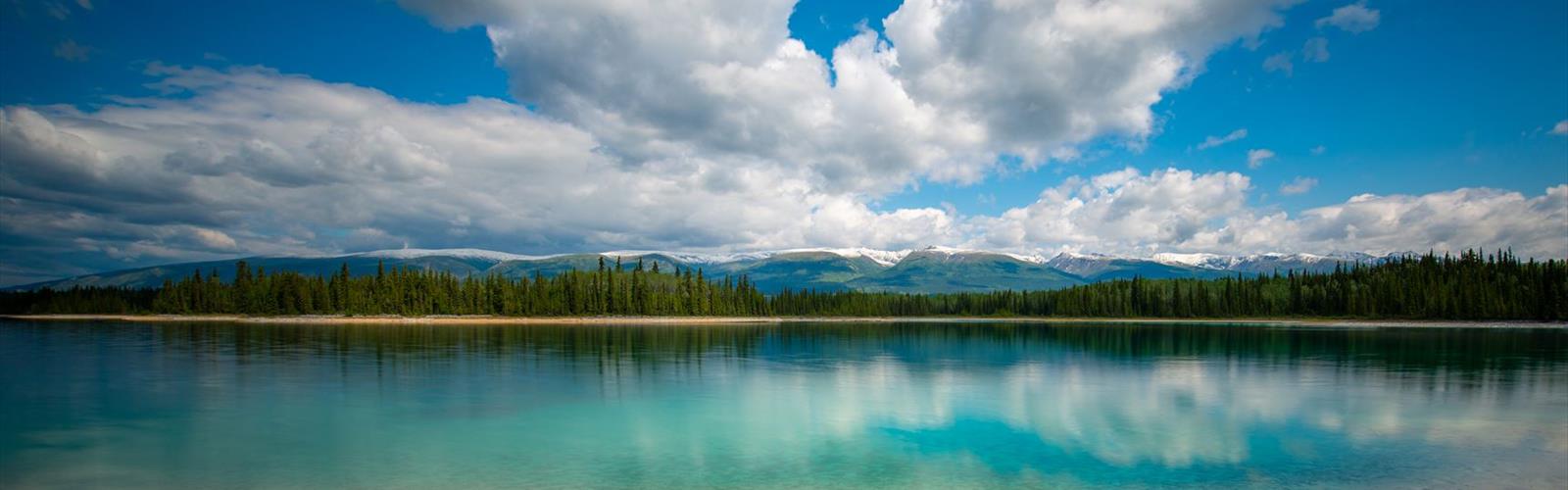

Ready to explore Boya Lake? Here's everything you need to know before you go!
Discover the trail
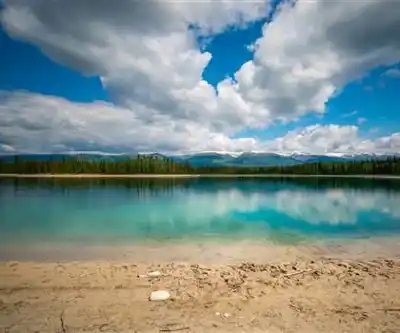
Photos: Daniel Ramminger from Heidelberg, Germany — CC BY 2.0 (Wikimedia Commons)
Trail description
Boya Lake Provincial Park is one of those places that genuinely stops you in your tracks the first time you see it. Tucked into the remote wilderness of northern British Columbia about 150 kilometers north of Dease Lake along Highway 37 — the Stewart-Cassiar Highway — this park centers on a lake with water so intensely turquoise it looks like something out of the Caribbean rather than the boreal north. The color is real, and it comes from fine glacial sediments suspended in the water. It photographs beautifully, but nothing quite prepares you for seeing it in person.
At just over 5,000 hectares, Boya Lake Provincial Park is compact enough that you can experience its highlights without any serious backcountry commitment. That's part of what makes it so appealing — the scenery is genuinely spectacular, and it's accessible to a wide range of visitors.
The Lakeshore Trail
The main hiking route here is the Lakeshore Trail, a 1.5-kilometer path that hugs the water's edge and keeps those famous turquoise waters in view for most of the walk. With only 20 meters of elevation gain and an estimated time of around 30 minutes, this is firmly in easy territory — well-suited for families with kids, casual hikers, or anyone who just wants to stretch their legs and take in the scenery without working too hard for it.
The trail moves through mixed boreal forest — white spruce, trembling aspen, and paper birch make up most of the canopy — with regular openings that frame the lake and give you spots to stop and take it all in. The surface alternates between soft forest floor covered in moss and lichen and occasional rocky sections where the path dips closer to the water. Several small peninsulas and quiet bays break up the shoreline, creating natural rest spots and good angles for photography.
The understory along the trail includes Labrador tea, blueberry bushes, and various wildflowers during the short but vivid northern growing season. It's the kind of walk where you find yourself moving slowly not because it's difficult, but because there's always something worth pausing for.
Additional Trails and Inland Exploration
Beyond the Lakeshore Trail, the park offers additional paths that venture slightly inland and provide different perspectives on the landscape. These routes wind through typical northern boreal habitat and give you a sense of the broader ecosystem beyond the lake's immediate shoreline. They're a good option if you want to extend your time in the park or explore away from the water for a while.
Wildlife
Boya Lake sits in prime wildlife habitat. Moose are a regular presence, particularly in the shallow bays during early morning and evening hours. Beavers maintain active lodges around the lake's perimeter, and their work creates additional wetland areas that attract waterfowl. Common loons are a fixture here — their calls carry well across the water and set the tone for the whole experience. You'll also find various ducks, grebes, and other waterfowl using the lake during migration. In the surrounding forest, gray jays, boreal chickadees, and warblers are common during summer months.
The lake supports a healthy rainbow trout population, which thrives in the cold, clean water. Fishing is a legitimate draw for many visitors, though you'll need a valid British Columbia fishing license.
Water Activities
The clarity and color of the water make Boya Lake an excellent destination for paddling. Canoe and kayak are both well-suited to the lake, which features small islands and protected coves worth exploring. Conditions are generally calm, making it manageable for paddlers with moderate experience. Water temperatures stay cold even in summer — this is northern BC — but the visibility and that remarkable turquoise color make it a memorable paddle regardless. The lake's size means you can cover most of the shoreline in a half-day, though most people end up lingering longer than planned.
Camping and Facilities
The park offers both vehicle-accessible campsites and walk-in sites for those wanting more privacy. Each site comes with a picnic table and fire pit, and there are basic washroom facilities on-site. The fire pits are genuinely useful here — northern evenings get cool even in midsummer, and sitting around a fire after a day on the water is a natural way to end things. There's typically deadfall available in the surrounding forest, but bringing your own dry wood is a reliable backup.
Day-use areas with picnic tables are positioned to take advantage of the best lake views, making Boya Lake worth a stop even if you're just passing through on Highway 37 and not planning to stay overnight.
Getting There and Planning Your Visit
The park is accessible via Highway 37, the Stewart-Cassiar Highway, roughly 150 kilometers north of Dease Lake. The summer window — generally late June through early September — is when conditions are most comfortable and all facilities are operating. Daytime temperatures in peak summer often reach the low 20s Celsius, though evenings cool off noticeably. Daylight hours are long this far north, which gives you plenty of time for hiking, paddling, and wildlife watching.
Come prepared for mosquitoes and blackflies, especially during calm, warm stretches — this is standard for northern boreal environments and worth planning around with appropriate clothing and repellent.
The park's remote location means the nearest significant services are back in Dease Lake to the south. Arrive with enough food, water, and emergency supplies to be self-sufficient, especially if you're planning an overnight stay.
The Essential Hiking Checklist
Everything you need for your next hike. Bilingual, printable, 1 page.
Get your free hiking checklistRecommended gear for this trail
As an Amazon Associate I earn from qualifying purchases.


Ready to go?
Everything you need to know before you goStarting Point
The start of the trails at the boya lake can be accessed by travelling east on Highway 3 from Princeton, British Columbia. The trailhead is located approximately 18 kilometres from Princeton.
When?
How much?
As an Amazon Associate I earn from qualifying purchases.
Affiliate links — LGPO may earn a commission at no extra cost to you.
- Hiking shoes Essential
- → Salomon Elixir Tour Mid WP · 203.38 $
- Layered clothing Essential
- Rain jacket Essential
- Trekking poles
- → Black Diamond Trail Ergo Cork · 69.99 $
- Headlamp
- → Petzl Actik Core 625 · 103.95 $
FAQ - Frequently asked questions
Everything you need to knowSimilar hikes nearby
Discover other trails you might enjoy

Mount Robson
Northern British Columbia
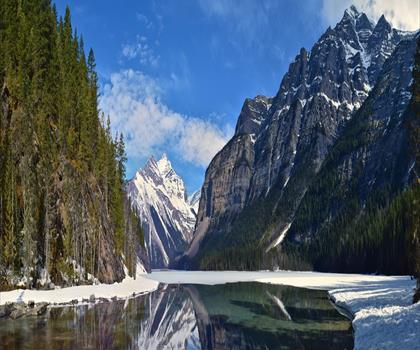
Kinney Lake
Northern British Columbia

Liard Hot Springs Lodge
Northern British Columbia
Kinuseo Falls
Northern British Columbia
Hudson Bay Mountain
Northern British Columbia
Stone Mountain Provincial Park
Northern British Columbia
Hiking near Jasper
82 trails to explore ~995 km away
We work hard to provide the most up-to-date and error-free data possible. If something seems incorrect, let us know! Your contribution helps the whole community.
Hikers' opinions
Be the first to review!
No hiker has shared their experience yet. Share your impressions and help other hikers!