
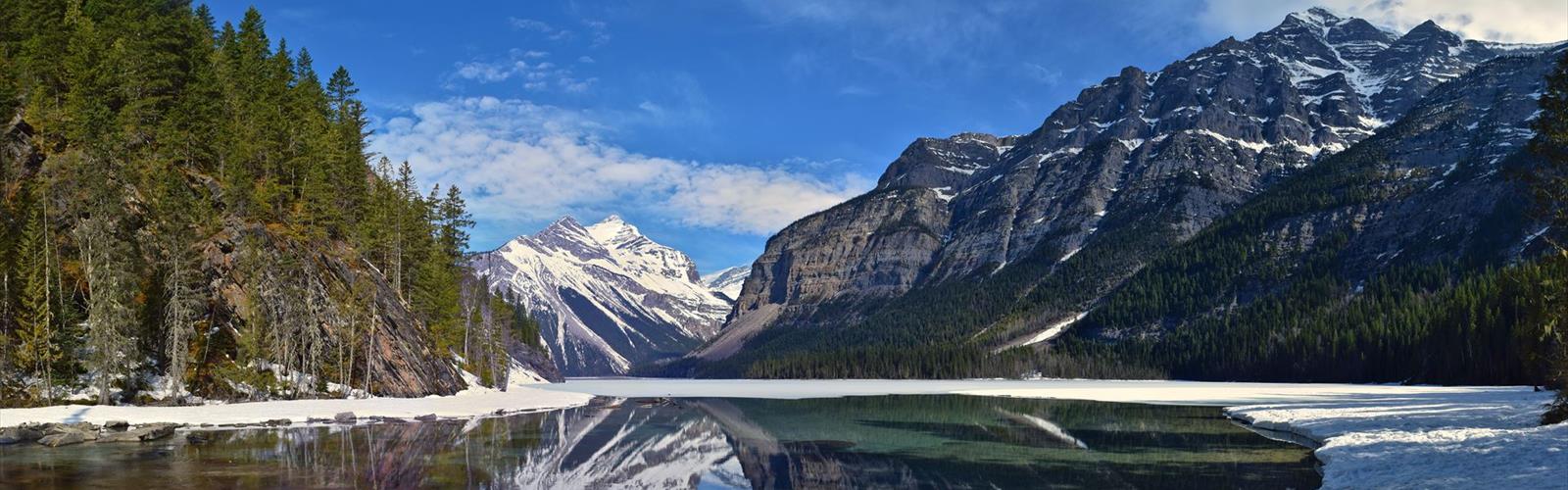

Ready to explore Kinney Lake? Here's everything you need to know before you go!
Discover the trail
Trail description
Kinney Lake sits within Mount Robson Provincial Park in Northern British Columbia, offering one of the most accessible and rewarding day hikes in the Canadian Rockies. This pristine alpine lake serves as the first major destination along the famous Berg Lake Trail, making it perfect for hikers who want a taste of the park's spectacular scenery without committing to a multi-day backpacking trip.
The lake lies in the shadow of Mount Robson, the highest peak in the Canadian Rockies, creating a dramatic backdrop that changes throughout the day as light shifts across the massive limestone and quartzite faces. What makes Kinney Lake special isn't just its stunning setting, but its accessibility—the trail delivers you to genuine wilderness beauty with relatively modest effort, making it one of the region's most satisfying hiking experiences.
The Trail Experience
The hike to Kinney Lake follows the first section of the renowned Berg Lake Trail, covering the initial stretch of this world-class route. This well-maintained path offers a moderate hiking experience suitable for most fitness levels, with the elevation gain spread unevenly along the route, including some steeper sections that will get your heart rate up.
The trail begins at the Berg Lake trailhead and immediately immerses you in the dense temperate rainforest that characterizes this region. You'll walk through towering stands of Engelmann spruce, subalpine fir, and western hemlock, with the forest floor carpeted in moss and ferns that thrive in the moist mountain environment. The path is wide and well-graded, making it easy to focus on the surroundings rather than watching your footing.
For most of the journey, the trail meanders alongside the Robson River, which provides a constant soundtrack of rushing water. The river itself is a highlight—fed by glacial melt from Mount Robson's upper reaches, it runs a distinctive milky turquoise color that contrasts beautifully with the dark forest. Several viewpoints along the way offer glimpses of the water through the trees, and you'll cross a few small tributaries on sturdy wooden bridges.
The forest environment creates an almost cathedral-like atmosphere, with filtered sunlight streaming through the canopy and the soft forest floor cushioning each step. Massive fallen logs, some centuries old, create natural benches and demonstrate the incredible scale of the old-growth forest. The air carries the rich scent of decomposing wood and fresh vegetation, while the sound of the nearby river creates a peaceful ambiance that makes the hiking feel effortless.
Wildlife and Natural Features
Wildlife sightings are common along this route, adding an element of excitement to every hike. Keep your eyes open for black bears, which frequent the area especially during berry season, and mountain goats on the rocky slopes above. The forest supports populations of mule deer, and you might spot pika among the rockslides. Bird life is abundant, with gray jays, Clark's nutcrackers, and various woodpecker species commonly seen and heard.
The geological features along the trail tell the story of this landscape's formation. Massive rockslides and exposed cliff faces reveal the power of glacial carving, while the U-shaped valley profile becomes increasingly apparent as you approach the lake. Small waterfalls cascade down the valley walls, especially during snowmelt season, creating temporary ribbons of white against the dark rock.
Arriving at Kinney Lake
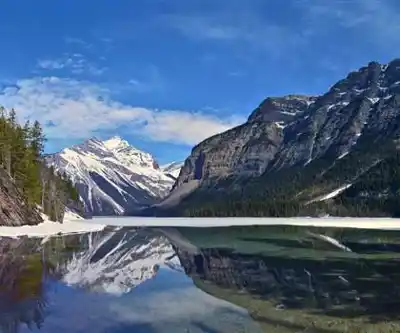
The forest opens dramatically as you approach Kinney Lake, revealing the full scope of the surrounding peaks. The lake stretches out before you with crystal-clear waters that mirror the towering mountains on all sides. On calm days, the reflections are so perfect they create an almost disorienting sense of symmetry.
The lake itself sits at the base of a classic glacial valley, carved by ice over thousands of years. The steep valley walls rise directly from the water's edge, creating an intimate feeling despite the grand scale of the landscape. Mount Robson dominates the view to the southeast, though you're still too close to see the famous peak in its entirety—that vista comes later on the Berg Lake Trail.
Several informal trails lead around the lake's perimeter, offering different vantage points for photography or simply taking in the scenery. The north shore provides the most comfortable spots for resting or having a snack, with fallen logs serving as natural benches. The water is remarkably clear, allowing you to see well into the depths, though it remains cold year-round due to its glacial origins.
The lake's setting creates a natural amphitheater effect, with avalanche chutes and steep rock faces rising on all sides. During different times of day, the lighting transforms the scene completely—morning light illuminates the eastern faces while evening brings a warm glow to the western slopes. The interplay of light and shadow across the water creates constantly changing photographic opportunities.
Planning Your Visit
The trail is typically snow-free from late May through October, with peak conditions from July through September. Early season hiking may encounter muddy sections and lingering snow patches, while late fall brings the possibility of icy conditions. Weather in this region can change rapidly, so pack layers even on seemingly perfect days.
A waterproof jacket is essential, as afternoon thunderstorms are common during summer months. The forest provides good protection from wind, but conditions can be quite different at the lake itself, which sits in a more exposed position. Sturdy hiking boots are recommended, as the trail can be muddy in places and rocky near the lake.
The trailhead includes parking facilities, though spaces fill quickly during peak summer weekends. Arriving early in the morning not only ensures parking but also provides the best lighting conditions for photography and the highest likelihood of calm water for reflections. Early starts also increase your chances of wildlife sightings, as many animals are most active during the cooler morning hours.
This trail serves as an excellent introduction to hiking in the Canadian Rockies, offering a genuine wilderness experience without requiring advanced hiking skills or specialized equipment. The well-maintained path and moderate distance make it suitable for families with older children, while the spectacular payoff satisfies even experienced hikers looking for a shorter day out. Remember to follow Leave No Trace principles throughout your visit, packing out all trash and maintaining appropriate distances from any wildlife you encounter.
The Essential Hiking Checklist
Everything you need for your next hike. Bilingual, printable, 1 page.
Get your free hiking checklistRecommended gear for this trail
As an Amazon Associate I earn from qualifying purchases.


Ready to go?
Everything you need to know before you goStarting Point
The kinney lake trails are located in the kinney lake Provincial Park, which is about a 2-hour drive from Vancouver. To get to the park, take Highway 1 east to Hope and then follow Highway 3 north to Princeton. The park is located about 10 km north of Princeton on Highway 3.
When?
How much?
As an Amazon Associate I earn from qualifying purchases.
Affiliate links — LGPO may earn a commission at no extra cost to you.
- Hiking shoes Essential
- → Salomon Elixir Tour Mid WP · 203.38 $
- Layered clothing Essential
- Rain jacket Essential
- Trekking poles
- → Black Diamond Trail Ergo Cork · 69.99 $
- Headlamp
- → Petzl Actik Core 625 · 103.95 $
FAQ - Frequently asked questions
Everything you need to knowSimilar hikes nearby
Discover other trails you might enjoy

Mount Robson
Northern British Columbia

Liard Hot Springs Lodge
Northern British Columbia
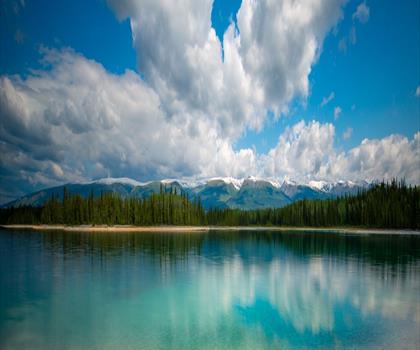
Boya Lake
Northern British Columbia
Kinuseo Falls
Northern British Columbia
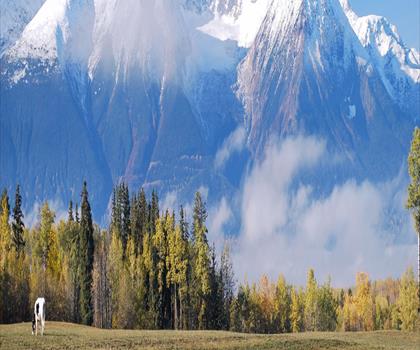
Hudson Bay Mountain
Northern British Columbia
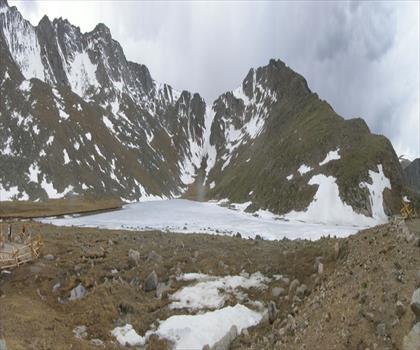
Stone Mountain Provincial Park
Northern British Columbia
Hiking near Jasper
82 trails to explore ~78 km away
We work hard to provide the most up-to-date and error-free data possible. If something seems incorrect, let us know! Your contribution helps the whole community.
Hikers' opinions
Be the first to review!
No hiker has shared their experience yet. Share your impressions and help other hikers!