

Ready to explore Centennial Ridges Trail? Here's everything you need to know before you go!
Discover the trail
Trail description
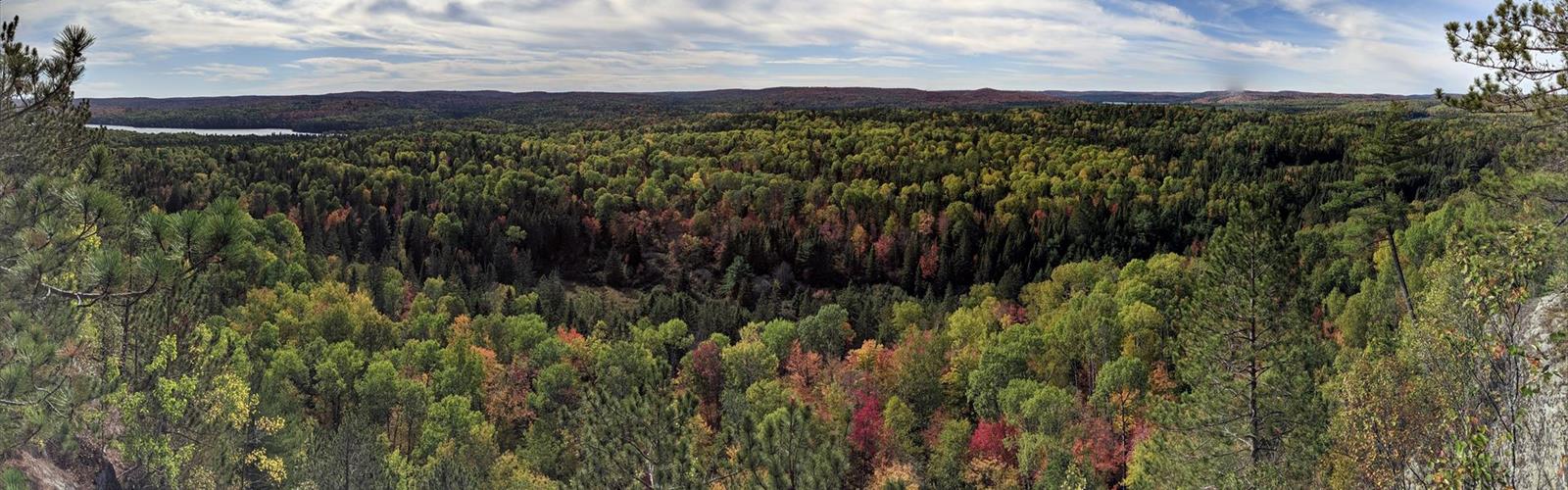
The Centennial Ridges Trail is one of Algonquin Park's most rewarding hikes, and it earns that reputation through a combination of dramatic exposed ridgelines, sweeping panoramic views, and terrain that feels genuinely wild despite being accessible to most hikers. This 10.4-kilometer loop travels through some of the park's most striking Canadian Shield landscape, where ancient granite meets boreal forest and the horizon opens up in ways that remind you just how vast Ontario's wilderness really is.
What Makes This Trail Stand Out
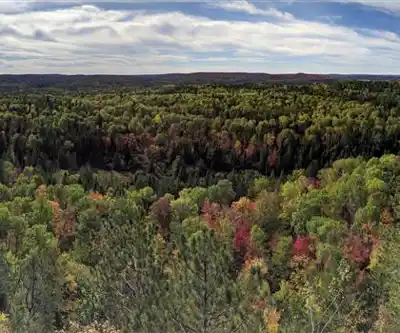
The defining feature of the Centennial Ridges Trail is its series of exposed ridgelines. These aren't just brief clearings in the trees — they're broad, open expanses of bare granite that rise above the surrounding forest and offer unobstructed views across the Almaguin Highlands, Muskoka, and Parry Sound regions. From the highest points, you're looking out over a landscape of interconnected lakes, unbroken forest canopy, and distant ridgelines that fade into blue haze on clear days. The scale of it is genuinely impressive, and it's the kind of view that makes the climb feel completely worth it.
The trail's design takes full advantage of this topography. Rather than a single summit payoff, the route strings together multiple lookout points, each facing a slightly different direction and offering a fresh perspective. You're not seeing the same view repeated — you're building a fuller picture of the park's geography with each new vantage point.
Terrain and Trail Experience
The 300-meter elevation gain is distributed throughout the loop, which means the climbing never feels relentless but does add up to a moderate-to-strenuous overall effort. The trail starts in dense mixed forest, where white pines, maples, and paper birch form a solid canopy overhead. As you gain elevation, the forest gradually gives way to the open granite ridges that define the trail's character.
The rocky sections demand attention, particularly when wet — the granite can be genuinely slippery after rain, and some of the exposed sections have steep drop-offs nearby. The trail is well-marked with clear blazes, so route-finding isn't a concern, but solid footing is. Sturdy hiking boots with good grip make a real difference here. Between the ridges, the trail drops back into sheltered valleys where small streams and wetland pockets break up the terrain and provide a welcome contrast to the open, windswept ridgetops.
The exposed ridges can also be significantly cooler and windier than the forest sections, even on warm days. Layering is worth the extra weight in your pack, especially if you plan to spend time at the lookouts.
Wildlife and Natural Features
Algonquin Park's wildlife reputation is well-earned, and the Centennial Ridges Trail passes through habitat that supports a good cross-section of the park's animal populations. Moose frequent the wetland areas and lake edges along the route, and white-tailed deer are commonly spotted in the forest sections, particularly early in the morning. Black bears are present throughout this part of the park, so proper food storage and basic bear awareness are standard practice here.
The varied terrain creates distinct wildlife zones. The sheltered forest sections are active with songbirds and smaller mammals, while the open ridges attract ravens and raptors that use the thermals rising off the warm granite. Loons are a near-constant presence on the lakes visible from the lookouts, and their calls carry clearly across the water. Pileated woodpeckers are heard regularly in the mature forest sections, and the park's warbler populations make spring and fall visits particularly good for birding.
The plant communities shift noticeably with elevation. Protected lower sections support balsam fir, white spruce, and paper birch, while the exposed ridgetops host specialized communities adapted to wind, sun, and thin soil. In autumn, the forest sections turn into a full display of red, orange, and gold that makes the views from the ridges even more striking.
Planning Your Visit
The 10.4-kilometer loop typically takes 4 to 6 hours to complete, depending on your pace and how long you linger at the lookouts. Starting early is worthwhile — the morning light on the granite ridges is excellent for photography, and you'll have the best lookouts to yourself before the midday crowds arrive.
Water sources along the trail are limited, so carry more than you think you'll need, especially in warmer months. The combination of elevation gain and trail length makes hydration genuinely important, not just a precaution. A map or GPS device is a good idea even though the trail is well-blazed — cell coverage throughout Algonquin Park is unreliable, and having a backup navigation option is standard practice in the park.
Let someone know your plans before you head out, check weather conditions beforehand (wet rock on exposed ridges is a real hazard), and follow Leave No Trace principles throughout. The Centennial Ridges Trail sees heavy use, and keeping it in good shape depends on every visitor doing their part.
The Essential Hiking Checklist
Everything you need for your next hike. Bilingual, printable, 1 page.
Get your free hiking checklistRecommended gear for this trail
As an Amazon Associate I earn from qualifying purchases.


Ready to go?
Everything you need to know before you goStarting Point
The centennial ridges trail is located in the town of Schomberg, Ontario. To get to the start of the trails, take Highway 9 north from Toronto and exit onto County Road 50. The trailhead is located on the east side of the road.
When?
How much?
As an Amazon Associate I earn from qualifying purchases.
Affiliate links — LGPO may earn a commission at no extra cost to you.
- Hiking shoes Essential
- → Salomon Elixir Tour Mid WP · 203.38 $
- Layered clothing Essential
- Rain jacket Essential
- Trekking poles
- → Black Diamond Trail Ergo Cork · 69.99 $
- Headlamp
- → Petzl Actik Core 625 · 103.95 $
FAQ - Frequently asked questions
Everything you need to knowSimilar hikes nearby
Discover other trails you might enjoy
Opeongo Lake
Algonquin Park, Almaguin Highlands, Muskoka and Parry Sound
Barron Canyon
Algonquin Park, Almaguin Highlands, Muskoka and Parry Sound
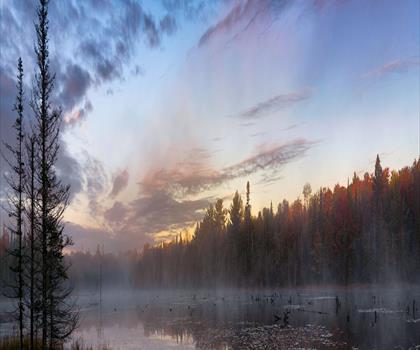
Doe Lake
Algonquin Park, Almaguin Highlands, Muskoka and Parry Sound
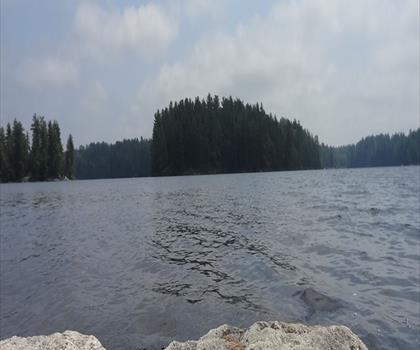
Hardy Lake
Algonquin Park, Almaguin Highlands, Muskoka and Parry Sound
Whitestone Lake
Algonquin Park, Almaguin Highlands, Muskoka and Parry Sound
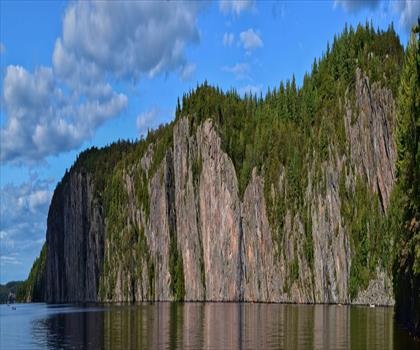
Canisbay Lake
Algonquin Park, Almaguin Highlands, Muskoka and Parry Sound
Hiking near Barrie
146 trails to explore ~164 km away
We work hard to provide the most up-to-date and error-free data possible. If something seems incorrect, let us know! Your contribution helps the whole community.
Hikers' opinions
Be the first to review!
No hiker has shared their experience yet. Share your impressions and help other hikers!