
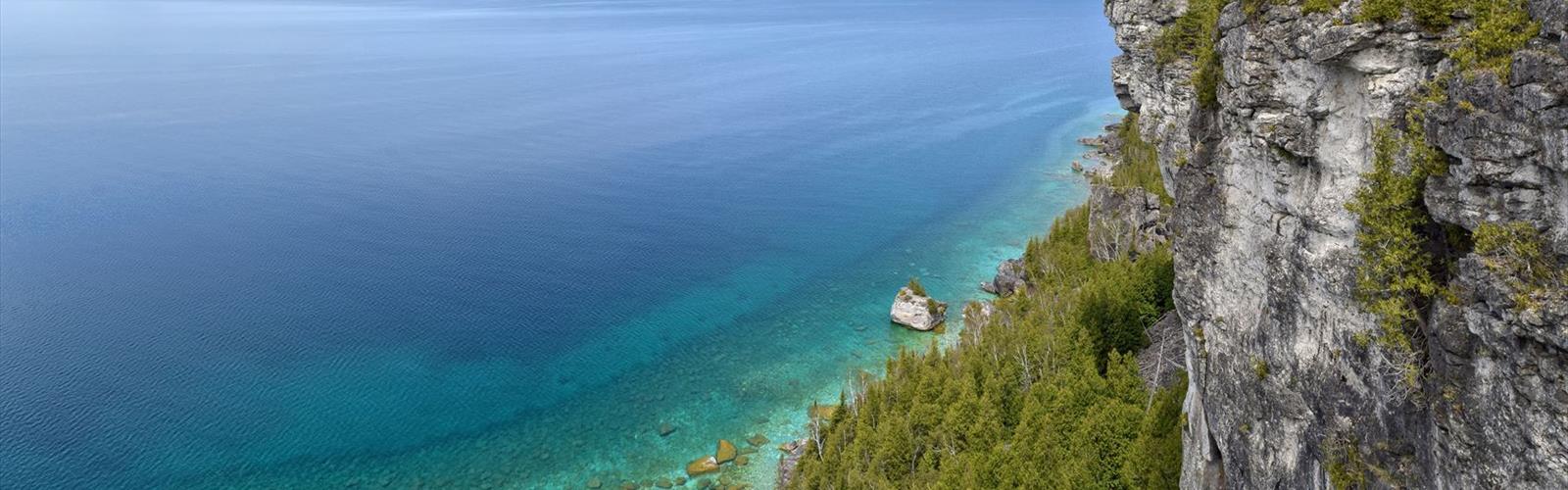

Ready to explore Lion’s Head Provincial Park? Here's everything you need to know before you go!
Discover the trail

Trail description
Lion's Head Provincial Park sits on the rugged eastern shore of the Bruce Peninsula, where dramatic limestone cliffs plunge into the crystal-clear waters of Georgian Bay. This compact park packs serious visual punch, offering some of Ontario's most spectacular cliff-top hiking within easy reach of the charming village of Lion's Head.
The Trail Experience
The park's main draw is the section of the Bruce Trail that winds along the cliff edge, delivering you to the famous Lion's Head Lookout with about 70 meters of elevation gain. Don't let the modest elevation change fool you—this hike demands respect. The trail follows the cliff edge closely, with steep drop-offs and uneven limestone terrain that requires sure footing and constant attention.
You'll start your hike through mixed forest before emerging onto the exposed clifftop, where the landscape transforms dramatically. The white limestone beneath your feet contrasts sharply with the deep blue of Georgian Bay stretching to the horizon. Ancient cedar trees cling to the cliff face, their gnarled roots finding purchase in cracks in the rock that formed millions of years ago when this area lay beneath a tropical sea.
The trail surface varies from packed earth in the forested sections to bare rock along the cliff edge. Expect some scrambling over limestone ledges and navigating around larger boulders. The rock can be slippery when wet, and the exposed sections offer no protection from wind or weather. What makes this hike special isn't technical difficulty—it's the constant presence of that stunning cliff-edge environment and the way the landscape keeps revealing new perspectives of Georgian Bay.
Lion's Head Lookout
The Lion's Head Lookout serves as the dramatic climax of your hike, perched high above Georgian Bay with unobstructed views across the water. From this vantage point, you can see the distinctive profile that gives the area its name—the cliff formations that early settlers thought resembled a lion's head when viewed from the water.
The lookout provides sweeping panoramas of the bay's turquoise waters, dotted with islands and bounded by the distant shores of Manitoulin Island on clear days. Below, waves crash against the limestone base of the cliffs, while above, the sky seems impossibly vast. This viewpoint offers some of the finest photography opportunities on the entire Bruce Peninsula, particularly during golden hour when the limestone cliffs glow warm against the blue water.
The platform itself sits right at the cliff edge, giving you that heart-stopping sense of height and exposure. On calm days, the water below appears almost tropical in its clarity, while stormy weather transforms the scene into something wild and dramatic, with waves sending spray high up the cliff face.
Wildlife and Natural Features
The park's diverse ecosystems support an impressive array of wildlife despite its relatively small size. Peregrine falcons nest on the cliff faces and can often be spotted soaring on thermals rising from the heated rock. These magnificent raptors were reintroduced to the area after near-extinction and now represent one of Ontario's conservation success stories.
White-tailed deer move quietly through the forested sections, particularly during early morning and evening hours. The mixed forest canopy includes maple, birch, and oak, while the cliff-edge environment supports specialized plant communities adapted to the harsh conditions of wind, sun, and thin soil.
Ancient eastern white cedars, some hundreds of years old, grow directly from cracks in the limestone. These hardy survivors create dramatic silhouettes against the sky and provide nesting sites for various bird species. The rare hart's-tongue fern finds refuge in the cool, moist crevices of the cliff face, while wild columbine adds splashes of color to the rock gardens in spring.
Keep your eyes open for chipmunks and red squirrels in the forested sections, and listen for the distinctive calls of ravens that often ride the cliff-face updrafts. The transition zone between forest and cliff edge creates unique habitat conditions that support species from both environments.
Geological Significance
The limestone cliffs that define Lion's Head Provincial Park tell the story of an ancient tropical sea that covered this region roughly 400 million years ago. The layered rock formations visible in the cliff faces contain fossilized remains of coral reefs and marine creatures from that distant era. Glacial action during the last ice age carved and polished these formations, creating the dramatic landscape you see today.
The Niagara Escarpment, of which these cliffs form a part, represents one of the most significant geological features in eastern North America. The escarpment's influence extends far beyond geology, creating unique microclimates and supporting plant communities found nowhere else in the region.
Walking along the cliff edge, you're literally stepping through geological time. The horizontal layers in the rock face mark different periods of ancient sea level changes, while the vertical cracks and fissures show where ice and water have worked to split the stone over millennia.
Planning Your Visit
The Bruce Trail through Lion's Head Provincial Park connects with the extensive trail network that runs the length of the Bruce Peninsula, but the park's highlights can be experienced in a focused visit of a few hours. The trail to Lion's Head Lookout and back makes an excellent half-day adventure, allowing time to fully appreciate the views and explore the cliff-edge environment.
Sturdy hiking boots with good grip are essential for navigating the limestone surfaces safely. The rock can be surprisingly slippery, especially when damp from morning dew or recent rain. Bring plenty of water, as the exposed cliff sections offer no shade and can be surprisingly hot during summer months.
Weather conditions change rapidly along the cliff edge, where the moderating influence of Georgian Bay can create sudden temperature shifts and wind changes. Pack layers and be prepared for conditions that may differ significantly from those in the parking area or nearby village. The wind can be particularly strong at the lookout, so secure any loose items.
A camera is practically mandatory—the photographic opportunities here rank among the finest in Ontario. The changing light throughout the day creates dramatically different moods, from the soft pastels of dawn to the golden warmth of sunset reflecting off the limestone cliffs. The park's location makes it an ideal base for exploring the broader Bruce Peninsula region, with the village of Lion's Head offering accommodations and services just minutes away from the trailhead.
The Essential Hiking Checklist
Everything you need for your next hike. Bilingual, printable, 1 page.
Get your free hiking checklistRecommended gear for this trail
As an Amazon Associate I earn from qualifying purchases.


Ready to go?
Everything you need to know before you goStarting Point
The Lion's Head Provincial Park is located in Ontario. To get to the start of the trails, take Highway 6 to Lion's Head and turn onto Mill Road. The park is located on the left side of the road.
When?
How much?
As an Amazon Associate I earn from qualifying purchases.
Affiliate links — LGPO may earn a commission at no extra cost to you.
- Hiking shoes Essential
- → Salomon Elixir Tour Mid WP · 203.38 $
- Layered clothing Essential
- Rain jacket Essential
- Trekking poles
- → Black Diamond Trail Ergo Cork · 69.99 $
- Headlamp
- → Petzl Actik Core 625 · 103.95 $
FAQ - Frequently asked questions
Everything you need to knowSimilar hikes nearby
Discover other trails you might enjoy
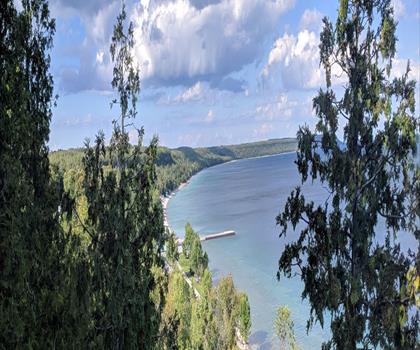
Cabot Head Provincial Park
Bruce Peninsula, Southern Georgian Bay and Lake Simcoe
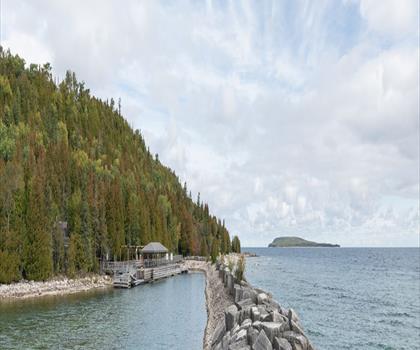
Head of Trails, Flowerpot Island
Bruce Peninsula, Southern Georgian Bay and Lake Simcoe
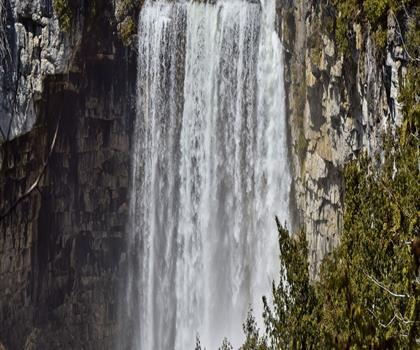
Hoggs Falls
Bruce Peninsula, Southern Georgian Bay and Lake Simcoe
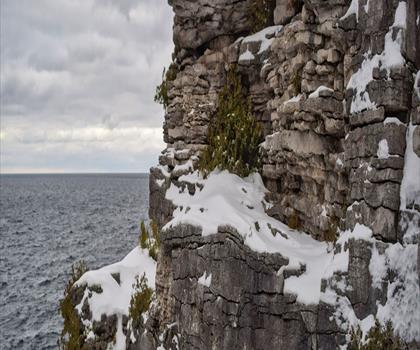
The Grotto, Bruce Peninsula National Park
Bruce Peninsula, Southern Georgian Bay and Lake Simcoe
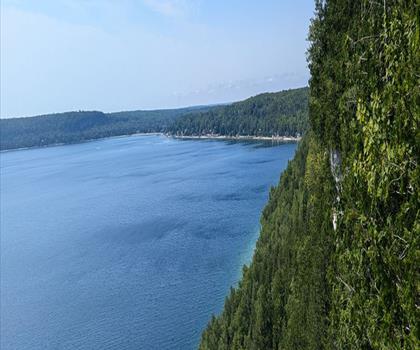
Lion’s Head Lookout Trail
Bruce Peninsula, Southern Georgian Bay and Lake Simcoe
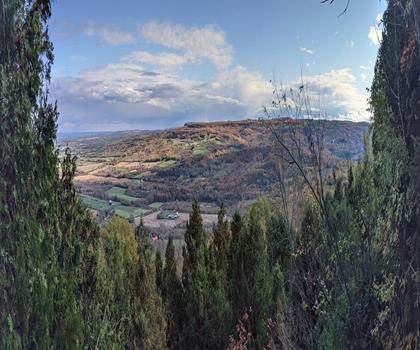
Pretty River Valley Provincial Park
Bruce Peninsula, Southern Georgian Bay and Lake Simcoe
Hiking near Barrie
146 trails to explore ~139 km away
We work hard to provide the most up-to-date and error-free data possible. If something seems incorrect, let us know! Your contribution helps the whole community.
Hikers' opinions
Be the first to review!
No hiker has shared their experience yet. Share your impressions and help other hikers!