
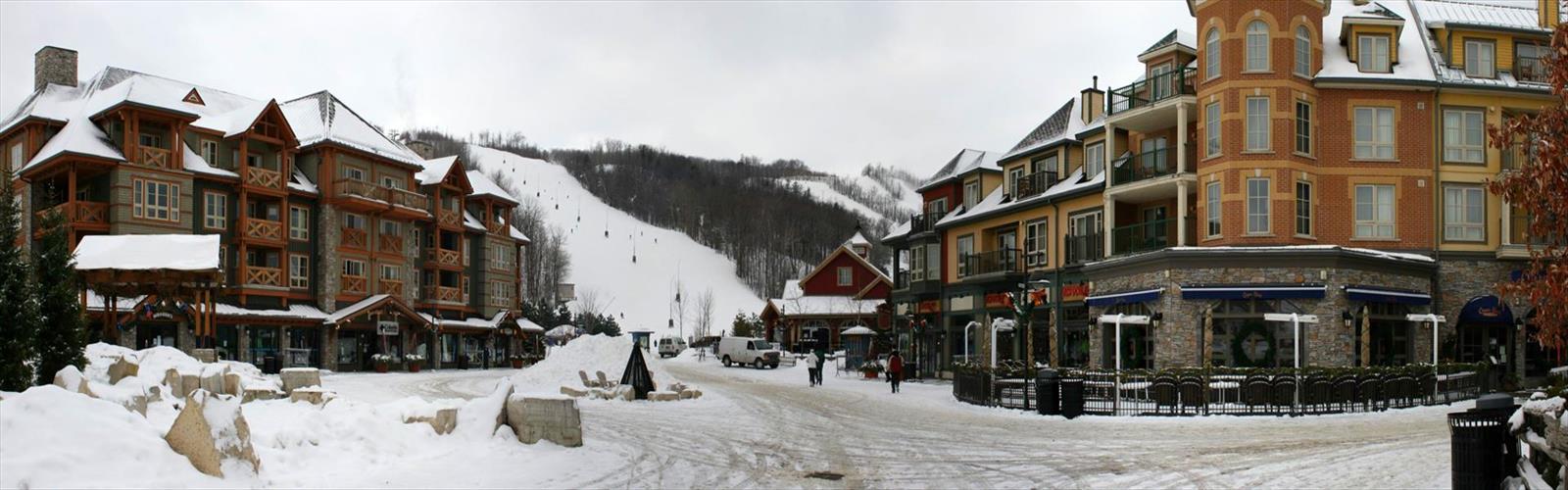

Ready to explore The Blue Mountains? Here's everything you need to know before you go!
Discover the trail
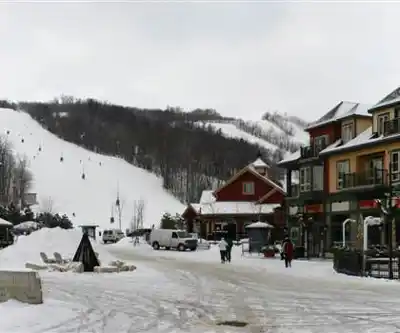
Trail description
The Blue Mountains sits within one of Ontario's most compelling outdoor regions, where the Niagara Escarpment — a UNESCO World Biosphere Reserve — shapes the landscape into something genuinely dramatic. This isn't a single peak or a single trail. It's a region where limestone cliffs, forested ridges, and the waters of Georgian Bay all come together to create a hiking destination that rewards repeat visits across every season.
The name itself comes from a visual phenomenon you'll notice on clear days: atmospheric perspective layers the ridgelines in progressively deeper shades of blue as they recede toward the horizon. It's most striking from the higher viewpoints along the escarpment edge, and it's the kind of thing that makes you stop mid-stride and just look.
The Trail Network
The Blue Mountains region features over 285 km of public trails woven throughout the area. The Bruce Trail Blue Mountains Section represents the sixth major stage of Canada's oldest long-distance hiking trail system, stretching approximately 67 kilometres from Lavender to Craigleith. Individual sections and loops range from easy 4 km day hikes to more challenging multi-hour routes, giving you flexibility based on fitness level and time available. The Bruce Trail backbone connects with side trails and loop options that let you adjust distance and difficulty depending on what you're after.
The Terrain
The surface underfoot changes as you move through the route. Along the escarpment edge, you're walking on exposed limestone — uneven, occasionally slick when wet, and requiring steady footing through boulder sections and crevices. These are the sections that deliver the views. Lower down and through the forested stretches, the trail softens into packed earth winding through mixed hardwood and coniferous forest, crossing small streams and opening into meadow patches. The contrast between these two environments is part of what makes the hike interesting rather than monotonous. The terrain features the deep crevices of Nottawasaga Lookout, steep slopes near Blue Mountain Resort, and spectacular caves carved by water working on limestone bedrock over millennia.
What You'll Actually See
The escarpment cliffs are the headline feature, and the views from the ridge toward Georgian Bay are genuinely worth the climb. On clear days the bay reads as a deep, saturated blue that explains the region's name all over again. The cliff-top environment also supports specialized plant communities — hardy shrubs and thin-soil species that cling to rocky outcrops and don't exist anywhere else on the route.
The forested sections have their own appeal. Pileated woodpeckers work the deeper woods, and turkey vultures are a regular sight riding thermals above the escarpment. White-tailed deer move through the meadow edges, most reliably in early morning or toward evening. The limestone bedrock creates caves, crevices, and carved formations throughout — water has been working on this rock for a long time, and the results add a geological layer to the hike that goes beyond scenery.
Spring brings trilliums and bloodroot across the forest floor before the canopy closes in, along with waterfalls fed by snowmelt coming off the cliffs. Autumn is when this region draws its biggest crowds, and fairly so — the hardwood forest turns the ridgelines into something visible for miles, and the cooler temperatures make for ideal hiking conditions. Winter converts the trail network to snowshoe terrain, and the bare trees open sightlines that disappear entirely in summer.
The Bruce Trail
The Bruce Trail is Canada's oldest and longest marked footpath, tracing the Niagara Escarpment across southern Ontario over almost 900 kilometres. The Blue Mountains Section represents one of the trail's most scenic stages, traversing the highest points of the Niagara Escarpment. This flexibility makes the area work for a wide range of hikers, from families with kids to people looking for a more serious day out.
Getting There and Planning Your Visit
The Blue Mountains region sits within comfortable range of both Toronto and Barrie, making it a realistic day trip without an early-morning departure. Multiple trailheads provide access points along the network, so you're not locked into a single entry point or a fixed route length. This is useful if you're hiking with people of different fitness levels or want to string together a longer day from separate sections.
Accommodation in the area runs from small-town bed-and-breakfasts to full-service resorts, and the region operates as a year-round destination — downhill skiing and snowboarding take over the same terrain in winter, so infrastructure is well-developed regardless of when you visit. Georgian Bay's shoreline adds post-hike options: swimming in summer, or simply sitting at the water after a long day on the escarpment.
Trails can be muddy in early spring, and some sections may be temporarily closed during that period for erosion management — worth checking before you go if you're planning a late-April or early-May visit. The exposed cliff-top sections can be hot and unshaded in midsummer, so an early start pays off in July and August.
The Essential Hiking Checklist
Everything you need for your next hike. Bilingual, printable, 1 page.
Get your free hiking checklistRecommended gear for this trail
As an Amazon Associate I earn from qualifying purchases.


Ready to go?
Everything you need to know before you goStarting Point
the blue mountains is located in Ontario, Canada. To get to the start of the trails, take Highway 26 east from Collingwood to Thornbury. Turn left on First Street and drive to the end of the road.
When?
How much?
As an Amazon Associate I earn from qualifying purchases.
Affiliate links — LGPO may earn a commission at no extra cost to you.
- Hiking shoes Essential
- → Salomon Elixir Tour Mid WP · 203.38 $
- Layered clothing Essential
- Rain jacket Essential
- Trekking poles
- → Black Diamond Trail Ergo Cork · 69.99 $
- Headlamp
- → Petzl Actik Core 625 · 103.95 $
FAQ - Frequently asked questions
Everything you need to knowSimilar hikes nearby
Discover other trails you might enjoy
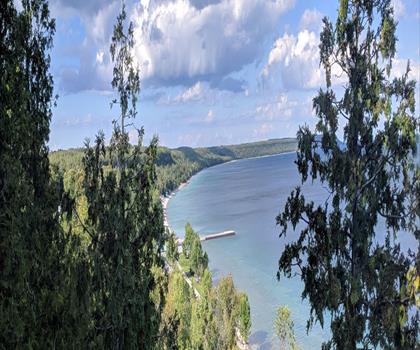
Cabot Head Provincial Park
Bruce Peninsula, Southern Georgian Bay and Lake Simcoe
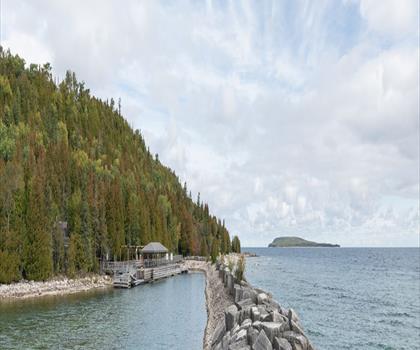
Head of Trails, Flowerpot Island
Bruce Peninsula, Southern Georgian Bay and Lake Simcoe
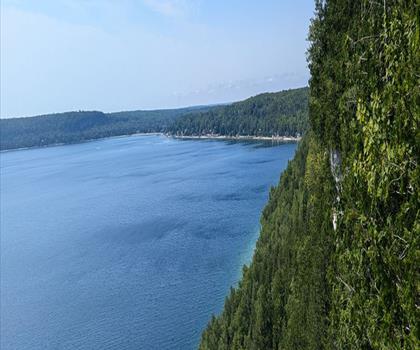
Lion’s Head Lookout Trail
Bruce Peninsula, Southern Georgian Bay and Lake Simcoe
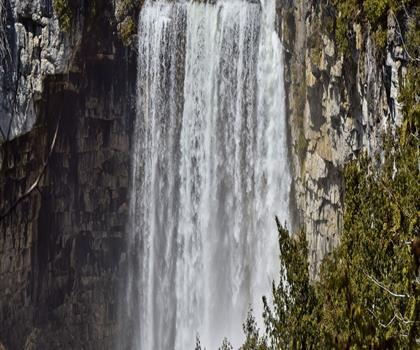
Hoggs Falls
Bruce Peninsula, Southern Georgian Bay and Lake Simcoe
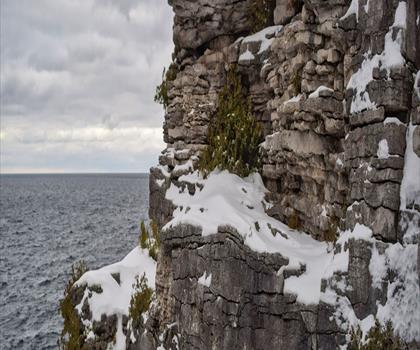
The Grotto, Bruce Peninsula National Park
Bruce Peninsula, Southern Georgian Bay and Lake Simcoe
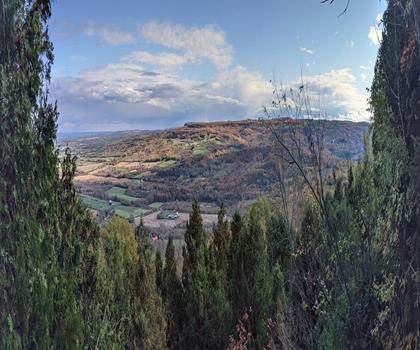
Pretty River Valley Provincial Park
Bruce Peninsula, Southern Georgian Bay and Lake Simcoe
Hiking near Barrie
146 trails to explore ~60 km away
We work hard to provide the most up-to-date and error-free data possible. If something seems incorrect, let us know! Your contribution helps the whole community.
Hikers' opinions
Be the first to review!
No hiker has shared their experience yet. Share your impressions and help other hikers!