
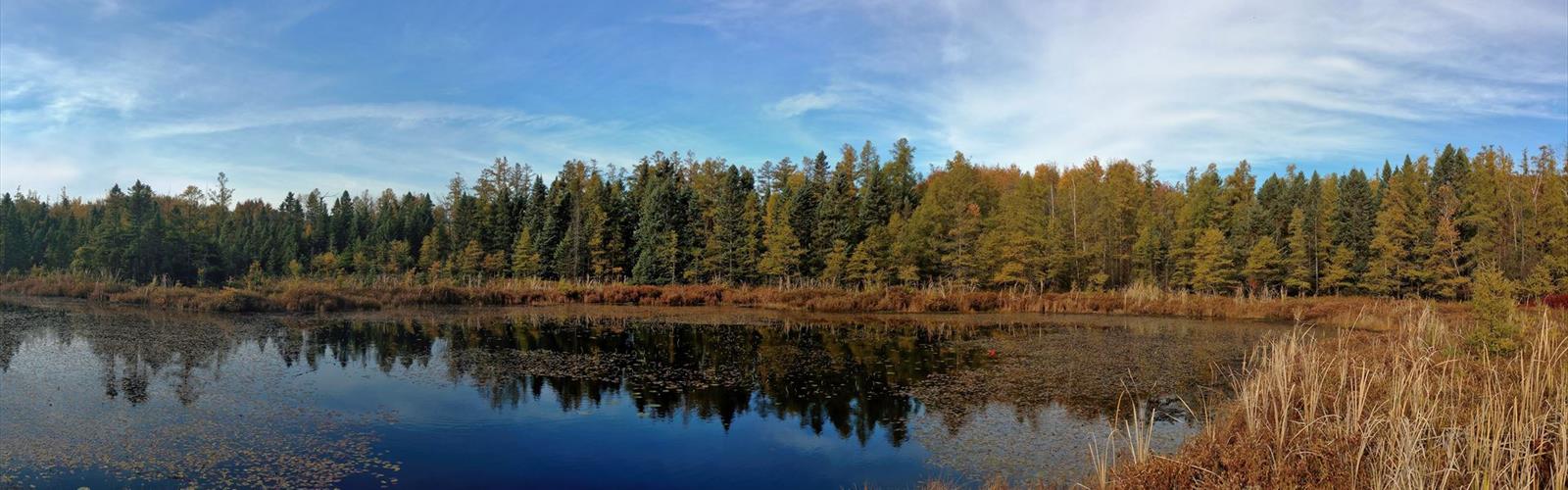

Ready to explore Hyde Park? Here's everything you need to know before you go!
Discover the trail

Trail description
Hill Top Trail at Hyde Park in Southwest Ontario: a rewarding short hike
Hyde Park in Southwest Ontario offers accessible outdoor experiences without requiring long drives or complex logistics. The Hill Top Trail is a reliable, well-reviewed option that gets you outside for quality time on natural terrain. This is the kind of place where you show up, lace up, and get moving — no summit to chase, no dramatic landscape to navigate around, just a solid stretch of trail that keeps you engaged for a comfortable hour to ninety minutes.
What the numbers tell you about the effort
At 2.9 km with 47 m of elevation gain and an estimated time of 1 to 1.5 hours, Hill Top Trail sits firmly in the easy-to-moderate range. The distance is short enough that you're never far from the trailhead, and the elevation gain is gentle — spread across 2.9 km, 47 m of climbing creates a natural, rolling feel: small rises and dips that give your legs something to respond to without ever pushing you into a hard effort.
That kind of terrain is more useful than it might sound. The minor grade changes keep your body engaged throughout the walk — you're not grinding up a steep pitch, but you're also not shuffling along a completely flat surface. The result is a pace that stays lively and comfortable, with just enough variation to make the outing feel active rather than monotonous.
How the effort actually feels on the ground
With a gentle elevation profile like this, the smartest approach is to start easy and stay consistent. On a short trail, it's tempting to push the pace from the beginning — but keeping your output steady from the first few minutes means you'll feel better at the halfway point and finish strong rather than fading. Let the small climbs come to you, shorten your stride slightly when the trail tips upward, and let your pace open back up naturally on the flatter sections.
Because the effort stays controlled throughout, Hill Top Trail is a good place to focus on the fundamentals of trail walking: posture, foot placement, breathing rhythm. On gentle terrain, there's no urgency forcing your hand, which means you can actually pay attention to how you're moving — something that pays off on harder trails later.
Who fits this trail well
Hill Top Trail works well for a wide range of hikers. If you're newer to trail walking and still building confidence on natural surfaces, the short distance and minimal elevation make this a low-pressure environment to develop your footing and pacing. If you're an experienced hiker looking for an active recovery day or a quick outing between bigger efforts, the one-hour-plus format fits easily into a busy schedule without stacking unnecessary fatigue.
It's also a practical choice for families or mixed-ability groups. When the trail doesn't demand a hard effort from anyone, the group tends to stay together, the pace stays social, and the focus shifts to the experience rather than the logistics of keeping everyone moving at the same speed.
Practical preparation for a trail like this
A short, gentle trail doesn't require heavy preparation, but a few basics make the outing more comfortable. Wear footwear you trust on natural surfaces — trail runners or light hiking shoes are more than enough here. Dress in layers you can adjust as you warm up, and bring water even for a one-hour walk; it's easy to underestimate how much a steady pace can dehydrate you, especially in warmer months.
Keep your kit simple and organized. There's no need to overload yourself for a 2.9 km outing, but having what you need — water, a light layer, and footwear with decent grip — means you can stay focused on the walk rather than managing discomfort. Trail conditions in Southwest Ontario can shift with weather, so checking conditions before you head out is always a reasonable habit, regardless of how short the route is.
User reviews and ratings
Hill Top Trail at Hyde Park has earned strong user ratings, with a 3.8-3.9 star rating from over 130 reviews. Hikers consistently praise the trail for its accessibility, manageable distance, and well-maintained conditions, making it a popular choice for both beginners and experienced walkers looking for a reliable short outing.
The value of a trail like this
Not every hike needs to be a big day out. Hill Top Trail offers something that's genuinely useful: a reliable, accessible route in Southwest Ontario where you can get an hour or more of quality time on natural terrain without a major time commitment. Whether you're using it to stay consistent between longer outings, introducing someone new to trail hiking, or simply stepping outside for a midweek reset, this is a trail that delivers exactly what it promises — a clean, comfortable walk that leaves you feeling better than when you started.
The Essential Hiking Checklist
Everything you need for your next hike. Bilingual, printable, 1 page.
Get your free hiking checklistRecommended gear for this trail
As an Amazon Associate I earn from qualifying purchases.


Ready to go?
Everything you need to know before you goStarting Point
To access the hiking trails, you can start at the main trailhead located at 1695 North Routledge Park, London, Ontario. There is a parking lot available at this address for convenience. Additionally, another entry point is accessible from the parking area at 1151 Gainsborough Road, London, Ontario. Both locations provide easy access to the trail network in the area.
When?
How much?
As an Amazon Associate I earn from qualifying purchases.
Affiliate links — LGPO may earn a commission at no extra cost to you.
- Hiking shoes Essential
- → Salomon Elixir Tour Mid WP · 203.38 $
- Layered clothing Essential
- Rain jacket Essential
- Trekking poles
- → Black Diamond Trail Ergo Cork · 69.99 $
- Headlamp
- → Petzl Actik Core 625 · 103.95 $
FAQ - Frequently asked questions
Everything you need to knowSimilar hikes nearby
Discover other trails you might enjoy

Lynn Valley Trails
Southwest Ontario

Point Pelee National Park High Point, Ontario
Southwest Ontario
Oxford Thames River Trail
Southwest Ontario

Pinery Provincial Park
Southwest Ontario
Ojibway Prairie Provincial Nature Reserve
Southwest Ontario
Springbank Park
Southwest Ontario
Hiking near Kitchener
142 trails to explore ~85 km away
We work hard to provide the most up-to-date and error-free data possible. If something seems incorrect, let us know! Your contribution helps the whole community.
Hikers' opinions
Be the first to review!
No hiker has shared their experience yet. Share your impressions and help other hikers!