
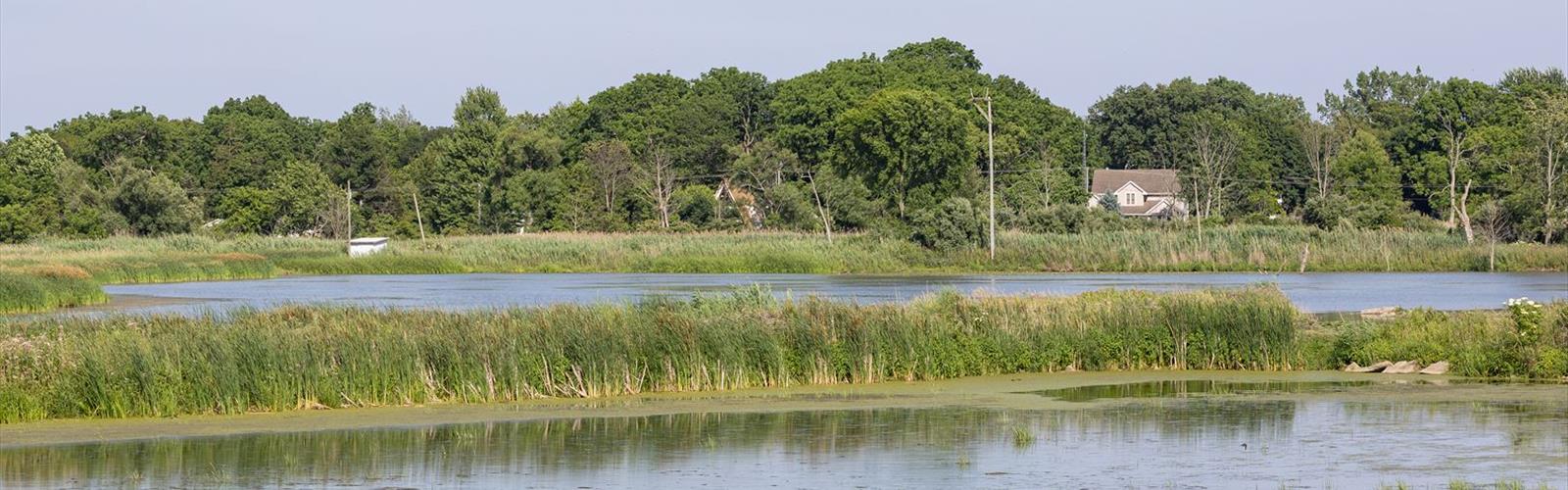

Ready to explore Rondeau Provincial Park? Here's everything you need to know before you go!
Discover the trail
Trail description
Rondeau Provincial Park sits on one of only two crescentic sand spits of its kind in North America—an 8-kilometer-long peninsula that juts into Lake Erie along the southwestern Ontario shoreline. That geography alone makes it worth the drive, but what really sets Rondeau apart is what grows on it: the largest tract of Carolinian forest in Canada. The park's 19 kilometers of trails give you access to all of it, from dense old-growth woodland to open beach to quiet marsh edges, with virtually no elevation change to slow you down.
With just 5 meters of total elevation gain across the entire trail network and an estimated 4 hours and 45 minutes to cover the full distance, this is genuinely accessible hiking. Families with kids, casual walkers, and serious birders all find something here. The flat terrain isn't boring—it's varied in a way that keeps you engaged, because the landscape shifts constantly between three very different environments as you move through the park.
The Carolinian Forest
The forest here doesn't look like anything else in Ontario. Carolinian woodland represents Canada's most southern forest type, and Rondeau holds the country's best remaining example of it. Walking through, you'll pass tulip trees, black walnuts, sassafras, and Kentucky coffee trees—species that feel more at home in the American South than in a Canadian provincial park. The understory fills in with spicebush and wild ginger, and the forest floor shifts with the seasons: spring wildflowers give way to deep summer shade, then to the rich, warm colors of fall foliage that Carolinian species produce unlike anything you'd see in a typical Ontario maple bush.
The underlying Berrien sand drains imperfectly, which is exactly why this specialized plant community thrives here. On the trails, that means firm footing through most of the forest, with some muddier stretches near the marsh during wet periods or early spring. The canopy varies from dense and cathedral-like under mature trees to more open clearings where you can watch the transition zones between habitat types—these edges tend to be some of the most interesting spots for wildlife.
Beach and Shoreline
Lake Erie's shoreline runs along the park's eastern edge, and hiking the beach is a completely different experience from the forest trails. The sand is firm and walkable, especially during cooler months, and the open exposure gives you long sightlines in both directions. The shoreline changes constantly—driftwood patterns shift after storms, sand formations rebuild themselves, and the light on the water varies dramatically depending on weather and time of day.
Wind exposure on the beach can be significant, particularly during cold fronts or storms rolling across Lake Erie. The lake's open water moderates temperatures somewhat, but conditions can change fast, so it's worth checking the forecast before heading out for a long beach stretch. On the bay side, Rondeau Bay offers calmer, more sheltered water and a quieter atmosphere—a good contrast to the open lake.
Wildlife and Birding
Rondeau holds designation as a Canadian Important Bird Area, and it earns it. The narrow peninsula acts as a funnel during spring and fall migrations, concentrating hundreds of species as they move through southwestern Ontario. Spring is the peak season for birding—migrants arrive in waves while resident species are starting their breeding cycles, and the combination produces some of the most impressive bird activity you'll find anywhere in the province.
The prothonotary warbler nests here at the northern edge of its range—a striking yellow bird that's genuinely rare in Canada and draws dedicated birders from across the country. The marsh areas support great blue herons, various duck species, and other waterfowl, particularly during migration. The edge habitat where forest meets marsh adds another layer of species diversity that neither environment alone would support.
White-tailed deer are common throughout the park and easy to spot. Coyotes are present but tend to stay out of sight during daylight. The variety of habitats packed into a relatively small area means almost any hike here turns into a wildlife encounter of some kind.
Seasonal Conditions
Spring brings the best birding and the first wildflower blooms, but also the muddiest trail conditions as the poorly drained soils release winter moisture slowly. Plan for wet sections on some routes and pack accordingly.
Summer opens up swimming in both Lake Erie and the calmer bay waters, and the Carolinian canopy provides real shade during hot stretches. The forest is at its densest and most lush, which makes the interior trails feel enclosed and cool even on warm days.
Fall is when the Carolinian species really show off—the foliage colors here are different from what you'd see in a typical Ontario hardwood forest, with sassafras and other southern species adding warm oranges and reds that aren't common this far north. Note that waterfowl hunting takes place in designated areas of the park during fall, so staying on marked trails and being aware of hunting schedules is important during that period.
Winter hiking is possible with the right preparation. Shoreline sections can become icy from wave spray, so traction devices are worth bringing if you plan to walk the beach in cold weather.
Access and Facilities
Established in 1894 as Ontario's second provincial park, Rondeau has had well over a century to develop its infrastructure. Trailheads are clearly marked, parking areas are maintained, and washroom facilities are available for day visitors. Campgrounds within the park make it easy to base yourself here for a multi-day visit and cover the full trail network at a relaxed pace.
A small private cottage community exists within the park boundaries, but it occupies a tiny fraction of the total area and has essentially no impact on the hiking experience—most visitors never notice it. The park's location near Chatham makes it a straightforward day trip from much of southwestern Ontario, with additional services and accommodations available in the surrounding Municipality of Chatham-Kent.
The connected trail system means you can customize your route based on time and interest, mixing forest, beach, and marsh sections in different combinations without risk of getting turned around—the sand spit's geography keeps you oriented naturally.
Services and amenities
This information may vary by season.
The Essential Hiking Checklist
Everything you need for your next hike. Bilingual, printable, 1 page.
Get your free hiking checklistRecommended gear for this trail
As an Amazon Associate I earn from qualifying purchases.


Ready to go?
Everything you need to know before you goStarting Point
The rondeau provincial park is located in southwestern Ontario. The park is about a two-hour drive from Toronto. To get to the start of the trails, take Highway 401 to Highway 2. Head south on Highway 2 and take the exit for rondeau provincial park.
When?
How much?
As an Amazon Associate I earn from qualifying purchases.
Affiliate links — LGPO may earn a commission at no extra cost to you.
- Hiking shoes Essential
- → Salomon Elixir Tour Mid WP · 203.38 $
- Layered clothing Essential
- Rain jacket Essential
- Trekking poles
- → Black Diamond Trail Ergo Cork · 69.99 $
- Headlamp
- → Petzl Actik Core 625 · 103.95 $
FAQ - Frequently asked questions
Everything you need to knowSimilar hikes nearby
Discover other trails you might enjoy
Lynn Valley Trails
Southwest Ontario
Point Pelee National Park High Point, Ontario
Southwest Ontario
Oxford Thames River Trail
Southwest Ontario
Pinery Provincial Park
Southwest Ontario
Ojibway Prairie Provincial Nature Reserve
Southwest Ontario
Springbank Park
Southwest Ontario
Hiking near Kitchener
142 trails to explore ~168 km away
We work hard to provide the most up-to-date and error-free data possible. If something seems incorrect, let us know! Your contribution helps the whole community.
Hikers' opinions
Be the first to review!
No hiker has shared their experience yet. Share your impressions and help other hikers!