


Ready to explore Parc naturel régional des Préalpes d'Azur? Here's everything you need to know before you go!
Discover the trail
Oh no! We don't have any photos 😢
This trail hasn't been captured yet. Be the first to share your adventure!Trail description
The Préalpes d'Azur Regional Nature Park covers 1,050 square kilometers of southeastern France, tucked into the Alpes-Maritimes department of Provence-Alpes-Côte d'Azur. It sits in a genuinely unusual position geographically — close enough to the Mediterranean coast to feel its influence, yet high enough in places to deliver real alpine terrain. That combination is what makes it worth the trip for hikers who want variety without driving between completely different destinations.
More than 100,000 people live within the park's boundaries, which means this isn't a remote wilderness preserve. Villages, historic mule paths, and cultivated fields are woven into the landscape alongside the wild sections. For hikers, that's actually an asset — the trail network connects communities and natural features in ways that add cultural texture to a day out on the trail.
Terrain and Landscape
The park organizes itself into three broad landscape types: mountains, valleys, and plateaus. Each one delivers a noticeably different hiking experience, and the transitions between them happen quickly as you gain or lose elevation.
The mountain sections offer the most dramatic terrain. The Alpes-Maritimes ranges within the park feature rocky peaks, exposed ridgelines, and significant elevation changes. On clear days, views stretch toward the Mediterranean in one direction and deeper into the Alps in the other — a combination you won't find in many places. The Préalpes d'Azur themselves, which give the park its name, form the central core: rolling hills and moderate summits that are accessible to a wider range of hikers without sacrificing the sense of being genuinely in the mountains.
The valley systems cut by the Tinée, Vésubie, Roya, and Bévéra rivers serve as natural entry points into the park. These corridors tend to be cooler in summer, often shaded, and follow historic routes that have connected mountain communities for centuries. They're good options for easier days or for acclimatizing before tackling higher terrain. The Mercantour, Valensole, and Grasse plateaus round out the landscape — elevated flatlands with wide-open views that are especially rewarding during spring when wildflowers cover the open ground.
What the Hiking Actually Feels Like
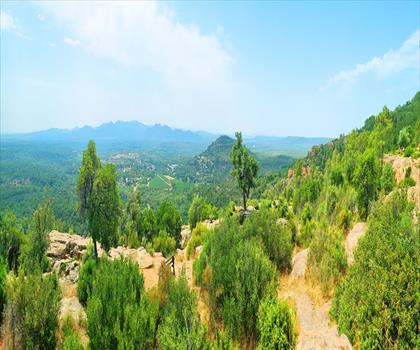
One of the things that stands out about hiking in the Préalpes d'Azur is how quickly the environment changes around you. You can start a route in Mediterranean scrubland — holm oaks, wild lavender, the smell of dry herbs baking in the sun — and work your way up through temperate forest into open alpine meadows, all in a single outing. The elevation gain of 800 meters that many routes involve is enough to move you through genuinely distinct ecosystems, not just subtle variations in the same landscape.
The trail surfaces vary accordingly. Lower sections often follow old mule tracks with compacted earth and stone, shaded by holm oak canopies. Higher up, trails become rockier and more exposed, with the kind of open ridgeline walking that rewards the climb. The umbrella pines that appear on many ridgelines and south-facing slopes are a distinctive visual marker — their wide, flat canopies filter the light in a way that feels particular to this part of France.
Lavender — both wild on sunny slopes and cultivated in some valley fields — adds a sensory dimension to hiking here that goes beyond what you see. The aromatic scrub on open terrain is one of those details that makes the Préalpes d'Azur feel distinctly Provençal rather than generically alpine. Oleanders mark water courses and seasonal streams along lower routes, useful natural indicators when you're planning water stops on longer hikes.
Climate and When to Go
The Mediterranean climate shapes the hiking calendar here in practical ways. Summers are hot and dry, which means water sources at higher elevations can be unreliable. If you're hiking in July or August, early starts are not optional — they're how you avoid the worst of the midday heat and make the most of the clearer morning light for views. The lack of summer rain also keeps trails dry and firm, which is a genuine advantage for footing on steeper terrain.
Winter brings mild, rainy conditions at lower elevations. Trails on clay soils get slippery, and some higher routes may be snow-covered or icy. That said, winter hiking in the park has real appeal: the air is clearer, the crowds are gone, and the landscape takes on a quieter character that's worth experiencing if you're comfortable with variable conditions.
Spring and fall are the most straightforward seasons for hiking here. Temperatures are moderate, weather patterns tend to be more stable, and the light is better for both views and photography. Spring brings the wildflower displays on the plateaus that the park is known for. Fall offers comfortable temperatures and the kind of settled weather that makes longer days on the trail more predictable.
Wildlife and Natural Features
The park's position as a transition zone between Mediterranean and alpine environments creates habitat diversity that supports a wide range of species. The edges between different ecosystem types — where scrubland meets forest, or forest meets open meadow — tend to be the most active areas for wildlife. Early morning and late afternoon are the most productive times for observation, as with most mountain environments.
The combination of southern and mountain species within the same hiking area is genuinely unusual. You're moving through overlapping ranges rather than a single defined habitat, which means the wildlife you might encounter shifts as you gain elevation in ways that reflect the broader ecological complexity of the park.
Access and Trail Networks
The park has multiple access points distributed across the Alpes-Maritimes, with trails radiating from villages throughout the territory. The network is designed with loop routes in mind, which reduces the logistical headache of shuttle arrangements and lets independent hikers plan straightforward out-and-back or circular days without needing local support.
Many of the best routes follow historic paths — old mule tracks and traditional connections between mountain villages that have been in use for generations. These aren't just scenic choices; they're often the most direct and well-maintained options, and they pass through villages where you can resupply or stop for a meal. The historical dimension adds something to the experience that purely wilderness trails don't offer: a sense that the landscape has been traveled and shaped by people over a long time, not just preserved apart from them.
The trail system accommodates hikers across a range of abilities, from easier valley walks to more demanding mountain routes with the kind of 800-meter elevation gain that will give your legs a genuine workout over a 2.5-hour push.
Recommended gear for this trail


Ready to go?
Everything you need to know before you goStarting Point
The trailhead for the Préalpes d'Azur Regional Nature Park is located in Saint-Martin-Vésubie, in the Alpes-Maritimes.
When?
How much?
- Hiking shoes Essential
- → Salomon Elixir Tour Mid WP · 203.38 $
- Layered clothing Essential
- Rain jacket Essential
- Trekking poles
- → Black Diamond Trail Ergo Cork · 69.99 $
- Headlamp
- → Petzl Actik Core 625 · 103.95 $
FAQ - Frequently asked questions
Everything you need to know
25 hikes under 2 hours from Montreal
Distance, elevation, parking and season for each one. The ones we go back to ourselves.
Get the guideSimilar hikes nearby
Discover other trails you might enjoy
Sentier du Littoral
Alpes-Maritimes
Le Sentier du Littoral
Alpes-Maritimes
Parc national du Mercantour
Alpes-Maritimes

Cascade De Clars
Alpes-Maritimes
Grotte De Mueron
Alpes-Maritimes
Gorges de la Siagne
Alpes-Maritimes
Hiking near Sydney
22 trails to explore ~5133 km away
We work hard to provide the most up-to-date and error-free data possible. If something seems incorrect, let us know! Your contribution helps the whole community.
Hikers' opinions
Be the first to review!
No hiker has shared their experience yet. Share your impressions and help other hikers!