

Ready to explore Hawaii Waipio Valley & Mauna Kea? Here's everything you need to know before you go!
Discover the trail

Trail description
Waipio Valley and Mauna Kea represent two of Hawaii's most spectacular and contrasting natural environments, offering visitors a chance to experience both lush tropical valleys and high-altitude volcanic landscapes in a single adventure. This unique combination showcases the incredible geological and ecological diversity that makes the Big Island such a remarkable destination for outdoor enthusiasts.
Waipio Valley
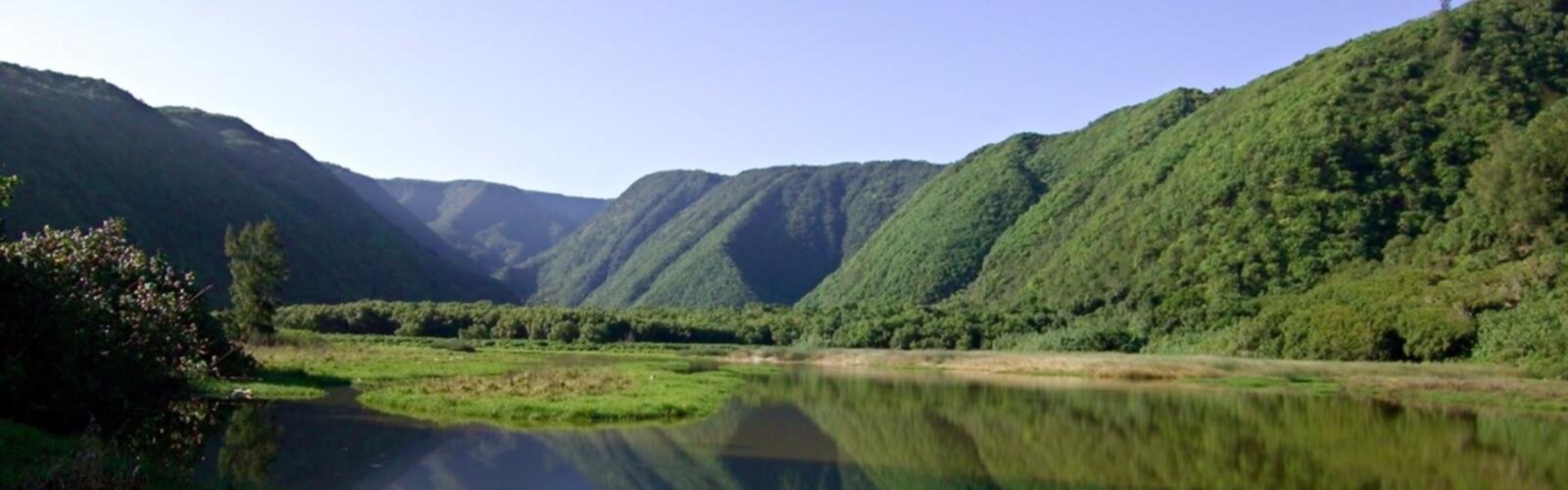
Known as the "Valley of the Kings," Waipio Valley stands as one of Hawaii's most sacred and historically significant locations. This dramatic valley cuts deep into the Kohala Mountains, creating a secluded world of towering waterfalls, black sand beaches, and ancient taro fields that have been cultivated for over a thousand years.
The valley floor stretches about a mile wide and six miles deep, enclosed by cliffs that rise up to 2,000 feet on three sides. Hi'ilawe Falls, the valley's crown jewel, plunges 442 feet in a spectacular free fall that's visible from the valley rim overlook. During heavy rains, dozens of temporary waterfalls cascade down the valley walls, creating an almost otherworldly atmosphere.
Access to the valley floor requires navigating an extremely steep paved road with grades reaching 25%. Most visitors choose to walk down rather than drive, as the descent and especially the climb back up can be challenging for both vehicles and drivers. The road leads to a landscape that feels frozen in time, where wild horses roam freely and traditional Hawaiian agriculture continues much as it has for centuries.
The valley's black sand beach stretches for nearly a mile, backed by ironwood trees and accessible via a short walk from the valley floor. The beach offers dramatic views of the Pacific Ocean, though swimming conditions can be dangerous due to strong currents and large waves. The contrast between the dark volcanic sand and the lush green valley walls creates some of the most photographically stunning scenery in Hawaii.
Mauna Kea
Rising 13,803 feet above sea level, Mauna Kea represents a completely different world from the tropical valley below. This dormant volcano, whose name means "white mountain" in Hawaiian, offers visitors a chance to experience alpine conditions in the middle of the Pacific Ocean. The summit area feels more like being on another planet than on a tropical island.
The journey to Mauna Kea's summit takes you through multiple climate zones, from tropical forests at sea level to alpine desert conditions above the tree line. The landscape transforms dramatically as you ascend, with native mamane and naio trees giving way to barren volcanic slopes covered in red and black cinder.
The summit area hosts one of the world's premier astronomical observatory complexes, with thirteen telescopes operated by eleven countries. The combination of high altitude, dry air, and minimal light pollution creates some of the best stargazing conditions on Earth. Even without telescopes, the night sky from Mauna Kea reveals thousands of stars invisible from lower elevations.
During winter months, snow often caps the summit, creating the surreal sight of a snow-covered peak rising from tropical surroundings. The temperature difference between sea level and summit can exceed 40 degrees Fahrenheit, making proper clothing essential for summit visits.
Terrain and Conditions
The contrast between these two environments couldn't be more dramatic. Waipio Valley offers a humid, tropical climate with temperatures typically ranging from the mid-70s to low 80s Fahrenheit year-round. The valley floor can be muddy, especially after rains, and the vegetation grows thick and lush. Streams cross the valley floor, and the overall environment feels primordial and untouched.
Mauna Kea presents alpine desert conditions above 9,000 feet, with thin air, intense UV radiation, and temperatures that can drop below freezing even in summer. The lack of vegetation and oxygen at altitude creates a stark, otherworldly landscape that challenges visitors accustomed to sea-level conditions.
Cultural and Historical Significance
Both locations hold deep cultural importance for Native Hawaiians. Waipio Valley served as a political and religious center for Hawaiian royalty and was home to thousands of people before Western contact. Many Hawaiian legends and historical events center on this valley, and it remains a place of great spiritual significance.
Mauna Kea is considered the most sacred mountain in Hawaiian culture, believed to be the realm of the snow goddess Poliahu and a place where earth and sky meet. The summit has been used for spiritual practices for centuries, and its cultural importance continues to influence modern management decisions about the mountain's use.
Wildlife and Ecosystems
The ecological diversity between these environments showcases Hawaii's unique position in the Pacific. Waipio Valley supports native Hawaiian waterbirds, including the endangered Hawaiian stilt and Hawaiian coot. The valley's streams and wetlands provide crucial habitat for these species, while the surrounding cliffs host seabirds and native forest birds.
Mauna Kea's high-altitude environment supports the endangered Hawaiian hoary bat and provides nesting habitat for the Hawaiian petrel. The mamane-naio forest on the mountain's slopes represents one of Hawaii's rarest ecosystems, supporting the endangered palila, a Hawaiian honeycreeper found nowhere else in the world.
Visitor Experience
Exploring both Waipio Valley and Mauna Kea in a single trip offers visitors an unparalleled opportunity to experience Hawaii's geological and ecological diversity. The journey from the lush valley floor to the stark summit landscape provides a condensed version of traveling from tropical to arctic conditions, all within the confines of a single island.
The physical demands vary significantly between locations. Waipio Valley requires moderate fitness for the steep road descent and ascent, while Mauna Kea's altitude can affect even well-conditioned visitors. The combination offers challenges for different fitness levels and interests, from cultural and historical exploration in the valley to astronomical and geological discovery on the mountain.
The Essential Hiking Checklist
Everything you need for your next hike. Bilingual, printable, 1 page.
Get your free hiking checklistRecommended gear for this trail
As an Amazon Associate I earn from qualifying purchases.


Ready to go?
Everything you need to know before you goWhen?
How much?
As an Amazon Associate I earn from qualifying purchases.
Affiliate links — LGPO may earn a commission at no extra cost to you.
- Hiking shoes Essential
- → Salomon Elixir Tour Mid WP · 203.38 $
- Layered clothing Essential
- Rain jacket Essential
- Trekking poles
- → Black Diamond Trail Ergo Cork · 69.99 $
- Headlamp
- → Petzl Actik Core 625 · 103.95 $
FAQ - Frequently asked questions
Everything you need to knowHiking near Victoria
93 trails to explore ~4262 km away
We work hard to provide the most up-to-date and error-free data possible. If something seems incorrect, let us know! Your contribution helps the whole community.
Hikers' opinions
Be the first to review!
No hiker has shared their experience yet. Share your impressions and help other hikers!