

Ready to explore Assabet River Rail Trail? Here's everything you need to know before you go!
Discover the trail
Trail description
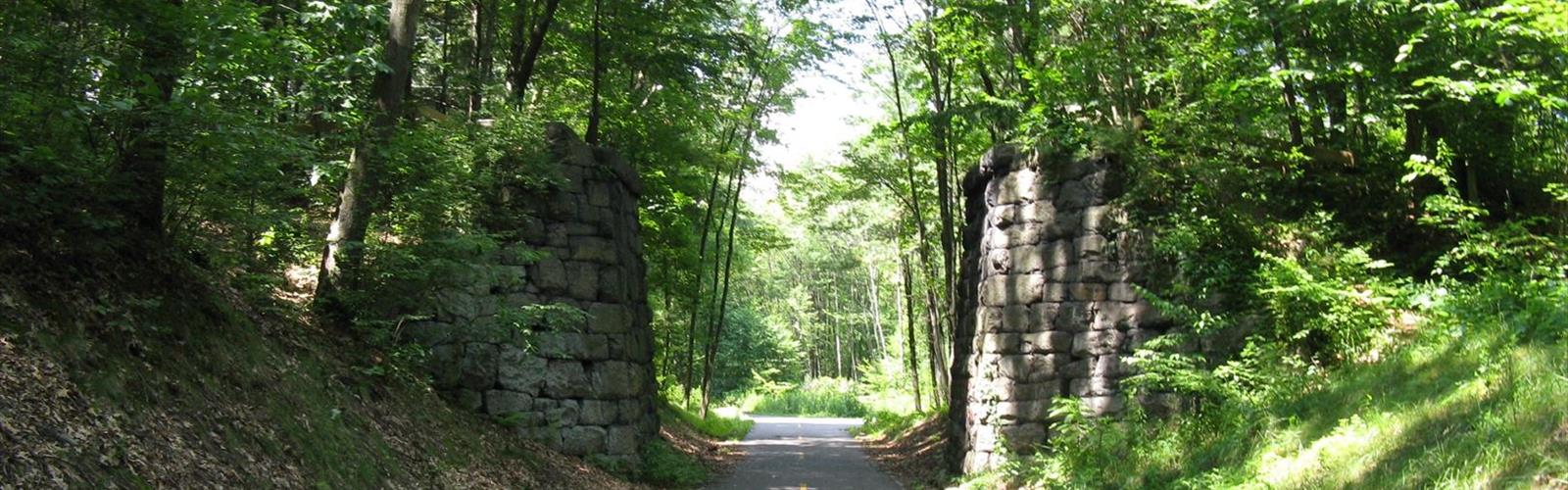
The Assabet River Rail Trail runs through five central Massachusetts communities—Marlborough, Hudson, Stow, Maynard, and Acton—along the converted right-of-way of the old Marlborough Branch of the Fitchburg Railroad. At 16 kilometers with only about 20 meters of elevation gain across its entire length, this is about as flat as trails get in New England, which makes it genuinely accessible for just about anyone: families with young kids, casual cyclists, runners, and hikers looking for a relaxed outing without the quad burn. Budget around four hours if you want to cover the full length at a comfortable pace with time to stop and look around.
What makes this trail interesting isn't dramatic scenery—it's the combination of railroad history, river corridor ecology, and the quiet pleasure of moving through a landscape that connects real communities rather than looping back on itself. The route parallels the Assabet River through much of its midsection before swinging north toward South Acton and south into Marlborough, giving you a genuine sense of traveling somewhere rather than just exercising in place.
Trail Sections and Current Status
The trail is still being developed, and understanding its current layout matters before you show up expecting a seamless end-to-end experience. There are two completed sections separated by a gap in the middle, so you'll want to pick your access point based on which section you're targeting.
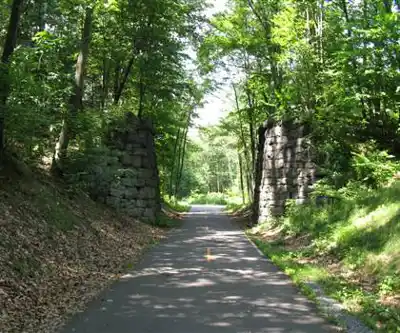
The southern section runs 5.1 miles from Marlborough to a Route 62 parking lot in north Hudson. Completed in 2005, this is the most polished stretch—twelve feet of smooth pavement with two-foot cleared shoulders on each side. It handles well in most conditions, though wet leaves in October and November can make the surface slippery, so watch your footing or your tire traction during fall visits. This section weaves through mixed hardwood forest and crosses near enough to the Assabet River that you'll get occasional water views and a good chance of spotting great blue herons at crossings.
The northern section connects the South Acton train station to Sudbury Road in Stow. The surface here is rougher—natural rather than paved—and it can get muddy after rain. It feels noticeably more remote than the southern stretch despite being close to residential neighborhoods, with dense tree cover that keeps things cool in summer and puts on a solid foliage show in fall. This end of the trail is also where active construction has been underway, with 3.4 miles being developed from the Acton station south and west to White Pond Road at the Maynard-Stow border. When that segment is finished to the same twelve-foot paved standard as the southern section, northern users will have a much more substantial continuous route to work with.
A roughly four-mile gap currently exists between west of Sudbury Road in Stow and Route 62 in Hudson. Missing bridges over two Assabet River crossings and private property restrictions make this middle section impassable, so a true end-to-end through-trip isn't possible right now. Check the ARRT website for current construction updates before heading out—conditions and accessible segments can change as work progresses.
Railroad History Along the Route
The trail's backstory adds a layer of interest that you don't get on purpose-built paths. The Marlborough Branch pushed progressively northward through the mid-1800s: Maynard by 1849, Hudson and Stow by 1850, Marlborough by 1855. Passenger service wound down in reverse order over the following century—Marlborough lost service in 1930, Hudson and Stow in 1939, and Maynard held on until 1958. Freight continued into the 1960s, and the last rails in Acton and Maynard weren't removed until 2014. Walking or riding the trail, you're moving through a corridor that was actively used by trains within living memory, and the straight, level geometry of the route still reflects its industrial origins.
Natural Features and Wildlife
The Assabet River is the trail's defining natural feature, though how much you actually see of it depends on where you are along the route. Dense riparian vegetation screens the water in some stretches, while other spots open up to clear views of the slow-moving river. The corridor is genuinely good for birding year-round: spring migration brings warblers and other songbirds through, summer is productive for watching nesting species near the water, and great blue herons are a reliable sight at river crossings in warmer months.
The surrounding forest is typical central Massachusetts mix—oak, maple, pine, and birch dominating the upland sections, with ferns, skunk cabbage, and seasonal wildflowers filling in the wetter areas near river crossings and wetland pockets. These habitat transitions happen gradually as you move along the trail, and they're worth paying attention to even if you're not a dedicated naturalist.
Access and Getting There
The Route 62 parking area in north Hudson is the most developed access point for the southern section, with room for multiple vehicles and a clear trail entry. For the northern end, the South Acton train station offers both parking and direct MBTA Fitchburg Line service, which makes this trail genuinely usable without a car—a rarity for suburban rail trails. Keep in mind that parking at South Acton can fill up during weekday commuting hours, so earlier arrival is smarter if you're visiting on a weekday.
The paved sections are wide enough for pedestrians and cyclists to share comfortably, but the flat, straight geometry does encourage faster cycling speeds, so stay aware of your surroundings and keep to the right. The trail is open to multiple user types simultaneously, and the accessible terrain makes it a solid choice for families, though younger children should stay close on sections where cyclists are moving quickly.
Seasonal Considerations
Spring brings mud and standing water to the unpaved northern section—manageable, but worth wearing appropriate footwear. Summer is the most comfortable season overall, with full tree cover keeping temperatures reasonable and wildlife activity at its peak. Fall offers the best foliage, but wet leaves on the paved southern section create real slip hazards for both hikers and cyclists. Winter use is possible on paved stretches, though snow and ice clearing varies by municipality, so conditions can be inconsistent depending on recent weather and which town you're in.
The Essential Hiking Checklist
Everything you need for your next hike. Bilingual, printable, 1 page.
Get your free hiking checklistRecommended gear for this trail
As an Amazon Associate I earn from qualifying purchases.


Ready to go?
Everything you need to know before you goStarting Point
The assabet river rail trail is located in Marlborough, Massachusetts. The start of the trails can be accessed from the intersection of Rt. 85 and Rt. 20.
When?
How much?
As an Amazon Associate I earn from qualifying purchases.
Affiliate links — LGPO may earn a commission at no extra cost to you.
- Hiking shoes Essential
- → Salomon Elixir Tour Mid WP · 203.38 $
- Layered clothing Essential
- Rain jacket Essential
- Trekking poles
- → Black Diamond Trail Ergo Cork · 69.99 $
- Headlamp
- → Petzl Actik Core 625 · 103.95 $
FAQ - Frequently asked questions
Everything you need to knowSimilar hikes nearby
Discover other trails you might enjoy

Crow Hill North Parking Area
Central Massachusetts
Tully Lake
Central Massachusetts
Blackstone River and Canal Heritage State Park
Central Massachusetts
nashua river rail trail
Central Massachusetts
Quabbin Reservoir
Central Massachusetts
West Hill Dam
Central Massachusetts
Hiking near Worcester
0 trails to explore ~22 km away
We work hard to provide the most up-to-date and error-free data possible. If something seems incorrect, let us know! Your contribution helps the whole community.
Hikers' opinions
Be the first to review!
No hiker has shared their experience yet. Share your impressions and help other hikers!