
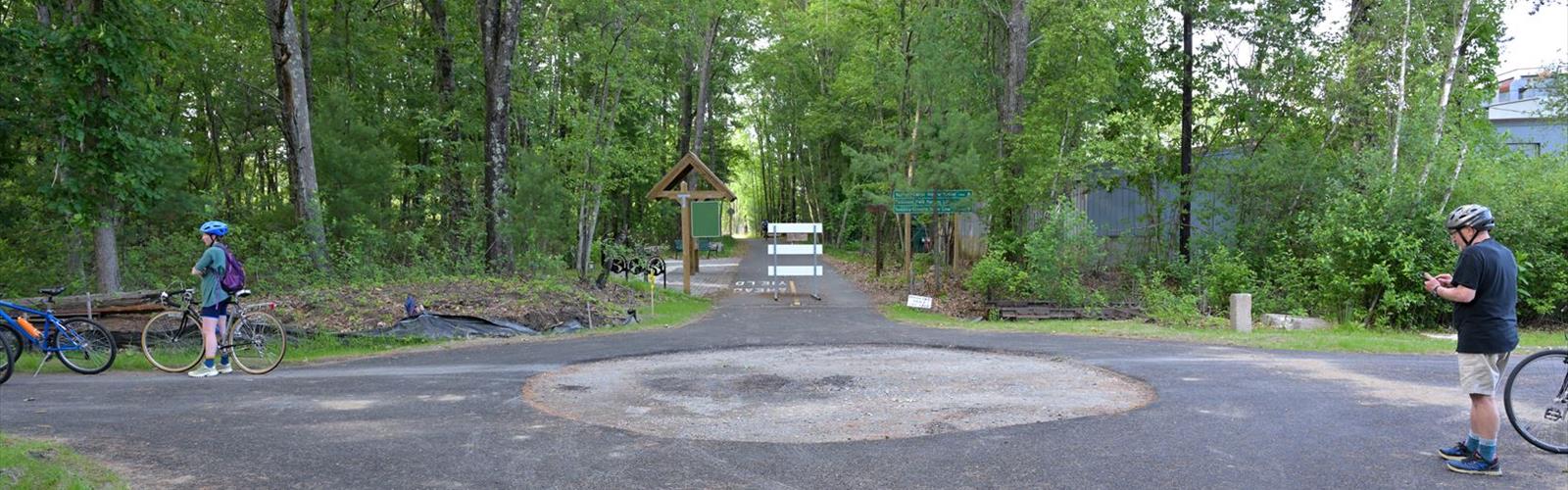

Ready to explore Mass Central Rail Trail? Here's everything you need to know before you go!
Discover the trail
Trail description
The Mass Central Rail Trail transforms a piece of Massachusetts railroad history into one of the state's most accessible and varied outdoor experiences. Stretching 104 miles across central Massachusetts, this rail-trail follows the corridor of the former Massachusetts Central Railroad, creating a gentle pathway that welcomes hikers, cyclists, and walkers of all abilities through the heart of the state.
With just 152 meters of total elevation gain across its entire length, the trail's flat profile is no accident — it's a direct inheritance from its railroad past. Trains demanded minimal grade changes, and that engineering legacy now benefits anyone who sets foot on the trail. You're not here to grind up switchbacks. You're here to move through the landscape at a pace that lets you actually notice it.
A Trail of Two Worlds
What makes the Mass Central Rail Trail genuinely interesting is how much the character of the route shifts as you move from east to west. The eastern sections near Boston weave through urban green corridors and suburban neighborhoods, making them a practical escape for city dwellers who want fresh air without a long drive. These stretches work well for families, casual walkers, and anyone easing into outdoor activity — the flat grade and accessible entry points lower the barrier considerably.
Push westward toward Northampton, and the trail becomes something else entirely. The density of the suburbs gives way to open farmland, dense woodlands, and quiet river valleys. The noise drops. The sky opens up. It genuinely feels like a different Massachusetts than the one most people picture.
Trail Surface and Terrain
The trail surface isn't uniform across its length, and that's worth knowing before you plan your outing. Some sections feature packed gravel, others are paved, and certain segments follow quiet rural roads where the original rail corridor couldn't be preserved. The variation keeps things interesting but also means your footwear and gear choices might shift depending on which section you're tackling.
The maintained condition of the trail makes it genuinely accessible year-round. The gentle grade means even less experienced hikers can cover meaningful distance without feeling wrecked at the end of the day. It's also a solid choice for anyone coming back from an injury or looking for a low-impact way to build up mileage.
Wildlife and Natural Diversity
The trail passes through multiple ecosystems along its length, and each one supports a different set of wildlife. The wetland sections are particularly active — great blue herons, red-winged blackbirds, and various waterfowl are regulars here, and these spots reward anyone willing to slow down and watch. The woodland stretches provide habitat for white-tailed deer, wild turkeys, and the usual cast of smaller forest animals. Early morning and late afternoon are consistently the best windows for wildlife watching, when animals are most active and trail traffic is lighter.
History Woven Into the Route
The Massachusetts Central Railroad shaped how central Massachusetts developed through the 19th and early 20th centuries, and the trail doesn't let you forget it. Historical markers appear regularly along the route, explaining the railroad's role in regional growth. More tangible are the physical remnants — bridge abutments, station foundations, and old mile markers that surface throughout the journey. These aren't just decorative; they give the trail a layered quality that a purpose-built path simply can't replicate.
For families with curious kids, these historical elements add a genuine educational dimension. Spotting an old bridge abutment and understanding what it once supported makes the history concrete in a way that a museum display rarely does.
Planning Your Visit
The full 104-mile trail represents a serious multi-day commitment — the estimated 26 hours of total trail time makes that clear. But the trail's sectional nature is one of its greatest strengths. Multiple access points exist throughout the route, with parking available at various trailheads and in the towns the trail passes through. This means you can design an outing that fits your available time, whether that's a two-hour neighborhood walk or a full weekend of point-to-point hiking with a car shuttle.
Day hikers should plan their sections in advance and note that services aren't consistently available along the more rural stretches. Towns along the route provide natural resupply opportunities, but carrying enough water and snacks for your planned segment is always the right call. On paved sections, the flat terrain accommodates strollers, which makes certain stretches genuinely family-friendly for younger children.
Seasonal Highlights
Spring brings wildflower activity and active bird migration, making the wetland sections especially worth visiting during this window. Summer fills out the forest canopy and offers the warmest conditions for longer outings, though early starts help on more exposed sections during peak heat. Fall is arguably the trail's most visually striking season — the woodland stretches turn into extended corridors of color, and the rural sections offer wide open views across the changing landscape. Winter opens up sightlines through bare trees and can deliver snow-covered conditions that transform the trail's atmosphere entirely, though traction devices on footwear become a practical necessity rather than an option.
The combination of accessible terrain, genuine historical depth, and the way the landscape shifts across 104 miles makes the Mass Central Rail Trail one of central Massachusetts' most rewarding outdoor destinations for hikers at any experience level.
The Essential Hiking Checklist
Everything you need for your next hike. Bilingual, printable, 1 page.
Get your free hiking checklistRecommended gear for this trail
As an Amazon Associate I earn from qualifying purchases.


Ready to go?
Everything you need to know before you goStarting Point
The mass central rail trail in Massachusetts can be accessed at various points. To get to the start of the trails, you can drive to the Northampton trailhead, which is located at the intersection of Damon Road and North King Street in Northampton.
When?
How much?
As an Amazon Associate I earn from qualifying purchases.
Affiliate links — LGPO may earn a commission at no extra cost to you.
- Hiking shoes Essential
- → Salomon Elixir Tour Mid WP · 203.38 $
- Layered clothing Essential
- Rain jacket Essential
- Trekking poles
- → Black Diamond Trail Ergo Cork · 69.99 $
- Headlamp
- → Petzl Actik Core 625 · 103.95 $
FAQ - Frequently asked questions
Everything you need to knowSimilar hikes nearby
Discover other trails you might enjoy

Crow Hill North Parking Area
Central Massachusetts

Tully Lake
Central Massachusetts
Blackstone River and Canal Heritage State Park
Central Massachusetts

nashua river rail trail
Central Massachusetts
Quabbin Reservoir
Central Massachusetts
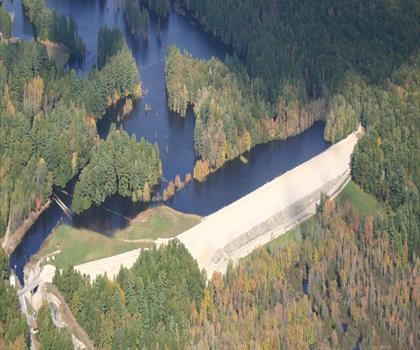
West Hill Dam
Central Massachusetts
Hiking near Worcester
0 trails to explore ~30 km away
We work hard to provide the most up-to-date and error-free data possible. If something seems incorrect, let us know! Your contribution helps the whole community.
Hikers' opinions
Be the first to review!
No hiker has shared their experience yet. Share your impressions and help other hikers!