
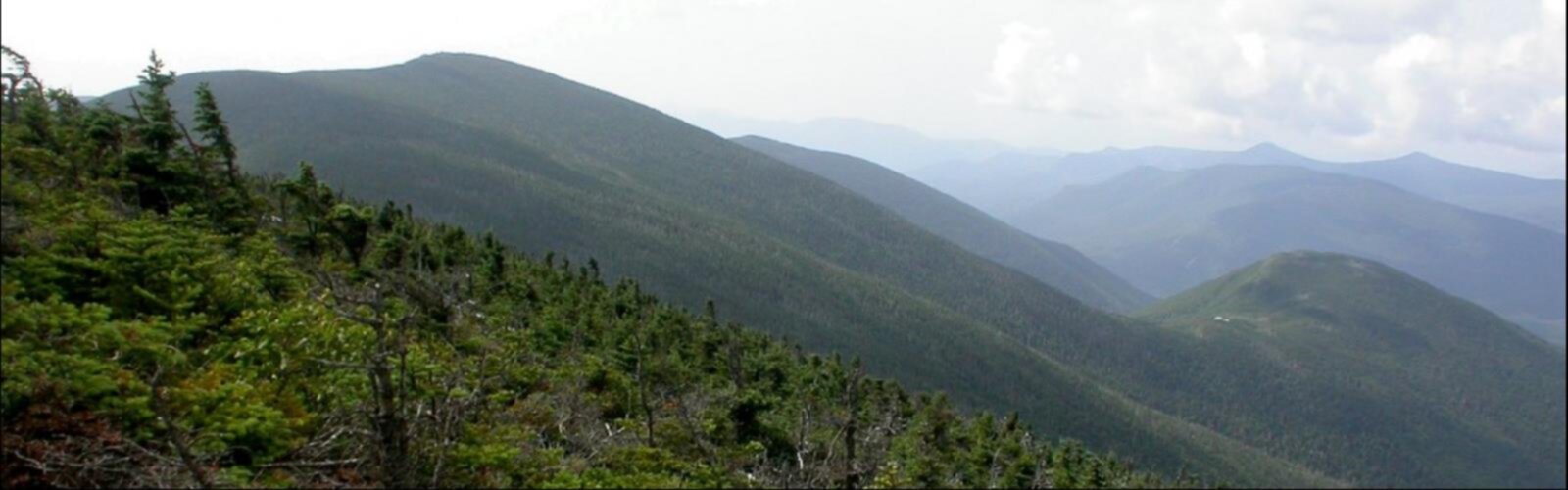

Ready to explore Galehead Mountain, New Hampshire? Here's everything you need to know before you go!
Discover the trail


Trail description
South Twin Mountain and Galehead Mountain form a compelling pair of peaks in the Twin Range of New Hampshire's White Mountains, offering hikers a challenging adventure through diverse terrain with rewarding summit views. Located in Grafton County, these mountains provide access to some of the most scenic ridge walking in the White Mountains, with South Twin serving as the high point of a dramatic north-south ridge system.
The 36.5-kilometer trek to reach these peaks demands serious preparation and stamina, with 1,227 meters of elevation gain that will test even experienced hikers. Plan for 6 to 8 hours of hiking time, making this a very hard difficulty adventure that requires proper planning and early starts, especially during shorter daylight months.
Trail Network and Access
The most direct approach to this mountain pair begins with the Gale River Trail from the northwest, which leads to Galehead Hut operated by the Appalachian Mountain Club. This hut serves as a crucial waypoint and provides a strategic base for exploring both peaks. From the hut, the Frost Trail climbs directly to Galehead's summit, while the famous Appalachian Trail provides the primary route to South Twin Mountain.
The Appalachian Trail, stretching 2,170 miles from Georgia to Maine, crosses directly over South Twin's summit, creating a natural highway for peak baggers. The trail approaches from Galehead Mountain and the hut to the west, then continues southeast toward Mount Guyot. For those seeking to extend their adventure, the North Twin Trail branches north along the ridge crest, leading to North Twin Mountain approximately one mile away.
Summit Characteristics and Terrain
South Twin Mountain's summit offers a striking contrast to many forested White Mountain peaks. The top features open, rocky terrain that provides expansive views across the surrounding wilderness. Despite the exposed summit conditions, dense stands of spruce and fir trees grow remarkably close to the peak, creating an interesting transition zone between alpine and subalpine environments.
Galehead Mountain presents a different character entirely. Positioned strategically above the headwaters of the North Branch of the Gale River, this peak earned its name from its location at the literal head of the Gale River drainage. The summit sits 400 feet above and 0.2 miles south of where the Appalachian Trail crosses the mountain's northern face, requiring the dedicated Frost Trail to reach the actual high point.
Geographic Context and Drainage
The geographic positioning of these mountains places hikers at a fascinating watershed divide. South Twin's east face feeds into an intricate water system beginning with the Little River, which flows into the Ammonoosuc River, then the Connecticut River, ultimately reaching Long Island Sound in Connecticut. Meanwhile, the northwest slopes drain into the North Branch of the Gale River, following a similar path through the Ammonoosuc system.
The southwest side of South Twin tells a different hydrological story. Here, Twin Brook carves through the valley, feeding into the Franconia Branch of the East Branch of the Pemigewasset River. This water travels through the pristine Pemigewasset Wilderness, eventually joining the Pemigewasset and Merrimack Rivers before reaching the Gulf of Maine in Massachusetts. Understanding these drainage patterns helps hikers appreciate the vast wilderness systems they're exploring.
Galehead Mountain's water systems mirror this complexity. The north face contributes to the same Gale River system flowing toward Long Island Sound, while both the southeast and west faces drain into the Franconia Branch system heading toward the Gulf of Maine. This positioning makes Galehead a true watershed mountain, sending water toward two different ocean destinations.
Strategic Location and Connections
The Twin Range positioning creates excellent opportunities for extended hiking adventures. South Twin forms the centerpiece of a ridge system with North Twin Mountain one mile north and Mount Guyot two miles southeast. Galehead Mountain serves as a western spur, flanked by Mount Garfield to the west, creating multiple route options for ambitious hikers.
Galehead Hut's location in the col between Galehead and South Twin makes it an invaluable resource for multi-day adventures or simply as a rest stop during long day hikes. The hut provides not only shelter and meals but also serves as a social hub where hikers share trail conditions and route advice.
Hiking Experience and Challenges
The very hard difficulty rating reflects several challenging aspects of this hike. The substantial distance requires sustained effort over varied terrain, from river valley approaches through dense forest to exposed ridge walking. Elevation gain accumulates steadily, demanding good cardiovascular fitness and proper pacing strategies.
Weather conditions can change rapidly at these elevations, particularly on South Twin's exposed summit. The open, rocky terrain that provides spectacular views also offers little protection from wind, rain, or sudden temperature drops. Hikers should prepare for potentially harsh conditions even when valley weather appears mild.
The trail network's complexity requires careful navigation skills. Multiple trail junctions, especially around Galehead Hut, demand attention to trail markers and map reading. The Appalachian Trail's white blazes provide reliable guidance on South Twin, but the approach trails require more careful route finding.
Seasonal Considerations
The 6 to 8-hour duration becomes particularly important during shorter winter days, though the specific seasonal accessibility varies with snow conditions and trail maintenance. The exposed nature of South Twin's summit makes it especially vulnerable to severe weather, while the lower Galehead summit may offer slightly more protection during marginal conditions.
The substantial elevation gain means hikers will experience significant temperature variations from trailhead to summit, requiring layered clothing systems and preparation for multiple climate zones within a single hike. The transition from dense forest to open summit conditions creates distinct microclimates that can surprise unprepared hikers.
The Essential Hiking Checklist
Everything you need for your next hike. Bilingual, printable, 1 page.
Get your free hiking checklistRecommended gear for this trail
As an Amazon Associate I earn from qualifying purchases.


Ready to go?
Everything you need to know before you goStarting Point
To access the hiking trails, you can start at the Gale River Trailhead. The trailhead is located on Gale River Loop Road, which is off Route 3 in Bethlehem, New Hampshire. There is a parking area available at this location. Another option is to begin at the Beaver Brook Trailhead, also accessible from Route 3. Both trailheads provide entry points for exploring the area.
When?
How much?
As an Amazon Associate I earn from qualifying purchases.
Affiliate links — LGPO may earn a commission at no extra cost to you.
- Hiking shoes Essential
- → Salomon Elixir Tour Mid WP · 203.38 $
- Layered clothing Essential
- Rain jacket Essential
- Trekking poles
- → Black Diamond Trail Ergo Cork · 69.99 $
- Headlamp
- → Petzl Actik Core 625 · 103.95 $
FAQ - Frequently asked questions
Everything you need to knowSimilar hikes nearby
Discover other trails you might enjoy

Crawford
White Mountains
Presidential Range Rail Trail
White Mountains

Welch-Dickey Trailhead
White Mountains
Sabbaday Falls
White Mountains
Swift River
White Mountains
Mt Bond
White Mountains
Hiking near North Conway
0 trails to explore ~39 km away
We work hard to provide the most up-to-date and error-free data possible. If something seems incorrect, let us know! Your contribution helps the whole community.
Hikers' opinions
Be the first to review!
No hiker has shared their experience yet. Share your impressions and help other hikers!