
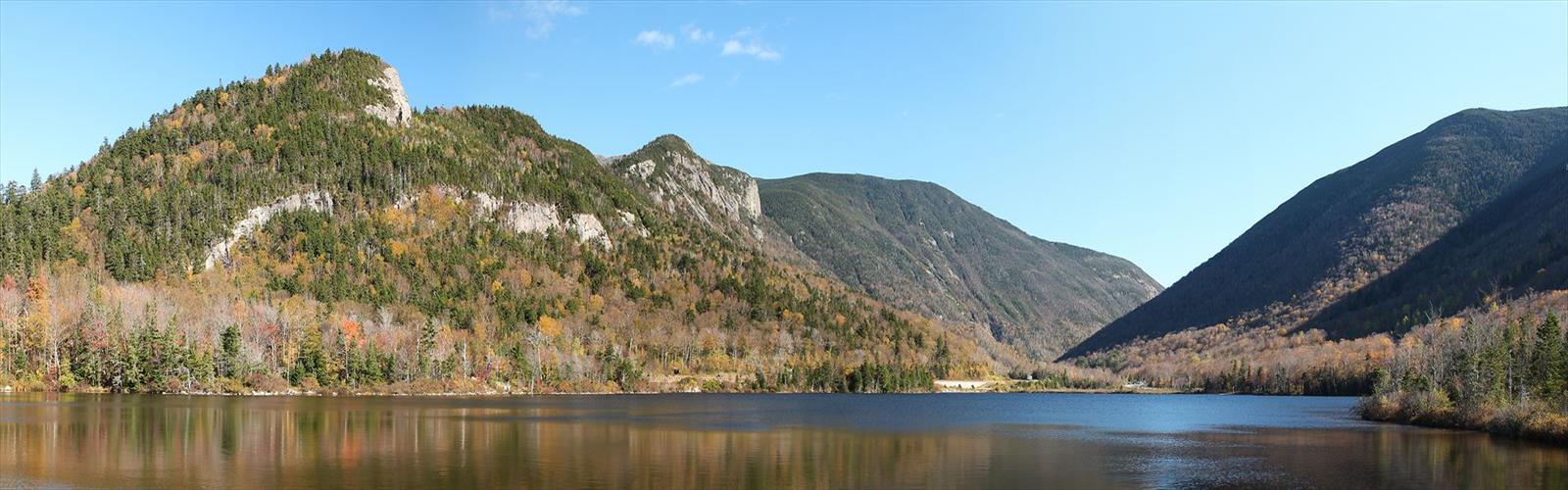

Ready to explore Kinsman Ridge Trailhead? Here's everything you need to know before you go!
Discover the trail

Trail description
The Kinsman Ridge Trailhead launches you into one of New Hampshire's White Mountains' most rewarding challenges, connecting directly to the legendary Appalachian Trail system. This 8.5-kilometer route tackles both North and South Kinsman Mountains with 914 meters of elevation gain, delivering the kind of panoramic White Mountain views that make the steep climbs worthwhile.
The moment you leave the parking area, you're swallowed by dense mixed forest where towering spruce and fir trees mingle with white birch. The trail wastes no time with pleasantries—you'll start climbing immediately through terrain that keeps you guessing. One moment you're navigating rocky scrambles that demand careful foot placement, the next you're walking on soft forest floor cushioned with pine needles and the season's fallen leaves. Multiple small streams tumble down from the peaks above, creating natural rest stops where the sound of flowing water drowns out everything except your own breathing.
What the Trail Throws at You
This hard-rated trail earns its reputation through relentless elevation gain rather than technical difficulty. White blazes mark the well-established route, but don't let that fool you into thinking it's easy. As you push toward the ridge line, the path becomes increasingly steep and rocky, testing your endurance and ankle stability. You'll encounter root-crossed forest sections that grab at your boots, granite slabs that can turn slippery when wet, and occasional boulder scrambles that require using your hands for balance.
The forest itself tells the story of your ascent. You start among hardwoods at lower elevations, but as you climb higher, the ecosystem shifts to the classic spruce-fir zone of New Hampshire's peaks. The trail weaves through small clearings that offer brief respites and crosses seasonal streams that transform dramatically with the weather. During spring snowmelt and after heavy rains, these modest water features become impressive cascades that add soundtrack and spectacle to your climb.
Once you reach the ridge, everything changes. The protected forest environment gives way to more exposed terrain where weather becomes a real factor. Temperatures drop noticeably, winds pick up strength, and views start opening through the trees in tantalizing glimpses of what awaits at the summits.
Summit Rewards
Both North and South Kinsman Mountains deliver the panoramic payoff that justifies every steep step. These summits showcase the White Mountains' signature landscape—layer upon layer of ridges rolling toward distant horizons. The rocky outcrops that crown each peak serve as natural amphitheaters where you can spread out, refuel, and soak in views that extend for miles in every direction.
Fall transforms these viewpoints into something extraordinary. The valleys and mountainsides explode in reds, oranges, and yellows that seem almost artificial in their intensity. Even on clear summer days, the layered ridges and deep valleys create a visual feast that makes you understand why people drive hundreds of miles to hike in New Hampshire. The summit areas provide stable platforms for photography, with lighting that's particularly dramatic during early morning and late afternoon hours.
Wildlife Encounters
The Kinsman Ridge area pulses with wildlife activity that adds unpredictability to every hike. Moose encounters happen regularly, especially during dawn and dusk hours when these massive animals move through the forest to feed. White-tailed deer frequent the trail edges and clearings, often freezing in place before bounding away through the underbrush.
The forest ecosystem supports a full cast of northern New England species. Woodpeckers hammer away at dead trees, while nuthatches and chickadees provide constant chatter from the canopy. During migration periods, the bird diversity explodes as species move through the mountain corridors. Red squirrels and chipmunks add ground-level entertainment, and while black bear inhabit the area, encounters remain uncommon enough to be memorable rather than concerning.
The trail's water features create micro-habitats that support salamanders and other amphibians. These streams and pools also nourish the lush vegetation that characterizes the most beautiful sections of the route, creating the kind of diverse forest environment that makes every turn interesting.
Planning Your Adventure
Block out 5 hours and 30 minutes for this challenging route, though your actual time will vary significantly based on your fitness level, rest stops, and weather conditions. The hard difficulty rating makes this suitable for hikers with solid mountain experience, though determined newcomers can succeed with proper preparation and realistic expectations about the physical demands.
Water management becomes critical on this long, steep climb. Carry more than you think you'll need, especially during summer months when dehydration can sneak up quickly. While the trail crosses several streams, treat any natural water sources with purification tablets or a filter before drinking. The varied terrain demands sturdy hiking boots that provide ankle support and reliable traction on wet rocks and root-crossed sections.
White Mountain weather changes with startling speed, making layered clothing essential regardless of season. Summer temperatures at the summits often run 15-20 degrees cooler than at the trailhead, and afternoon thunderstorms can roll in with little warning. Pack rain gear as standard equipment—getting soaked on exposed ridges turns uncomfortable quickly and can become dangerous.
Bring a camera or ensure your smartphone has plenty of battery life for the scenic opportunities this trail provides. The summit views and wildlife encounters create memories worth capturing, and the changing light conditions throughout the day offer different photographic possibilities.
The connection to the broader Appalachian Trail network opens up extended hiking possibilities for those planning multi-day adventures. Day hikers and overnight campers both find excellent options here, with the trailhead serving as a gateway to deeper White Mountains exploration.
The Essential Hiking Checklist
Everything you need for your next hike. Bilingual, printable, 1 page.
Get your free hiking checklistRecommended gear for this trail
As an Amazon Associate I earn from qualifying purchases.


Ready to go?
Everything you need to know before you goStarting Point
The kinsman ridge trailhead is located in the town of North Woodstock, New Hampshire. From Interstate 93, take exit 32 and head east on Route 3. After about 4 miles, take a left onto Kinsman Notch Road. The trailhead will be about 1.5 miles down the road on the right.
When?
How much?
As an Amazon Associate I earn from qualifying purchases.
Affiliate links — LGPO may earn a commission at no extra cost to you.
- Hiking shoes Essential
- → Salomon Elixir Tour Mid WP · 203.38 $
- Layered clothing Essential
- Rain jacket Essential
- Trekking poles
- → Black Diamond Trail Ergo Cork · 69.99 $
- Headlamp
- → Petzl Actik Core 625 · 103.95 $
FAQ - Frequently asked questions
Everything you need to knowSimilar hikes nearby
Discover other trails you might enjoy

Crawford
White Mountains
Presidential Range Rail Trail
White Mountains

Welch-Dickey Trailhead
White Mountains
Sabbaday Falls
White Mountains

Swift River
White Mountains

Mt Bond
White Mountains
Hiking near North Conway
0 trails to explore ~47 km away
We work hard to provide the most up-to-date and error-free data possible. If something seems incorrect, let us know! Your contribution helps the whole community.
Hikers' opinions
Be the first to review!
No hiker has shared their experience yet. Share your impressions and help other hikers!