
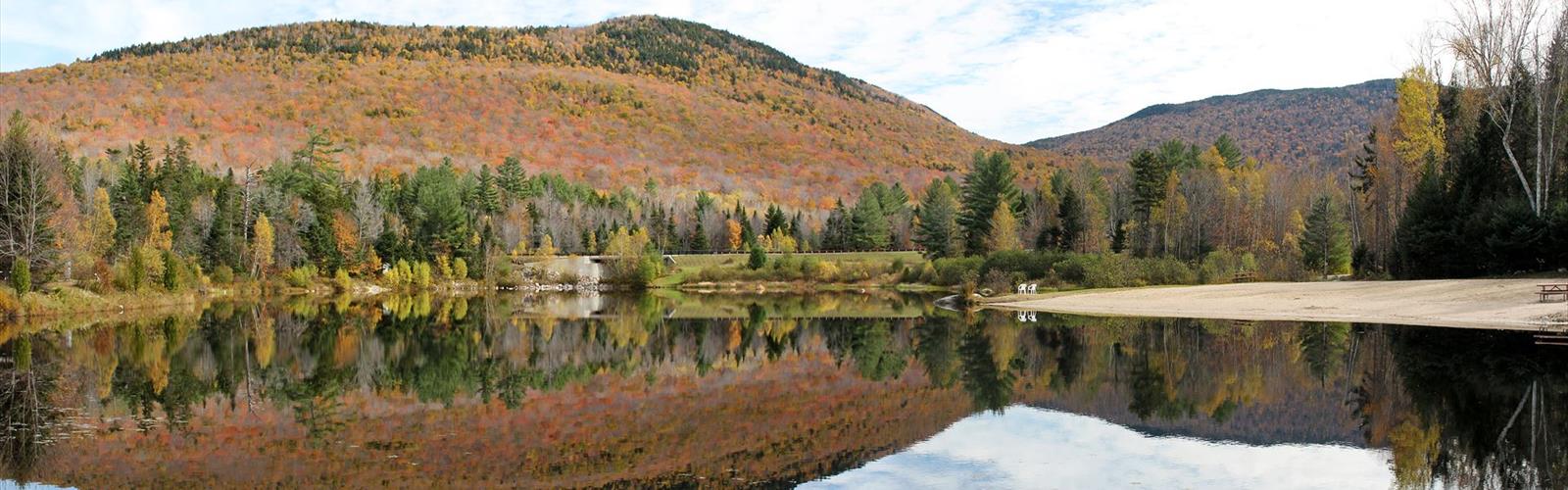

Ready to explore West Sleeper, New Hampshire? Here's everything you need to know before you go!
Discover the trail
Trail description
West Sleeper rises as one of a pair of twin peaks deep in New Hampshire's Sandwich Range, tucked within the Sandwich Range Wilderness. These mountains carry the name of Katherine Sleeper, a local innkeeper who was instrumental in developing the trail network that hikers still use today. The Kate Sleeper Trail, the primary route to both summits, honors her legacy and her genuine love for these hills.
Geographically, the Sleepers sit in good company. Mount Tripyramid stands to the northwest, Mount Passaconaway anchors the northeastern horizon, and Mount Whiteface closes the circle to the southeast. Together, these peaks frame a section of the White Mountains that rewards hikers who venture beyond the more trafficked 4,000-footers.
The Route
The Kate Sleeper Trail is the backbone of any trip to West Sleeper. It winds through mixed hardwood and coniferous forest in the lower elevations before the trees gradually give way to the stunted spruce and fir typical of higher White Mountain terrain. The trail passes close to both the east and west peaks, with clear spur paths branching off to each summit. Navigation is generally straightforward on the maintained trail, though the wilderness designation means you'll encounter fewer constructed features — fewer bridges, less blazing — than on some of the more popular White Mountain routes.
At 14.5 km with 1,183 meters of elevation gain, this is a substantial day out. The estimated time of 5 hours 30 minutes is a reasonable benchmark for a fit, steady hiker, but factor in time at both summits and the ridge walk between them. The climb is rated moderate, though the cumulative elevation gain means you'll want to come prepared.
West Sleeper vs. East Sleeper
West Sleeper is the higher of the two peaks, but here's the quirk that makes the Sleepers interesting to peak-baggers: West Sleeper's connection to South Tripyramid via a high ridge means it doesn't achieve the 200 feet of topographic prominence required for the Appalachian Mountain Club's "Hundred Highest" list. East Sleeper, slightly lower but more topographically independent, does make that list. It's a good reminder that height alone doesn't tell the whole story when it comes to how mountains are measured and ranked.
What to Expect at the Top
Both summits offer views across the Sandwich Range Wilderness, though reaching the best vantage points requires short bushwhacks from the main trail. West Sleeper's slightly higher elevation gives you a broad look across the wilderness, while East Sleeper offers a different angle on the surrounding peaks and valleys. The ridge walk connecting the two is one of the better parts of the day — open enough to feel exposed, with the kind of windswept terrain that makes you feel like you've genuinely earned the elevation.
Wilderness Character
The Sandwich Range Wilderness designation shapes the entire experience here. Expect solitude, minimal infrastructure, and a more self-reliant style of hiking than you'd find on, say, the Franconia Ridge Loop. Trail maintenance follows Leave No Trace principles, which means the environment stays intact but also means you need solid navigation skills, especially if weather rolls in on the exposed ridgeline.
The watershed geography of this area is worth noting. Water draining from the southwest slopes eventually finds its way to the Gulf of Maine at Newburyport, Massachusetts, moving through Slide Brook, Cascade Brook, Avalanche Brook, the Mad River, the Pemigewasset River, and finally the Merrimack River. The northeast slopes feed Sabbaday Brook and Downes Brook into the Swift River, which reaches the ocean at Saco, Maine via the Saco River. The south end of East Sleeper contributes to yet another system, draining through the Whiteface River, Cold River, Bearcamp River, and Ossipee River before joining the Saco River. It's a small detail, but it illustrates how central these peaks are to the hydrology of the region.
Planning Your Trip
This hike is best suited to hikers who are comfortable with sustained climbing and self-sufficient in a wilderness setting. The elevation gain is real, and the wilderness designation means help is not close by if something goes wrong. Carry a map, know how to use it, and don't rely solely on a phone signal that may not be there.
Seasonally, winter conditions can linger well into spring at these elevations, and the wilderness trails may not be broken out as quickly as more popular routes. Summer and early fall generally offer the most reliable conditions, though rapid weather changes are always a possibility in the White Mountains. Check the forecast before you go and be ready to adapt.
The Sleepers don't draw the same crowds as the big-name 4,000-footers, which is a significant part of their appeal. If you're looking for a challenging, rewarding day in genuine White Mountain wilderness — with a bit of history attached — West Sleeper and its twin deliver exactly that.
The Essential Hiking Checklist
Everything you need for your next hike. Bilingual, printable, 1 page.
Get your free hiking checklistRecommended gear for this trail
As an Amazon Associate I earn from qualifying purchases.


Ready to go?
Everything you need to know before you goStarting Point
To access the hiking trails, you can start from several trailheads:
Downes Brook Trailhead: Located on the Kancamagus Highway (Route 112), approximately 14 miles west of Conway, NH. There is a parking area available at this location.
Sabbaday Brook Trailhead: Also found on the Kancamagus Highway (Route 112), about 15 miles west of Conway, NH. Parking is available here as well.
Both trailheads provide access to the hiking trails in the area.
When?
How much?
As an Amazon Associate I earn from qualifying purchases.
Affiliate links — LGPO may earn a commission at no extra cost to you.
- Hiking shoes Essential
- → Salomon Elixir Tour Mid WP · 203.38 $
- Layered clothing Essential
- Rain jacket Essential
- Trekking poles
- → Black Diamond Trail Ergo Cork · 69.99 $
- Headlamp
- → Petzl Actik Core 625 · 103.95 $
FAQ - Frequently asked questions
Everything you need to knowSimilar hikes nearby
Discover other trails you might enjoy

Crawford
White Mountains
Presidential Range Rail Trail
White Mountains

Welch-Dickey Trailhead
White Mountains
Sabbaday Falls
White Mountains
Swift River
White Mountains
Mt Bond
White Mountains
Hiking near North Conway
0 trails to explore ~27 km away
We work hard to provide the most up-to-date and error-free data possible. If something seems incorrect, let us know! Your contribution helps the whole community.
Hikers' opinions
Be the first to review!
No hiker has shared their experience yet. Share your impressions and help other hikers!