
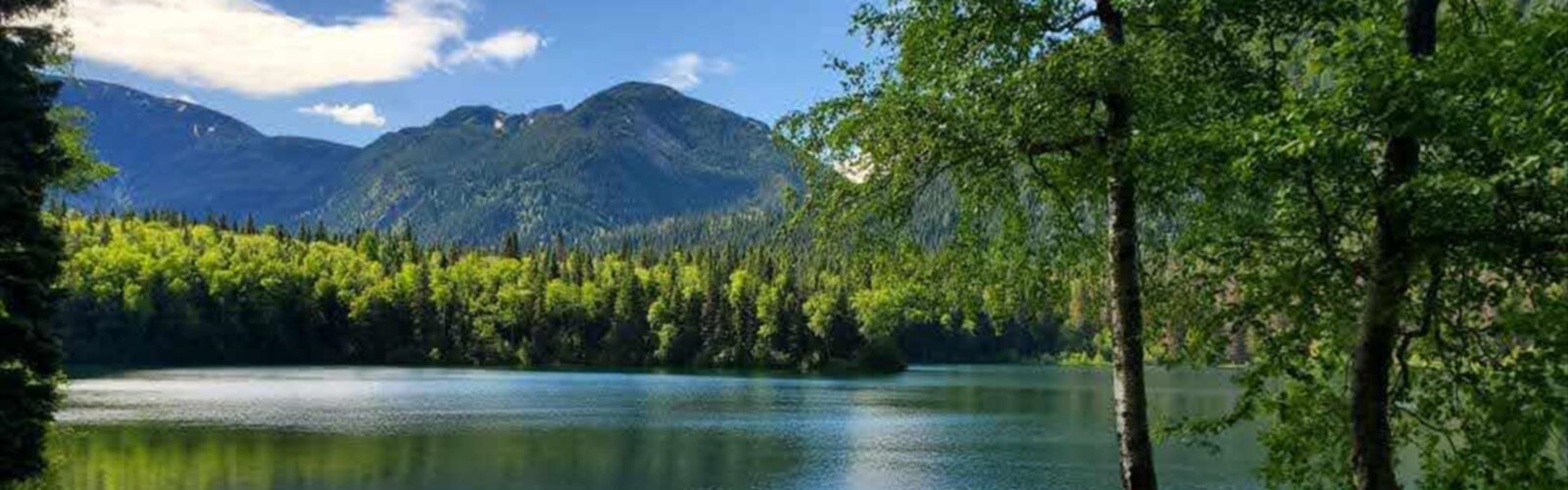

Ready to explore Heart Lake? Here's everything you need to know before you go!
Discover the trail


Trail description
Heart Lake represents one of the most popular hiking destinations across North America, with numerous lakes sharing this evocative name from the Canadian Rockies to the Adirondack Mountains. The most well-known Heart Lake sits in New York's Adirondack Park near the historic Adirondak Loj, offering hikers a rewarding 14-kilometer round-trip journey through some of the region's most pristine wilderness.
The Adirondack Heart Lake trail winds through dense mixed forests of maple, birch, and towering pines, gradually ascending 300 meters over varied terrain that keeps hikers engaged throughout the 3 to 4-hour adventure. The path begins at the Adirondak Loj trailhead, following well-maintained trails that showcase the diverse ecosystems that make this region a haven for outdoor enthusiasts.
Trail Experience and Terrain
The journey to Heart Lake in the Adirondacks takes you through classic northeastern mountain terrain, where rocky outcroppings alternate with soft forest floor covered in ferns and moss. Early sections of the trail meander through hardwood forests that explode with color during fall months, while higher elevations reveal the characteristic boreal forest that defines much of the Adirondack wilderness.
Hikers will encounter several stream crossings and small wetland areas that provide excellent opportunities for wildlife observation. The trail's moderate elevation gain is distributed evenly, making it accessible to intermediate hikers while still providing enough challenge to feel rewarding. Rocky sections near the lake require careful footing, especially during wet conditions.
Wildlife and Natural Features
Heart Lake serves as a wildlife corridor where hikers regularly spot white-tailed deer, black bears, and various bird species including the iconic common loon whose haunting calls echo across the water. The lake itself is surrounded by lush forests that create a natural amphitheater, with forested hills rising on all sides to frame the pristine waters.
The diverse ecosystem supports everything from small songbirds to larger mammals, making wildlife photography a popular activity. Early morning and evening hours offer the best chances for animal sightings, when deer come to drink at the water's edge and loons are most active on the lake surface.
Recreational Opportunities
Beyond hiking, Heart Lake provides excellent fishing opportunities for those willing to carry gear along the trail. The clear mountain waters support native fish populations, though success requires patience and skill. Camping is available in designated areas, allowing visitors to experience the lake's serene atmosphere during the magical transition from day to night.
The lake's protected setting makes it ideal for nature photography, with opportunities to capture both intimate forest details and sweeping landscape vistas. The combination of water, forest, and mountain backdrop provides endless compositional possibilities throughout different seasons and lighting conditions.
Regional Context and Other Heart Lakes
While the Adirondack Heart Lake draws many visitors, outdoor enthusiasts should know that Heart Lakes exist throughout North America, each offering unique experiences. In Yellowstone National Park, Heart Lake near the South Entrance Road provides access to breathtaking views of Mt. Sheridan and represents one of the park's more remote backcountry destinations.
Colorado's Arapaho National Forest contains its own Heart Lake, while Idaho boasts multiple Heart Lakes in both the Sawtooth Wilderness and White Cloud Mountains of Custer County, plus another in the Soldier Mountains of Camas County. Montana offers several Heart Lakes across Beaverhead, Carbon, Missoula, and Stillwater counties, each reflecting the diverse landscapes of Big Sky Country.
Even closer to urban areas, Ontario's Heart Lake in northern Brampton provides accessible outdoor recreation for Canadian residents, demonstrating how these naturally heart-shaped or emotionally stirring bodies of water have captured imaginations across the continent.
Planning Your Visit
The Adirondack Heart Lake trail remains accessible most of the year, though winter conditions require appropriate gear and experience. Spring brings muddy conditions during snowmelt, while summer offers the most comfortable hiking weather and longest daylight hours. Fall provides spectacular foliage but also draws the largest crowds.
Hikers should prepare for changing weather conditions, as Adirondack weather can shift rapidly. The 14-kilometer distance and 300-meter elevation gain require moderate fitness levels, and the 3 to 4-hour timeframe allows for a leisurely pace with stops for photography and wildlife observation.
Many visitors use online platforms and travel resources to share experiences and plan their trips, contributing to a growing community of Heart Lake enthusiasts who appreciate these special places. Whether seeking solitude, wildlife encounters, or simply a rewarding day hike, Heart Lake in the Adirondacks delivers an authentic mountain lake experience that exemplifies the best of northeastern wilderness hiking.
The Essential Hiking Checklist
Everything you need for your next hike. Bilingual, printable, 1 page.
Get your free hiking checklistRecommended gear for this trail
As an Amazon Associate I earn from qualifying purchases.


Ready to go?
Everything you need to know before you goStarting Point
The start of the trails at the heart lake can be accessed from the parking lot near the lake.
The start of the trails at the heart lake in New York can be accessed from the parking lot off of Route 6N.
When?
How much?
As an Amazon Associate I earn from qualifying purchases.
Affiliate links — LGPO may earn a commission at no extra cost to you.
- Hiking shoes Essential
- → Salomon Elixir Tour Mid WP · 203.38 $
- Layered clothing Essential
- Rain jacket Essential
- Trekking poles
- → Black Diamond Trail Ergo Cork · 69.99 $
- Headlamp
- → Petzl Actik Core 625 · 103.95 $
FAQ - Frequently asked questions
Everything you need to knowSimilar hikes nearby
Discover other trails you might enjoy

Algonquin Peak, New York
Adirondacks

Big Slide Mountain, New York
Adirondacks

Boundary Peak, New York
Adirondacks
Crane Mountain
Adirondacks
Avalanche Pass
Adirondacks
Ampersand Mountain, New York
Adirondacks
Hiking near Lake Placid
0 trails to explore ~11 km away
We work hard to provide the most up-to-date and error-free data possible. If something seems incorrect, let us know! Your contribution helps the whole community.
Hikers' opinions
Be the first to review!
No hiker has shared their experience yet. Share your impressions and help other hikers!