
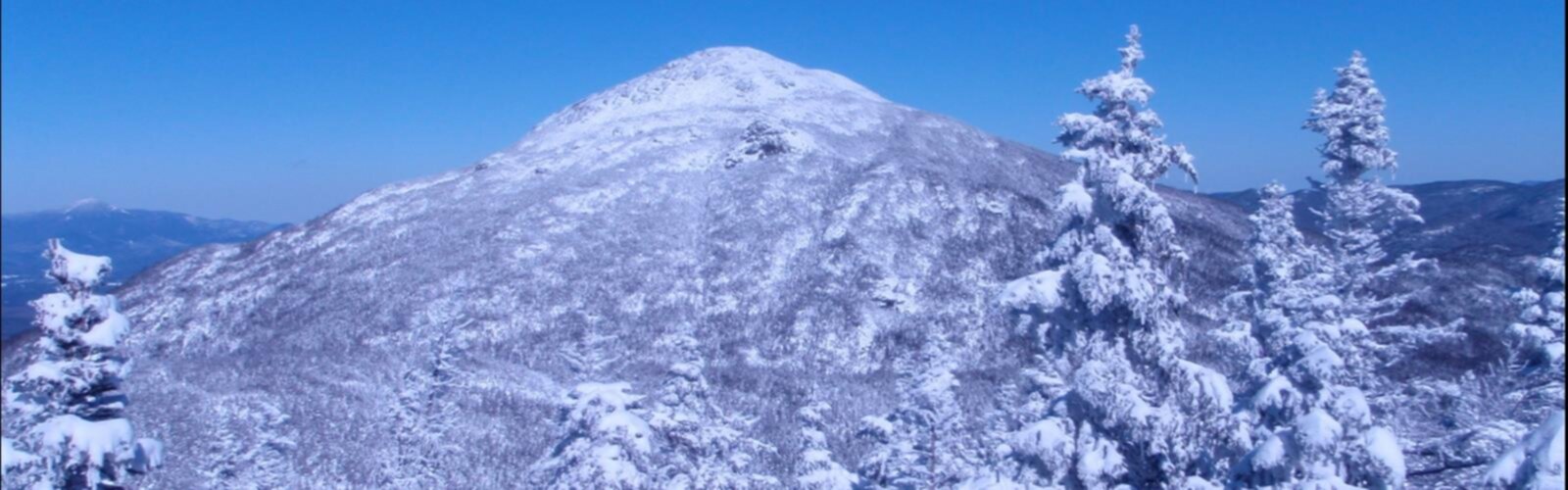

Ready to explore Mount Marshall, New York? Here's everything you need to know before you go!
Discover the trail
Oh no! We don't have any photos 😢
This trail hasn't been captured yet. Be the first to share your adventure!Trail description
Mount Marshall stands as one of the more challenging peaks in New York's Adirondack High Peaks region, offering experienced hikers a demanding 13.5-kilometer journey with 1,330 meters of elevation gain. Located in Essex County within the High Peaks Wilderness Area, this mountain carries a rich history—originally named for Governor DeWitt Clinton, then Herbert Clark, before receiving its current name honoring wilderness activist Bob Marshall (1901-1939) after his death.
As part of the MacIntyre Mountains, Mount Marshall occupies a strategic position in the heart of the High Peaks. The mountain sits flanked by Iroquois Peak to the northeast and faces the dramatic Wallface Mountain across Indian Pass to the northwest. This positioning places hikers at the center of some of the Adirondacks' most spectacular alpine terrain, where the rugged peaks create a landscape that feels more like the Canadian Rockies than typical Eastern mountains.
The Hiking Experience
The trek to Mount Marshall's summit represents a very hard difficulty rating that typically requires 6 to 8 hours to complete. The primary route follows the Whiteface Mountain Trail, described as a moderate approach that takes about 3 hours to reach the summit, though this timeframe likely refers to a portion of the overall journey given the mountain's remote location and substantial elevation gain.
Hikers will encounter varied terrain throughout the ascent, from dense forest sections where the canopy filters sunlight into dappled patterns on the trail, to increasingly rocky and exposed areas as elevation increases. The final approaches to many Adirondack peaks feature scrambling over granite slabs and navigating through stunted spruce and fir trees that have been sculpted by harsh winter conditions.
The summit rewards those who complete the challenging climb with panoramic views of the surrounding mountains and valleys. From this vantage point, the interconnected network of High Peaks spreads out in all directions, showcasing the wilderness area's impressive scale and the dramatic topography that makes this region unique in the northeastern United States.
Watershed and Geographic Context
Mount Marshall sits at a fascinating hydrological crossroads where waters flow toward three different major water systems. The northeast end drains into Cold Brook, which feeds into Lake Colden, the Flowed Lands, and eventually the Opalescent River before joining the Hudson River on its journey to New York Bay. The east side contributes to Herbert Brook, also flowing toward the Flowed Lands, while the southwest end feeds Calamity Brook and the Hudson River system.
The western slopes drain into southern Indian Pass Brook, which flows to Henderson Lake—the actual source of the Hudson River. Perhaps most interesting, the north side of Marshall drains into northern Indian Pass Brook, which joins the West Branch of the Ausable River, flows into Lake Champlain, and eventually reaches Canada's Richelieu River, the Saint Lawrence River, and the Gulf of Saint Lawrence. This geographic positioning means that rainfall on different sides of the mountain will eventually reach the Atlantic Ocean via completely different routes.
Planning Your Visit
The High Peaks Information Center near Adirondack Loj serves as an excellent starting point for anyone planning to tackle Mount Marshall. The center provides valuable insights about the region's history, including information about Verplanck Colvin's pioneering surveys of the Adirondacks and Robert Marshall's significant conservation efforts that helped preserve these lands for future generations.
Given the mountain's location within the MacIntyre Range, hikers often combine Mount Marshall with other peaks in the area, though this significantly increases the difficulty and time commitment. The range is renowned for its breathtaking vistas and challenging terrain that attracts serious outdoor enthusiasts throughout the year.
Nearby attractions extend the adventure possibilities for those willing to explore further. Marcy Dam offers a more accessible destination with its own scenic rewards, while Upper Works provides unique historical context as a former mining operation site. These locations can serve as warm-up hikes or alternative destinations for days when weather conditions make the higher peaks inadvisable.
Seasonal Considerations
The MacIntyre Range, including Mount Marshall, attracts outdoor enthusiasts year-round, though each season presents distinct challenges and rewards. Winter conditions transform these peaks into serious mountaineering objectives requiring specialized equipment and experience. The mention of "valid February dates" in planning contexts suggests that winter access may have specific restrictions or requirements that hikers should verify with current regulations.
Summer and fall typically offer the most accessible conditions for the average hiker, though the very hard difficulty rating means this mountain demands respect regardless of season. Weather can change rapidly at elevation, and the exposed sections near the summit can become dangerous in poor visibility or high winds.
The trail system connecting to Mount Marshall integrates with the broader network of Adirondack paths, some of which connect to historical routes like those along the Erie Canal pathways that lead upstate toward these majestic peaks. This connectivity reflects the region's long history as a destination for those seeking wilderness experiences within reach of major population centers.
Whether approached as a standalone challenge or part of a longer High Peaks adventure, Mount Marshall offers the kind of demanding but rewarding experience that defines Adirondack hiking. The combination of significant physical challenge, rich natural and human history, and spectacular mountain scenery creates an outing that exemplifies why the High Peaks Wilderness Area holds such a special place in the hearts of serious hikers and wilderness enthusiasts.
The Essential Hiking Checklist
Everything you need for your next hike. Bilingual, printable, 1 page.
Get your free hiking checklistRecommended gear for this trail
As an Amazon Associate I earn from qualifying purchases.


Ready to go?
Everything you need to know before you goStarting Point
The easiest way to get to the start of the trails at Mount Marshall is to take Route 73 to the trailhead parking lot.
When?
How much?
As an Amazon Associate I earn from qualifying purchases.
Affiliate links — LGPO may earn a commission at no extra cost to you.
- Hiking shoes Essential
- → Salomon Elixir Tour Mid WP · 203.38 $
- Layered clothing Essential
- Rain jacket Essential
- Trekking poles
- → Black Diamond Trail Ergo Cork · 69.99 $
- Headlamp
- → Petzl Actik Core 625 · 103.95 $
FAQ - Frequently asked questions
Everything you need to knowSimilar hikes nearby
Discover other trails you might enjoy

Algonquin Peak, New York
Adirondacks

Big Slide Mountain, New York
Adirondacks

Boundary Peak, New York
Adirondacks
Crane Mountain
Adirondacks
Avalanche Pass
Adirondacks
Ampersand Mountain, New York
Adirondacks
Hiking near Lake Placid
0 trails to explore ~17 km away
We work hard to provide the most up-to-date and error-free data possible. If something seems incorrect, let us know! Your contribution helps the whole community.
Hikers' opinions
Be the first to review!
No hiker has shared their experience yet. Share your impressions and help other hikers!