


Ready to explore Snowy Mountain, New York? Here's everything you need to know before you go!
Discover the trail
Oh no! We don't have any photos 😢
This trail hasn't been captured yet. Be the first to share your adventure!Available trails
| Trails | Distance | Elevation | Duration | Difficulty | GPX |
|---|---|---|---|---|---|
| 5.73 km | 0 m | 1h30 | GPX |
GPX track: © OpenStreetMap contributors — ODbL 1.0
Trail description
Snowy Mountain stands as Hamilton County's highest peak and the tallest summit in the Adirondacks south of the famous High Peaks region. At 3,899 feet (though some recent surveys suggest 3,904 or even 3,908 feet), this mountain offers one of the most rewarding hiking experiences in the southern Adirondacks, combining significant elevation gain, pristine wilderness, and spectacular summit views from a restored historic fire tower.
Originally known as Squaw Bonnet, Snowy Mountain ranks among just thirteen peaks in New York State with more than 2,000 feet of topographic prominence, making it a true giant rising dramatically from the surrounding landscape. The mountain sits within the Hudson River watershed, with its slopes feeding numerous brooks and streams that eventually flow into New York Bay.
The Hiking Experience
The trail to Snowy Mountain's summit covers approximately 11.4 kilometers (7.1 miles) round trip with 1,188 meters (3,900 feet) of elevation gain, making this a very challenging full-day hike that typically requires 6 to 8 hours to complete. The four-mile approach to the base of the mountain gives you a sense of just how remote and wild this peak feels, even by Adirondack standards.
The trail begins with a gradual approach through mixed hardwood and coniferous forests, following old logging roads and established footpaths that may date back to before the fire tower's construction in 1909. As you progress, the terrain becomes increasingly steep and rugged, demanding good physical conditioning and proper hiking boots for the rocky, root-filled sections near the summit.
The final push to the top involves navigating through dense forest that was likely cleared multiple times throughout history—first by Verplanck Colvin's survey crew in 1872 for triangulation work, and later by fire tower maintenance crews. Today, the surrounding trees have grown tall enough that the fire tower itself had to be raised to 55 feet total height in 1933 to maintain clear sightlines.
Summit Views and Fire Tower
The restored Snowy Mountain Fire Observation Station, listed on the National Register of Historic Places in 2001, serves as the crown jewel of this hike. This steel tower replaced earlier wooden structures as part of New York State's comprehensive forest fire suppression program launched after devastating fires in 1903 and 1908. An 11.5-mile telephone line once connected the tower to Indian Lake village, allowing observers to quickly report fire locations for triangulation with other nearby peaks.
Climbing the fire tower rewards hikers with panoramic views across the southern Adirondacks and beyond. The vantage point showcases the mountain's impressive neighbors: Squaw Mountain (3,239 feet) to the northeast and Lewey Mountain (3,742 feet) to the southwest. To the east, you can spot the unnamed Peak 3149, which forms the head of a dramatic bowl overlooking the Griffin Brook drainage.
The tower provides views across multiple watersheds, including Little Squaw Brook and Cedar River to the southwest, Squaw Brook flowing toward Indian Lake and Lake Abanakee to the north, and various tributaries including Beaver Brook, Griffin Brook, Forks Brook, Willow Brook, and Falls Brook that all eventually feed the Hudson River system.
Historical Significance
Snowy Mountain boasts a rich history of human exploration dating back centuries. The earliest recorded ascent occurred in 1771 when surveyor Archibald Campbell from Albany climbed the peak, likely as part of land negotiations between Joseph Totten, Stephen Crossfield, and the Mohawk Nation for a massive tract being purchased by the influential Jessup brothers.
The mountain played a crucial role in the famous Adirondack Survey, with Verplanck Colvin and his crew reaching the summit on August 4, 1872. His assistant Mills Blake returned with a crew on November 7, 1882, and remarkably stayed for multiple days (November 9-10), almost certainly bivouacking on the summit to complete triangulation work. Colvin himself made at least one more ascent on June 22, 1885, again camping overnight on the peak.
The fire tower era began in 1909 with a 15-foot log structure and small cabin, evolving through a 22-foot steel tower in 1917 to the current 55-foot height achieved in 1933. Operations continued until 1971 when aircraft surveillance made the tower obsolete for fire detection, though the observer's cabin remained until sometime between 1986 and 2006.
Rock Climbing and Bouldering
Beyond hiking, Snowy Mountain has developed into a destination for rock climbers and boulderers. The summit cliffs attracted climbers Neal Knitel and Jonas Morelli in the mid-1990s, though they never completed their route due to the long approach. More serious development began in 2002 when two separate parties—Karl Swisher with Sid Perkins, and Ed Palen with Bob Starinsky—began establishing routes. By 2008, seven high-quality bolt-protected face climbing routes had been completed on the highly featured summit rock.
Partway up the Griffin Brook drainage toward Peak 3149, the Snowy Mountain Boulders offer a unique climbing experience featuring the largest collection of huecos (solution holes) in the Adirondack Park. Dave Buzzelli first noticed this area in 2003 while approaching Peak 3149's ski slides, and since 2006, over 40 bouldering problems have been established among these distinctive rock formations.
Planning Your Visit
Given the trail's length and elevation gain, start early and bring plenty of water, food, and layers for changing weather conditions. The remote location means you'll be committed once you start, so ensure your group has the fitness level and experience for a very challenging mountain hike. The fire tower adds an extra element of adventure, but use caution when climbing and be prepared for exposure to wind and weather at the top.
The mountain's elevation and northern location mean weather can change rapidly, and snow is possible even in late spring and early fall. Check conditions before heading out, and consider this hike a serious undertaking that showcases some of the wildest, most rewarding terrain the southern Adirondacks have to offer.
Recommended gear for this trail


Ready to go?
Everything you need to know before you goStarting Point
To reach the trailhead for hiking, head to the Snowy Mountain Trailhead located on Route 30. The parking area is situated approximately 7 miles south of Indian Lake, New York. If you're coming from the south, it's about 4 miles north of the hamlet of Speculator. There is only one main trailhead for this hike, and it is well-marked with signage along Route 30.
When?
How much?
- Hiking shoes Essential
- → Salomon Elixir Tour Mid WP · 203.38 $
- Layered clothing Essential
- Rain jacket Essential
- Trekking poles
- → Black Diamond Trail Ergo Cork · 69.99 $
- Headlamp
- → Petzl Actik Core 625 · 103.95 $
FAQ - Frequently asked questions
Everything you need to know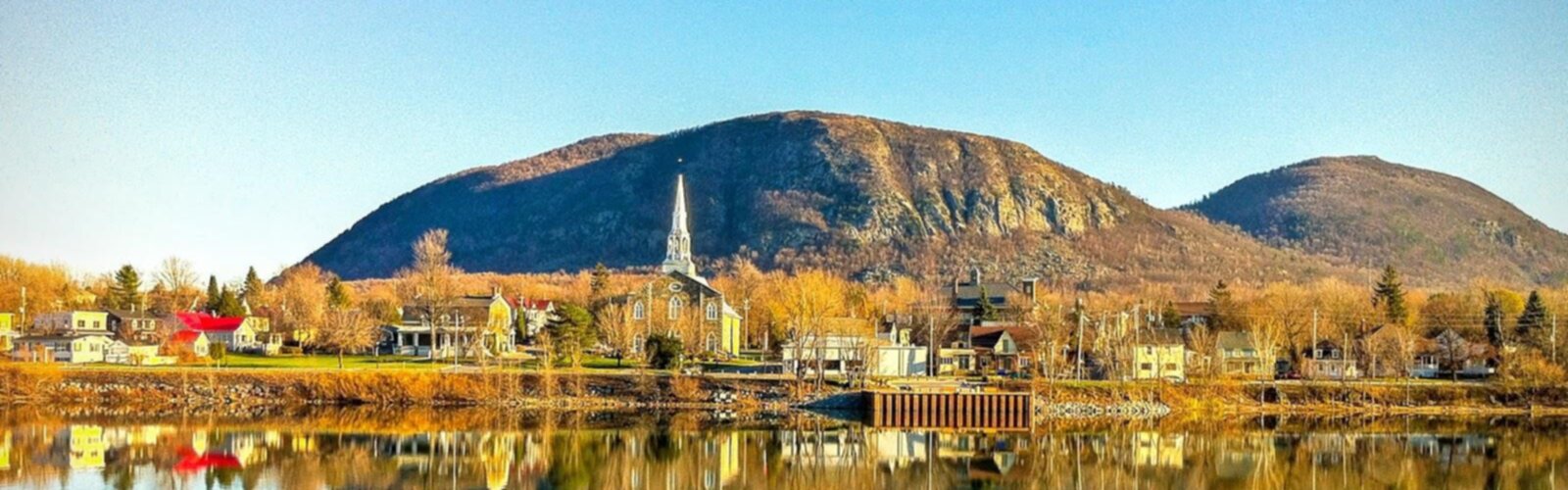
25 hikes under 2 hours from Montreal
Distance, elevation, parking and season for each one. The ones we go back to ourselves.
Get the guideSimilar hikes nearby
Discover other trails you might enjoy

Algonquin Peak, New York
Adirondacks

Big Slide Mountain, New York
Adirondacks

Boundary Peak, New York
Adirondacks
Crane Mountain
Adirondacks
Avalanche Pass
Adirondacks
Ampersand Mountain, New York
Adirondacks
Hiking near Lake Placid
0 trails to explore ~72 km away
We work hard to provide the most up-to-date and error-free data possible. If something seems incorrect, let us know! Your contribution helps the whole community.
Hikers' opinions
Be the first to review!
No hiker has shared their experience yet. Share your impressions and help other hikers!