

Ready to explore Cross Vermont Trail? Here's everything you need to know before you go!
Discover the trail
Trail description
The Cross Vermont Trail is one of the most ambitious trail projects in the northeastern United States — a non-motorized, multi-use corridor that stretches across the entire width of Vermont, connecting the Connecticut River on the east side of the state to Lake Champlain on the west. It's not just a hiking trail. It's a living, evolving route that passes through forests, farmland, small towns, rail trails, and river valleys, giving you a genuine cross-section of what central Vermont actually looks and feels like.
The trail is managed by the Cross Vermont Trail Association, a nonprofit that has been working for decades to stitch together existing paths, rail trails, and new connections into one continuous east-west route. The work is ongoing, which means some sections are polished and well-signed, while others are more rugged or require navigating through road walks. That's part of the deal with a trail of this scale and ambition.
What Kind of Trail Is This?
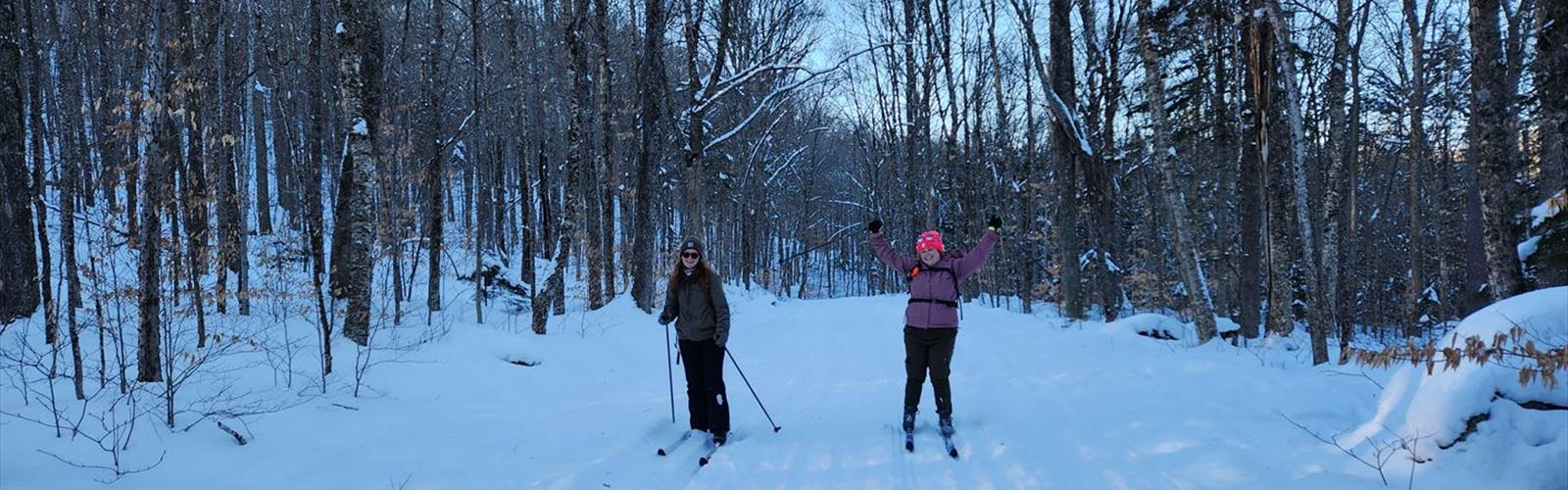
The Cross Vermont Trail is designed for multiple uses — hiking, biking, and cross-country skiing in winter. It's not a backcountry wilderness trail in the traditional sense. You'll move through a mix of environments: wooded singletrack, converted rail trails, dirt roads, and paved sections through villages. That variety is actually one of the trail's strengths. You're not locked into one type of terrain for the whole route.
Because the trail crosses Vermont from east to west rather than following the north-south ridge lines that most Vermont trails use, the topography is different from what you'd find on, say, the Long Trail. You're crossing river valleys and low passes rather than climbing major summits. The terrain is generally more accessible and less technical, which makes this route appealing to a wider range of users — families, cyclists, and hikers who want distance and scenery without extreme elevation gain.
Key Sections and Highlights
The trail passes through or near several notable areas in central Vermont:
- The Montpelier area — The state capital sits roughly in the middle of the route, and the trail passes through or near the city, giving you access to services, food, and lodging mid-route.
- The Winooski River corridor — A significant portion of the trail follows the Winooski River valley, one of Vermont's major river systems. The river views and riparian habitat along this stretch are a consistent highlight.
- The Lamoille Valley Rail Trail — Parts of the Cross Vermont Trail connect with or run parallel to this converted rail corridor, offering smooth, flat travel through the northern part of the route.
- Wells River and the Connecticut River — The eastern terminus puts you at the Connecticut River, which forms the border between Vermont and New Hampshire. It's a meaningful endpoint with real geographic weight.
- Lake Champlain — The western terminus at Lake Champlain is equally satisfying, dropping you at one of the largest lakes in North America and offering views toward the Adirondacks across the water.
Trail Conditions and Navigation
Because the Cross Vermont Trail is a work in progress, conditions vary significantly depending on which section you're on. Some segments are well-maintained with clear signage and smooth surfaces. Others involve road walks or less-developed connectors where you'll want to pay closer attention to your map or GPS. The Cross Vermont Trail Association publishes updated maps and route information on their website, and it's worth downloading the most current version before you head out — especially if you're doing a multi-day traverse.
Signage has improved considerably over the years, but don't rely on it exclusively. Carrying a downloaded route on your phone or a printed map is a smart move, particularly in the more rural eastern sections where trail markers can be sparse.
Multi-Day Planning
Doing the full crossing is a multi-day undertaking. The trail passes through enough towns and villages that resupply and lodging options exist along the way, which makes a supported traverse more realistic than on a remote wilderness route. Camping options vary — some sections have access to established campgrounds, while others require more planning. The Cross Vermont Trail Association's resources are the best starting point for logistics.
Many people choose to hike or bike individual sections rather than the full route. Day trips are very doable, particularly in the central sections near Montpelier or along the river corridors. If you're new to the trail, starting with a well-developed segment gives you a good sense of the route's character before committing to a longer push.
Seasons and Access
Vermont's seasons shape the experience on this trail considerably. Summer and early fall are the most popular times, with dry trails, full foliage, and long daylight hours. Fall color along the Winooski River valley and through the forested sections is genuinely excellent — central Vermont delivers on that front. Spring can be muddy, particularly on unpaved sections, and some areas may be seasonally wet. Winter opens up cross-country skiing possibilities on appropriate sections, though the mixed-surface nature of the trail means not every segment is skiable.
Who This Trail Is For
The Cross Vermont Trail works well for:
- Long-distance hikers looking for an east-west traverse of Vermont as an alternative or complement to the north-south Long Trail.
- Cyclists interested in a multi-day bikepacking route through Vermont's interior.
- Day hikers and families who want accessible, scenic sections without committing to the full route.
- Cross-country skiers in winter, on sections that support it.
It's not the right choice if you're looking for a technical summit hike or a remote wilderness experience. The trail's value is in its breadth — the way it connects communities, landscapes, and ecosystems across an entire state — rather than in any single dramatic feature.
Practical Notes
There is no single trailhead for the Cross Vermont Trail — access points exist at multiple locations along the route. Parking availability varies by access point. Dogs are generally welcome on the trail, though you should check local regulations for any sections that pass through parks or protected areas with specific rules. There is no fee to use the trail itself, though some connected facilities may have their own policies.
Before your trip, check the Cross Vermont Trail Association's website for the most current route maps, trail conditions, and any closures or reroutes — given the trail's ongoing development, this is genuinely useful information rather than just a formality.
The Essential Hiking Checklist
Everything you need for your next hike. Bilingual, printable, 1 page.
Get your free hiking checklistRecommended gear for this trail
As an Amazon Associate I earn from qualifying purchases.


Ready to go?
Everything you need to know before you goStarting Point
The cross vermont trail is located in Vermont. To get to the start of the trails, take exit 9 off of I-89 and head east on Route 2. The trailhead will be on your right.
When?
How much?
As an Amazon Associate I earn from qualifying purchases.
Affiliate links — LGPO may earn a commission at no extra cost to you.
- Hiking shoes Essential
- → Salomon Elixir Tour Mid WP · 203.38 $
- Layered clothing Essential
- Rain jacket Essential
- Trekking poles
- → Black Diamond Trail Ergo Cork · 69.99 $
- Headlamp
- → Petzl Actik Core 625 · 103.95 $
FAQ - Frequently asked questions
Everything you need to knowSimilar hikes nearby
Discover other trails you might enjoy

Vermont Association of Snow Travelers
Central Vermont
Northern Forest Canoe Trail
Central Vermont
Sterling Pond Trail
Central Vermont
Lake Mansfield Trout Club
Central Vermont
Moss Glen Falls
Central Vermont
Mill Trail
Central Vermont
Hiking near Stowe
0 trails to explore ~16 km away
We work hard to provide the most up-to-date and error-free data possible. If something seems incorrect, let us know! Your contribution helps the whole community.
Hikers' opinions
Be the first to review!
No hiker has shared their experience yet. Share your impressions and help other hikers!