


Ready to explore Mt Ellen? Here's everything you need to know before you go!
Discover the trail

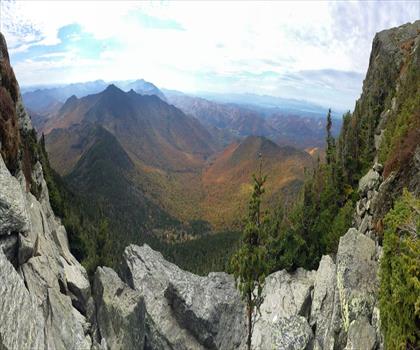
Photos: Patrick from Merrimack, NH, United States — CC BY 2.0 (Wikimedia Commons)
Trail description
Mt. Ellen is one of Vermont's highest peaks, topping out at 4,083 feet in the heart of the Green Mountains. It's a genuine mountain hike — 8.5 km with 875 meters of elevation gain — and the terrain earns its hard rating. Plan for around 4.5 hours on the trail, and start early enough to give yourself a comfortable buffer for the descent.
The Climb
The trail wastes no time establishing its character. You start in dense hardwood forest — maple, birch, and beech — where the canopy keeps things cool and the footing is relatively forgiving. That changes as you gain elevation. The forest transitions through mixed woods before thinning out near the upper reaches of the mountain, and the trail gets progressively steeper and rockier as you push toward the summit ridge.
The rocky sections in the upper half demand attention. Foot placement matters here, and the trail requires steady effort rather than just endurance. Open ridgeline sections break up the climb and give you your first real views across the surrounding valleys — a preview of what's waiting at the top. These exposed stretches also serve as natural checkpoints to catch your breath and get your bearings before the final push.
Summit Views
The payoff at the top is real. Mt. Ellen's summit delivers sweeping panoramic views across the Green Mountains, with layer after layer of forested ridges rolling out toward the horizon. On a clear day, the scale of central Vermont's mountain terrain becomes fully apparent from up here in a way that's hard to appreciate from the valleys below.
The summit is also a key point along the Long Trail, America's oldest long-distance hiking trail, which runs the full length of Vermont from the Massachusetts border to Canada. For through-hikers, Mt. Ellen is one of the significant high points on the route. For day hikers, it's a chance to walk a stretch of a trail system that's been drawing people into these mountains for over a century. The white blazes of the Long Trail guide you through the upper terrain, and the trail's character here — steep, rocky, and exposed in places — represents some of the more demanding miles on the entire route.
Wildlife and Vegetation
The elevation change on Mt. Ellen creates distinct ecological zones that shift noticeably as you climb. The lower hardwood forest is active with bird life — hermit thrushes, wood warblers, and woodpeckers are common — and white-tailed deer and black bears move through these woods regularly. Chipmunks and red squirrels are reliable trail companions throughout the climb.
As the forest thins near the summit, the vegetation shifts to hardier mountain plants adapted to the exposure and harsher conditions at elevation. This transition from lush lowland forest to sparse high-elevation plant communities gives the hike a condensed tour of Vermont's mountain ecosystems — the kind of ecological variety that usually requires much longer distances to experience.
Sugarbush and Seasonal Context
Mt. Ellen sits within the Sugarbush Resort area, which shapes the mountain's character in interesting ways. In winter, the same slopes you hike become ski terrain. In hiking season, the mountain offers backcountry access and a genuine wilderness feel despite the resort infrastructure nearby. The two identities coexist, and hikers who know the mountain in both seasons tend to appreciate each one differently.
Fall is a particularly strong season on Mt. Ellen. The elevation changes create a layered foliage effect as different tree species turn at different rates — the upper mountain often showing color before the valleys below. That said, fall also brings shorter days and busy trailheads, especially during peak foliage weekends. Parking areas can fill up early, so an early start is worth it both for the parking and for the light.
Spring mud season is worth factoring into your planning. Trails on Mt. Ellen can be soft and heavily churned during the melt, which is hard on both the trail surface and your boots. Summer offers the most reliable conditions overall, though afternoon thunderstorms are a real consideration in the Green Mountains — another reason to start early and aim to be off exposed ridgelines before midday.
What to Know Before You Go
- Distance: 8.5 km round trip
- Elevation gain: 875 m
- Difficulty: Hard
- Estimated time: 4.5 hours
- Trail connection: Long Trail (white blazes)
- Start early — the climb is substantial and afternoon weather in the mountains can move in quickly
- Parking fills up during fall foliage season and summer weekends; arriving early is the simplest solution
- Spring mud season can make trails difficult and damaging to the trail surface — check conditions before heading out
Mt. Ellen is a serious hike by Vermont standards, but it's the kind of serious that rewards the effort with a summit that genuinely delivers — big views, a connection to one of the great long-distance trails in the eastern United States, and a climb through terrain that keeps you engaged the whole way up.
The Essential Hiking Checklist
Everything you need for your next hike. Bilingual, printable, 1 page.
Get your free hiking checklistRecommended gear for this trail
As an Amazon Associate I earn from qualifying purchases.


Ready to go?
Everything you need to know before you goStarting Point
The mt ellen trails are located in the town of Warren, Vermont. To get to the start of the trails, take exit 10 off of I-89 and head east on VT-100. The trailhead will be on your left after about 2 miles.
When?
How much?
As an Amazon Associate I earn from qualifying purchases.
Affiliate links — LGPO may earn a commission at no extra cost to you.
- Hiking shoes Essential
- → Salomon Elixir Tour Mid WP · 203.38 $
- Layered clothing Essential
- Rain jacket Essential
- Trekking poles
- → Black Diamond Trail Ergo Cork · 69.99 $
- Headlamp
- → Petzl Actik Core 625 · 103.95 $
FAQ - Frequently asked questions
Everything you need to knowSimilar hikes nearby
Discover other trails you might enjoy

Vermont Association of Snow Travelers
Central Vermont
Northern Forest Canoe Trail
Central Vermont
Sterling Pond Trail
Central Vermont
Moss Glen Falls
Central Vermont
Mill Trail
Central Vermont
Camel's Hump State Park
Central Vermont
Hiking near Montpelier
0 trails to explore ~30 km away
We work hard to provide the most up-to-date and error-free data possible. If something seems incorrect, let us know! Your contribution helps the whole community.
Hikers' opinions
Be the first to review!
No hiker has shared their experience yet. Share your impressions and help other hikers!