
🦟 Why a Good Mosquito Net Can Save Your Best Adventures
I lived through hell. It was last June at Parc national des Hautes-Gorges-de-la-Rivière-Malbaie, and I had forgotten my perfect outdoor mosquito net at home. Result? A sleepless night battling swarms of hungry mosquitoes, and a completely ruined hiking day because I was exhausted. Since that mishap, I never leave without my mosquito protection. And trust me, after 15 years exploring Quebec trails and beyond, I've tested pretty much everything on the market. In this guide, I'll share everything I've learned so you can choose the perfect mosquito net for your adventures.🏕️ Different Types of Mosquito Nets: Find What Works for You
When we talk about the perfect outdoor mosquito net, you first need to understand there's no single miracle solution. It all depends on your adventure style and specific needs.Head Net: Your Personal Shield
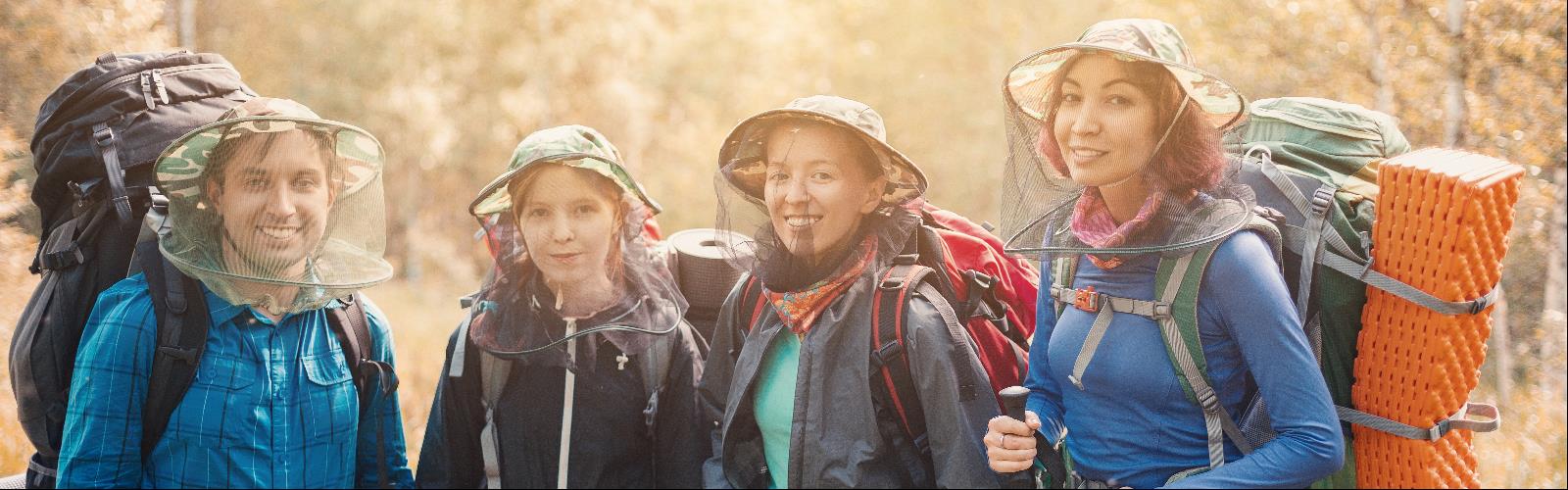
This is my favorite for day hiking. Ultra-light (under 50 grams), it slips into any pocket and protects you instantly when you stop for a break or to take photos. Pros:
💡 Pro tip — Choose a head net with a rigid ring rather than elastic. It keeps its shape even in wind, and you avoid it sticking to your face.
Camping Mosquito Net: Your Nighttime Fortress
For camping, nothing beats a good mosquito net that covers your entire sleeping area. I use a rectangular 2x1.5 meter model that lets me sleep, read, and even eat in shelter.| Type | Weight | Coverage Area | Best Use |
|---|---|---|---|
| Head net | 30-80g | Face/neck | Day hiking |
| Individual net | 200-400g | 1 person lying | Solo camping |
| Double net | 400-700g | 2 people | Couple camping |
| Shelter net | 800g-2kg | Dining/relaxation area | Base camping |
Shelter Net: Luxury in Nature
If you're base camping or car camping, a shelter net with floor is a game-changer. You can set up your table, chairs, and fully enjoy your evenings outdoors without getting devoured.🔍 How to Choose the Perfect Mesh (and Avoid Traps)
Mesh size is crucial. Too wide, and small gnats get through. Too fine, and you lack airflow. After testing several densities, here's what I recommend.Optimal Density by Insect Type
In Quebec, we deal with a whole range of small flying creatures. Mosquitoes are just the beginning! There are also black flies, no-see-ums, and those damn gnats that always find a way through. Standard mesh (156 holes/square inch): Perfect against mosquitoes, but black flies can sometimes get through. This is my choice for classic summer hikes. Fine mesh (196+ holes/square inch): My recommendation for really infested areas. It blocks even the smallest no-see-ums, but reduces airflow slightly.
⚠️ Warning — Avoid ultra-fine mesh (250+ holes/square inch) for camping. You'll feel like you're suffocating, especially on hot, humid nights.
Materials: Polyester vs Nylon
I used nylon for a long time, but switched to polyester for most of my adventures. Why? It resists UV better and keeps its flexibility even after years of use. Nylon remains interesting if you're seeking absolute lightness, but it tends to become brittle over time, especially if you leave it in the sun often.🎒 Ultra-Light Mosquito Nets: My Favorites for Hiking
When you're heading out for a long hike like at Mont du Lac-des-Cygnes, every gram counts. Here are my tested and approved choices for adventures where weight is critical.My Personal Ultra-Light Selection
After hauling overly heavy mosquito nets for years, I finally found my gems. My current head net weighs only 35 grams and fits in a ping-pong ball-sized pouch. For lightweight camping, I use a pyramid model that weighs 180 grams and hangs from a single anchor point. Perfect when you're sleeping under the stars and just want quick protection to set up.
💡 Pro tip — For long distances, invest in a mosquito net with integrated compression sack. You can compact it to apple size and easily clip it to your pack.
Compromises to Accept
Ultra-light mosquito nets require some concessions. The fabric is thinner, so more fragile. I once tore mine on a branch during a night outing. Now I always carry a small roll of repair tape. The other point is space. A 180-gram mosquito net will never give you the comfort of a 500-gram model. But honestly, for one or two nights on trail, it works perfectly.🌲 Camping Special: Setup and Field Tips
Setting up your mosquito net seems obvious, but I've seen so many campers struggle that I've developed techniques that change everything. Especially when you arrive at camp at night and mosquitoes are already in attack mode.The "Lightning Setup" Technique
My favorite trick is preparing all my anchor points before even taking the mosquito net out of the bag. I stretch my guy lines, adjust heights, and only have to hang the fabric as the last step. Takes me 30 seconds instead of 5 minutes getting bitten. My setup sequence:
📌 Good to know — Mosquitoes are less active when there's wind. Set up in natural airflow, but avoid overly exposed summits where your mosquito net might flap all night.
Solutions for Difficult Terrain
Not always easy to find well-placed trees. I invested in ultra-light telescopic poles (120 grams per pair) that let me create my own anchor points. This saved me several times, notably during outings to Mont Yamaska where open sites lack trees.Maintenance and Durability
A good mosquito net can last years if you take care of it. After each outing, I shake it well to remove debris, and let it dry completely before storing. Once per season, gentle hand wash with mild soap."A well-maintained mosquito net is like a good pair of boots: it gets even better with time and experience."
🦟 Beyond the Mosquito Net: Complete Anti-Insect Protection
A perfect outdoor mosquito net is great, but it doesn't do everything. I learned the hard way that a comprehensive approach works much better than single protection.The Multi-Layer Strategy
My method combines several elements depending on infestation intensity. In June in swampy areas, I bring out heavy artillery. For an autumn hike, a head net is plenty. Level 1 - Light protection:
💡 Pro tip — Mosquitoes are attracted to the CO2 you exhale. Eat less sugar before outings and avoid alcohol at camp: you'll be naturally less attractive to them.
Strategic Site Selection
Your campsite location can make all the difference. After years of experience, I systematically avoid areas near stagnant water, even if the view is magnificent. Mosquitoes breed there, and you'll see swarms as soon as the sun sets. My favorite spots: slightly elevated, with natural breeze, away from swamps but not too far from flowing water for supply.
📥 Download our free gifts — The complete list of all anti-insect equipment to bring by outing type, with exact quantities and field-tested brands.
Get my gifts →
Get my gifts →
💰 Budget and Value: My Recommendations
You can easily spend a fortune on outdoor gear, but for mosquito nets, I've discovered you can do very well without breaking the bank. Here are my recommendations by budget, personally tested.Tight Budget (under $30)
Even with a small budget, you can equip yourself properly. My first head net cost me $15 at a military surplus, and it accompanied me for 3 years before giving up. For camping, a basic rectangular mosquito net works perfectly. What matters is mesh density and dimensions, not necessarily the brand.Medium Budget ($30-80)
This is the sweet spot in my opinion. You access more durable materials, more practical attachment systems, and often an interesting warranty. In this range, I favor models with reinforcements at tension points and integrated compression systems. It makes the difference over time.High Budget ($80+)
For regular adventurers or those heading into extreme conditions, the investment is justified. You gain in weight, compactness, and durability. High-end mosquito nets use technical fabrics that better resist UV and tears. Some even have anti-microbial treatments.| Budget | Advantages | Compromises | Lifespan |
|---|---|---|---|
| < $30 | Accessible, does the job | Weight, durability | 1-2 seasons |
| $30-80 | Good balance | Few extra grams | 3-5 seasons |
| $80+ | Maximum performance | Price | 5+ seasons |
📌 Good to know — End-of-summer sales are the best time to invest in a quality mosquito net. I've found models at 40% off in September.
🌍 Extreme Conditions: Arctic, Tropics and High Mountains
My adventures have taken me to environments where a standard mosquito net is no longer enough. Whether in northern Quebec or during my southern travels, I had to adapt my strategy.Arctic and Subarctic Conditions
In northern Quebec, mosquitoes and black flies can be unimaginably intense. I've experienced moments where the air seemed literally black with so many. For these conditions, I use a head net with a cape covering the shoulders, plus a camping mosquito net with integrated floor. Impossible to skip the floor: insects always find a way underneath.Tropical Environments
During my southern travels, I discovered that tropical mosquitoes are different from our Quebec mosquitoes. More aggressive, active at different times, and some disease carriers. The mosquito net then becomes health safety equipment, not just comfort. I favor insecticide-treated models for these destinations.
⚠️ Warning — In tropical zones, always verify your mosquito net meets WHO (World Health Organization) standards for protection against disease-vector mosquitoes.
High Mountains
At altitude, mosquitoes are generally less present, but when they're there, you have nowhere to flee. I experienced this during a Rockies expedition: arriving at the alpine lake, impossible to escape swarms of mosquitoes attracted to the only water source for kilometers. For high mountains, I favor absolute lightness. An ultra-compact head net and body protection for extended breaks.🔧 Emergency Repairs and Field Maintenance
It'll happen to you someday: your mosquito net tears mid-expedition. I learned the hard way the importance of always having a repair kit and knowing how to use it.My Minimal Repair Kit
In my pack, I always have a small kit weighing under 20 grams but can save an outing:
💡 Pro tip — For emergency repairs, clear tape is more discreet than silver duct tape, and lets through as much light. Perfect for repairing without compromising visibility.
Field Repair Techniques
Small tear (under 2 cm): A simple piece of tape on each side suffices. Make sure fabric is clean and dry before applying. Medium tear (2-5 cm): Quick stitch with overlock, then tape reinforcement. It's makeshift, but it holds. Large tear: Sewn then glued fabric patch. I once saved a mosquito net with a piece cut from a t-shirt! The important thing is acting fast. A small tear quickly becomes a large tear if you do nothing.Preventive Maintenance
A few simple gestures greatly extend your mosquito net's lifespan:Conclusion: Your Perfect Mosquito Net Awaits
After all these years testing mosquito nets in every possible environment, here are my essential tips: • Adapt your choice to your adventures: a head net for day hiking, a complete model for camping • Prioritize mesh quality: 156-196 holes/square inch for good protection/breathability balance • Invest according to usage frequency: $30-80 suffices for most adventurers • Prepare for repairs: a minimal kit can save your outings • Think comprehensive strategy: the mosquito net is part of a complete protection system Your next adventure at Parc national du Mont-Saint-Bruno or elsewhere deserves to be fully experienced, without getting devoured by mosquitoes. A good mosquito net is the difference between a memorable outing and an ordeal. Now, stop procrastinating and go choose your perfect outdoor mosquito net. The trails await you, and this time, you'll be ready to face all the little flying vampires that cross your path!Newsletter
Content that makes you want to go outside
Every week, a trail idea, a reflection on nature, or a tip worth the detour. Zero spam. Only the essentials.
Joined by 12,000+ outdoor enthusiasts
Read next