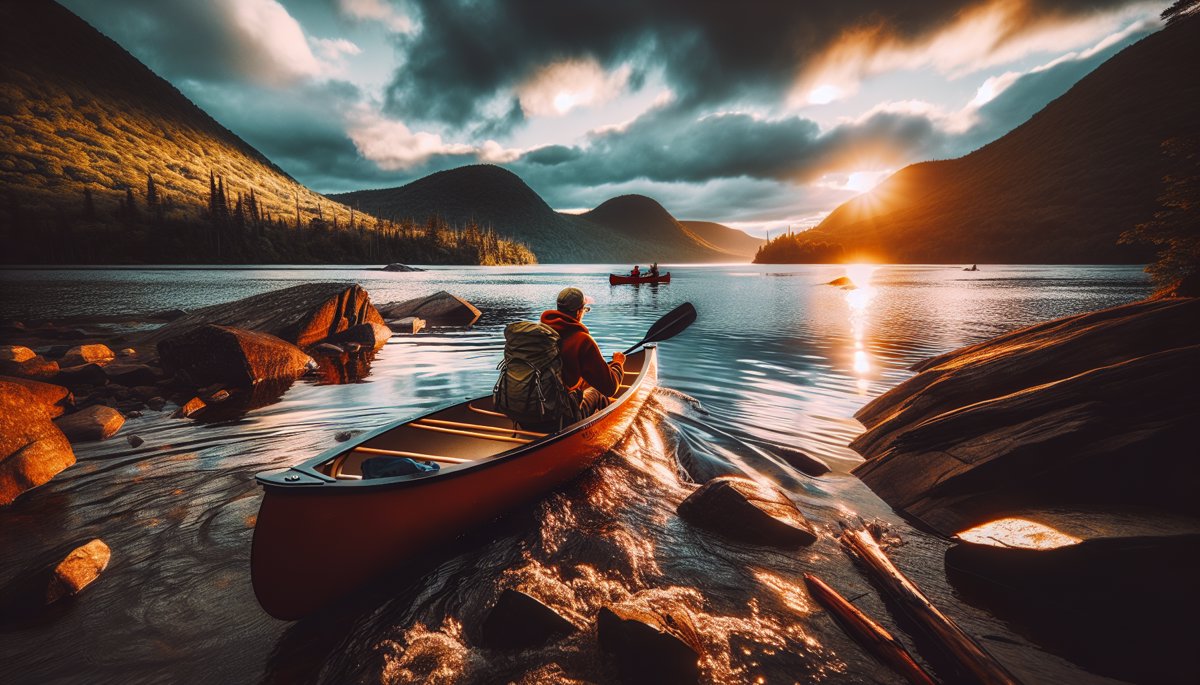
Have you ever found yourself on the edge of a perfectly calm lake, thinking it would be the perfect moment for a canoe ride? Quebec, with its thousands of lakes and rivers winding through our forests, is literally a dream playground for starting canoeing. After spending years exploring our waterways, I can tell you there's nothing like that first outing when you realize how much canoeing can transform your way of discovering nature. In this guide, I'll share everything I wish I had known before my first trip — from essential equipment to the best spots to start, including basic techniques that will make you a confident canoeist.
Get my gifts →
Why choose canoeing as your first water activity?
Canoeing is a bit like the hiking of water — accessible, versatile and incredibly rewarding. Unlike kayaking where you sit lower and getting out can be complicated, canoeing gives you a total sense of freedom. You can easily bring your dog, a picnic, or even your camping equipment for a multi-day adventure.
What I love about canoeing is its gentle learning curve. In a single outing, you can master the basics and already fully enjoy the experience. No need for years of training like in climbing or whitewater kayaking.
In Quebec, we have the advantage of having thousands of lakes perfect for beginners. From small lakes protected from wind in the Laurentides to the magnificent waters of Charlevoix, you'll always find a spot suited to your level and the day's weather.
Essential equipment to start canoeing in Quebec
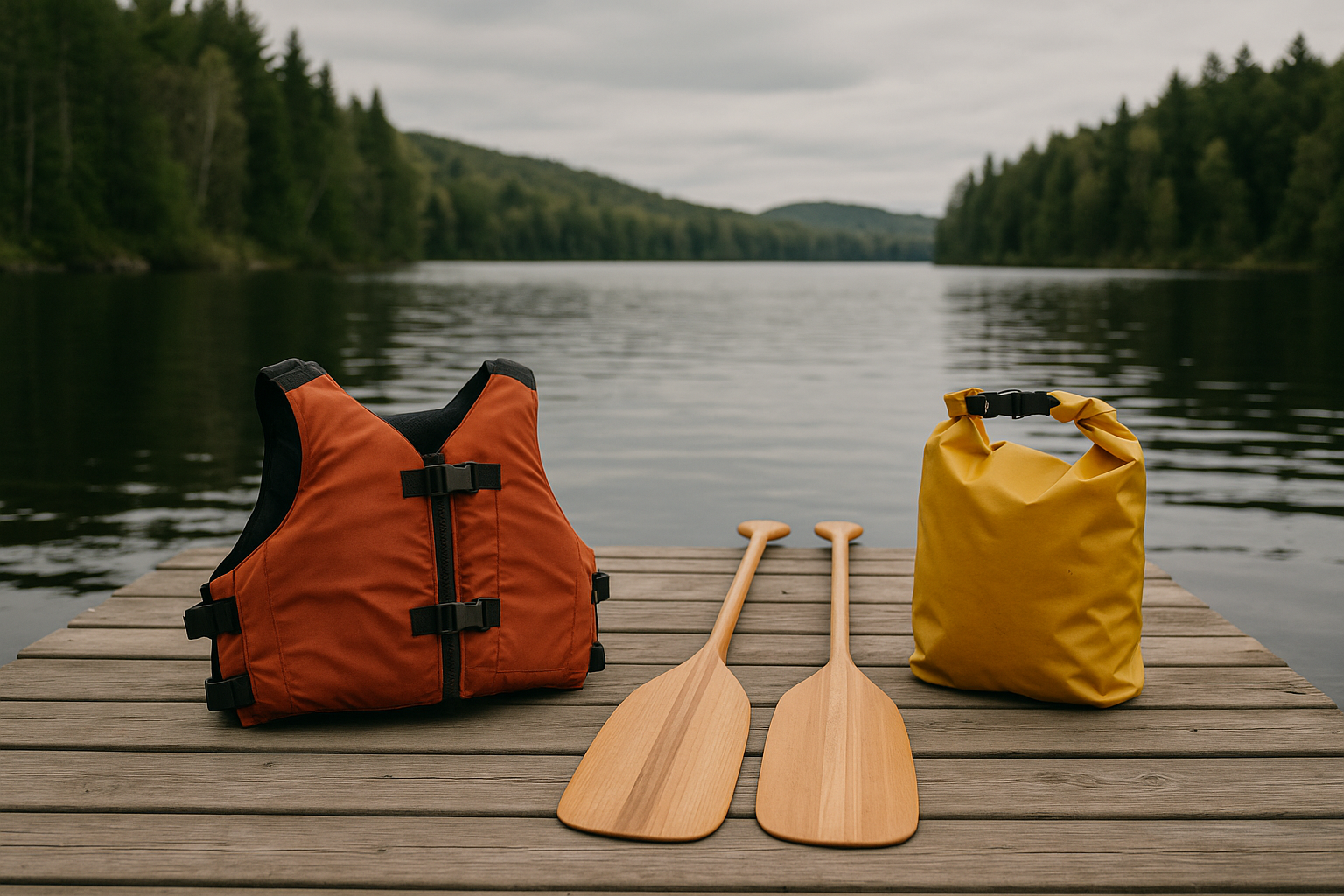
Good news: you don't need to empty your bank account to start! Here's what's really essential, based on my years of experience and some costly mistakes I'd like to help others avoid.
Mandatory safety equipment
| Equipment | Legally required | Approximate price |
|---|---|---|
| Personal flotation device (PFD) | Yes (one per person) | $50-150 |
| Sound signaling device | Yes (whistle or horn) | $5-20 |
| Bailer or bilge pump | Yes | $15-40 |
| Waterproof flashlight | Sunset/sunrise | $20-60 |
Comfort and performance equipment
For your first outings, focus on these elements that will really improve your experience:
- Quality paddles — A good paddle makes all the difference. Avoid plastic paddles from big box stores.
- Dry bag — To protect your phone, keys and snacks. Essential!
- Seat cushion — Your knees will thank you after 2-3 hours on the water.
- Sunscreen and hat — Water reflection doubles UV exposure.
The best places to start canoeing in Quebec
After exploring hundreds of waterways, I can tell you that not all lakes are equal for beginners. You want a place protected from wind, with easy water access and ideally services nearby just in case.
Montreal region
If you live near Montreal, you're lucky! Several excellent options are less than an hour's drive away:
- Lac des Deux Montagnes — Perfect for beginners, with multiple access points and protected areas
- Rivière des Mille Îles — A magnificent and safe route, ideal for a first outing
- Parc national du Mont-Saint-Bruno — Small lake perfect for practice, with on-site equipment rental
Laurentides and Lanaudière
The Laurentides are canoeing paradise! Hundreds of lakes, often connected to each other, offering infinite possibilities:
- Lac Monroe — A classic for beginners, with beautiful landscape diversity
- Parc du Domaine Vert — Perfect for families, with marked routes
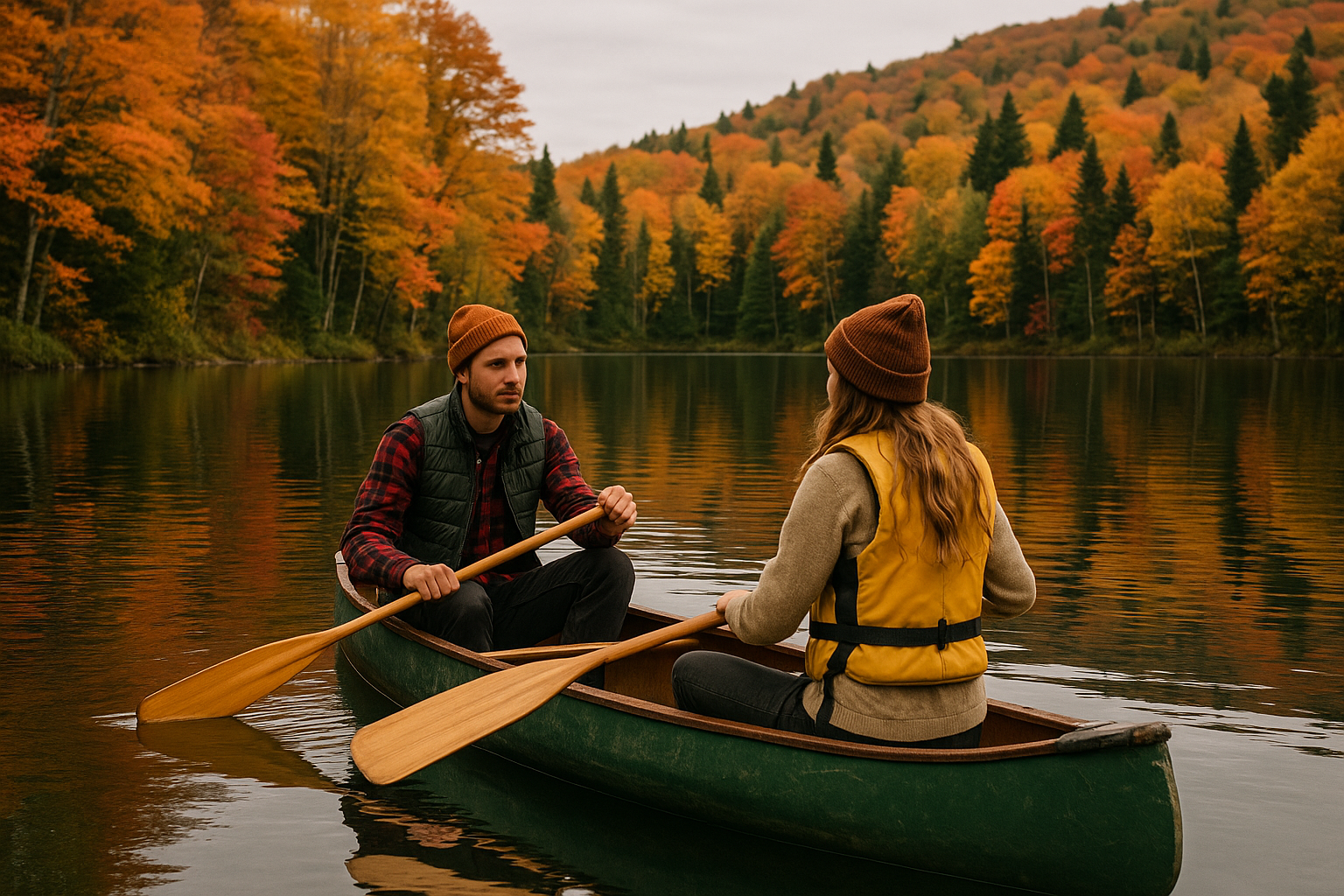
- Lac Écho — My personal favorite, especially in autumn with the colors
Basic techniques for proper paddling
Technique is what makes the difference between an exhausting outing and a relaxing ride. Let me share the basics I teach all my friends who are starting out.
Position in the canoe
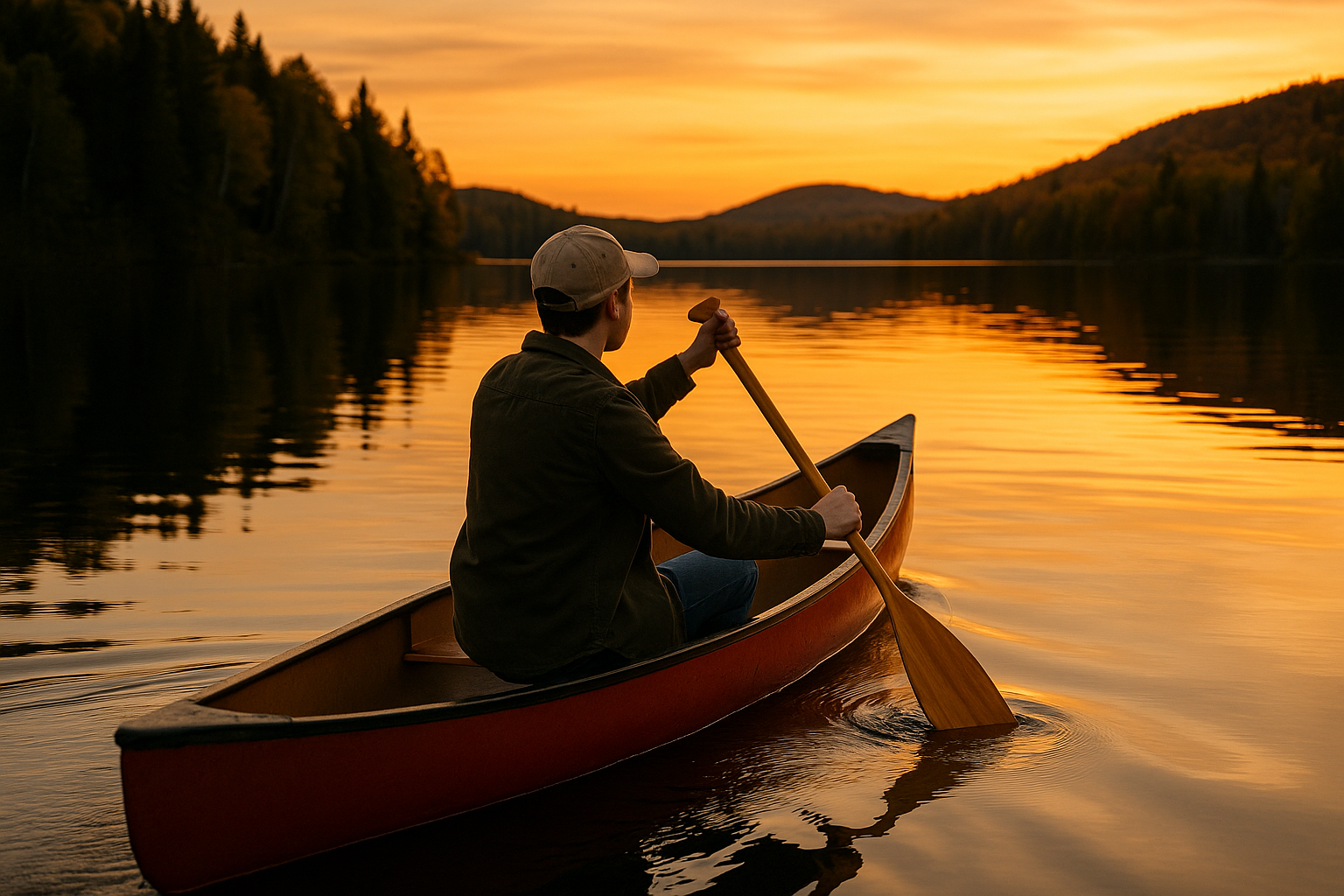
If there are two of you in the canoe, the more experienced person goes in the back. They control direction while the person in front provides power. If you're starting alone, position yourself slightly behind center for better control.
The basic paddle stroke
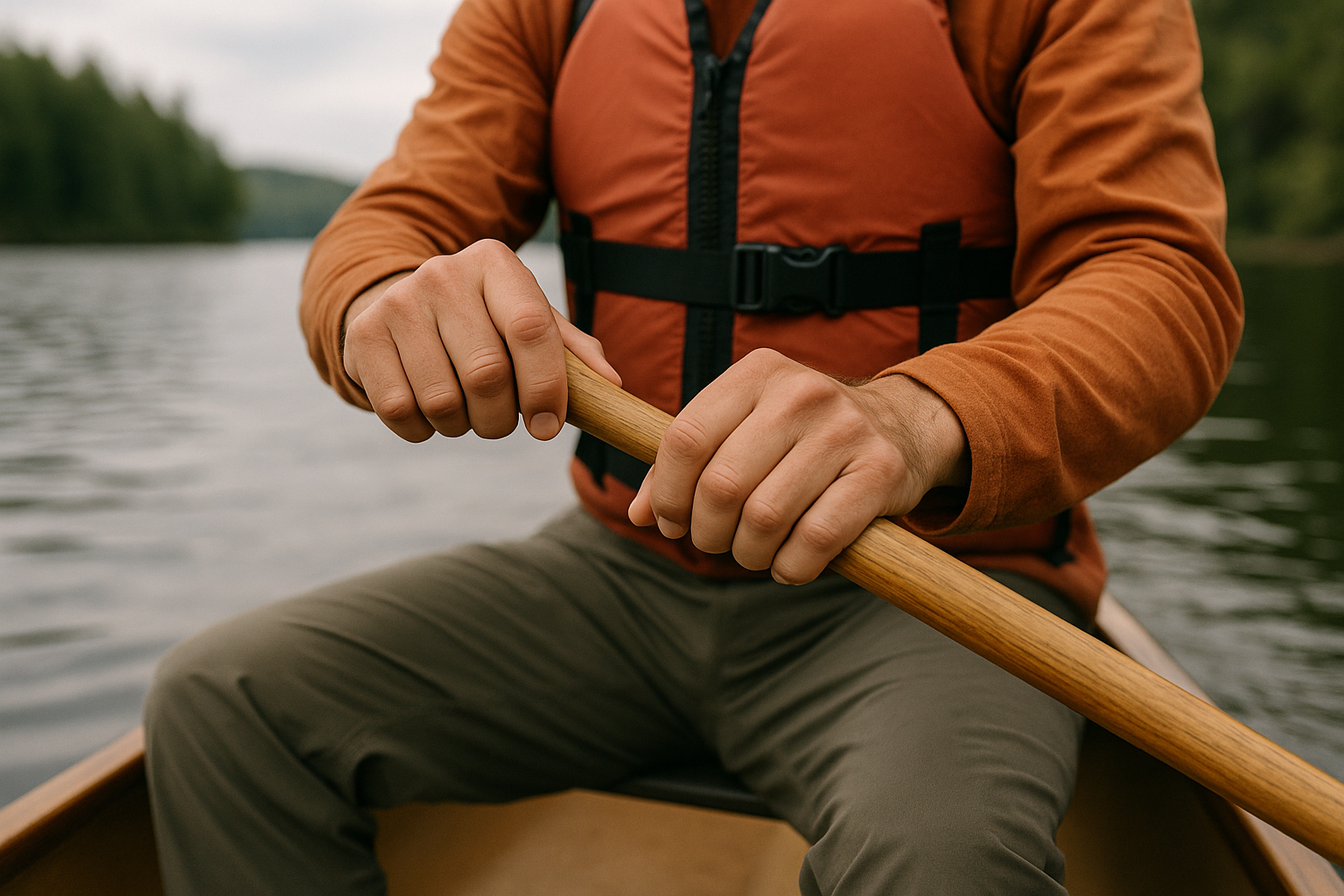
Forget what you see in movies! A good paddle stroke is done with your whole body, not just your arms:
- Catch phase — Plunge the blade completely into the water, close to the canoe
- Power phase — Pull the water backward keeping the paddle close to the canoe
- Exit phase — Remove the paddle when it reaches your hips
- Recovery phase — Bring the paddle forward without dragging it in the water
How to turn and maneuver
To turn right, the person in front paddles on the left and vice versa. If you're alone, use the rudder stroke: leave your paddle in the water at the back and use it like a rudder.
How to choose the right conditions for beginners
Weather is your best friend or worst enemy in canoeing. After experiencing some memorable outings (not always for the right reasons!), I can tell you it's better to be patient and wait for the right conditions.
Ideal conditions for beginners
| Factor | Ideal condition | Absolutely avoid |
|---|---|---|
| Wind | Less than 15 km/h | More than 25 km/h |
| Water temperature | More than 15°C | Less than 10°C (without specialized equipment) |
| Visibility | Clear, no fog | Dense fog |
| Precipitation | Dry weather | Storms or heavy rain |
Reading conditions on the water
Once on the water, stay alert to signs of weather change:
- Growing waves — Wind is picking up, time to get closer to shore
- Darkening clouds — Prepare to return quickly
- Dropping temperature — Often a sign that a weather front is approaching
My trick: I always check at least two weather sources before an outing, and I keep an eye on wind forecasts specifically. Environment Canada has excellent marine forecasts.
Canoe safety: golden rules I learned the hard way
Safety isn't just about equipment — it's primarily about judgment. Let me share some lessons I learned in the field (sometimes in a bit too memorable way!)
Before leaving
Always, ALWAYS tell someone where you're going and when you plan to return. I use a simple trip plan that I leave with my partner:
- Exact launch location
- Planned route
- Expected return time (+2h margin)
- Number to call if I don't check in
On the water
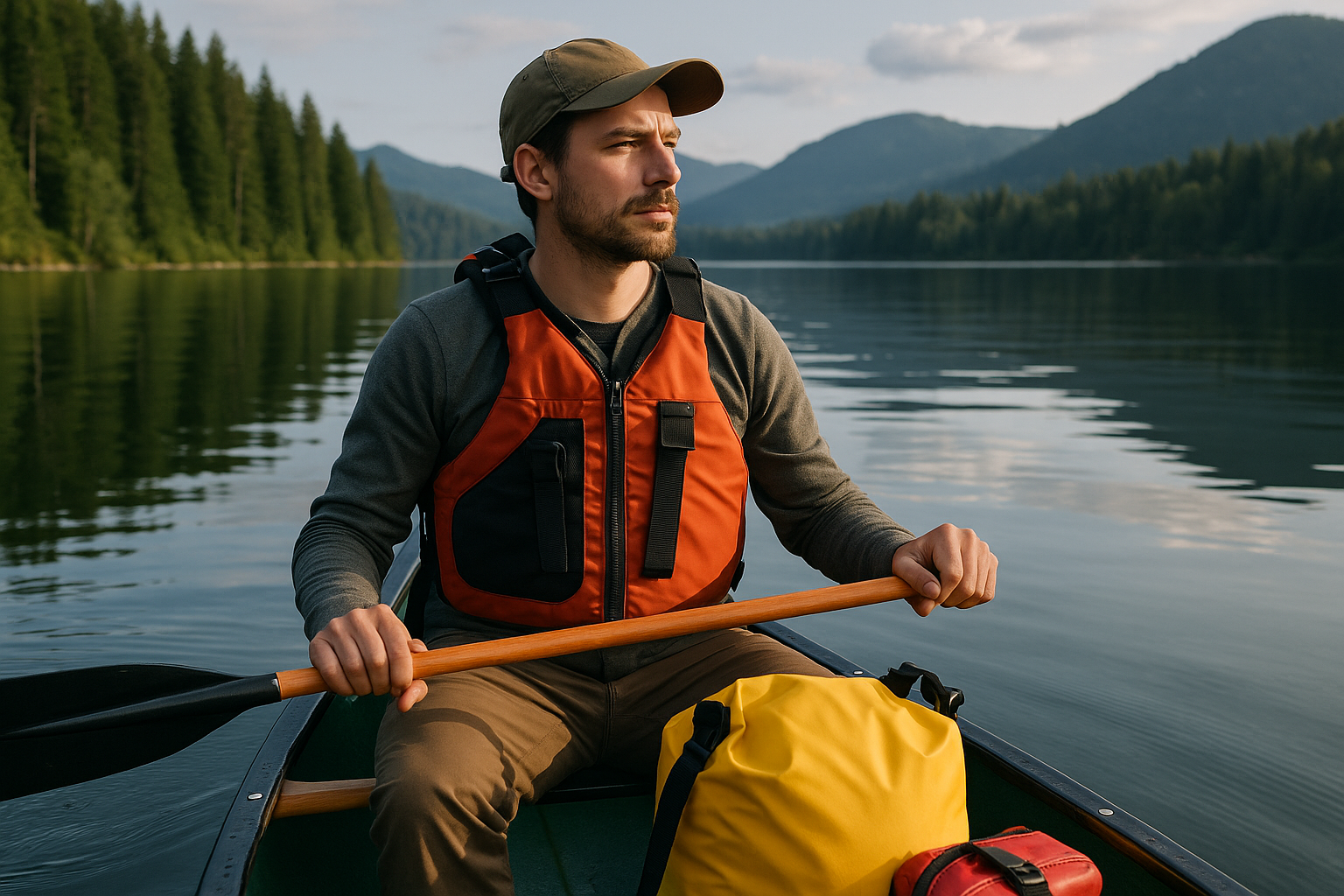
Rule number one: always wear your flotation vest. Not attached in the canoe, not lying on your knees — on your body. I've seen too many situations deteriorate quickly to take this risk.
Other essential safety rules:
- Stay near shores when you're starting — maximum 50 meters
- Avoid rapids even if they look easy
- Learn self-rescue before your first outing
- Keep your phone in a dry bag and accessible
Realistic budget to start canoeing in Quebec
Let's talk money! It's often the first question I get asked, and the good news is that canoeing can be very affordable if you approach it right.
Option 1: Rental to start
If you want to test before investing, rental is perfect:
| Service | Typical price | Generally included |
|---|---|---|
| Canoe rental (day) | $40-80 | Canoe, paddles, PFD |
| Rental with transport | $80-120 | Everything + transport to lake |
| Beginner course | $100-150 | Course + equipment + supervision |
Option 2: Buying used equipment
The used market is excellent in Quebec. Here's what you can expect to pay:
- Used canoe in good condition — $400-800 (new: $800-2000)
- Used paddles — $30-60 each (new: $60-150)
- Used PFD — $20-40 (new: $50-120)
- Various accessories — $50-100
Realistic total budget
To start seriously with your own equipment:
- Tight budget — $500-700 (all used, basic equipment)
- Comfortable budget — $1000-1500 (mix new/used, good equipment)
- No-compromise budget — $2000+ (new quality equipment)
Planning your first canoe outing
Your first outing is a special moment! Let me guide you so everything goes perfectly and you can't wait for the next one.
Choosing the right time
For a successful first experience, aim for:
- A weekday morning if possible — fewer people, often calmer conditions
- Between May and September — mild temperatures and warmer water
- After a period of stable good weather — predictable conditions
- 2-3 hours maximum — enough to learn, not enough to be exhausted
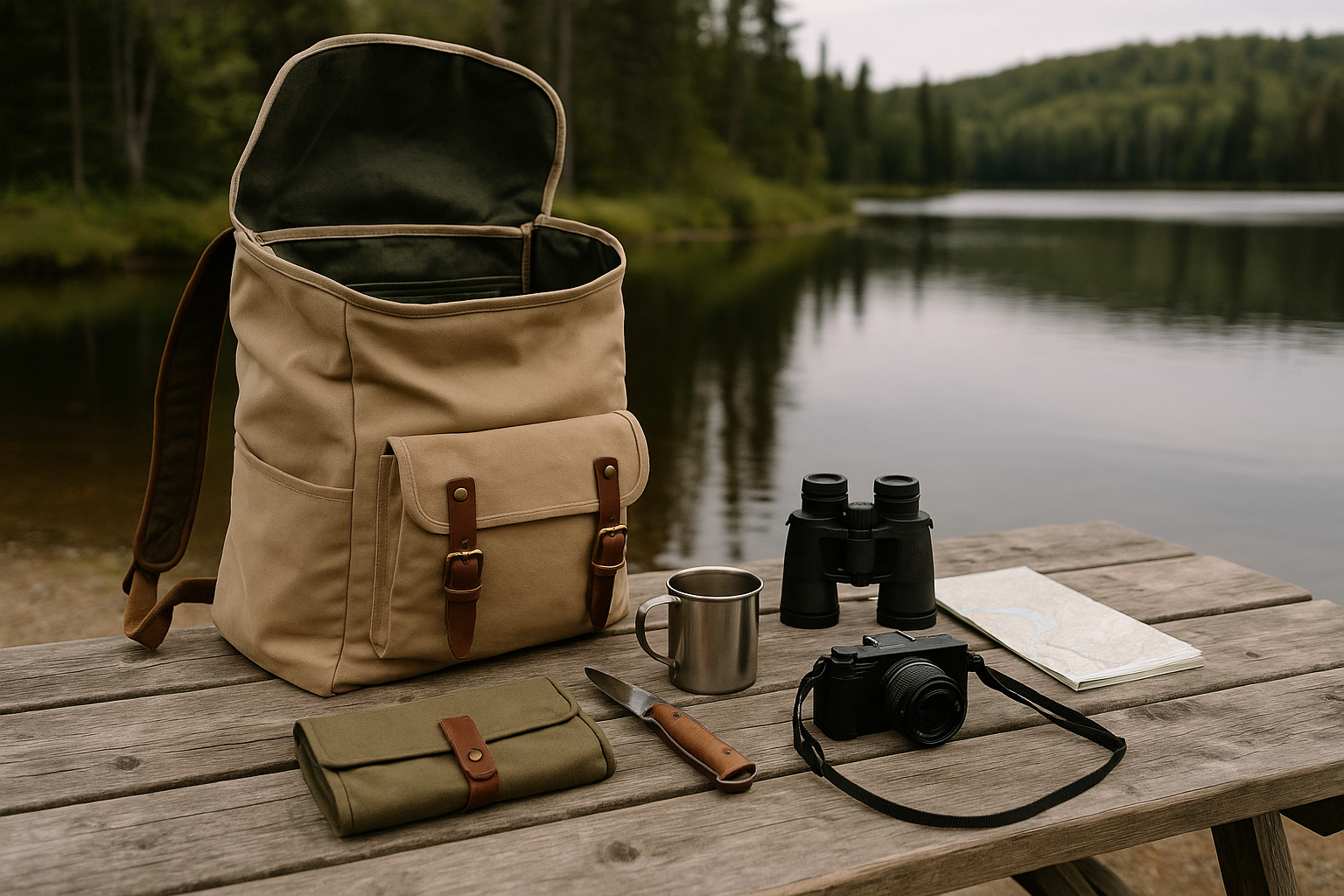
What to put in your bag
Here's my proven checklist for a few-hour outing:
- Safety — PFD, whistle, waterproof phone, basic first aid kit
- Comfort — Sunscreen, hat, sunglasses, cushion
- Hydration/nutrition — Water (more than you think you need), energy snacks
- Clothing — Change of clothes in dry bag, windbreaker
- Navigation — Laminated lake map, compass (even if staying near shores)
If you want to discover other outdoor activities after your first canoe outing, I recommend reading our ultimate guide to start hiking in Quebec. Both activities complement each other perfectly!
Beginner mistakes to absolutely avoid
After seeing (and making myself) quite a few mistakes over the years, here are the most common traps and how to avoid them. Trust me, it'll save you time, money and some embarrassing moments!
Mistake #1: Underestimating wind strength
Wind is the factor all beginners underestimate. A lake that looks calm from the parking lot can become a real challenge once you're 200 meters from shore. My rule: if trees are moving, postpone your outing or choose a smaller, more protected lake.
Mistake #2: Going too far, too long
First outing enthusiasm often pushes people to think big. Big mistake! You don't yet know your pace, your endurance, or how your body will react to this new activity. Start with 1-2 hours maximum, always stay within 15 minutes paddling from your starting point.
Mistake #3: Neglecting safety equipment
"It's nice weather, the water is calm, we're staying near shore..." I've heard this dozens of times before a situation went wrong. Safety equipment is like a seatbelt in a car: you need it exactly when you don't expect to.
Mistake #4: Poor weight distribution
A poorly loaded canoe is an unstable and hard-to-steer canoe. Basic rule: heaviest weight in the center and bottom of the canoe. If you're alone, position yourself slightly behind center, never completely at the back.
Next steps: how to progress in canoeing
Once you've tasted the pleasure of canoeing, you'll probably want to explore further and develop your skills. Here's how to progress intelligently.
Advanced techniques to master
After mastering the basics, focus on these techniques that will really improve your experience:
- The J-stroke — To paddle alone without constantly changing sides
- Draw and pry strokes — For precise maneuvers near obstacles
- Reverse propulsion — Essential for tight spaces
- Self-rescue — Crucial technique for getting back into a canoe after a fall
Exploring new territories
Quebec offers infinite exploration possibilities. Once comfortable on lakes, you can consider:
- Calm rivers — Like rivière L'Assomption or certain sections of rivière Rouge
- Canoe camping — Multi-day adventures in parks like La Vérendrye
- Connected lake circuits — Algonquin Park in Ontario or Parc de la Jacques-Cartier
For inspiration, check out our trails near Charlevoix — this magnificent region perfectly combines canoeing and hiking.
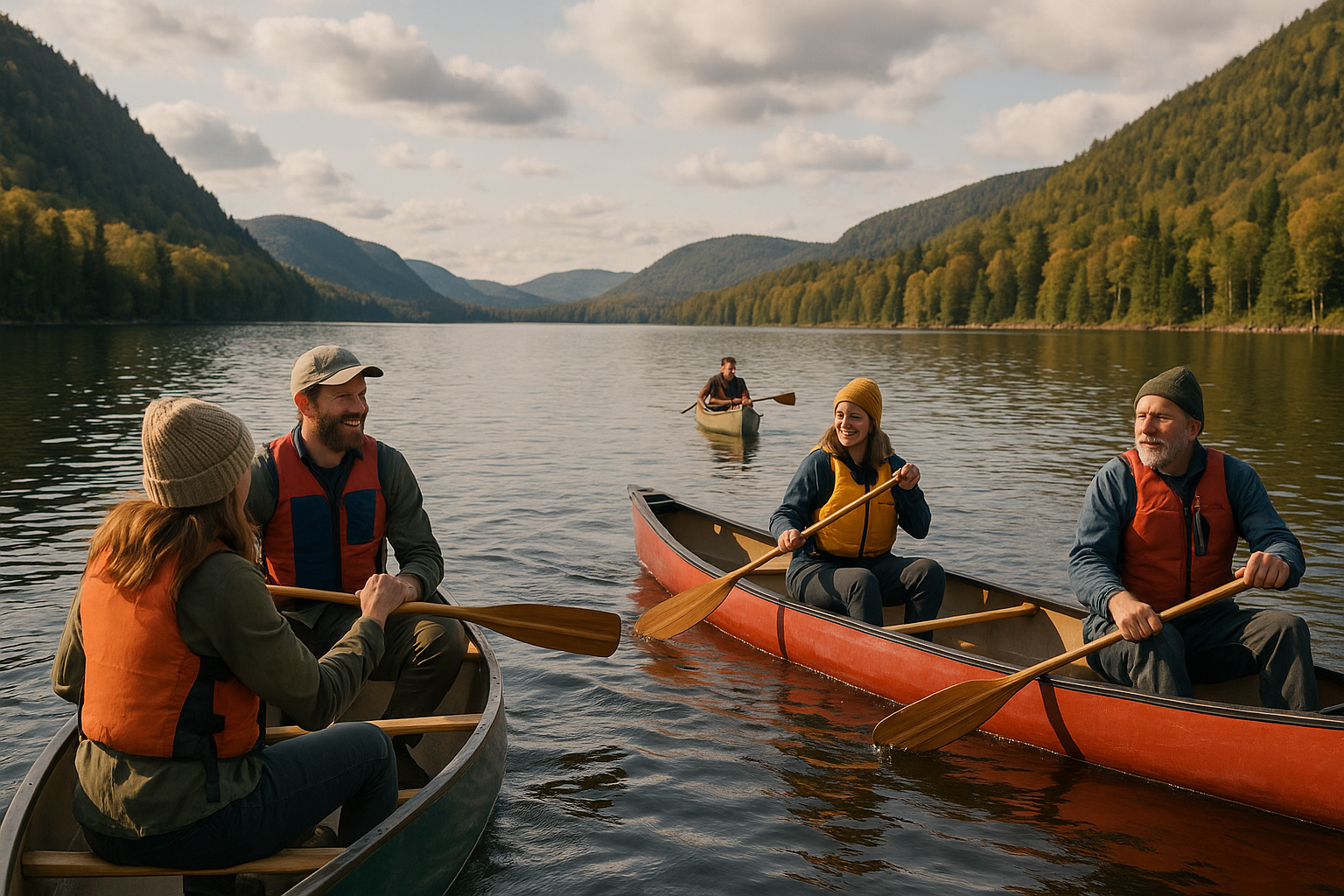
Launch into the canoeing adventure!
There you have it, you now have all the keys to start canoeing in Quebec with confidence! Let's recap the essential points:
- Start simple — Choose a calm lake, ideal conditions and limit your first outing to 2-3 hours
- Safety first — Mandatory equipment, trip plan and always stay near shores at the beginning
- Invest intelligently — Rental or used to start, then gradually upgrade your equipment
- Learn basic techniques — Good technique will save you energy and increase your enjoyment
- Progress at your pace — Each outing is an opportunity to learn and discover new territories
Canoeing is much more than just an activity — it's a gateway to a deeper relationship with our magnificent Quebec landscapes. That feeling of gliding silently on water, observing wildlife up close and discovering hidden corners inaccessible on foot, is something that will mark your weekends for a long time.
"Canoeing teaches us patience, reading nature and humility. Each outing is a lesson, each lake a new adventure to discover."
So what are you waiting for? The beautiful season is approaching, our lakes have never been more beautiful, and your first canoe adventure awaits you. Start with a small outing near home, respect safety guidelines, and let yourself be carried by this passion that has transformed my way of seeing the outdoors. If you have questions or want to share your first experience, don't hesitate to write to us — the LGPO community is always there to encourage new enthusiasts!

About the author
François Dumaine
Founder of Let's Go Play Outside
A passionate hiker, photographer and content creator, François has been hiking the trails of Quebec and Alberta since 2014. He founded Let's Go Play Outside to give you the information he wished he had before heading out.
Newsletter
Content that makes you want to go outside
Every week, a trail idea, a reflection on nature, or a tip worth the detour. Zero spam. Only the essentials.
Joined by 12,000+ outdoor enthusiasts
Read next
Continue the journey