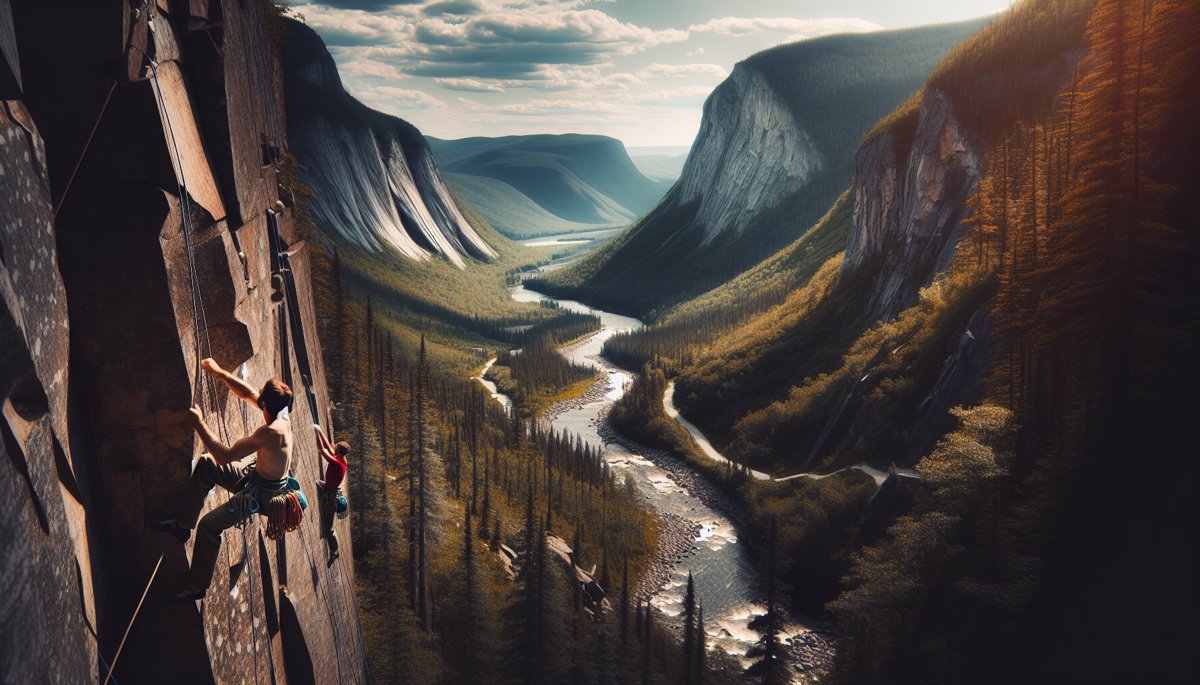
📌 Good to know — Outdoor rock climbing in Quebec offers incredible playgrounds, from the granite of the Laurentides to the cliffs of Charlevoix. With over 300 documented sites in the province, you'll never have time to explore them all!
Do you dream of leaving the climbing gym to discover real cliffs? I totally understand. After 15 years exploring Quebec's trails, I caught the outdoor climbing bug a few years ago, and believe me, it's a completely different world. Between rock that can be friable, unpredictable weather, and sometimes epic approaches, outdoor climbing requires solid preparation. But what a reward! Climbing on granite facing a Laurentides lake or on the Côte-Nord cliffs is nothing like the colorful holds of the gym. In this guide, I'll share everything I wish I had known before my first cliff outing in Quebec.
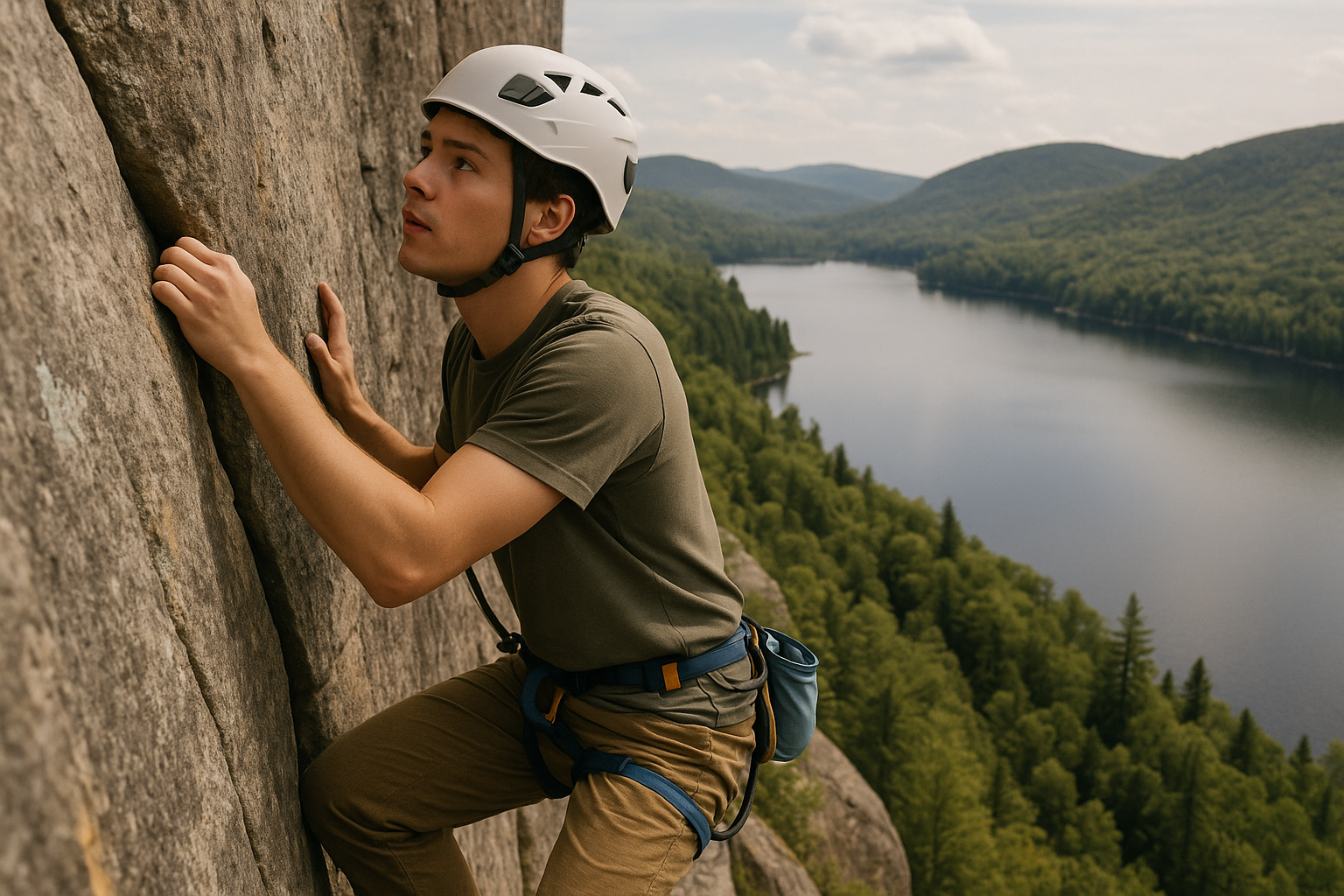
🧗♂️ Why Switch from Gym Climbing to Outdoor Climbing in Quebec?
Indoor climbing is fantastic for learning basics and building strength. But outside, it's another universe that opens up to you. In Quebec, we're lucky to have varied geology that offers unique climbing experiences. The granite of the Laurentides will give you your first sensations on natural rock. It's generally solid, with excellent grip when dry. I cut my teeth at Val-David, and I still remember the difference from the gym's resin holds. Your feet slip differently, your hands search for good holds, and suddenly, you realize that every movement really counts. The limestone cliffs of the Quebec City region offer a completely different style. More technical, often overhanging, they require finer route reading. And what about the gneiss of Charlevoix? Geological formations millions of years old that tell the story of the Canadian Shield.
💡 Pro tip — Start with easily accessible sites like Val-David or Mont-Tremblant. The short approach lets you focus on climbing rather than logistics.
But beyond the rock, it's the entire environment that changes. You climb with squirrels watching you, birds singing, and sometimes even a moose passing at the base of the cliff (been there!). Outdoor climbing is a complete sport that combines technique, nature, and adventure.
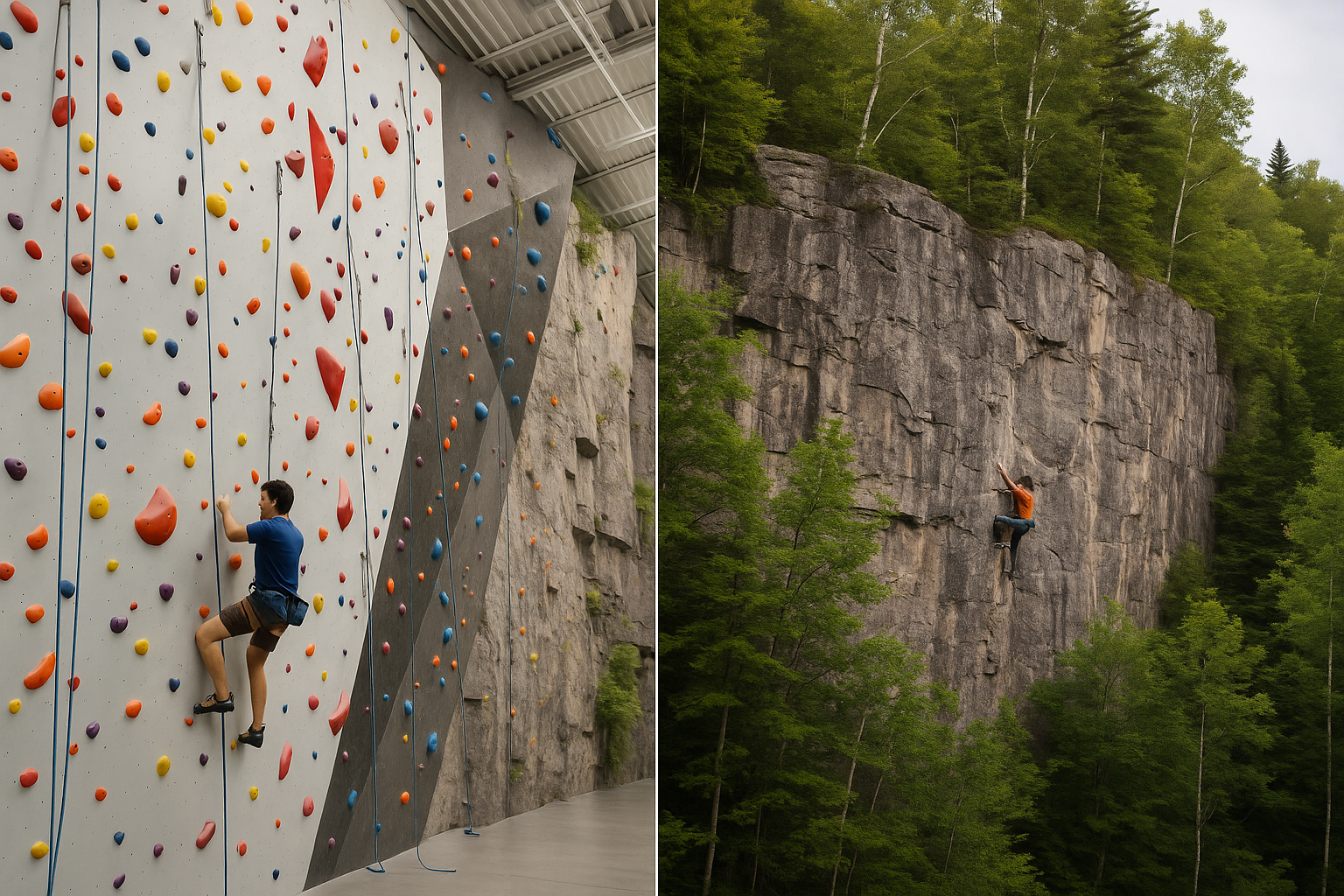
🎒 What Specific Equipment for Starting Outdoor Climbing in Quebec?
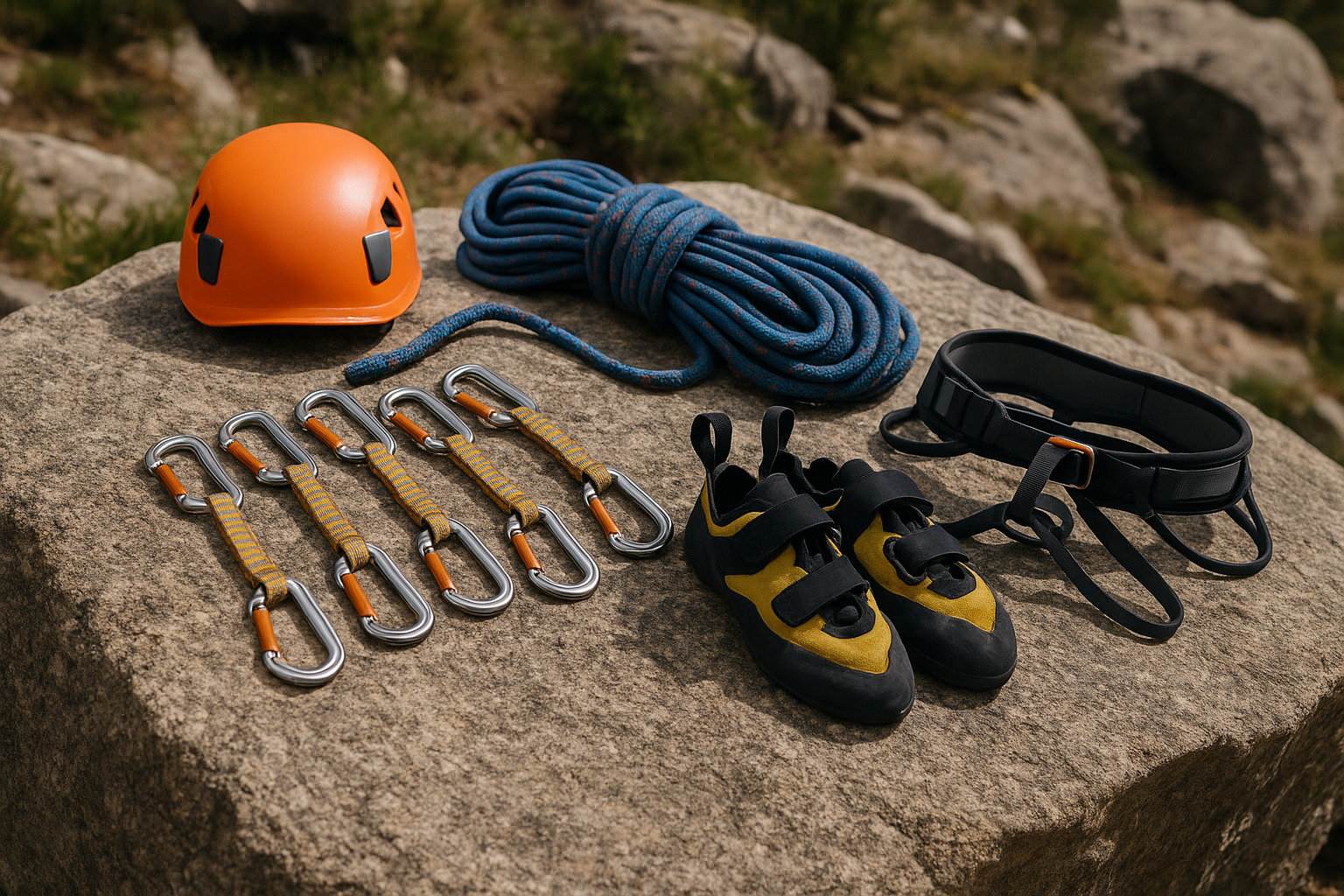
If you already climb indoors, you probably have the basics: harness, shoes, chalk. But for outdoors, you need to complete your arsenal. And watch out, it can get expensive quickly if you don't go gradually! Essential safety equipment:| Equipment | Approximate Price | Priority |
|---|---|---|
| Climbing helmet | $80-150 | Essential |
| Dynamic rope (60-70m) | $200-300 | Essential |
| Belay device (GriGri, ATC) | $100-180 | Essential |
| Quickdraws (set of 12) | $200-350 | High |
| Slings and carabiners | $150-250 | High |
⚠️ Warning — Never skimp on the quality of your belay system. It's literally what can save your life. Invest in UIAA or CE certified equipment.
Equipment specific to Quebec's climate:
Our unpredictable weather requires some adjustments. A waterproof bag to protect your gear from sudden showers. Approach gloves for rappel descents, especially in fall when ropes are wet and cold.
And don't forget the adapted first aid kit. Outdoors, you're often far from rescue services. An ankle sprain on scree can quickly become complicated if you don't have something to stabilize it.
🏔️ Where to Take Your First Steps in Outdoor Climbing in Quebec?
Choosing the site for your first outings is crucial. You want something accessible, with varied routes and a welcoming community. Fortunately, Quebec doesn't lack options! Val-David: the unmissable classic If I had to choose ONE place to start, it would be Val-David. It's the birthplace of Quebec climbing, with over 200 documented routes. The granite is excellent, approaches are short (5-15 minutes walk), and you'll always find someone to give you advice. The Petit Yves and l'Érablière sectors are perfect for starting. From 5.4 to 5.8, with decent protection and easy descents. I've spent dozens of days there, and I still discover new routes. Mont-Tremblant: diversity and beauty Mont-Tremblant National Park hides some gems for climbing. The Corniche sector offers longer routes (up to 3 pitches) in an absolutely magnificent setting. More demanding than Val-David in terms of approach, but what a reward!
💡 Pro tip — Always start with routes one or two grades below your gym level. Natural rock is less forgiving, and you need to learn to read the rock.
For the more adventurous: Charlevoix
If you want something really special, the cliffs of Charlevoix offer unique experiences. Wilder, more committing, but with breathtaking panoramas of the Saint Lawrence.
Urban sites for training
Near Montreal, the Mont-Royal cliffs allow you to practice after work. It's small, but convenient for reviewing your basic techniques.
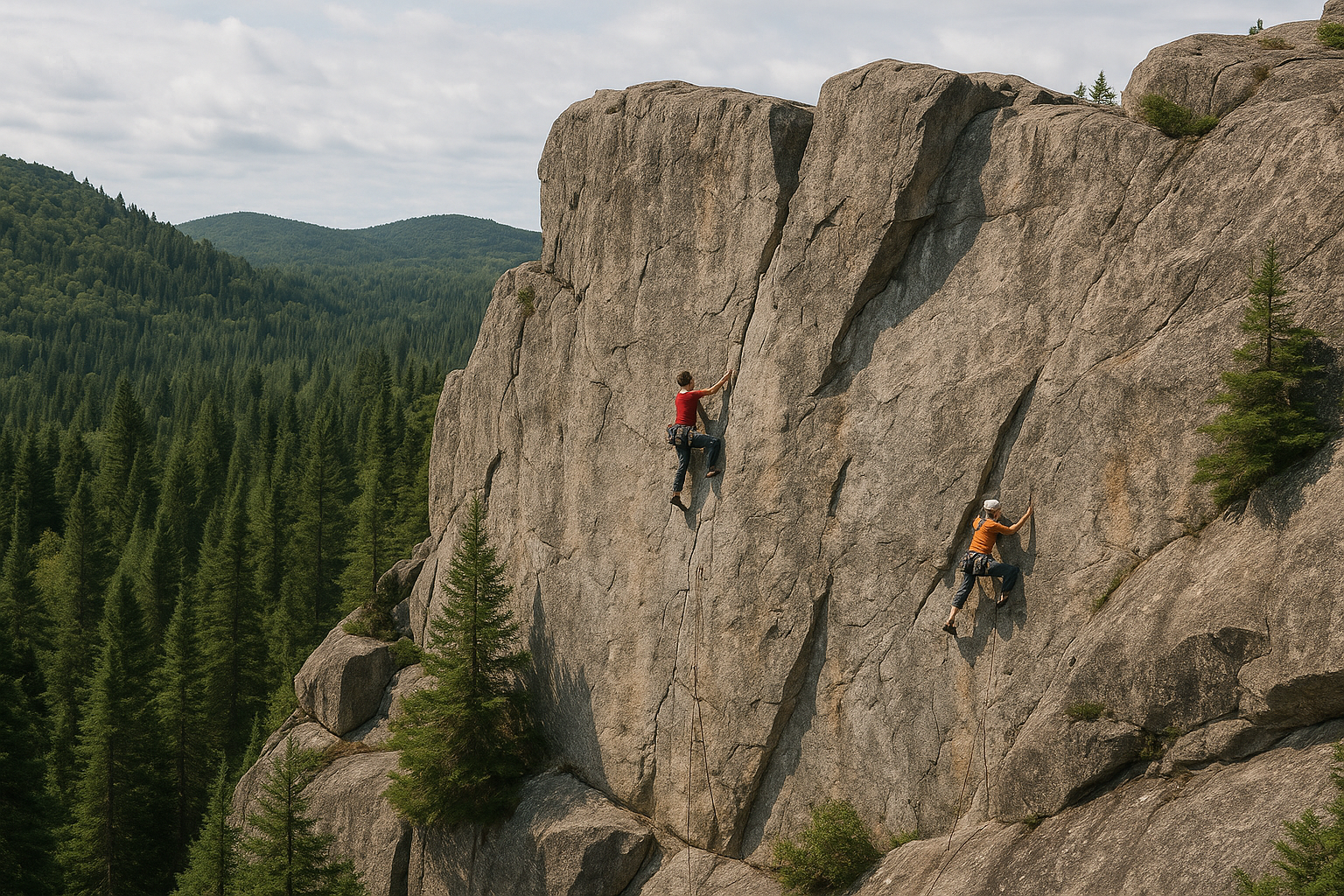
🌡️ How to Adapt to Quebec's Weather Conditions?
Outdoor climbing in Quebec means managing four distinct seasons, each with its challenges and pleasures. After a few memorable mishaps (like that time I climbed in freezing rain in October), I learned to respect our unpredictable weather. Spring: the season of surprises Quebec spring is fantastic... when you know how to handle it. Days get longer, snow melts, but watch out for rock conditions. Meltwater seeps into cracks, and with nighttime freeze-thaw cycles, some routes become dangerous. I generally wait until mid-May before returning to my favorite cliffs. And even then, I always check the rock condition in the morning. If it "sounds" hollow when you tap it, postpone your outing. Summer: high season (with its traps) Summer is paradise... except when it's 35°C and humid! Granite heats up enormously in the sun. I've seen climbers burn their hands on holds exposed to midday sun.| Condition | Strategy | Special Equipment |
|---|---|---|
| Intense heat | Climb early morning or evening | Cap, sunscreen, lots of water |
| Summer storms | Watch forecasts, have a plan B | Rain gear, shelter |
| High humidity | More chalk, frequent breaks | Liquid chalk, towel |
⚠️ Warning — In fall, always leave with a headlamp and warm clothes, even for a day outing. I've been caught several times by rapid weather changes.
Winter: for die-hards only
Winter climbing in Quebec is a sport apart. Ice climbing, mixed climbing on iced rock... Magnificent, but reserved for experienced climbers with appropriate equipment.
🎯 Specific Techniques to Master for Outdoor Climbing
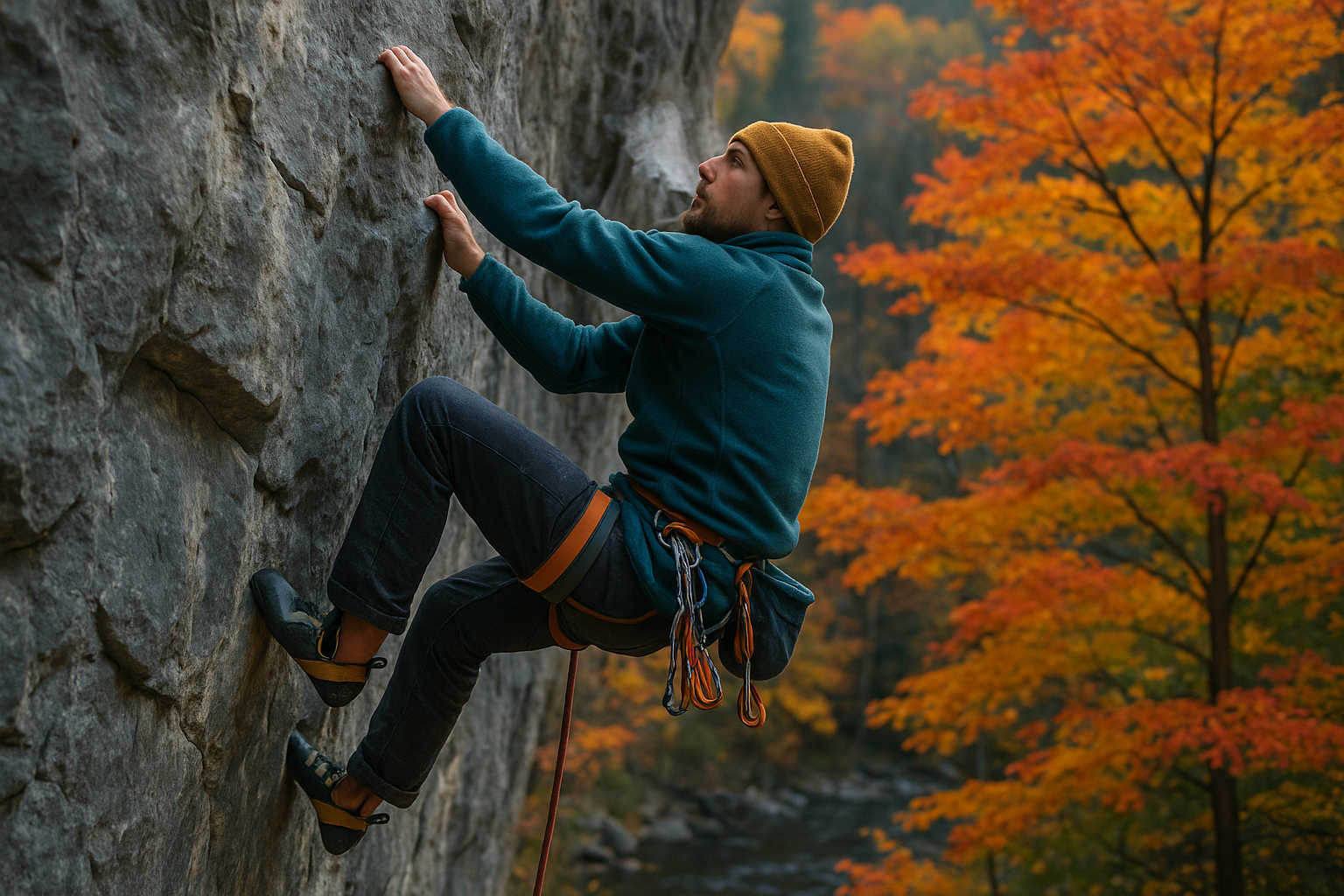
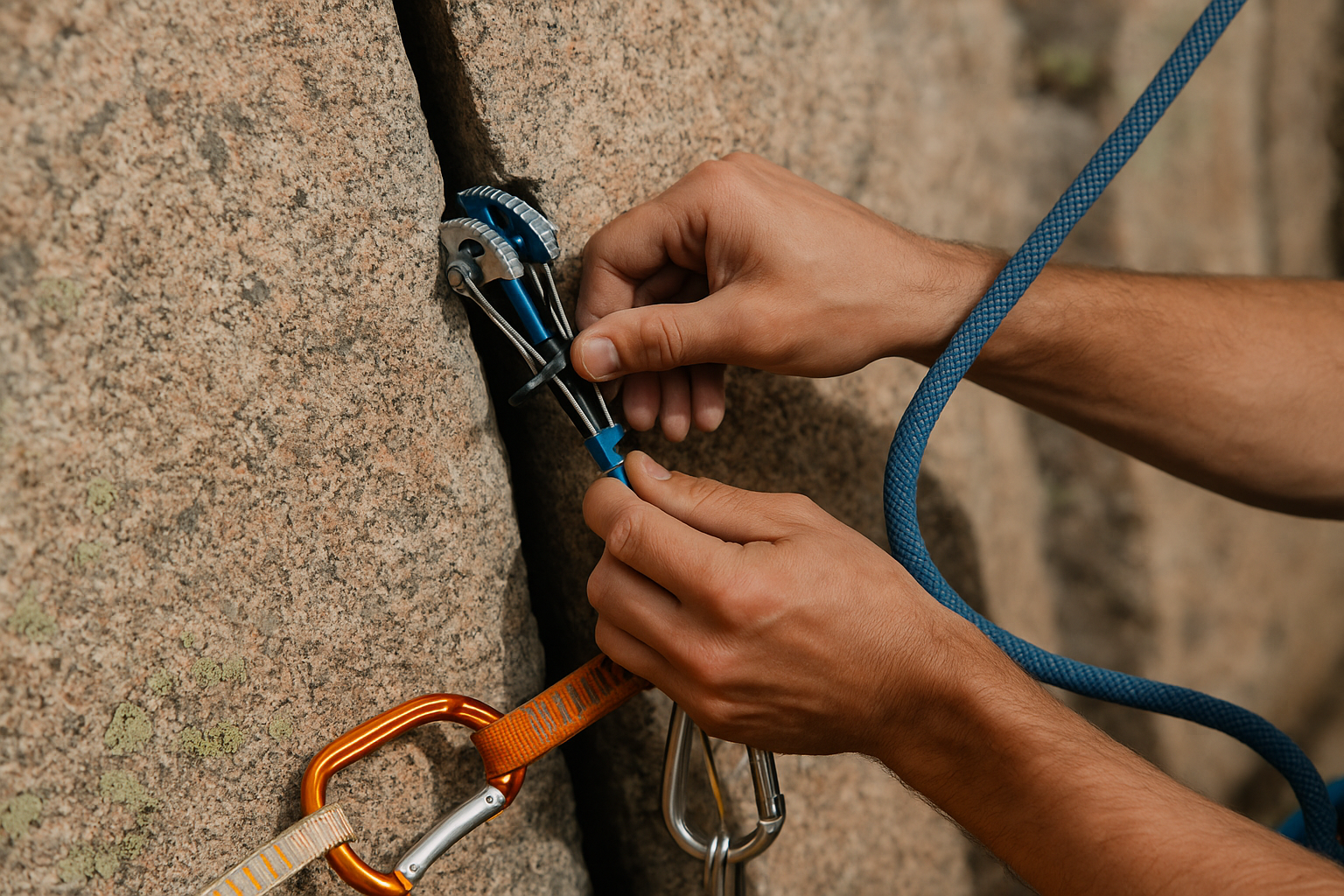
Going from gym to cliff is like learning a new language. The basics are the same, but the subtleties change everything. Let me share the techniques that really make a difference outside. Reading natural rock In the gym, holds are obvious and colored. Outside, you need to develop your eye to spot good holds. Quebec granite, for example, often offers excellent friction on surfaces that seem smooth. My trick: before starting a route, I take 5 minutes to "read" it entirely. I spot potential rests, technical passages, and especially, I visualize my movement sequence. It's an investment that saves you energy on the route. Managing natural protection Outdoors, you place your own protection: nuts, cams, pitons. It's quite an art! Poorly placed protection is not only useless but potentially dangerous if it pulls out under the shock of a fall.
💡 Pro tip — Learn first on well-equipped routes with bolts (fixed anchors). Once comfortable, you can gradually learn to place removable protection with an experienced climber.
The "clean climbing" technique
In Quebec, we favor "clean" climbing - without leaving permanent traces on the rock. That means using removable protection rather than pitons left in place.
This approach requires more technique, but it respects the environment and preserves the wild character of our cliffs. And believe me, when you succeed on a route by placing your own protection, the satisfaction is multiplied!
Adapting to different rock types
The granite of the Laurentides requires a different approach from the limestone of the Quebec City region. On granite, you can often rely on your shoes' friction on apparently smooth surfaces. On limestone, holds are often more positive, but watch out for friable holds.
I learned this the hard way during an outing near Quebec City. A hold that seemed solid came off in my hand... Fortunately, I was well belayed!
🤝 How to Find Reliable Climbing Partners in Quebec?
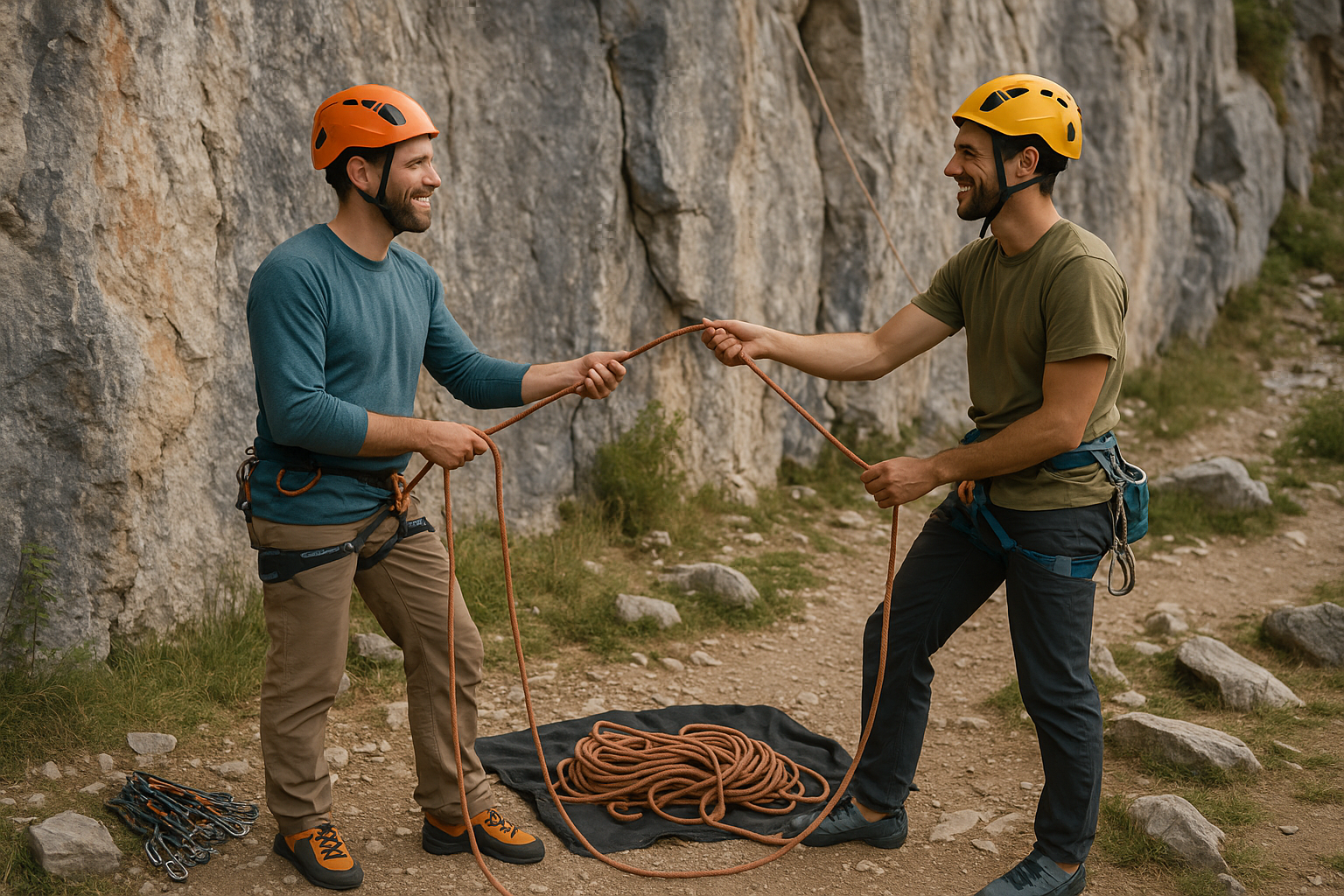
Climbing is above all a partnership sport. Your belayer literally holds your life in their hands. So how do you find reliable partners when you're starting outdoors? Climbing clubs and associations The Fédération québécoise de la montagne et de l'escalade (FQME) groups several clubs throughout the province. It's often the best starting point. Clubs organize supervised outings, perfect for beginners. I started with my regional club, and I met some of my best climbing partners there. The advantage is that you learn with people who know local sites and their specificities. Specialized stores Climbing shops are often natural meeting points. Most have bulletin boards where climbers look for partners. And employees, generally climbers themselves, can connect you with the local community. Apps and online groups Apps like Mountain Project or regional Facebook groups allow you to find partners. But be careful: always meet the person in a secure context before going to the cliff together.
⚠️ Warning — Before climbing with someone new, always test their belaying skills on the ground or on an easy route. Trust is earned gradually.
Evaluating a potential partner
Some essential questions to ask (and ask yourself):
📥 Download our free gifts — Equipment checklists, safety guides and maps of the best climbing sites in Quebec to properly prepare your first cliff outings.
Get my gifts →
Get my gifts →
⚠️ Safety and Risk Management in Quebec Outdoor Climbing
Safety in outdoor climbing is a serious subject that can't be taken lightly. Unlike the gym where everything is controlled, outside, you're responsible for your own safety and that of your partner. Risks specific to Quebec Our climate and geology create particular challenges. Freeze-thaw cycles weaken rock. I've seen holds the size of a refrigerator detach after a particularly harsh winter. Wildlife can also pose challenges. Black bears are present in several climbing regions. No panic, they generally avoid humans, but you need to know how to react and store your food properly. The belay system: your lifeline A good belayer is one who stays 100% focused on the climber. No phone, no discussion with other climbers. When you belay, you have one job: be ready to stop a fall.| Situation | Good Practice | Common Error |
|---|---|---|
| Climber moving | Dynamic slack, constant attention | Too much slack, distraction |
| Announced fall | Stable position, progressive braking | Brutal braking, loss of balance |
| Communication | Clear and repeated signals | Assuming the other understood |
⚠️ Warning — In case of accident, stay calm. First assess the situation, secure the area, then decide whether to call rescue services (911). A panicked climber can worsen the situation.
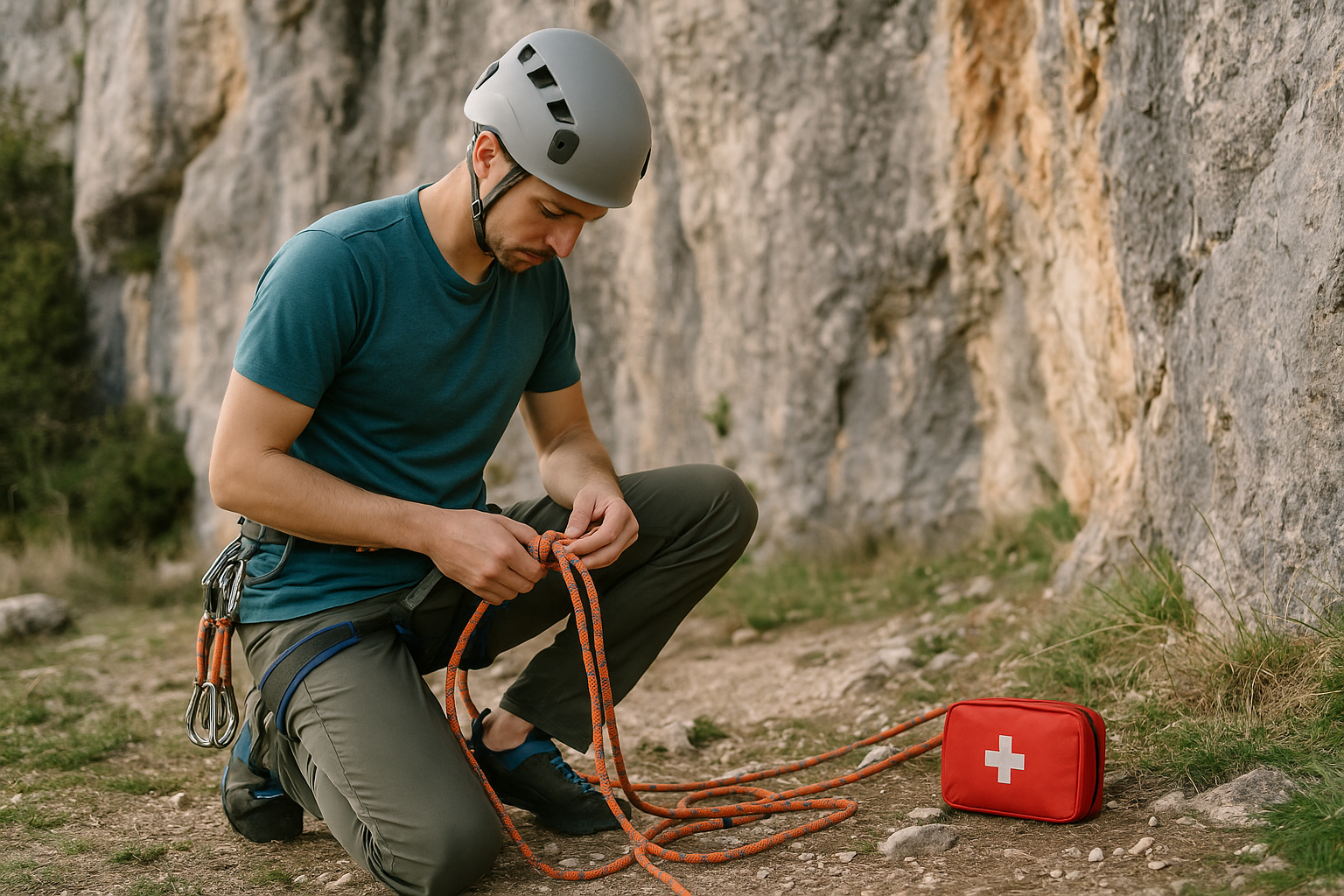
Adapted first aid kit
My climbing kit always contains:
🌱 Respecting the Environment and Regulations
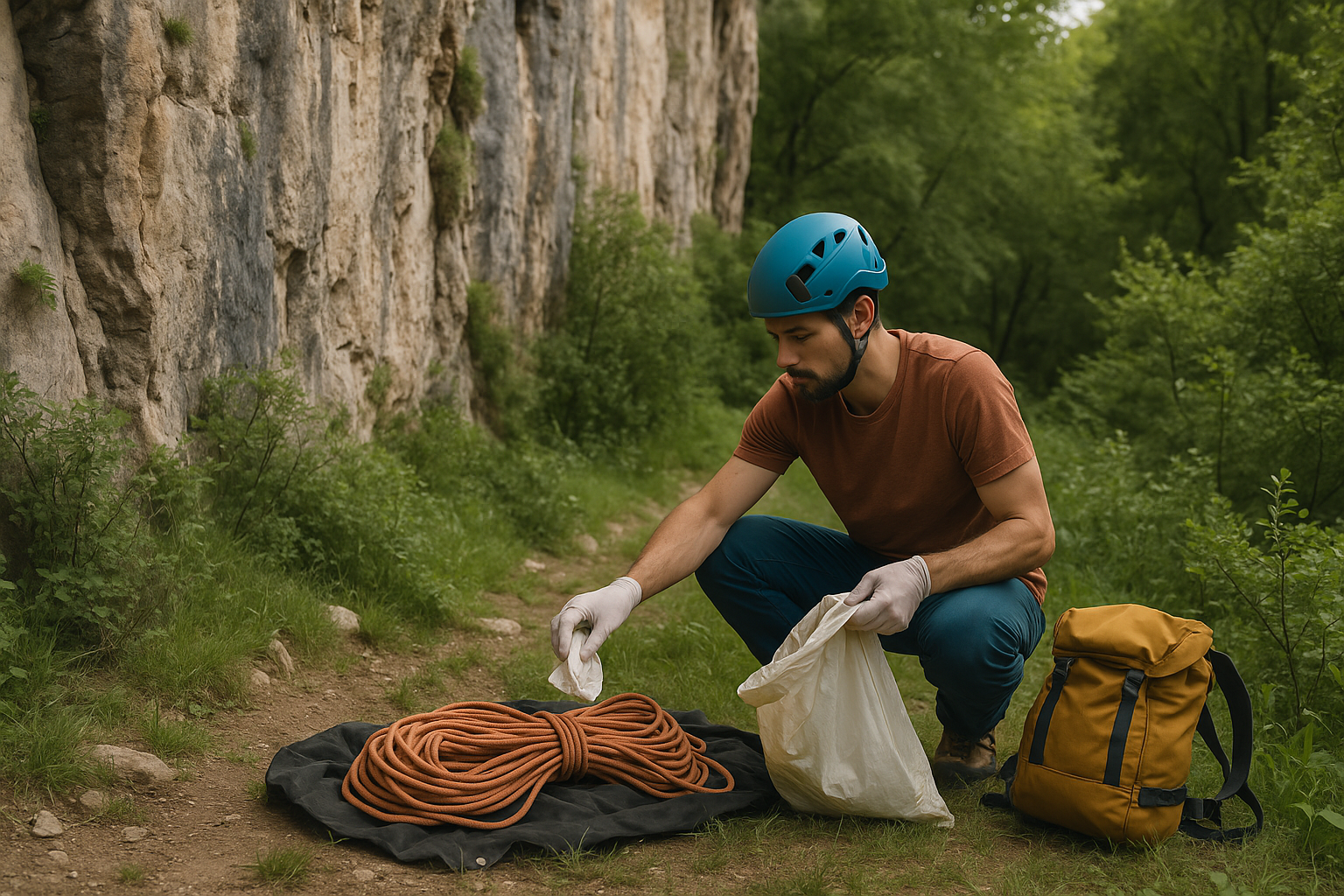
Outdoor climbing gives us access to fragile and precious environments. As climbers, we have the responsibility to preserve them for future generations. Leave No Trace principles This philosophy guides all my nature outings. Concretely, it means:
📌 Good to know — Most sites have information panels about seasonal closures. Always consult this information before your outing, and scrupulously respect prohibitions.
I remember an outing to Val-David where we discovered a falcon nest in a route we wanted to climb. We simply chose another sector. It's a small sacrifice to preserve these magnificent birds.
Managing impact on vegetation
Plants growing in cliff cracks are often specialized species, adapted to these extreme conditions. Once damaged, they can take years to regrow.
When I clean a route (remove leaves and debris from holds), I do it delicately, preserving moss and small plants that don't interfere with climbing.
Relations with landowners and other users
Many climbing sites in Quebec are on private land or in parks with specific regulations. Respecting these rules and a courteous attitude with other users (hikers, hunters, landowners) are essential to maintain access.
I've seen sites close because of the disrespectful behavior of a few climbers. It's unfortunate for the entire community.
« Climbing teaches us humility before nature. Respecting the environment means ensuring our children can also discover the magic of Quebec cliffs. »

About the author
François Dumaine
Founder of Let's Go Play Outside
A passionate hiker, photographer and content creator, François has been hiking the trails of Quebec and Alberta since 2014. He founded Let's Go Play Outside to give you the information he wished he had before heading out.
Newsletter
Content that makes you want to go outside
Every week, a trail idea, a reflection on nature, or a tip worth the detour. Zero spam. Only the essentials.
Joined by 12,000+ outdoor enthusiasts
Read next