
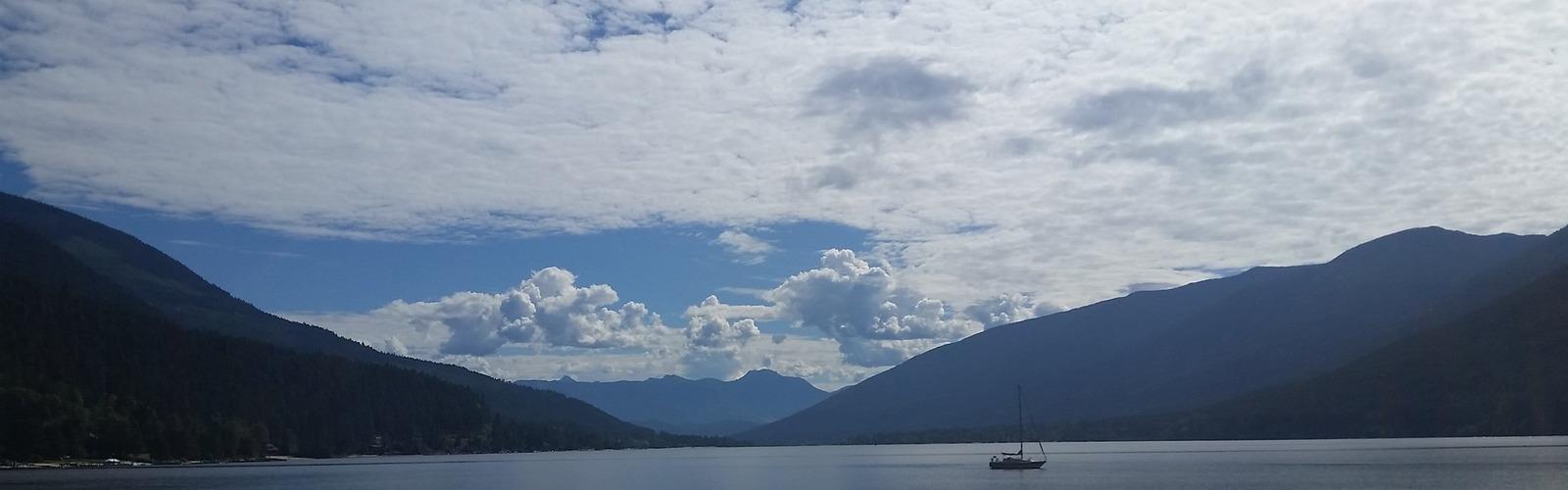

Ready to explore Kokanee Creek Provincial Park? Here's everything you need to know before you go!
Discover the trail
Oh no! We don't have any photos 😢
This trail hasn't been captured yet. Be the first to share your adventure!Trail description
Kokanee Creek Provincial Park sits 19 kilometers east of Nelson, British Columbia, where 260 hectares of Kootenay Rockies wilderness meet the shores of Kootenay Lake. This park delivers an excellent combination of lakefront recreation and easy hiking trails suitable for visitors of all abilities.
The park's geography creates distinct zones for different activities. Dense forests of cedar, hemlock, and Douglas fir blanket the hillsides, while sandy beaches stretch along Kootenay Lake's eastern shore. The terrain gently rises from the lakeshore through mixed forest.
Trail Network and Hiking Experience
The park's trail system is designed to accommodate families with young children and casual hikers. Multiple short interpretive trails wind through the forest and along the lakeshore, offering gentle terrain with clearly marked paths and fairly level ground. These accessible trails make the park ideal for morning explorations from the campground or leisurely evening walks without requiring significant elevation gain or technical skills.
The main loop trail provides a pleasant hike that weaves along the forests and beaches of Kokanee Creek Provincial Park, combining forest walking with lakeside access. The varied terrain means you can choose your adventure based on energy levels and available time, though all maintained trails remain accessible to families.
What Makes the Hiking Special
The hiking experience here differs from many mountain parks because of the constant interplay between forest, water, and mountain environments. You might start a hike along the lakeshore, walk through dense forest where the canopy creates peaceful shade, then emerge onto beaches with views across Kootenay Lake and the surrounding peaks.
The sound of flowing water accompanies much of the hiking in the park's lower elevations. Kokanee Creek itself flows year-round, fed by snowmelt and springs from the higher elevations. Hikers following the waterway encounter small waterfalls, deep pools, and sections where the creek has carved channels through the rock.
Wildlife and Natural Spectacles
Kokanee Creek's diverse habitats support an impressive range of wildlife that hikers regularly encounter on the trails. Black bears move through the forested areas, particularly during berry season, while deer browse in meadows and along forest edges. The park's bird population includes both forest species and waterfowl that utilize the lake environment.
The park's namesake kokanee salmon create one of the region's most spectacular natural events. From late August through early October, these landlocked salmon return to spawn in Kokanee Creek, turning sections of the waterway into a churning mass of red-bodied fish. This spawning run attracts not only human observers but also bears and birds that time their feeding to coincide with this annual abundance. Timing your visit during salmon season adds an entirely different dimension to the hiking experience and is best experienced in late August and September.
Camping as a Hiking Base
With over 100 campsites spread across multiple campground loops, Kokanee Creek accommodates both tent campers and RV users. The campground's proximity to trailheads means hikers can roll out of their sleeping bags and be on the trail within minutes, making it an ideal base for exploring the area's hiking options over several days.
The campsites vary in size and privacy, with some offering direct lake access while others nestle among the trees for a more secluded forest experience. This setup works particularly well for hikers who want to tackle different trails on consecutive days without the hassle of finding new accommodations.
Lake Integration with Mountain Activities
Kootenay Lake's sandy beaches offer a refreshing contrast to forest hiking, particularly during the warm summer months. The lake water warms enough for comfortable swimming by mid-summer, and the beaches provide space for relaxation after days on the trails. The beach areas also serve as excellent spots for wildlife observation, particularly during early morning and evening hours when animals come to drink.
Seasonal Hiking Conditions
The park's hiking season is ideal from late spring through fall, with easy trail access available from May through October. Summer offers reliable trail conditions and warmest lake temperatures, though it brings higher visitor numbers.
Fall hiking provides excellent conditions with cooler temperatures and fewer crowds, plus the added attraction of the salmon spawning season. The autumn colors in the mixed forest create particularly striking scenery for hikers. Winter transforms the park into a different landscape, with cross-country skiing and snowshoeing replacing hiking as primary activities.
Access and Practical Considerations
The park's location just east of Nelson makes it easily accessible by vehicle, with well-maintained roads leading directly to both the campground and day-use areas. Multiple parking areas serve different sections of the park, allowing hikers to choose starting points based on their planned activities.
The park operates as a full-service facility during the main season, with washrooms, picnic areas, and interpretive displays that help visitors understand the local ecology and history. The combination of developed facilities and easy hiking trails makes Kokanee Creek particularly appealing to families and casual hikers who want accessible outdoor experiences with basic amenities.
The Essential Hiking Checklist
Everything you need for your next hike. Bilingual, printable, 1 page.
Get your free hiking checklistRecommended gear for this trail
As an Amazon Associate I earn from qualifying purchases.


Ready to go?
Everything you need to know before you goStarting Point
The kokanee creek provincial park is located in British Columbia. To get to the start of the trails, take Highway 3 east from Creston. The park is located on the north side of the highway, about 15 km east of Creston.
When?
How much?
As an Amazon Associate I earn from qualifying purchases.
Affiliate links — LGPO may earn a commission at no extra cost to you.
- Hiking shoes Essential
- → Salomon Elixir Tour Mid WP · 203.38 $
- Layered clothing Essential
- Rain jacket Essential
- Trekking poles
- → Black Diamond Trail Ergo Cork · 69.99 $
- Headlamp
- → Petzl Actik Core 625 · 103.95 $
FAQ - Frequently asked questions
Everything you need to knowSimilar hikes nearby
Discover other trails you might enjoy

Emerald Lake
Kootenay Rockies

Golden Skybridge
Kootenay Rockies
Mount Stephen
Kootenay Rockies
Bugaboo Provincial Park
Kootenay Rockies
Magog, Lake
Kootenay Rockies
Iceline Trail
Kootenay Rockies
Hiking near Kelowna
45 trails to explore ~174 km away
We work hard to provide the most up-to-date and error-free data possible. If something seems incorrect, let us know! Your contribution helps the whole community.
Hikers' opinions
Be the first to review!
No hiker has shared their experience yet. Share your impressions and help other hikers!