
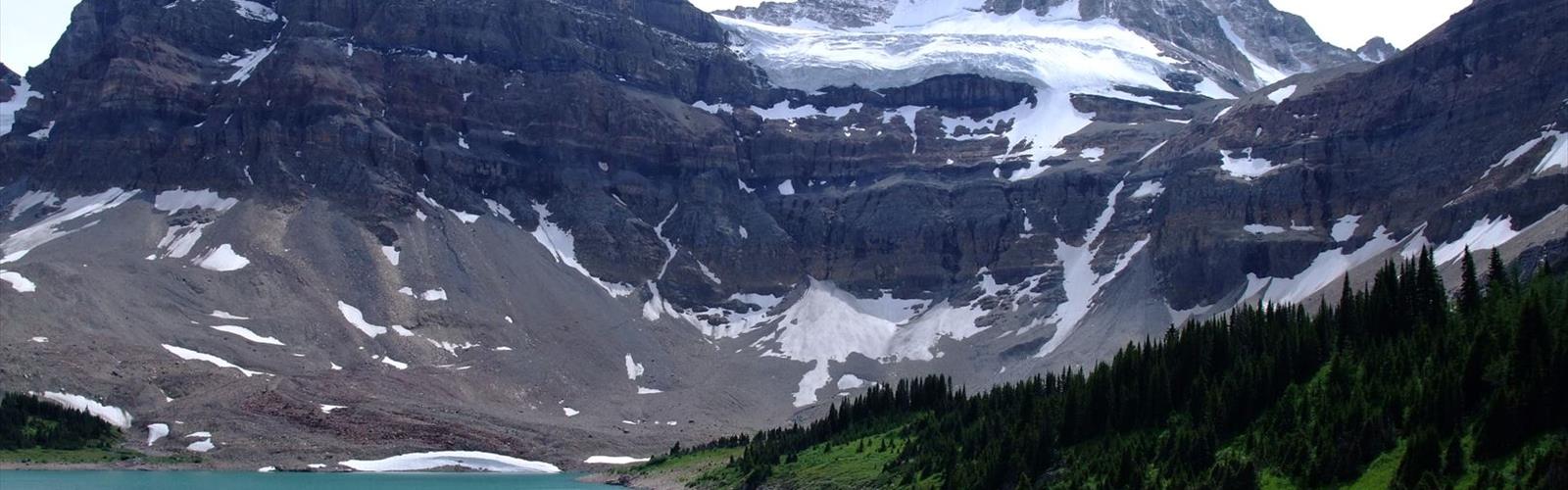

Ready to explore Mount Assiniboine? Here's everything you need to know before you go!
Discover the trail
Trail description
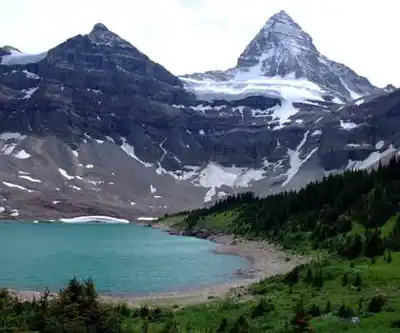
Mount Assiniboine is one of those peaks that stops you in your tracks the moment it comes into view. Rising 3,618 meters (11,870 feet) along the Great Divide on the British Columbia-Alberta border, its sharp pyramidal summit has earned it the nickname "Matterhorn of the Rockies" — and once you see it, the comparison makes complete sense. It's the highest peak in the Southern Continental Ranges of the Canadian Rockies, and it towers nearly 1,525 meters (5,003 feet) above the turquoise waters of Lake Magog at its base. That kind of vertical relief is rare, and it makes for one of the most dramatic alpine settings anywhere in Canada.
History and Naming
The mountain's name traces back to geologist George M. Dawson, who named it in 1885 after observing distinctive cloud plumes streaming from the summit — plumes that reminded him of smoke rising from Assiniboine teepees. Some sources also credit explorer David Thompson with naming it in 1807, after the Assiniboine people who guided him through the region. Either way, the name carries real Indigenous significance and connects the peak to the deep history of the Canadian Rockies.
The mountain remained unclimbed until 1902, when British mountaineer J. Norman Collie and his party completed the first successful ascent. That milestone helped put the Canadian Rockies on the map for serious alpinists, and Mount Assiniboine has drawn climbers from around the world ever since.
The Park
Mount Assiniboine sits at the center of Mount Assiniboine Provincial Park in British Columbia, with its eastern slopes reaching into Banff National Park in Alberta. The provincial park was established in 1922 specifically to protect the area surrounding the peak, and it now covers 6,890 hectares (17,000 acres) of alpine wilderness. No roads come anywhere near it. That's not an oversight — it's the whole point. The park's roadless character is what keeps it wild, and it's what makes getting here feel like a genuine commitment rather than a casual day trip.
Getting There
The most common approach to Mount Assiniboine follows the Bryant Creek trail, a 27-kilometer (17-mile) route that typically takes around six hours on foot. The trailhead starts at the Mount Shark parking lot, reached by driving from Canmore along the Smith-Dorien road. Signage at the trailhead is clear, and the trail itself is well-established — but the distance and remote location mean you need to come prepared with wilderness experience, proper gear, and a solid plan.
The trail takes you through a gradual transition from montane forest into open alpine terrain, with the mountain slowly revealing itself as you gain elevation. By the time Lake Magog comes into view with the peak rising behind it, the approach feels completely worth it.
Helicopter access is also available from the Mount Shark helipad, offering a faster way in with spectacular aerial views of the surrounding peaks and valleys. It's a legitimate option for those with limited time or who are focused on the climbing objective rather than the approach.
Mountain biking was once a popular middle-ground option that cut the approach time to roughly three hours, but park authorities have discontinued bicycle access due to concerns about dangerous encounters between cyclists and grizzly bears. It's a decision that reflects the park's commitment to both visitor safety and wildlife protection.
Wildlife
The park supports a healthy and diverse wildlife community. Grizzly bears and black bears are present throughout the area — their density is part of why bike access was restricted — and encounters are a real possibility. Elk, deer, and moose move through the valley bottoms and meadows, while mountain goats navigate the steep rocky terrain around the peak with impressive ease. This is intact wilderness, and the wildlife reflects that.
What to Expect on the Trail
With 27 kilometers of distance, 3,616 meters of elevation gain, and an estimated time of 12 hours and 30 minutes, this is a very hard undertaking by any measure. The route demands solid fitness, experience in alpine terrain, and careful attention to weather. Conditions in the mountains can shift quickly, and the park's remote location means self-sufficiency is essential — there's no quick exit if things go sideways.
That said, the experience of arriving at Lake Magog with Mount Assiniboine's summit rising directly above is something that's hard to put into words. The scale of the mountain, the clarity of the alpine air, and the sense of having genuinely earned your way into this wilderness make it one of the most rewarding destinations in the Canadian Rockies.
Beyond the Summit
Mount Assiniboine draws serious mountaineers, but the area has plenty to offer hikers who aren't aiming for the top. Shorter walks around Lake Magog give you close-up views of the peak without committing to a technical climb, and the surrounding alpine terrain offers multiple routes with different perspectives on the mountain. Photographers find the area endlessly rewarding — the interplay of light on the peak's steep faces changes constantly throughout the day.
In winter, the park transforms into a backcountry skiing destination for those with the skills and experience to handle the remote conditions, though the isolation that defines summer visits becomes significantly more serious when the snow arrives.
The Essential Hiking Checklist
Everything you need for your next hike. Bilingual, printable, 1 page.
Get your free hiking checklistRecommended gear for this trail
As an Amazon Associate I earn from qualifying purchases.


Ready to go?
Everything you need to know before you goStarting Point
To access the hiking trails in this area, there are several trailheads you can consider:
Mount Shark Trailhead: Located in Alberta, this is a common starting point for those heading into the region. To get here, drive to the end of Mount Shark Road from Canmore, Alberta. The parking lot is well-marked and provides access to the trails leading into British Columbia.
Sunshine Village: Another option is to start from Sunshine Village Ski Resort near Banff, Alberta. You can take a gondola or bus up to the resort and then begin your hike from there.
Assiniboine Pass Trailhead: This trailhead can be accessed via Bryant Creek Shelter, which involves a longer approach through Spray Valley Provincial Park in Alberta.
Each of these trailheads offers different routes and experiences, so choose based on your preferences and logistical considerations.
When?
How much?
As an Amazon Associate I earn from qualifying purchases.
Affiliate links — LGPO may earn a commission at no extra cost to you.
- Hiking shoes Essential
- → Salomon Elixir Tour Mid WP · 203.38 $
- Layered clothing Essential
- Rain jacket Essential
- Trekking poles
- → Black Diamond Trail Ergo Cork · 69.99 $
- Headlamp
- → Petzl Actik Core 625 · 103.95 $
FAQ - Frequently asked questions
Everything you need to knowSimilar hikes nearby
Discover other trails you might enjoy

Emerald Lake
Kootenay Rockies

Golden Skybridge
Kootenay Rockies
Bugaboo Provincial Park
Kootenay Rockies
Mount Stephen
Kootenay Rockies
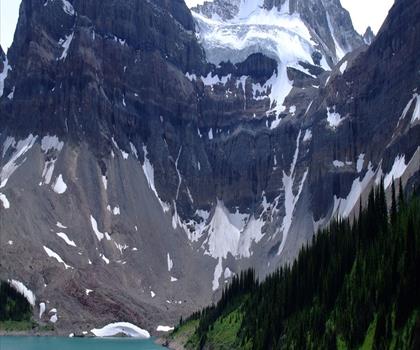
Magog, Lake
Kootenay Rockies
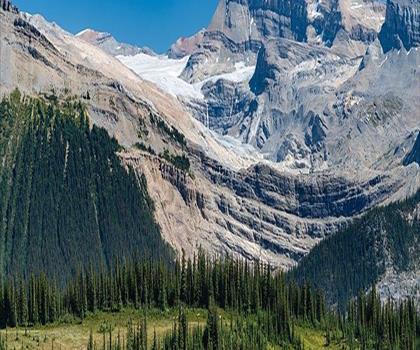
Iceline Trail
Kootenay Rockies
Hiking near Canmore
200 trails to explore ~32 km away
We work hard to provide the most up-to-date and error-free data possible. If something seems incorrect, let us know! Your contribution helps the whole community.
Hikers' opinions
Be the first to review!
No hiker has shared their experience yet. Share your impressions and help other hikers!