
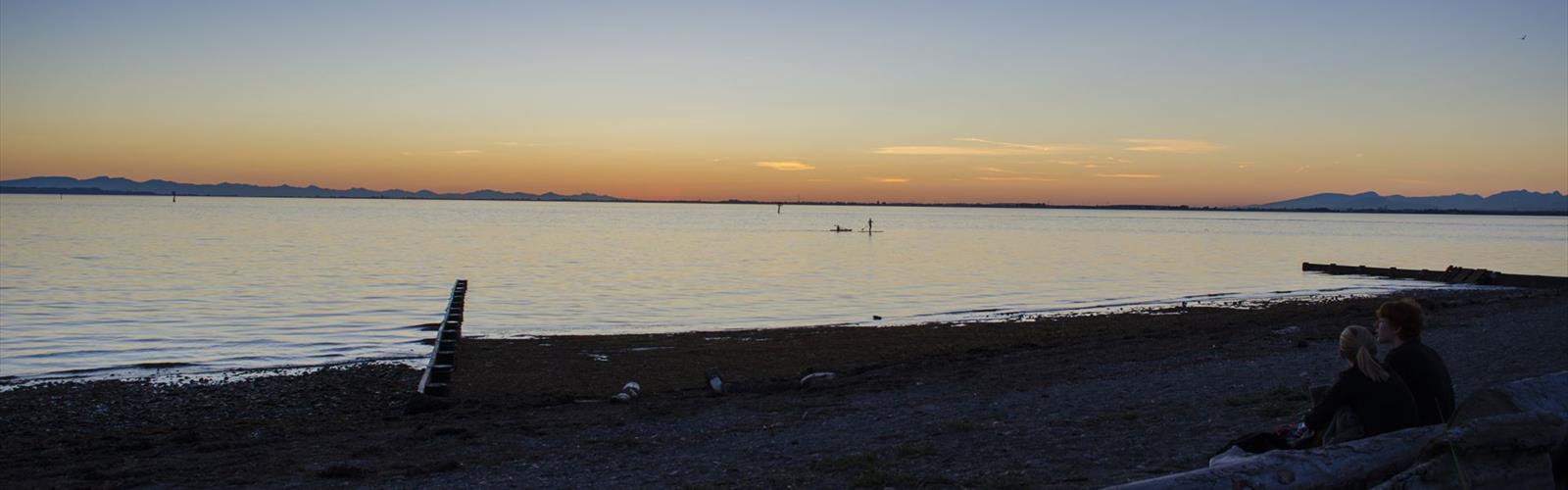

Ready to explore Boundary Bay? Here's everything you need to know before you go!
Discover the trail
Trail description
Boundary Bay is one of the Lower Mainland's most rewarding flat-terrain destinations — a wide-open coastal landscape where the sky feels enormous, the air smells like salt and low tide, and the walking is easy enough that you can actually pay attention to what's around you. Located in the Delta area south of Vancouver in British Columbia, this spot draws birders, beach walkers, and anyone who needs a break from the trees and elevation gain that dominate most of the region's trails.
The Landscape
What makes Boundary Bay stand out is the sheer scale of the intertidal flats. At low tide, the water pulls back to reveal an expansive mudflat ecosystem that stretches far into the bay. This isn't a dramatic cliffside or a mountain panorama — it's a horizontal world, and that's exactly the point. The light changes constantly here, especially in the morning and late afternoon, when the reflections off the wet sand and shallow water can be genuinely stunning.
The shoreline transitions between sandy beach, grassy dike tops, and marshy edges depending on where you walk. The dike trails are well-maintained and wide, making this accessible for a broad range of visitors — families with strollers, older hikers, and people with dogs all share the path comfortably.
Wildlife and Birding
Boundary Bay has a serious reputation in the birding community, and for good reason. The bay sits along the Pacific Flyway, one of North America's major migratory bird routes, which means the diversity and volume of bird activity here is exceptional. During migration seasons, the mudflats and shallow waters attract enormous concentrations of shorebirds and waterfowl. Raptors are also a consistent presence — short-eared owls, peregrine falcons, and rough-legged hawks are regularly spotted hunting over the fields and marsh edges.
Even outside peak migration, there's almost always something worth watching. Great blue herons work the shallows, dunlins and sandpipers probe the mudflats, and the open sky above the dikes is prime hunting territory for raptors year-round. If you're a birder, bring your binoculars and give yourself more time than you think you'll need. Note: Dogs must remain on leashes as this is a rare bird habitat.
The Trail Experience
The walking here follows the dike system that runs along the edge of the bay. The surface is firm and relatively flat throughout, which makes it a reliable option when you want to get outside without committing to a strenuous outing. The dike trail extends approximately 17-20 km depending on which sections you explore, with minimal elevation gain.
The openness of the landscape means you're exposed to wind and weather in a way that forested trails don't prepare you for. On a clear day, the views across the water toward the mountains are wide and unobstructed. On a grey, blustery day, the place takes on a completely different character — more raw, more atmospheric. Both versions are worth experiencing.
Because the dike network covers a lot of ground, you have flexibility in how far you go and which direction you head. There's no single prescribed loop — most people pick a direction, walk as far as they feel like, and turn around. This makes it easy to tailor the outing to your energy level or the amount of time you have.
Practical Information
- Terrain: Flat dike trails and beach walking — minimal to no significant elevation gain.
- Distance: Approximately 17-20 km of dike trail available; most walks are 2-4 hours depending on distance chosen.
- Surface: Packed gravel and dirt dike paths, with sandy beach sections accessible depending on tide levels.
- Dogs: Dogs are welcome on the dike trails but must remain on leashes at all times, as this is a rare bird habitat and sensitive nesting area.
- Accessibility: The wide, flat dike surface makes this one of the more accessible walking destinations in the region for people with mobility considerations.
- Tides: The experience changes significantly with the tide. Low tide exposes the mudflats and brings out the most bird activity. It's worth checking a tide table before you go if wildlife watching is your priority.
- Parking: Multiple parking areas accessible from roads bordering the bay, including areas at Centennial Beach and along 12th Ave on the western edge. Arrive earlier in the day on weekends to secure a spot, as this is a popular destination with local residents.
What to Bring
Because you're walking on open dikes with no tree cover, sun protection matters more here than on a shaded forest trail — hat, sunscreen, and sunglasses are worth packing even on partly cloudy days. Wind is a factor in most seasons, so an extra layer is a good call regardless of the forecast. If you're planning to walk the beach sections at low tide, waterproof footwear will keep things more comfortable.
Binoculars are genuinely useful here even if you don't consider yourself a birder — the wildlife activity is visible enough that most people end up wishing they had a closer look at something.
When to Visit
Boundary Bay is a year-round destination, but the experience shifts with the seasons. Fall and winter bring the largest concentrations of migratory birds, and the low-angle winter light can make for some of the most visually striking walks of the year. Spring migration adds another wave of activity. Summer is when the beach draws the most casual visitors and the crowds are at their peak on weekends.
Early mornings are consistently the best time to visit for wildlife — less foot traffic, better light, and more active birds before the day warms up and activity slows down.
Getting There
Boundary Bay is located in the Delta area south of Vancouver in the Lower Mainland of British Columbia, accessible by car from several entry points along the roads that border the bay. The area is well-known locally and easy to find with standard navigation apps. Transit options exist from Vancouver, though having a car gives you more flexibility in choosing your starting point along the dike system.
The Essential Hiking Checklist
Everything you need for your next hike. Bilingual, printable, 1 page.
Get your free hiking checklistRecommended gear for this trail
As an Amazon Associate I earn from qualifying purchases.


Ready to go?
Everything you need to know before you goWhen?
How much?
As an Amazon Associate I earn from qualifying purchases.
Affiliate links — LGPO may earn a commission at no extra cost to you.
- Hiking shoes Essential
- → Salomon Elixir Tour Mid WP · 203.38 $
- Layered clothing Essential
- Rain jacket Essential
- Trekking poles
- → Black Diamond Trail Ergo Cork · 69.99 $
- Headlamp
- → Petzl Actik Core 625 · 103.95 $
FAQ - Frequently asked questions
Everything you need to knowSimilar hikes nearby
Discover other trails you might enjoy
Bridle Path
Vancouver Coast Mountains
Flora Lake
Vancouver Coast Mountains

Alouette Mountain
Vancouver Coast Mountains
Williamson Lake
Vancouver Coast Mountains
Brandywine Mountain
Vancouver Coast Mountains

Coliseum Mountain
Vancouver Coast Mountains
Hiking near Vancouver
235 trails to explore ~31 km away
We work hard to provide the most up-to-date and error-free data possible. If something seems incorrect, let us know! Your contribution helps the whole community.
Hikers' opinions
Be the first to review!
No hiker has shared their experience yet. Share your impressions and help other hikers!