
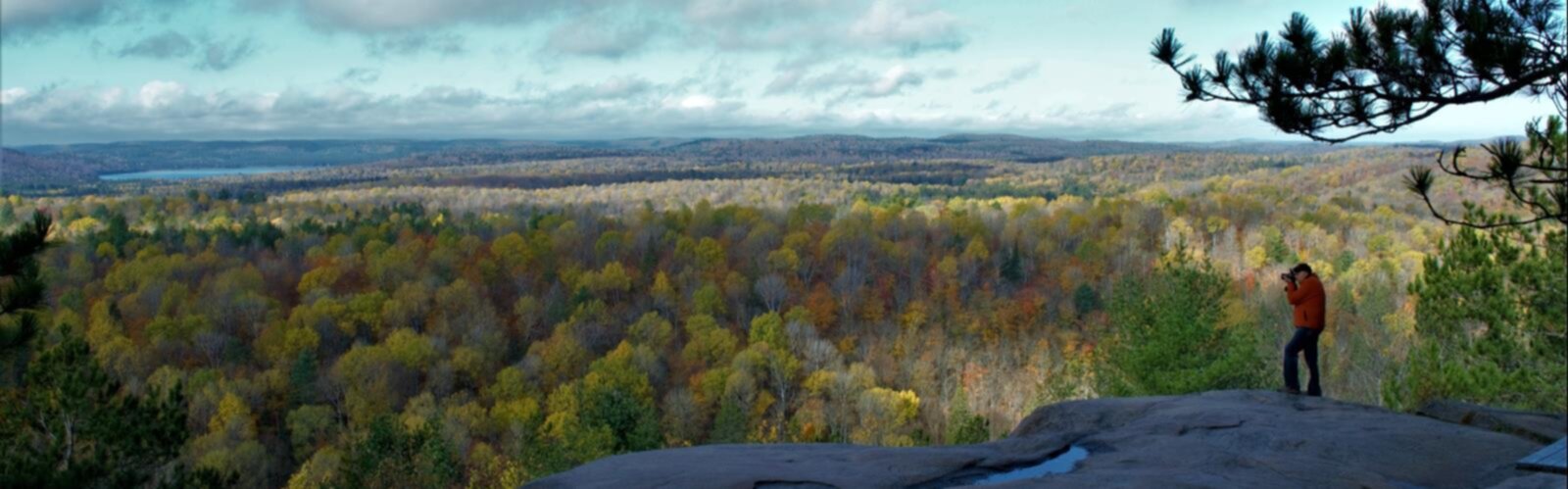

Ready to explore Algonquin Provincial Park? Here's everything you need to know before you go!
Discover the trail
Oh no! We don't have any photos 😢
This trail hasn't been captured yet. Be the first to share your adventure!Trail description
Algonquin Provincial Park stands as Ontario's premier wilderness destination, encompassing a vast 7,653 square kilometers of pristine Canadian Shield landscape across the Almaguin Highlands, Muskoka and Parry Sound regions. This iconic park offers an authentic backcountry experience where dense mixed forests of maple, birch, and towering white pines give way to countless lakes and meandering rivers that have carved their paths through ancient granite bedrock over millennia.
The park's extensive trail network spans 240 kilometers, weaving through diverse terrain that showcases the raw beauty of central Ontario's wilderness. Hikers traverse rolling hills with moderate elevation gains distributed across various routes, moving through thick boreal forest where sunlight filters through the canopy to illuminate moss-covered rocks and fallen logs. The landscape constantly shifts between dense woodland sections and open ridgelines that offer sweeping views across the park's 2,400 lakes and countless wetlands. The park's highest point, Ishpatina Ridge, reaches 414 meters above sea level.
Wildlife and Natural Features
The park serves as a sanctuary for an impressive array of wildlife that makes every hiking experience unpredictable and exciting. Moose are frequently spotted in marshy areas and shallow lake edges, particularly during early morning and evening hours when they wade into the water to feed on aquatic vegetation. White-tailed deer move quietly through the forest understory, while black bears roam throughout the park's vast territory, foraging for berries, nuts, and other natural food sources.
The numerous lakes and rivers create a complex aquatic ecosystem that supports both wildlife and recreational activities. These waterways range from small, secluded ponds perfect for quiet reflection to larger lakes that stretch beyond the horizon. The interconnected river systems have been carved by centuries of water flow, creating dramatic rocky gorges, gentle meandering sections, and areas where the current picks up speed as it navigates between granite outcroppings.
Trail Experience and Terrain
The hiking experience in Algonquin varies significantly depending on the chosen route and conditions. Much of the terrain follows the natural contours of the Canadian Shield, where ancient geological forces have created a landscape of gentle hills, rocky outcroppings, and natural depressions that now hold the park's countless lakes and wetlands. Trails often follow ridgelines that provide elevated views across the forest canopy, revealing the true scale of this wilderness area.
Rocky sections require careful footing, particularly when wet, as the granite surfaces can become slippery. Many trails incorporate wooden boardwalks and bridges that span wetland areas and creek crossings, protecting both the fragile ecosystem and keeping hikers' feet dry. The forest floor varies from soft pine needle carpets to areas where exposed roots and rocks create more challenging walking conditions.
Stream crossings add an element of adventure to many routes, with some requiring rock-hopping skills while others feature established crossing points. The moderate difficulty rating reflects the combination of distance and terrain variety rather than technical climbing, making most routes accessible to hikers with basic experience and proper preparation.
Seasonal Activities and Experiences
Algonquin Provincial Park transforms dramatically with each season, offering distinct experiences throughout the year. During summer months, the extensive hiking trail system becomes the park's main attraction, with routes that accommodate everyone from day hikers to serious backcountry enthusiasts planning multi-day expeditions. The trails wind past pristine swimming holes where crystal-clear water provides relief after hours of hiking through warm forest sections.
Summer also brings excellent opportunities for fishing in the park's well-stocked lakes and rivers, where anglers can expect to find lake trout, brook trout, and various warm-water species. Canoeing becomes a natural extension of any park visit, with established canoe routes that allow paddlers to explore remote areas accessible only by water. The combination of hiking and paddling opens up camping opportunities in truly isolated locations where the only sounds are lapping water and wildlife calls.
Winter transforms the landscape into a snow-covered wilderness playground where skiing takes center stage. Cross-country ski trails follow many of the same routes used by hikers during warmer months, but the snow-covered terrain creates an entirely different experience. The forest takes on a hushed quality under its white blanket, and animal tracks in the snow tell stories of wildlife activity that remains hidden during other seasons.
Snowmobiling provides access to areas that would require extensive hiking during summer, allowing winter visitors to cover significant ground while experiencing the park's vastness. Ice fishing opens up new angling opportunities on the park's frozen lakes, where patient anglers can target cold-water species through the ice while surrounded by the stark beauty of the winter landscape.
Planning Your Adventure
The park remains open year-round, but trail conditions and accessibility change dramatically with the seasons. Spring brings muddy conditions as snow melts and frost leaves the ground, while also offering excellent wildlife viewing opportunities as animals become more active. Fall transforms the deciduous forest into a spectacular display of red, orange, and yellow foliage that attracts visitors from across North America.
The park's immense size means that planning becomes essential for making the most of any visit. With the trail network's extensive reach and varied elevation profiles, hikers can choose everything from short nature walks to challenging multi-day backcountry expeditions. The interconnected trail system allows for loop routes that bring hikers back to their starting point without retracing their steps, maximizing the diversity of landscapes experienced.
Camping options range from established campgrounds with basic facilities to remote backcountry sites accessible only by foot or canoe. The combination of hiking trails, water routes, and camping opportunities means that visitors can design experiences lasting anywhere from a few hours to several weeks, depending on their interests and skill level. This flexibility makes Algonquin a destination that rewards both spontaneous day trips and carefully planned wilderness expeditions.
The Essential Hiking Checklist
Everything you need for your next hike. Bilingual, printable, 1 page.
Get your free hiking checklistRecommended gear for this trail
As an Amazon Associate I earn from qualifying purchases.


Ready to go?
Everything you need to know before you goStarting Point
The easiest way to get to the start of the trails at Algonquin Provincial Park is to take Highway 60 north from Toronto and then take Highway 11 east at Huntsville.
When?
How much?
As an Amazon Associate I earn from qualifying purchases.
Affiliate links — LGPO may earn a commission at no extra cost to you.
- Hiking shoes Essential
- → Salomon Elixir Tour Mid WP · 203.38 $
- Layered clothing Essential
- Rain jacket Essential
- Trekking poles
- → Black Diamond Trail Ergo Cork · 69.99 $
- Headlamp
- → Petzl Actik Core 625 · 103.95 $
FAQ - Frequently asked questions
Everything you need to knowSimilar hikes nearby
Discover other trails you might enjoy
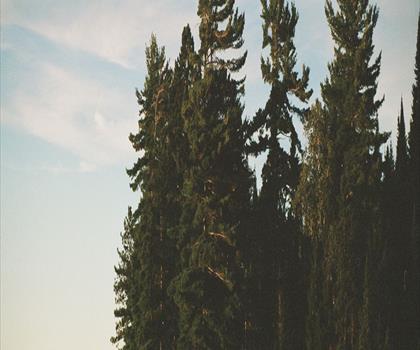
Opeongo Lake
Algonquin Park, Almaguin Highlands, Muskoka and Parry Sound
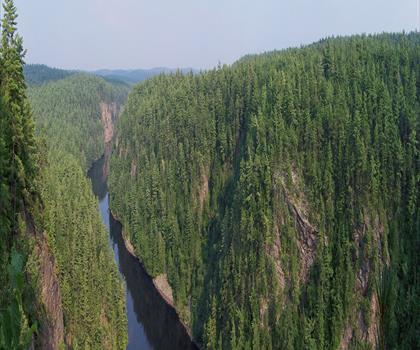
Barron Canyon
Algonquin Park, Almaguin Highlands, Muskoka and Parry Sound
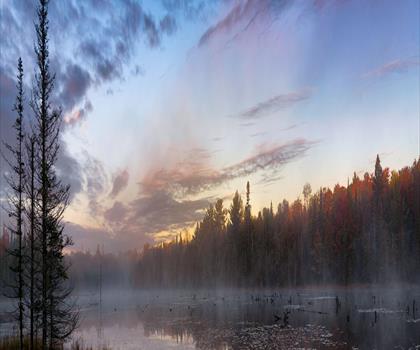
Doe Lake
Algonquin Park, Almaguin Highlands, Muskoka and Parry Sound
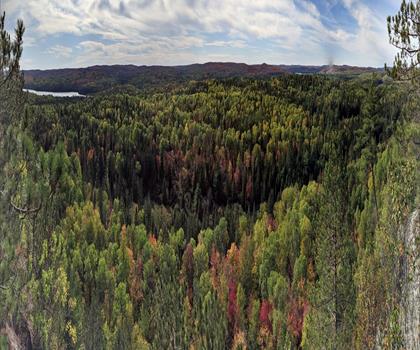
Centennial Ridges Trail
Algonquin Park, Almaguin Highlands, Muskoka and Parry Sound
Hardy Lake
Algonquin Park, Almaguin Highlands, Muskoka and Parry Sound
Whitestone Lake
Algonquin Park, Almaguin Highlands, Muskoka and Parry Sound
Hiking near Barrie
146 trails to explore ~191 km away
We work hard to provide the most up-to-date and error-free data possible. If something seems incorrect, let us know! Your contribution helps the whole community.
Hikers' opinions
Be the first to review!
No hiker has shared their experience yet. Share your impressions and help other hikers!