
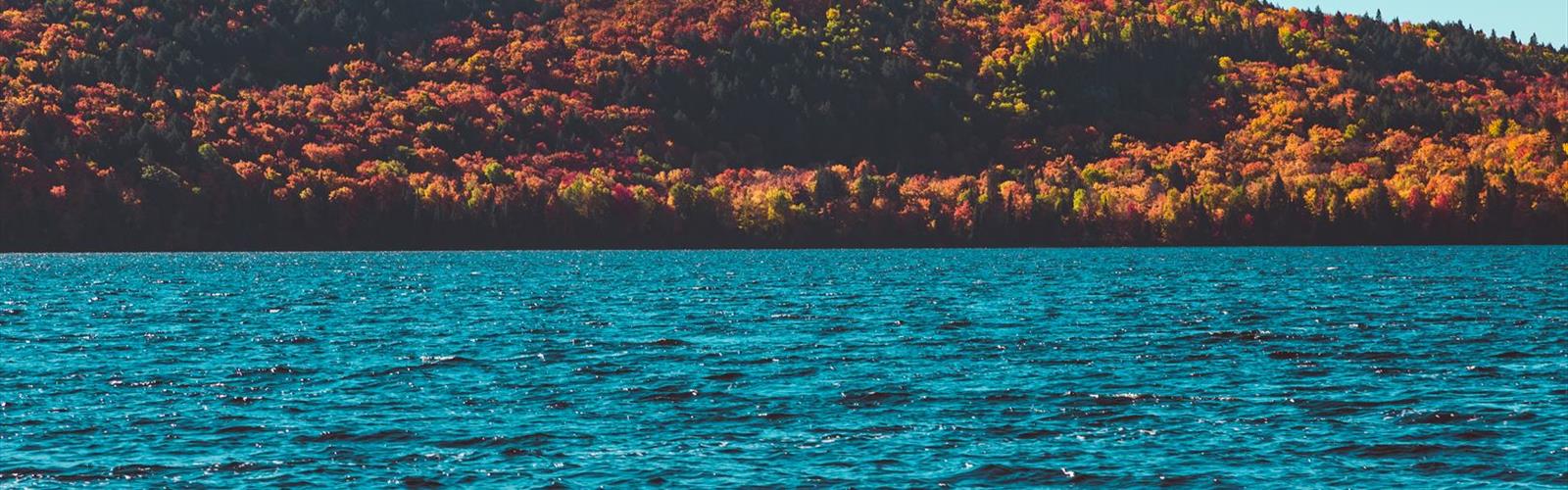

Ready to explore Lake of Two Rivers? Here's everything you need to know before you go!
Discover the trail
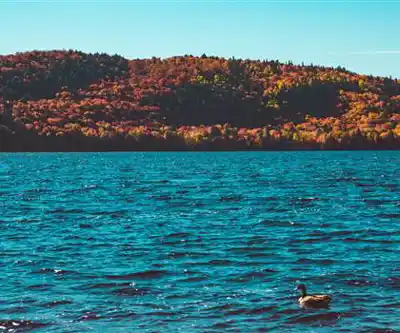
Photos: Tony Webster from Minneapolis, Minnesota, United States — CC BY 2.0 (Wikimedia Commons)
Trail description
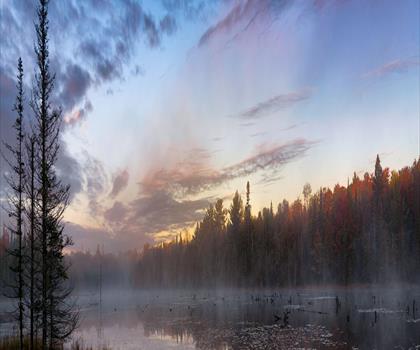
Lake of Two Rivers sits in the heart of Algonquin Park, where two river systems converge in a valley shaped by ancient glacial activity. It's one of the most accessible entry points into genuine Algonquin wilderness — the kind of place where you can spend a quiet morning watching mist lift off the water before the rest of the park wakes up, or spend a full day exploring trails that range from flat and family-friendly to legitimately challenging ridge terrain.
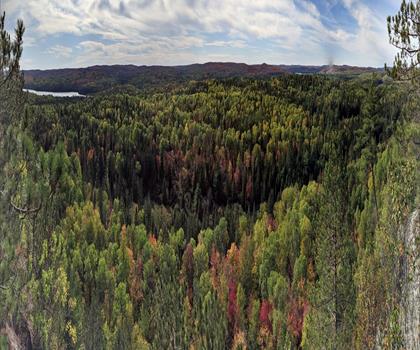
The lake is framed by dense mixed forest — maple, birch, and pine — with rocky outcrops and wetland edges adding variety to the shoreline. In late September and early October, the fall color here is exceptional. The maples and birches reflect in the calm water against a backdrop of dark evergreens, and it's easy to understand why photographers make the drive from across Ontario specifically for this view.
Trail Options and Terrain
Two trails define the hiking experience at Lake of Two Rivers, and they couldn't be more different from each other.
The Old Railway Bike Trail follows the bed of a historic logging railway that once moved timber through this region. The surface is packed gravel, the grade is gentle, and the path runs alongside the lake for much of its length. This is the trail you bring kids on, or the one you choose when you want to cover ground without technical effort. The wide, firm surface holds up well in most weather, and the flat terrain lets you keep your eyes on the forest and water rather than your footing.
As you walk, the trail moves through several distinct environments. Dense forest canopy closes in overhead in some sections, creating a shaded tunnel effect, then opens up to clear lake views. Small wooden bridges cross creek mouths and marshy inlets — these spots are worth slowing down for, since beaver activity and waterfowl are common here.
The Centennial Ridges Trail is a different proposition entirely. It climbs through mature hardwood forest before breaking out onto exposed Canadian Shield ridgelines — ancient granite worn smooth over millennia, dotted with hardy pines and blueberry bushes. There are steep sections and rocky scrambles involved, and the elevation gain of 20 metres understates the cumulative effort on the ridge sections. The payoff is panoramic views over unbroken forest, with the lake visible below as a blue ribbon threading through the green canopy. On a clear day, the vistas stretch for kilometres in every direction.
Wildlife and Natural Features
Lake of Two Rivers is prime moose habitat. The shallow bays where the rivers enter the lake are reliable spots for sightings, particularly in early morning and evening. Moose wade belly-deep into the water to feed on aquatic vegetation, often completely indifferent to quiet observers on the shoreline trail. Patience and early starts are your best tools here.
The lake supports lake trout, brook trout, and smallmouth bass, which draws osprey and occasional bald eagles overhead. Common loons nest here each summer — their calls carry across the water from spring through fall, and they frequently fish close to shore, diving and surfacing with their catch in full view.
The mixed forest habitat is productive for birdwatchers year-round. Ruby-crowned kinglets, pileated woodpeckers, and during migration windows, waves of warblers and vireos moving through the corridor. Black bears live in the surrounding forest, though sightings are less common in the busier sections of trail. Red squirrels, chipmunks, and red fox are more reliably spotted, especially on quieter stretches.
Camping and Extended Stays
Campgrounds near Lake of Two Rivers make it easy to turn a day trip into a multi-day stay. Both tent camping and RV sites are available, with options ranging from basic sites to those with electrical hookups. Facilities include washrooms, showers, and potable water — enough infrastructure to make the area accessible for families or first-time campers, while still putting you squarely in the middle of Algonquin wilderness.
Each site has a fire pit and picnic table. The absence of light pollution in this part of the park means genuinely dark skies — stars are dense and bright on clear nights, and northern lights are visible here during active periods. Waking up to loons calling over flat calm water, with mist still sitting on the surface, is one of those Algonquin experiences that's hard to replicate anywhere else.
Seasonal Considerations
Spring brings migrating birds and wildflowers emerging along the forest floor, but black flies and mosquitoes are intense through May and into early June — plan accordingly and bring effective bug protection. Summer offers stable hiking conditions, long daylight hours, and the best wildlife photography opportunities.
Fall is when Lake of Two Rivers draws its biggest crowds, and for good reason. The color peak typically hits in late September to early October, and the combination of lakeside hardwoods against the evergreen backdrop makes this one of the most visually striking spots in the park during that window.
Winter converts the area into cross-country skiing and snowshoeing terrain. The Old Railway Trail in particular is well-suited to winter travel, but visitors need to come prepared for cold conditions and significantly shorter days.
Practical Notes
Lake of Two Rivers is one of the more accessible destinations within Algonquin Park, which means it can get busy on summer weekends and during peak fall color. Arriving early in the morning gives you the best chance at quiet trail time and wildlife sightings before the day-use crowds arrive. The campgrounds provide a genuine advantage here — staying overnight puts you on the water at dawn, when the park is at its best.
The Essential Hiking Checklist
Everything you need for your next hike. Bilingual, printable, 1 page.
Get your free hiking checklistRecommended gear for this trail
As an Amazon Associate I earn from qualifying purchases.


Ready to go?
Everything you need to know before you goStarting Point
The lake of two rivers is located in Algonquin Provincial Park, which is in Central Ontario. The easiest way to get there is to take Highway 60 north from Toronto and then take Highway 11 east into the park.
When?
How much?
As an Amazon Associate I earn from qualifying purchases.
Affiliate links — LGPO may earn a commission at no extra cost to you.
- Hiking shoes Essential
- → Salomon Elixir Tour Mid WP · 203.38 $
- Layered clothing Essential
- Rain jacket Essential
- Trekking poles
- → Black Diamond Trail Ergo Cork · 69.99 $
- Headlamp
- → Petzl Actik Core 625 · 103.95 $
FAQ - Frequently asked questions
Everything you need to knowSimilar hikes nearby
Discover other trails you might enjoy
Opeongo Lake
Algonquin Park, Almaguin Highlands, Muskoka and Parry Sound
Barron Canyon
Algonquin Park, Almaguin Highlands, Muskoka and Parry Sound
Doe Lake
Algonquin Park, Almaguin Highlands, Muskoka and Parry Sound
Centennial Ridges Trail
Algonquin Park, Almaguin Highlands, Muskoka and Parry Sound
Hardy Lake
Algonquin Park, Almaguin Highlands, Muskoka and Parry Sound
Whitestone Lake
Algonquin Park, Almaguin Highlands, Muskoka and Parry Sound
Hiking near Barrie
146 trails to explore ~163 km away
We work hard to provide the most up-to-date and error-free data possible. If something seems incorrect, let us know! Your contribution helps the whole community.
Hikers' opinions
Be the first to review!
No hiker has shared their experience yet. Share your impressions and help other hikers!