
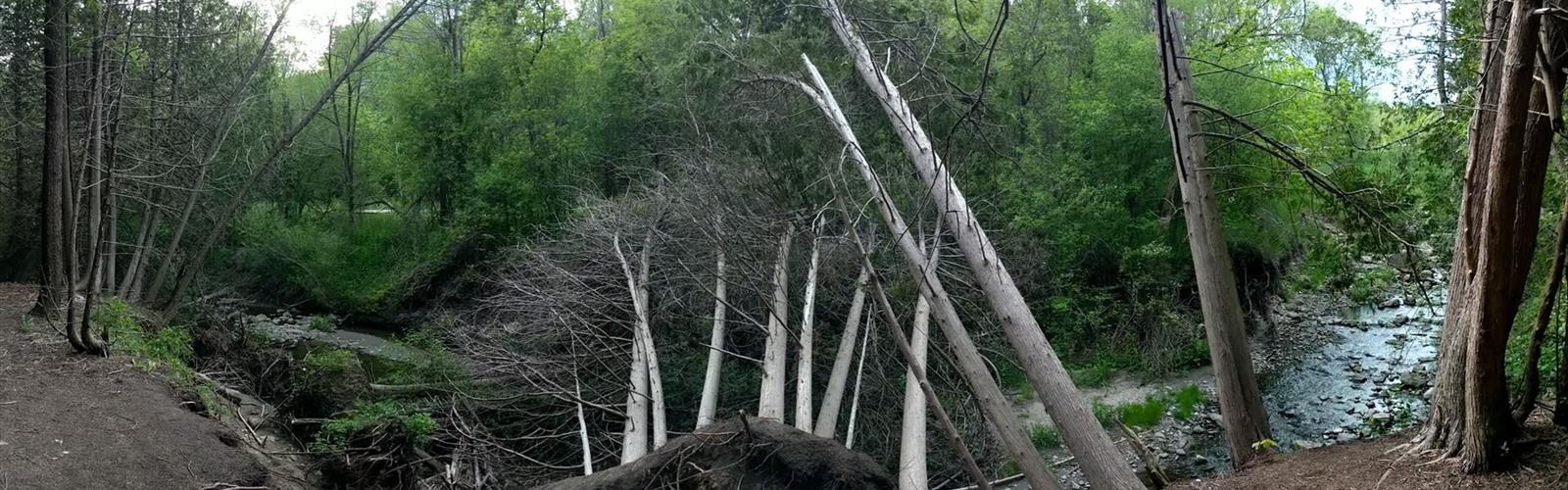

Ready to explore Bob Hunter Memorial Park? Here's everything you need to know before you go!
Discover the trail
Trail description
Bob Hunter Memorial Park covers 500 acres in Ontario's York, Durham, and Headwaters region, and it delivers one of the more varied hiking experiences you'll find in the area. The park's trail network threads through several distinct ecosystems — dense hardwood forest, open meadows, and quiet wetlands — all within a single accessible location. The Rouge River runs through portions of the park, and its sound follows you along several trail sections in a way that genuinely adds to the experience.
The interconnected trail design is one of the park's strongest features. Rather than committing to a fixed route, you can adjust your hike as you go — extend into the forest if you're feeling good, or loop back through the meadow if you want to keep things shorter. Trail junctions are well-marked, so route decisions are easy to make on the fly without worrying about getting turned around.
Terrain and Trail Character
The forest sections move through mature hardwood stands with a well-established canopy that keeps things noticeably cooler on warm days. The elevation changes here are gentle — enough to give the trail some character without pushing the difficulty up significantly. Underfoot, the surface is mostly natural leaf litter, which is soft and pleasant in dry conditions but can get muddy near the wetland transitions after rain. If you're hiking in shoulder season or after a wet stretch, waterproof footwear is worth it.
The meadow portions feel like a completely different park. Open grasslands replace the tree cover, the sightlines open up, and the light hits differently — especially in the early morning or late afternoon. These sections tend to be drier and more exposed, which makes them particularly good for wildlife watching and photography. The contrast between the shaded forest and the open meadow is one of the things that keeps the hike interesting throughout.
The wetland areas include boardwalk segments that let you move through sensitive habitat without getting your feet wet. These elevated sections put you right at eye level with the aquatic environment in a way that feels more intimate than a trail that simply skirts the edge. The boardwalks are well-positioned for bird watching, and the vantage point they offer is genuinely useful for spotting activity in the water and surrounding vegetation.
Wildlife and Natural Features
White-tailed deer are a regular presence in the meadow sections, most reliably spotted during early morning or late afternoon visits. Rabbits show up frequently along trail edges, particularly where the forest transitions to open ground. The bird life is diverse across the park's different habitats — forest species in the hardwood sections, waterfowl and wetland birds near the boardwalks, and a mix of both during migration when the wetlands serve as stopover habitat.
The Rouge River corridor adds another layer to the park's natural variety. The riparian vegetation along the riverbanks differs from the upland forest, which draws different species and creates additional habitat complexity. There are spots along the river where it's worth pausing to take in the water views or simply sit with the sound of the current for a few minutes.
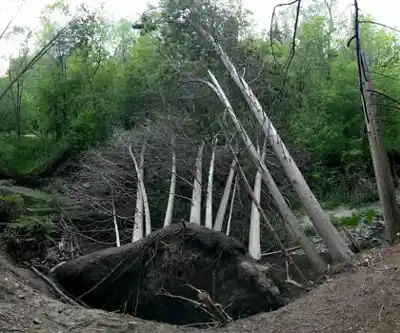
The park's management approach leans toward leaving dead trees standing where it's safe to do so. This creates better nesting habitat for woodpeckers and cavity-nesting birds, and it also makes the forest feel more genuinely natural rather than manicured. It's a small detail, but it contributes to the overall character of the place.
Facilities and Practical Information
Picnic areas are scattered through the park at spots chosen for their views or sense of quiet, making them useful rest points during a longer hike or destinations in their own right for a shorter outing. The park works well for families because the trail variety means different members can find something that suits their pace and interest without the group having to compromise too much.
Photography is genuinely rewarding here across all three ecosystem types. The forest, meadow, and wetland sections each offer different subjects and light conditions, and moving between them within a single hike gives you a lot of variety without covering a huge amount of ground. The seasonal changes — spring wildflowers, summer foliage, fall colour, winter structure — mean the park looks meaningfully different depending on when you visit.
Conservation Context
The park is named for Bob Hunter, an environmentalist whose conservation work shaped the principles that guide how the park is managed today. That heritage shows up in practical ways: trail design prioritizes low environmental impact, sensitive habitats are protected rather than developed, and the overall approach favors keeping the park feeling like a natural area rather than a recreational facility. The result is a place that feels more like exploring a protected landscape than visiting a park in the conventional sense.
The 500 acres within the park boundaries represent a meaningful cross-section of the natural landscape character of the York, Durham, and Headwaters region, and the fact that several distinct ecosystems are accessible within a single visit makes it a strong option for anyone wanting to get a genuine sense of what this part of Ontario looks like at its best.
The Essential Hiking Checklist
Everything you need for your next hike. Bilingual, printable, 1 page.
Get your free hiking checklistRecommended gear for this trail
As an Amazon Associate I earn from qualifying purchases.


Ready to go?
Everything you need to know before you goStarting Point
The bob hunter memorial park is located in the city of Toronto. To get there, take the Gardiner Expressway and exit at Spadina Avenue. Head north on Spadina and turn left on Lake Shore Boulevard. The park will be on your right.
When?
How much?
As an Amazon Associate I earn from qualifying purchases.
Affiliate links — LGPO may earn a commission at no extra cost to you.
- Hiking shoes Essential
- → Salomon Elixir Tour Mid WP · 203.38 $
- Layered clothing Essential
- Rain jacket Essential
- Trekking poles
- → Black Diamond Trail Ergo Cork · 69.99 $
- Headlamp
- → Petzl Actik Core 625 · 103.95 $
FAQ - Frequently asked questions
Everything you need to knowSimilar hikes nearby
Discover other trails you might enjoy

North Maple Regional Park
York, Durham and Headwaters
Murphys Pinnacle, Ontario
York, Durham and Headwaters
Vicki Barron Lakeside Trail
York, Durham and Headwaters

Hockley Valley
York, Durham and Headwaters

Eldred King Woodlands
York, Durham and Headwaters

Lake Aquitaine
York, Durham and Headwaters
Hiking near Toronto
168 trails to explore ~27 km away
We work hard to provide the most up-to-date and error-free data possible. If something seems incorrect, let us know! Your contribution helps the whole community.
Hikers' opinions
Be the first to review!
No hiker has shared their experience yet. Share your impressions and help other hikers!