
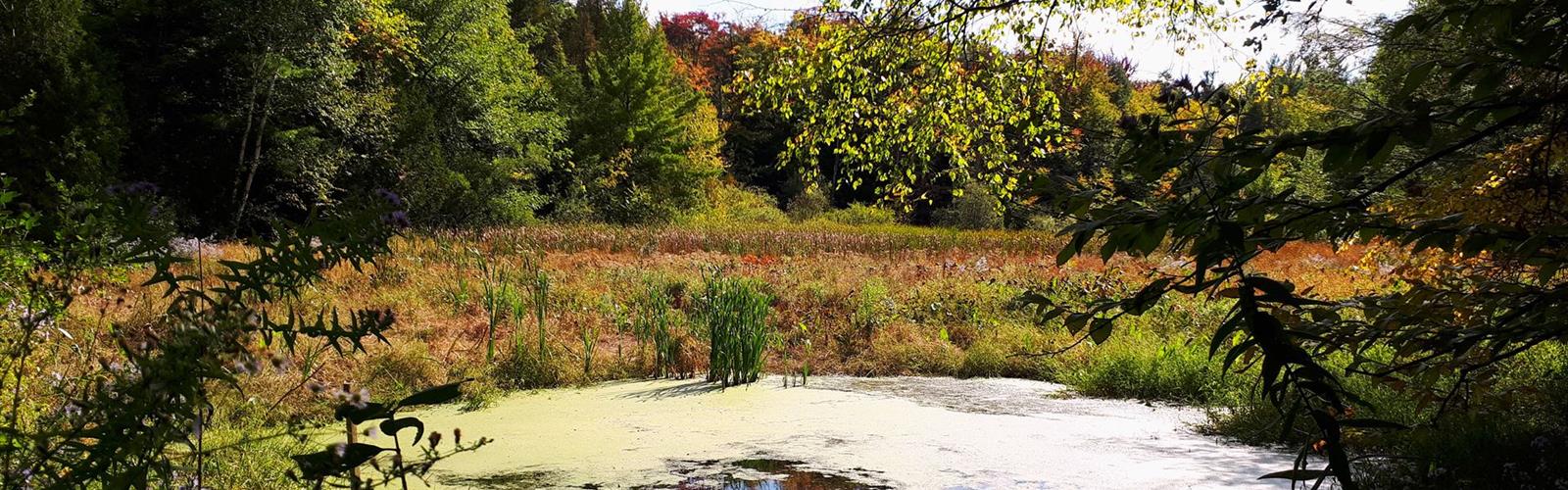

Ready to explore Thornton Bales Conservation Area? Here's everything you need to know before you go!
Discover the trail
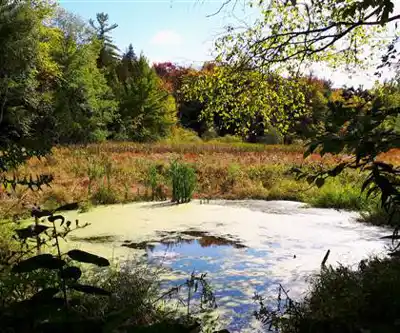
Trail description
Thornton Bales Conservation Area sits quietly in the heart of York, Durham, and Headwaters, offering one of southern Ontario's most distinctive hiking experiences. This 73-hectare conservation area has earned a devoted following among local hikers who know it by its nickname: the "99 Steps." That name tells you exactly what makes this place stand out — a steep wooden staircase that climbs through dense forest, delivering a solid workout and a genuine sense of reward at the top.
The famous staircase is the centerpiece of any visit here. These aren't your typical park steps — they're steep, uneven in places, and demand real attention. The climb takes you up through a thick canopy of mature hardwood trees, where towering maples, oaks, and birches create a natural cathedral overhead. The forest feels surprisingly wild for somewhere so accessible, with deep shade and earthy smells that make it easy to forget you're still within reach of the Greater Toronto Area.
Trail Experience and Terrain
What strikes most visitors is how the terrain shifts as you climb. You start near the parking area in a relatively open setting, then quickly enter dense forest where the temperature drops noticeably. The steps are built into the natural slope of the land, following the contours of a steep ravine. As you ascend, the forest composition changes subtly, with different understory plants thriving at different elevations — ferns, wildflowers, and shrubs filling in the gaps between the larger trees.
The trail network extends beyond the famous staircase, offering gentler options for those who prefer a more relaxed pace. These paths wind through the same beautiful mixed forest without the intense climb, making them a solid choice for families or anyone who wants to enjoy the area's natural character without the cardiovascular push. The varying difficulty levels mean you can tailor your visit to your energy level and the time you have available.
The terrain throughout Thornton Bales is classic southern Ontario mixed forest, with rich soil supporting a diverse understory. The forest floor changes dramatically with the seasons, and the area's topography — gentle rolling hills punctuated by steeper ravines — creates microclimates that support different plant communities across a relatively compact space.
Wildlife and Natural Features
The conservation area's diverse habitats support a solid range of wildlife for such a compact space. White-tailed deer are commonly spotted, especially during early morning or late afternoon visits. The forest canopy draws numerous bird species throughout the year — year-round residents like chickadees and woodpeckers share the space with seasonal visitors including warblers and thrushes during migration. Squirrels and chipmunks are abundant throughout, and patient observers occasionally spot raccoons or fox moving through the understory.
The mix of deciduous and coniferous trees creates year-round shelter and food sources that support this variety of wildlife, making the area worth visiting in any season rather than just during the obvious fall peak.
Seasonal Highlights
Fall is when Thornton Bales earns its reputation as one of the region's premier leaf-peeping destinations. The mature hardwood forest explodes into brilliant reds, oranges, and yellows, and the contrast between the colorful canopy and the dark wooden steps makes for genuinely compelling photography. This is also when the trails are at their busiest — weekday mornings are your best bet for a quieter experience.
Winter brings a completely different character to the area. Snow-covered trails offer good conditions for snowshoeing, and the bare trees reveal the underlying structure of the forest in a way that's worth seeing on its own terms. That said, the steps can become genuinely treacherous with ice and snow, so traction devices and careful footing are non-negotiable in cold conditions.
Spring awakens the forest with emerging wildflowers and fresh green growth, and wildlife activity picks up noticeably after winter. Summer delivers deep shade and noticeably cooler temperatures under the canopy, making Thornton Bales a worthwhile escape from the heat.
Photography and Viewpoints
Several lookout points along the trails offer views through the forest canopy and across the surrounding landscape, showcasing the rolling terrain characteristic of this part of Ontario. The interplay of light and shadow through the canopy shifts constantly, with early morning and late afternoon providing the most interesting conditions for photography.
The wooden steps themselves have become a popular subject — the rustic construction set against the wild forest creates a composition that captures something real about the place. It's a good reminder that built infrastructure and natural character don't have to work against each other.
Practical Considerations
Thornton Bales Conservation Area is open year-round, though conditions vary significantly with the seasons. Sturdy footwear is essential regardless of when you visit — the steps can be slippery when wet or leaf-covered, and the forest trails include roots, rocks, and uneven surfaces throughout. Bring enough water, especially if you plan to tackle the steps more than once or explore the longer trail options.
Dress for the conditions and account for the fact that the forest canopy keeps things cooler than you might expect in summer, while winter requires extra layers and serious attention to footing on the steps. The trail system is well-marked and compact enough that navigation is straightforward, and maps are available on-site for those who want them.
The 54-metre elevation gain concentrated in the staircase section makes this a more demanding outing than the overall trail length might suggest — it's a short but genuinely physical experience that earns its reputation among regulars in the York, Durham, and Headwaters area.
The Essential Hiking Checklist
Everything you need for your next hike. Bilingual, printable, 1 page.
Get your free hiking checklistRecommended gear for this trail
As an Amazon Associate I earn from qualifying purchases.


Ready to go?
Everything you need to know before you goStarting Point
The thornton bales conservation area is located in Ontario. To get to the start of the trails, take Highway 401 to exit 431 and go north on County Road 2. The conservation area will be on the right.
The thornton bales conservation area is located in Ontario. To get to the start of the trails, take Highway 401 to exit 431 and go north on County Road 2. The conservation area will be on the right.
When?
How much?
As an Amazon Associate I earn from qualifying purchases.
Affiliate links — LGPO may earn a commission at no extra cost to you.
- Hiking shoes Essential
- → Salomon Elixir Tour Mid WP · 203.38 $
- Layered clothing Essential
- Rain jacket Essential
- Trekking poles
- → Black Diamond Trail Ergo Cork · 69.99 $
- Headlamp
- → Petzl Actik Core 625 · 103.95 $
FAQ - Frequently asked questions
Everything you need to knowSimilar hikes nearby
Discover other trails you might enjoy

North Maple Regional Park
York, Durham and Headwaters
Murphys Pinnacle, Ontario
York, Durham and Headwaters
Vicki Barron Lakeside Trail
York, Durham and Headwaters

Hockley Valley
York, Durham and Headwaters

Eldred King Woodlands
York, Durham and Headwaters

Lake Aquitaine
York, Durham and Headwaters
Hiking near Barrie
146 trails to explore ~42 km away
We work hard to provide the most up-to-date and error-free data possible. If something seems incorrect, let us know! Your contribution helps the whole community.
Hikers' opinions
Be the first to review!
No hiker has shared their experience yet. Share your impressions and help other hikers!