

Ready to explore Grasslands National Park? Here's everything you need to know before you go!
Discover the trail
Trail description
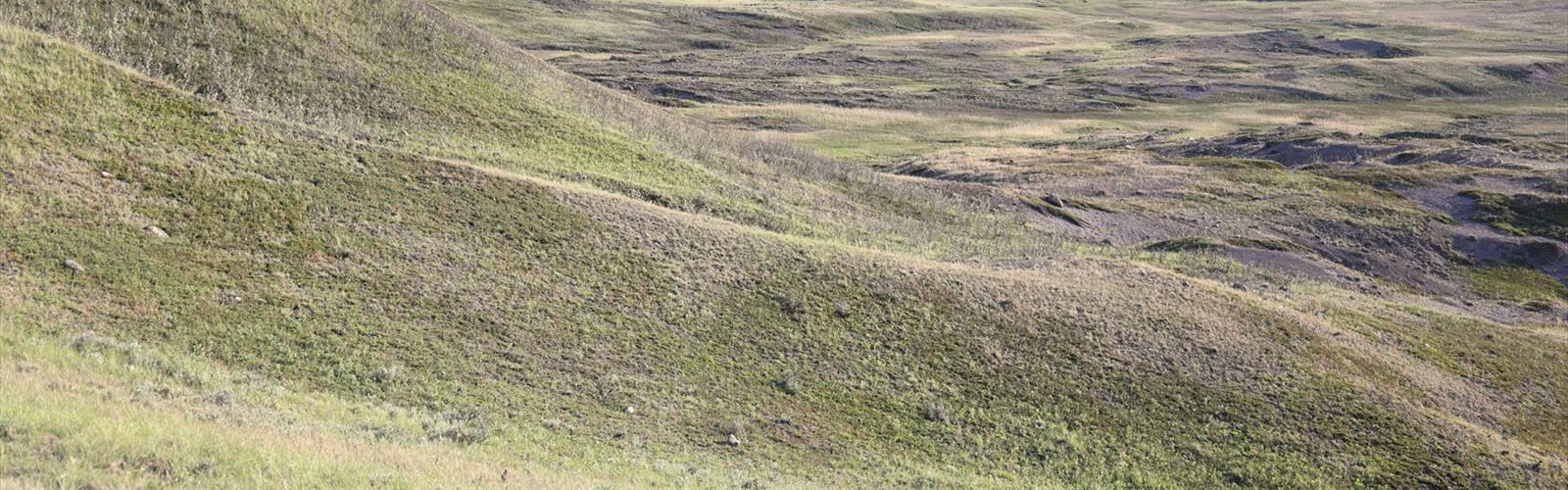
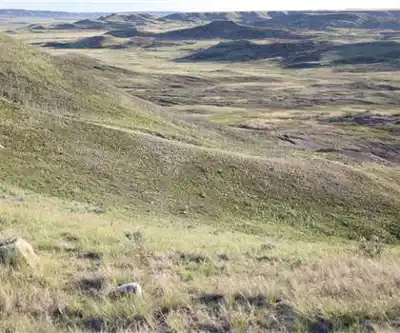
Grasslands National Park sprawls across southern Saskatchewan's mixed-grass prairie, protecting one of North America's last intact grassland ecosystems. Split into two distinct blocks separated by about 70 kilometers, this park offers hikers a rare chance to experience the Great Plains as they existed centuries ago, complete with free-roaming bison herds and endless horizons that seem to stretch into infinity.
The West Block Experience
The West Block centers around the Frenchman River Valley, where the landscape transforms from rolling prairie into a maze of coulees, buttes, and hidden valleys. This 27,000-hectare section feels like stepping into a western movie set, with its dramatic sandstone formations and winding creek beds that cut deep channels through the grassland. The terrain here varies significantly as you move from the flat prairie tableland down into the valley system, creating microclimates that support different plant communities and wildlife.
The Two Trees Trail provides an excellent introduction to this landscape without demanding serious physical effort. This easy walk takes you across typical mixed-grass prairie where you'll encounter the park's signature grasses—blue grama, spear grass, and western wheatgrass—along with wildflowers that paint the landscape in brilliant colors during summer months. The trail's name comes from two prominent cottonwood trees that serve as landmarks in this vast landscape, and the panoramic views from various points along the route showcase the prairie's subtle but compelling beauty.
East Block Adventures
The East Block presents a more rugged character with its badlands formations and eroded hillsides that reveal millions of years of geological history. This 6,000-hectare section offers some of the most dramatic scenery in the park, with layered rock formations, deep gullies, and exposed fossil beds that tell the story of ancient seas and prehistoric life.
The 70 Mile Butte Trail represents the park's premier hiking challenge, leading to one of the highest points in the area. The climb rewards hikers with commanding views across the prairie landscape, extending into Montana on clear days. The trail passes through diverse terrain, from grassland flats to rocky slopes, and the summit provides an unparalleled perspective on the vastness of the Great Plains ecosystem.
Wildlife Encounters
Grasslands National Park supports an impressive array of prairie wildlife, with the plains bison herd serving as the flagship species. These massive animals, reintroduced to restore the ecosystem's natural balance, roam freely across the West Block and create an authentic prairie experience that few places can match. Watching a bison herd move across the grassland, especially during the golden hours of sunrise or sunset, ranks among the most memorable wildlife experiences in Canada.
Pronghorns, North America's fastest land animal, inhabit both blocks and can often be spotted bounding across the prairie with their distinctive white rumps flashing. These graceful animals embody the spirit of the open range and demonstrate remarkable speed and agility as they navigate the rolling terrain.
The park's bird life reflects the diversity of prairie ecosystems, with species that have adapted specifically to grassland environments. Ferruginous hawks, the largest hawks in North America, soar overhead hunting for ground squirrels and other small mammals. Burrowing owls, unusual among their family for nesting underground, can be spotted near prairie dog towns where they take advantage of existing burrow systems. Sharp-tailed grouse perform elaborate mating dances on traditional dancing grounds, while western meadowlarks fill the air with their distinctive songs that have become synonymous with prairie landscapes.
Terrain and Trail Conditions
The park's trail system accommodates different skill levels and interests, though all hiking here requires preparation for prairie conditions. Trails range from well-marked paths near visitor facilities to more challenging routes that cross unmarked grassland where navigation skills become important. The terrain varies from flat prairie walking to steep climbs up buttes and down into valley systems.
Weather conditions can change rapidly on the open prairie, where there's little natural shelter from wind, sun, or sudden storms. Summer temperatures can soar above 30°C with intense sun exposure, while spring and fall bring unpredictable weather patterns that might include everything from snow to thunderstorms. The lack of tree cover means hikers are exposed to elements throughout most of their journey.
Water sources are extremely limited throughout the park, making adequate hydration planning essential for any hike. The few natural water sources may not be reliable or safe for drinking, so carrying sufficient water for your entire trip is mandatory.
Planning Your Visit
Both blocks of the park offer camping facilities for visitors who want to experience the prairie's incredible night skies, renowned for their darkness and clarity. The camping areas provide basic amenities while maintaining the wild character that defines this landscape.
Trail conditions and weather forecasts should be checked before any hiking trip, as prairie weather can be severe and change quickly. The park's remote location means that emergency services are far away, making self-sufficiency and proper preparation crucial for safe hiking.
Essential gear for hiking in Grasslands includes sturdy footwear suitable for uneven terrain, sun protection including hat and sunscreen, and layers of clothing to handle temperature variations. The open landscape offers little shade, so sun protection becomes critical during summer months. Wind protection is important year-round, as prairie winds can be constant and strong.
The park's role in conservation extends beyond providing recreational opportunities, protecting genetic diversity in native plant species and maintaining habitat for species that have disappeared from most of their original range. This conservation mission adds significance to every visit, connecting hikers to broader efforts to preserve North America's grassland heritage.
The Essential Hiking Checklist
Everything you need for your next hike. Bilingual, printable, 1 page.
Get your free hiking checklistRecommended gear for this trail
As an Amazon Associate I earn from qualifying purchases.


Ready to go?
Everything you need to know before you goStarting Point
The grasslands national park is located in Saskatchewan, Canada. To get to the start of the trails, take Highway 6 south from Swift Current and turn left onto Highway 21. The park is located about 60 km west of Swift Current.
When?
How much?
As an Amazon Associate I earn from qualifying purchases.
Affiliate links — LGPO may earn a commission at no extra cost to you.
- Hiking shoes Essential
- → Salomon Elixir Tour Mid WP · 203.38 $
- Layered clothing Essential
- Rain jacket Essential
- Trekking poles
- → Black Diamond Trail Ergo Cork · 69.99 $
- Headlamp
- → Petzl Actik Core 625 · 103.95 $
FAQ - Frequently asked questions
Everything you need to knowSimilar hikes nearby
Discover other trails you might enjoy

Hiking near Regina
4 trails to explore ~257 km away
We work hard to provide the most up-to-date and error-free data possible. If something seems incorrect, let us know! Your contribution helps the whole community.
Hikers' opinions
Be the first to review!
No hiker has shared their experience yet. Share your impressions and help other hikers!