
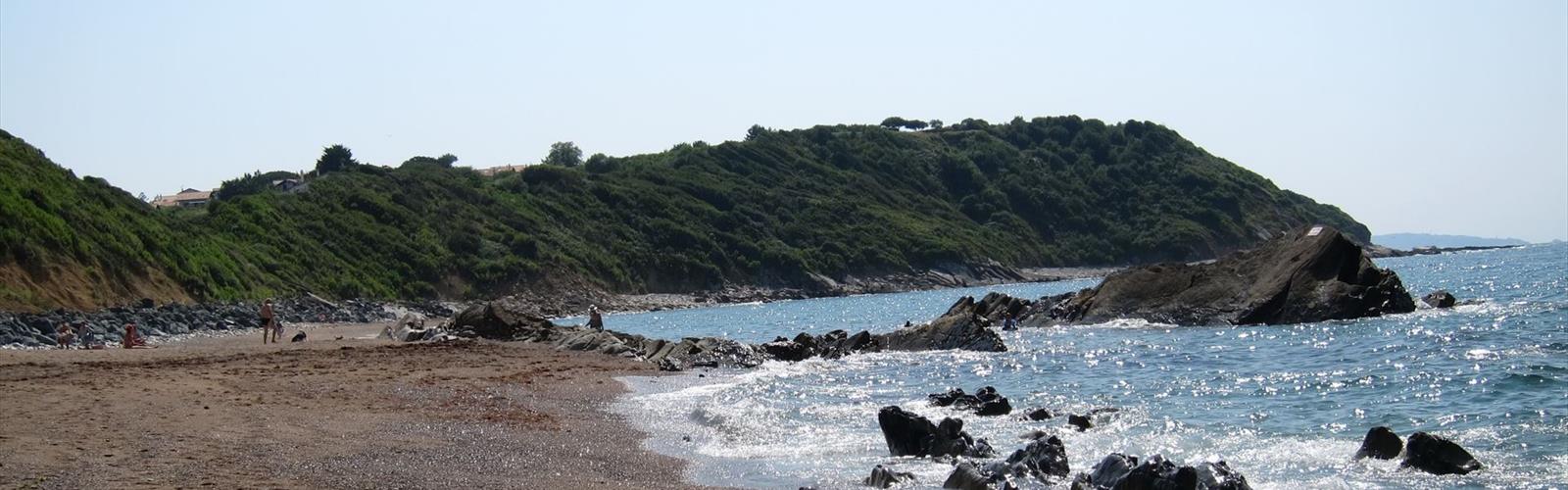

Ready to explore Jardin botanique littoral de Saint-Jean-de-Luz? Here's everything you need to know before you go!
Discover the trail
Trail description
The Jardin botanique littoral de Saint-Jean-de-Luz sits right where the Basque coast gets interesting — where Atlantic winds, salt spray, and sandy soils create conditions that most plants simply can't handle. This small but genuinely rewarding botanical garden focuses exclusively on littoral vegetation, the specialized plant communities that have figured out how to thrive in one of the more demanding environments along the French Atlantic coast.
At 1.5 km of pathways with only 10 meters of elevation change, this is an easy, flat walk that takes around 30 minutes at a comfortable pace. The terrain reflects the natural character of coastal lowlands — no dramatic climbs, just subtle shifts in soil type, drainage, and exposure that translate into noticeably different plant communities from one section to the next.
What Makes This Place Worth Your Time
What sets this garden apart from a standard botanical collection is its tight ecological focus. Every plant here was selected because it belongs to the coastal environment of the Pyrénées-Atlantiques. You're not looking at exotic imports or ornamental varieties — you're seeing the actual species that stabilize dunes, colonize cliff faces, and carpet the coastal meadows of the Basque shoreline. That specificity makes the garden genuinely useful as a primer before heading out to explore the wilder stretches of coast nearby.
The interpretive signage does real work here. Rather than just labeling species, the panels explain the specific adaptations at play — why a particular grass develops hollow stems, how a succulent's waxy coating blocks salt absorption, what makes certain root systems effective at anchoring in sandy soil. If you take the time to read them, you leave with a framework for understanding coastal vegetation that changes how you see the broader landscape.
The Walk Itself
The pathways are well-maintained and connect distinct habitat zones, each representing a different type of coastal environment found along the Atlantic shore. Sandy sections showcase dune-stabilizing grasses alongside the wildflowers that bloom across coastal meadows. Rocky areas display the tenacious plants that colonize stone outcrops and cliff edges, their leaves often coated or thickened to handle constant salt exposure.
Because the garden is compact, you can move slowly without feeling like you're covering ground inefficiently. That's actually the right approach here — the details reward close attention. Leaf textures, growth patterns, seed structures, the way certain plants orient themselves relative to prevailing winds. These are things you'd walk right past on a longer trail but can actually stop and examine here.
The flat, accessible layout makes this suitable for visitors of all ages and mobility levels. Comfortable walking shoes are all you need for the terrain itself, though the coastal location means Atlantic weather can shift quickly — a light layer and something waterproof are worth having on hand.
Seasonal Highlights
Spring is when the coastal wildflowers are most active, with many species producing their most visible blooms before summer heat sets in. It's also the easiest season for photography, with plants in active growth and good light conditions along the coast.
Summer shows the garden's plants under stress — which is actually when their adaptations are most visible. The strategies for handling intense sun, salt, and dry spells become obvious when you can see plants actively deploying them. It's the most instructive season for anyone interested in plant ecology.
Fall shifts the focus to seed production and the structural forms of grasses and flowering plants as they prepare for winter. Some of the most visually interesting textures in the garden appear during this period.
Winter strips things back to form and structure, and the persistent foliage of many coastal species means the garden doesn't go dormant the way an inland garden might. The resilience of littoral plants is genuinely on display during the harsher Atlantic months.
Who This Is For
The garden works well for a few different types of visitors. If you have a genuine interest in botany or coastal ecology, it's a concentrated, well-interpreted collection that covers the key species and adaptations of the Pyrénées-Atlantiques coastline in a single accessible space. If you're traveling with kids, the visible differences between coastal plants and familiar garden species give you concrete, easy-to-explain examples of how organisms adapt to their environments — more engaging than abstract explanations.
For casual visitors, it's a pleasant, low-effort walk that adds context to the broader coastal landscape of Saint-Jean-de-Luz. The town itself has plenty to offer — beaches, architecture, restaurants — and the garden fits naturally into a day that includes other stops. Its compact size means you can explore it thoroughly without it taking over your afternoon.
Getting There and Practical Notes
The garden is located in Saint-Jean-de-Luz, making it straightforward to reach whether you're based in town or visiting for the day. Its position in the Pyrénées-Atlantiques puts it within easy reach of the broader Basque coast, and it pairs well with time spent exploring the shoreline or the town's cultural sites.
- Distance: 1.5 km
- Elevation gain: 10 m
- Difficulty: Easy
- Estimated time: 30 minutes
- Terrain: Flat, well-maintained paths
- Accessibility: Suitable for all ages and mobility levels
Wear comfortable walking shoes, bring a layer for unpredictable Atlantic weather, and give yourself enough time to actually read the interpretive panels — that's where most of the value of this visit lives.
The Essential Hiking Checklist
Everything you need for your next hike. Bilingual, printable, 1 page.
Get your free hiking checklistRecommended gear for this trail
As an Amazon Associate I earn from qualifying purchases.


Ready to go?
Everything you need to know before you goWhen?
How much?
As an Amazon Associate I earn from qualifying purchases.
Affiliate links — LGPO may earn a commission at no extra cost to you.
- Hiking shoes Essential
- → Salomon Elixir Tour Mid WP · 203.38 $
- Layered clothing Essential
- Rain jacket Essential
- Trekking poles
- → Black Diamond Trail Ergo Cork · 69.99 $
- Headlamp
- → Petzl Actik Core 625 · 103.95 $
FAQ - Frequently asked questions
Everything you need to knowSimilar hikes nearby
Discover other trails you might enjoy

Hiking near Sydney
22 trails to explore ~4537 km away
We work hard to provide the most up-to-date and error-free data possible. If something seems incorrect, let us know! Your contribution helps the whole community.
Hikers' opinions
Be the first to review!
No hiker has shared their experience yet. Share your impressions and help other hikers!