

Ready to explore Lac de Bious Artigues? Here's everything you need to know before you go!
Discover the trail
Trail description
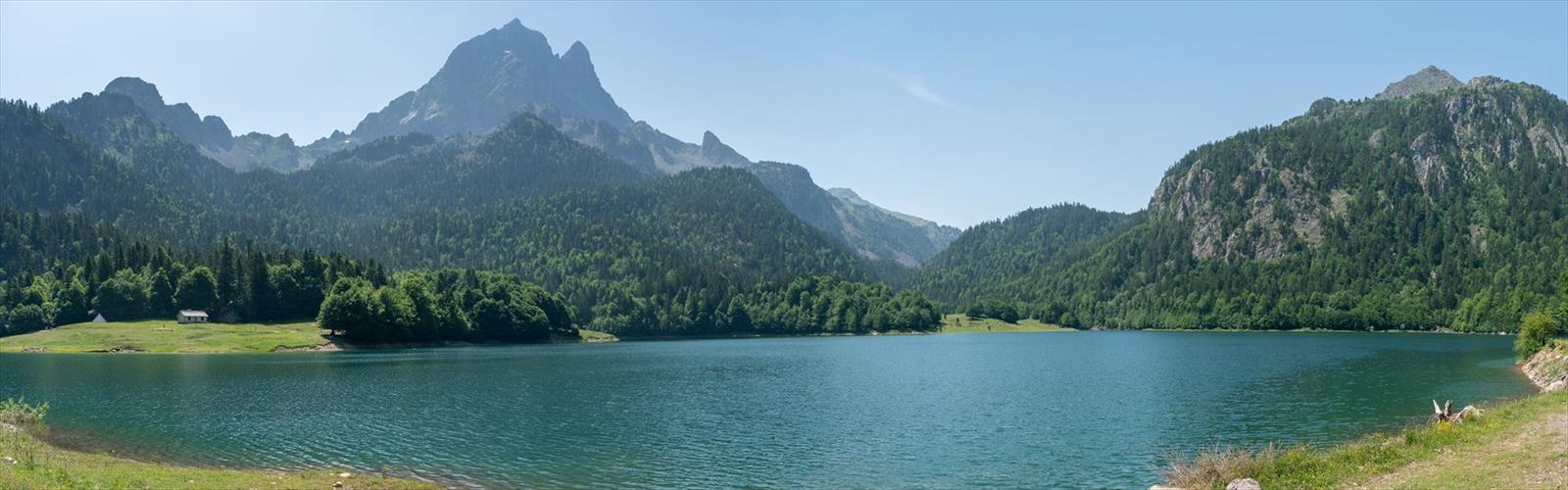
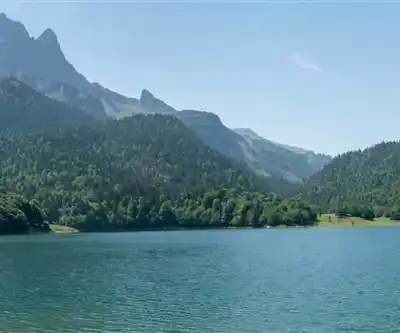
Lac de Bious Artigues sits at the heart of the Pyrénées-Atlantiques, tucked into a glacially-carved basin surrounded by some of the most dramatic peaks in the French Pyrenees. It works equally well as a destination on its own or as a launching point for longer routes into the high mountains. The lake is accessible via a winding mountain road, and from the moment you start climbing toward it, the landscape makes clear you're entering something special.
The lake's dark water has a way of holding the surrounding cliffs in near-perfect reflection on calm mornings. The pale gray limestone walls rise sharply from the shoreline, and the contrast between rock, water, and sky shifts constantly as the light moves through the day. It's the kind of place that looks different every hour, which is part of why people tend to linger longer than they planned.
The Terrain and What to Expect on Trail
The loop around the lake covers 3.2 km with 200 meters of elevation gain, and most people complete it in around an hour and a half. That puts it firmly in easy territory — enough movement to feel like you've actually been somewhere, without the kind of effort that leaves you wrecked for the rest of the day. It's a genuinely good option for families, for people easing back into hiking, or for anyone who wants to spend more time looking around than watching their footing.
The trail itself isn't uniform. Near the shoreline, the path is well-maintained and straightforward. As you move toward the higher viewpoints around the lake, the terrain gets rockier and requires a bit more attention. The elevation gain is spread out enough that it never feels like a sudden wall — you earn the views gradually, which makes them land better when you get there.
The geological detail in the surrounding cliffs is worth slowing down for. The limestone walls show clear horizontal layering — ancient marine sediments compressed and pushed skyward over millions of years, then carved back by glaciers. You don't need a geology background to appreciate it; the scale and texture of the rock faces are striking on their own terms.
Wildlife and Natural Features
Marmots are the most reliably entertaining part of any visit here. They're active on the rocky slopes around the lake, and their sharp warning whistles carry clearly across the water. If you sit still for a few minutes near a rocky section, you'll almost certainly spot one popping up to check you out before ducking back underground. Kids tend to love this, but honestly, so does everyone else.
Golden eagles use the thermals rising off the sun-warmed rock faces, and if you spend enough time looking up, you'll likely catch one working the updrafts overhead. Alpine choughs and snow finches are common at this elevation, moving through the rocks and sparse vegetation in small groups. The lake itself sits high enough that aquatic life is limited, but the surrounding wetland margins get busy with insect activity during the summer months.
The plant life around the lake is adapted to a short, intense growing season. Cushion plants spread low across exposed rocky ground, built to handle wind and temperature swings that would flatten less specialized vegetation. From late June through August, alpine wildflowers push through in patches of color that feel almost improbable given how harsh the environment looks the rest of the year.
Getting There and Parking
The access road to Lac de Bious Artigues is part of the experience. It's a winding mountain road with narrow sections and steep grades — not technically difficult to drive, but it demands your attention, especially when meeting oncoming traffic. The views along the way are consistently good, and there are pullouts where it makes sense to stop.
Parking near the lake fills up fast on summer weekends and holidays. Arriving early in the morning gives you the best shot at a convenient spot and also means you'll have the lake mostly to yourself for the first hour or two — which is a meaningfully different experience than arriving mid-afternoon when the area is at its busiest.
Weather and What to Bring
Weather at this elevation moves fast. Summer afternoons in the Pyrenees are known for building thunderstorms that can roll in with little warning, and the exposed terrain around the lake offers limited shelter. Even on a warm morning, temperatures can drop quickly if clouds move in or if you gain any elevation beyond the shoreline.
The practical answer is to bring more layers than you think you need and to have something waterproof accessible, not buried at the bottom of your pack. Starting early also helps you stay ahead of the afternoon weather pattern that's common through the summer months.
Seasonal Access
The access road is closed during winter due to snow, so visits are limited to the warmer months. Early season arrivals — typically from late spring onward — may find snow patches still clinging to the slopes and shoreline. That combination of snow, dark water, and bare rock creates a stark, striking landscape that's quite different from the lush mid-summer version of the same place.
Peak summer brings the most activity: wildflowers, wildlife, longer daylight hours, and the extended alpine twilight that makes evening photography particularly rewarding. By late summer and into autumn, the crowds thin out and the landscape takes on a more austere quality. The vegetation goes dormant quickly after the first hard frosts, and what's left is the raw structure of the mountains — which has its own appeal for those who prefer the high country without the softening effect of green.
What Makes This Place Worth the Drive
Lac de Bious Artigues punches above its weight for a 3.2 km trail. The combination of an accessible distance, genuine alpine scenery, reliable wildlife sightings, and a setting that rewards both a quick visit and a longer stay makes it one of the more satisfying easy hikes in the Pyrénées-Atlantiques. The lake itself is the draw, but the surrounding terrain — the cliffs, the rock detail, the marmots, the shifting light — is what makes people want to come back.
The Essential Hiking Checklist
Everything you need for your next hike. Bilingual, printable, 1 page.
Get your free hiking checklistRecommended gear for this trail
As an Amazon Associate I earn from qualifying purchases.


Ready to go?
Everything you need to know before you goWhen?
How much?
As an Amazon Associate I earn from qualifying purchases.
Affiliate links — LGPO may earn a commission at no extra cost to you.
- Hiking shoes Essential
- → Salomon Elixir Tour Mid WP · 203.38 $
- Layered clothing Essential
- Rain jacket Essential
- Trekking poles
- → Black Diamond Trail Ergo Cork · 69.99 $
- Headlamp
- → Petzl Actik Core 625 · 103.95 $
FAQ - Frequently asked questions
Everything you need to knowSimilar hikes nearby
Discover other trails you might enjoy

Hiking near Sydney
22 trails to explore ~4651 km away
We work hard to provide the most up-to-date and error-free data possible. If something seems incorrect, let us know! Your contribution helps the whole community.
Hikers' opinions
Be the first to review!
No hiker has shared their experience yet. Share your impressions and help other hikers!