
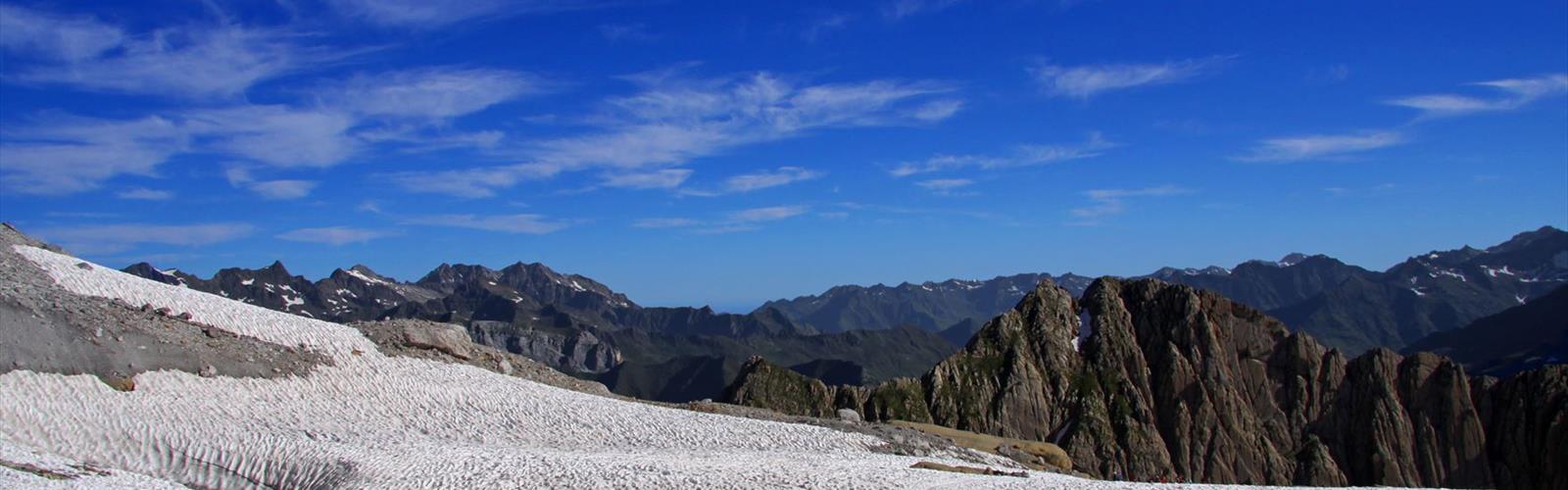
Ready to explore Brèche de Roland? Here's everything you need to know before you go!
Discover the trail
Trail description
The Brèche de Roland is one of those places that stops you in your tracks the moment it comes into view. A massive natural gap in the Pyrenean ridge — nearly 100 meters high and about 40 meters wide — it punches through the mountain wall like something out of a myth. Which, in a way, it is: legend holds that Roland, the legendary knight of Charlemagne's army, carved this breach with his sword Durandal in a final attempt to destroy the blade before dying at the Battle of Roncevaux. Whether you believe the legend or not, standing at the breach and looking through to Spain's Ordesa Valley on the other side, it's easy to understand why people have been telling that story for centuries.
Sitting at 2,807 meters along the border ridge within Pyrenees National Park, the Brèche de Roland is part of the Cirque de Gavarnie — a UNESCO World Heritage landscape and one of the most dramatic mountain environments in all of France. The hike to reach it covers 14 kilometers with 280 meters of elevation gain and takes around 6 hours and 30 minutes. It's rated hard, and that rating is honest.
Getting There: The Approach from Port de Boucharo
The standard approach starts from Port de Boucharo, reached by a winding mountain road that climbs well into the cirque. The trailhead sits at high elevation already, which means you're starting with alpine terrain right from the beginning — no long forest warm-up here. The first sections follow well-marked paths across open alpine meadows, and on a clear morning the views are already worth the drive up.
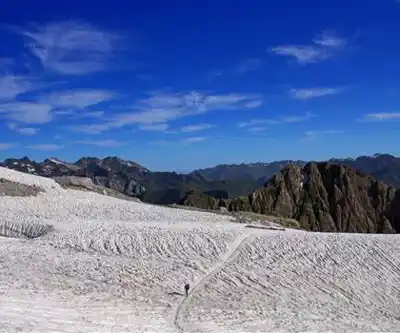
As you gain elevation, the character of the landscape shifts noticeably. Vegetation thins out, the soil gives way to rock, and the scale of the surrounding ridgeline starts to register. The trail crosses terrain shaped by glacial activity over thousands of years — polished rock faces, old moraines, and the sweeping bowl of the cirque itself all tell that geological story without needing a sign to explain it.
The final push to the breach is where the hike earns its hard rating. Loose scree, large boulders, and steep sections require careful, deliberate movement. Cairns mark the way where the path becomes less defined, but you'll want to keep your eyes on your footing as much as on the route. Basic comfort with exposed, uneven terrain is genuinely necessary here — this isn't a place to discover you're not comfortable with that kind of hiking.
At the Breach
When you step through the Brèche de Roland, you're standing on the French-Spanish border with the Ordesa Valley framed in front of you. The limestone walls on either side show clear stratification — layers of rock that record millions of years of geological history. The gap itself creates a wind funnel effect, and even on calm days lower down, conditions at the breach can be significantly windier and colder. That's not a warning to skip it; it's just something to be ready for.
The breach has served as a crossing point between France and Spain for centuries, and it remains a significant waypoint on several long-distance routes, including sections of the GR10 and the Haute Route Pyrénéenne. Standing there, you get a real sense of why — it's one of the few natural passages through this section of the ridge, and the views in both directions make it a logical place to pause regardless of where you're headed.
Wildlife and Alpine Ecosystem
The cirque environment around the breach supports a well-adapted alpine ecosystem. Marmots are a common sight on the rocky slopes, and their sharp warning whistles are often the first sign you're near them. Golden eagles use the thermals rising from the valley below, and if you spend time at the breach, there's a reasonable chance of spotting one working the updrafts. The alpine flora blooms briefly during the short mountain summer, with specialized species filling in color against the rock in ways that feel almost improbable given the conditions they're surviving in.
Terrain and What to Expect Underfoot
The terrain on this hike covers a real range. Lower sections can be muddy and slippery after rain or during early season snowmelt, and stream crossings may be required depending on conditions. Higher up, loose rock and scree demand attention and proper footwear. Sturdy hiking boots with solid ankle support aren't optional on this route — trail runners won't cut it on the upper sections. Trekking poles are genuinely useful, both for stability on loose terrain and for stream crossings.
Snow can linger well into June in some years, and new snowfall is possible even in midsummer at this elevation. If you're hiking early in the season, microspikes or crampons may be necessary for the upper portions of the trail. Check conditions before heading out — the mountain road to Port de Boucharo is typically closed from October through May, and even when it's open, the upper trail can present serious snow travel challenges.
Timing and Practical Considerations
July through September offers the most reliable window for this hike, with July and August providing the warmest and most stable conditions. That said, afternoon thunderstorms are a real concern during summer months at this elevation, and an early start is strongly recommended — both to beat the weather and to experience the breach before the wind picks up and the crowds arrive.
- Start early: Afternoon thunderstorms are common in summer; aim to be at the breach by midday at the latest.
- Dress in layers: Temperature and wind conditions at 2,807 meters can be dramatically different from what you felt at the trailhead.
- Carry enough water: Water sources become scarce as you gain elevation; bring more than you think you'll need.
- Footwear matters: Sturdy boots with ankle support are essential for the rocky upper terrain.
- Check road access: The road to Port de Boucharo is typically closed October through May.
The physical demands of the distance, elevation, and technical terrain mean your energy output will be higher than on a typical day hike — plan your food accordingly and don't underestimate the 6h30 time estimate, especially if conditions are anything less than ideal.
Everything you need for your next hike. Bilingual, printable, 1 page.
Get your free hiking checklistReady to go?
Everything you need to know before you goWhen?
- Hiking shoes Essential
- Layered clothing Essential
- Rain jacket Essential
- Trekking poles
- Headlamp
FAQ - Frequently asked questions
Everything you need to knowOutings near Brèche de Roland
Discover other trails you might enjoy
La Grande Cascade
Hautes-Pyrénées · 2.5 km away
Lac d'Estom
Hautes-Pyrénées · 13.9 km away
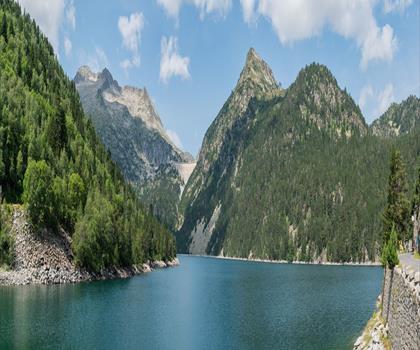
Lac d'Orédon
Hautes-Pyrénées · 21.9 km away
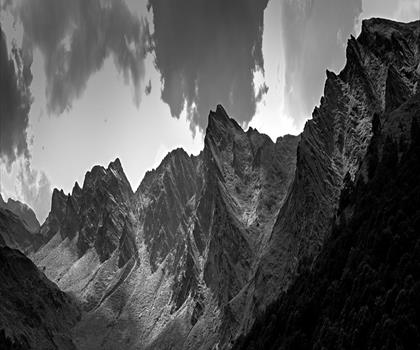
Lac d'Estaing
Hautes-Pyrénées · 27.8 km away
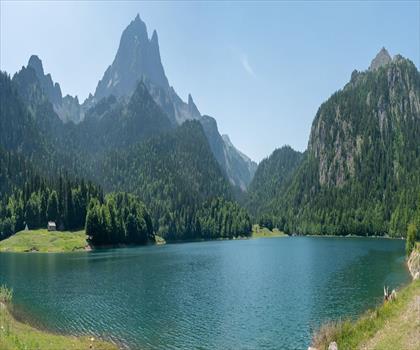
Lac de Bious Artigues
Pyrénées-Atlantiques · 39.5 km away
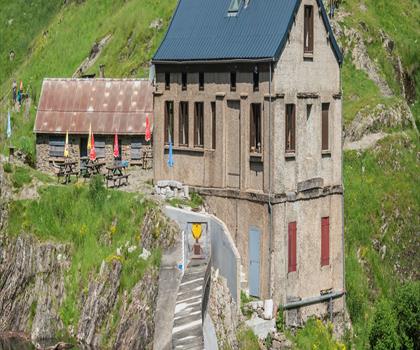
Refuge du Lac d'Oô
Haute-Garonne · 43.4 km away
Hiking near Sydney
25 trails to explore ~4690 km away
We work hard to provide the most up-to-date and error-free data possible. If something seems incorrect, let us know! Your contribution helps the whole community.
Hikers' opinions
Be the first to review!
No hiker has shared their experience yet. Share your impressions and help other hikers!