
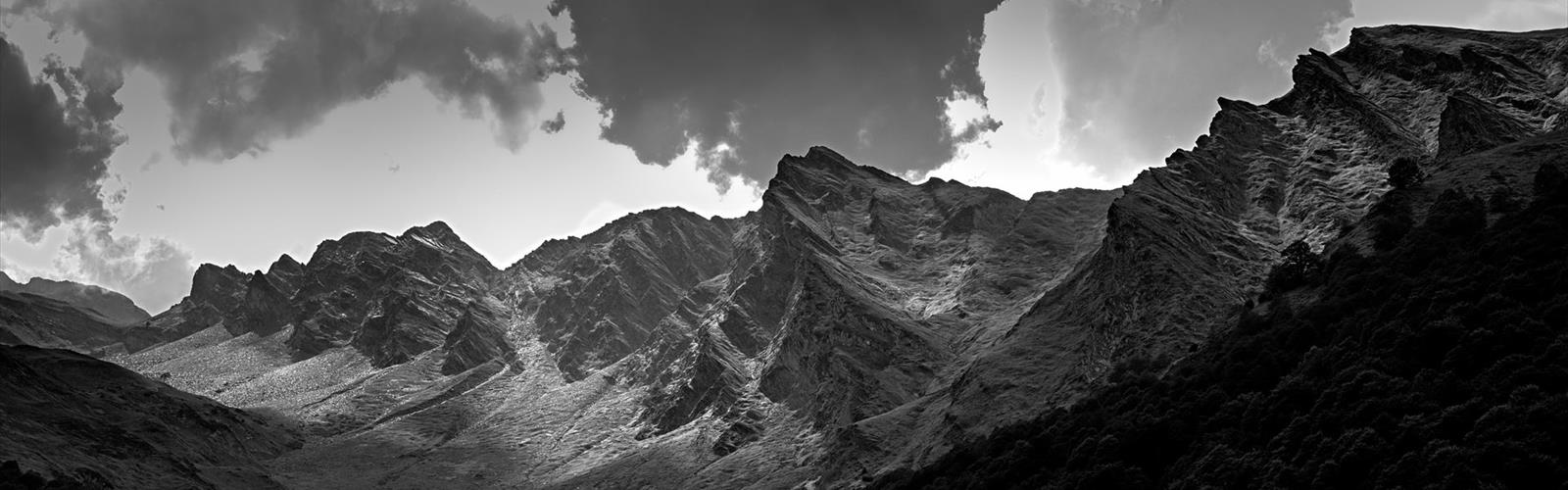

Ready to explore Lac d'Estaing? Here's everything you need to know before you go!
Discover the trail
Trail description
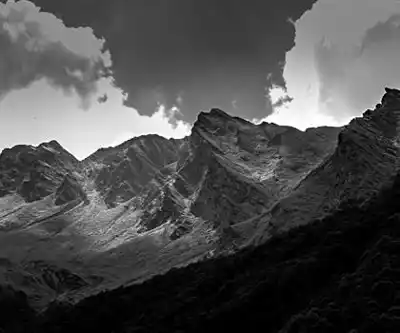
Lac d'Estaing sits in a natural mountain basin in the Hautes-Pyrénées, tucked into a valley that feels genuinely remote despite being reachable on foot in a half-day. The lake is one of those places that earns its reputation — the water is strikingly clear, the surrounding peaks frame it on multiple sides, and the trail getting there is varied enough to keep things interesting the whole way.
The hike covers 8 km with 300 meters of elevation gain, which puts it squarely in moderate territory. Expect around 3 hours 30 minutes of moving time, though most people linger at the lake long enough to stretch that into a full half-day outing. The elevation gain is steady rather than brutal, making this accessible to hikers with a reasonable base fitness level.
The Trail
The route follows a valley floor before gradually climbing toward the lake basin. Early on, the path moves through forest — beech and fir are the dominant species — where the canopy keeps things cool and the light filters through in a way that makes the first stretch genuinely pleasant even on warm days. The forest eventually opens up as you gain elevation, and that transition is one of the highlights of the hike: the moment the trees thin out and the lake comes into view for the first time is well worth the climb.
The terrain underfoot is mixed. Lower sections are mostly packed earth and root-crossed trail, manageable in most conditions. Higher up, the path becomes rockier, and wet conditions can make some surfaces slippery — this is worth keeping in mind if you're hiking after rain or early in the season when snowmelt is still running off the slopes. Sturdy hiking boots with ankle support are the right call here, not trail runners.
The 300-meter elevation gain is distributed across the route in a way that feels natural rather than punishing. There are no sustained steep pitches that force you to stop and catch your breath — instead, the trail climbs progressively, which makes it easier to find a comfortable pace and maintain it.
At the Lake
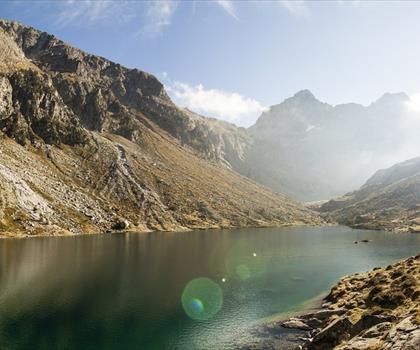
Lac d'Estaing itself is the payoff, and it delivers. The water clarity is exceptional — you can see clearly into the depths from the shoreline, and the surrounding peaks reflect in the surface when conditions are calm. The lake sits in an open basin that feels like a natural amphitheater, with the mountains rising on multiple sides and the sky taking up a large portion of your field of view.
Swimming is possible and popular during summer months. The water stays cold — this is a mountain lake at elevation, not a lowland reservoir — but on a warm day after a 4 km approach, that cold water is exactly what most people are looking for. Entry points vary around the shoreline, with a mix of rocky and grassy edges. There are no lifeguards or facilities, so swimming here is entirely at your own judgment and risk.
The shoreline offers plenty of spots to stop, eat lunch, and take in the surroundings without feeling crowded. The open basin means you can move around the lake edge to find a quieter spot or a better angle for photos.
Wildlife and Flora
The variety of habitats along the route — forest, open meadow, lakeside — means you're moving through different ecosystems over a relatively short distance. The forests shelter deer and smaller mammals, and the transition zones between woodland and open terrain are worth slowing down for, particularly in the early morning when wildlife is most active.
Birdwatchers will find the area worthwhile. The forests support songbirds, and the open terrain above the treeline gives raptors room to work. The lake itself attracts waterfowl. The meadows along the upper sections of the trail bloom with alpine wildflowers in late spring and early summer, which adds a lot of color to the approach during that window.
The vegetation shifts noticeably as you gain elevation. Near the lake, moisture-tolerant grasses and plants dominate the shoreline, while the surrounding slopes support hardier mountain species. This gradient is part of what makes the hike feel like it covers real ground rather than just distance.
Practical Information
There are no facilities at the lake or along the trail — no toilets, no food, no water sources you should rely on without treatment. Bring everything you need for the full 8 km round trip, including more water than you think you'll need, especially in summer. The mountain environment here requires self-sufficiency.
Weather in the Hautes-Pyrénées can shift quickly, and the open basin at the lake offers no shelter if a storm moves in. Even on a clear morning, carrying a rain layer and an extra insulating layer is standard practice. The elevation and exposed terrain at the top mean conditions at the lake can be noticeably different from what you experienced at the trailhead.
Leave No Trace principles apply strictly here. The lake and its surroundings are a protected natural environment, and keeping it that way depends on every visitor packing out everything they bring in and staying on established paths.
What Makes This Hike Worth It
A lot of Pyrenean lake hikes follow a similar formula, but Lac d'Estaing stands out for a few reasons. The approach through forest before the open basin reveal gives the hike a satisfying structure — you earn the view gradually rather than having it handed to you from the parking lot. The lake itself is large enough to feel significant without being so popular that the shoreline gets crowded. And the combination of clear water, mountain backdrop, and accessible difficulty level makes this a hike that works for a wide range of people, from families with older kids to experienced hikers looking for a solid half-day objective.
The 8 km distance and 300 meters of gain hit a sweet spot: enough to feel like a real mountain hike, not so much that it dominates your entire day or requires a high fitness baseline to complete comfortably.
The Essential Hiking Checklist
Everything you need for your next hike. Bilingual, printable, 1 page.
Get your free hiking checklistRecommended gear for this trail
As an Amazon Associate I earn from qualifying purchases.


Ready to go?
Everything you need to know before you goStarting Point
The start of the Lac d'Estaing trails is located in Estaing, Occitanie. To get there, take the D921 road towards Saint-Girons and continue on the D618 towards Estaing. You will find the start of the Lac d'Estaing trails at the entrance of the village.
When?
How much?
As an Amazon Associate I earn from qualifying purchases.
Affiliate links — LGPO may earn a commission at no extra cost to you.
- Hiking shoes Essential
- → Salomon Elixir Tour Mid WP · 203.38 $
- Layered clothing Essential
- Rain jacket Essential
- Trekking poles
- → Black Diamond Trail Ergo Cork · 69.99 $
- Headlamp
- → Petzl Actik Core 625 · 103.95 $
FAQ - Frequently asked questions
Everything you need to knowSimilar hikes nearby
Discover other trails you might enjoy
Hiking near Sydney
22 trails to explore ~4667 km away
We work hard to provide the most up-to-date and error-free data possible. If something seems incorrect, let us know! Your contribution helps the whole community.
Hikers' opinions
Be the first to review!
No hiker has shared their experience yet. Share your impressions and help other hikers!