
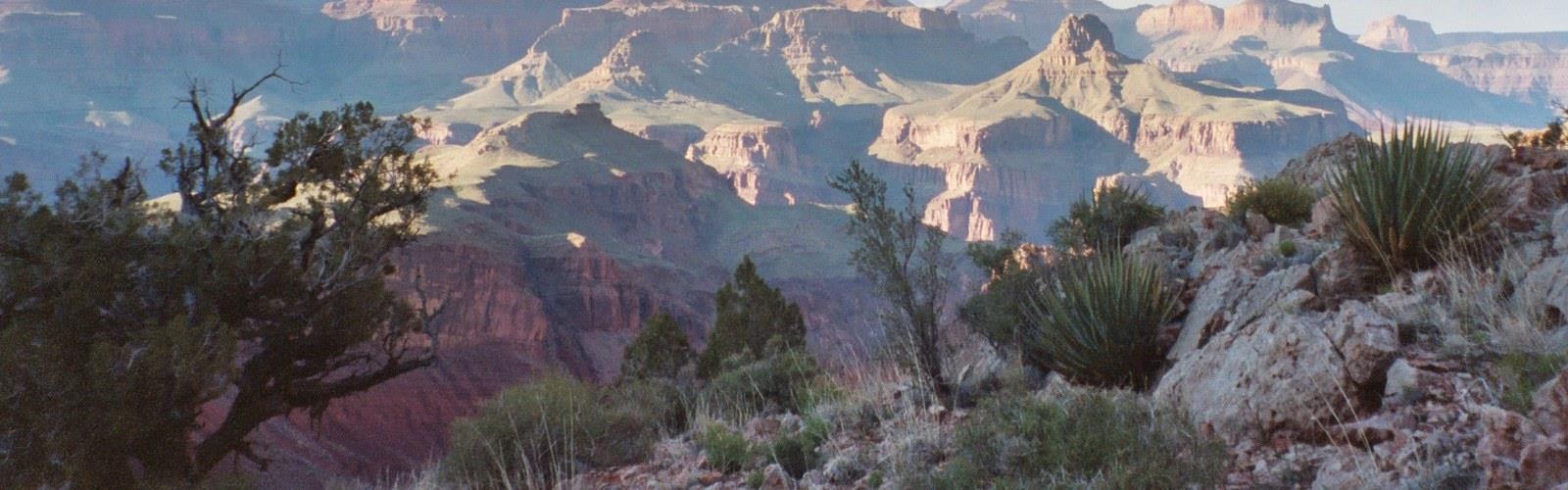

Ready to explore New Hance Trail? Here's everything you need to know before you go!
Discover the trail
Oh no! We don't have any photos 😢
This trail hasn't been captured yet. Be the first to share your adventure!Trail description
The New Hance Trail is one of the Grand Canyon's most demanding and rewarding backcountry routes. Unlike the polished Bright Angel or South Kaibab corridors, this trail drops into the canyon on its own terms — rugged, unmaintained, and unapologetically raw. If you're looking for solitude and a genuine wilderness experience in the Grand Canyon, New Hance delivers in a way that few other trails can.
What Kind of Trail Is This?
New Hance is a primitive, unmaintained backcountry trail on the South Rim of the Grand Canyon. It was originally built by prospector John Hance in the late 1800s as a replacement for his earlier Old Hance Trail, which had been damaged by erosion. The trail descends steeply through multiple geological layers — Kaibab Limestone, Toroweap Formation, Coconino Sandstone, Hermit Shale, and eventually the ancient Vishnu Schist near the Colorado River. Each layer tells a different chapter of the canyon's geological story, and on New Hance, you move through all of them up close.
The route is not marked with the same regularity as corridor trails. Cairns help guide the way in some sections, but route-finding skills are genuinely useful here. The trail surface ranges from loose shale and scree to exposed rock faces, and some sections require careful footwork and attention. This is not a trail where you can zone out and just walk.
The Descent and the Terrain
The trailhead sits near Moran Point on the South Rim. From there, the trail immediately commits — there's no gentle warm-up. The upper sections move through steep, crumbling shale that can be slippery underfoot, especially if conditions are dry and dusty. The footing demands concentration from the start.
As you descend deeper into the canyon, the character of the terrain shifts. The Redwall Limestone section is one of the more technical stretches, requiring some scrambling and careful navigation. Below that, the trail opens up somewhat as it moves through the Tonto Platform, a broad, relatively flat bench of Tapeats Sandstone that runs across much of the inner canyon. The Tonto offers a brief reprieve before the final steep drop to the Colorado River and Red Canyon.
Red Canyon itself is a striking feature — a side canyon carved through deep red rock that the trail passes through on its way to the river. The color contrast against the surrounding canyon walls is dramatic, and the narrow passage gives the lower section of the hike a distinct, enclosed feel.
The Colorado River at the bottom is the turnaround point for most hikers. There is no bridge here, and crossing the river is not a realistic option without specialized equipment. The river access point at the end of New Hance is remote and sees far less foot traffic than the corridor beaches — on a quiet day, you may have the riverbank entirely to yourself.
Difficulty and Who This Trail Is For
New Hance is rated as one of the most difficult trails in the Grand Canyon. The combination of steep grades, loose and unpredictable footing, route-finding challenges, and the sheer physical demand of the elevation change makes this a trail for experienced canyon hikers. If you haven't spent time on unmaintained backcountry trails before, this is not the place to start.
The Grand Canyon's standard backcountry warnings apply here with extra weight: the inner canyon is significantly hotter than the rim, water sources are limited and must be treated, and the ascent back out is harder than the descent. Heat-related illness is a serious risk during warmer months. Anyone planning to hike New Hance should be honest with themselves about their fitness level, their experience with technical terrain, and their ability to navigate with limited signage.
That said, for hikers who are prepared, New Hance offers something the corridor trails simply can't — a genuine sense of remoteness and a connection to the canyon that feels earned. The trail sees a fraction of the traffic of Bright Angel or South Kaibab, and that solitude is a big part of what makes it special.
Permits and Regulations
Overnight camping in the Grand Canyon backcountry requires a permit from the Grand Canyon National Park Backcountry Information Center. Permits are competitive and should be applied for well in advance. Day hiking on New Hance does not require a permit, but given the length and difficulty of the trail, most people who complete the full route to the river do so as an overnight trip.
All standard Grand Canyon National Park regulations apply — pack out all waste, camp only in designated areas or on durable surfaces as directed by your permit, and follow Leave No Trace principles throughout.
Water and Resupply
There is no reliable water source on the upper portions of the trail. The Colorado River at the bottom is a water source but must be filtered or treated before drinking. Hikers should carry sufficient water for the descent and plan carefully around water availability before committing to the route. This is one of the most important logistical considerations on New Hance — underestimating water needs in the Grand Canyon backcountry has serious consequences.
Getting to the Trailhead
The New Hance Trailhead is located near Moran Point along Desert View Drive on the South Rim. It is not served by the Grand Canyon shuttle system, so a private vehicle is required to reach it. Parking at the trailhead is limited. The South Rim entrance fees for Grand Canyon National Park apply.
A Few Practical Notes
- Route-finding: Cairns mark portions of the trail, but they are not consistent. A topographic map and the ability to read it are strongly recommended.
- Footwear: Sturdy hiking boots with good ankle support and grip are essential given the loose shale and rocky terrain.
- Season: Spring and fall are the most manageable seasons for this trail. Summer heat in the inner canyon is extreme and significantly increases risk.
- Group size: Smaller groups tend to navigate the route more efficiently and have less impact on the trail surface.
- Emergency: Cell service is nonexistent on most of this trail. Let someone know your itinerary before you go.
New Hance Trail is the kind of route that asks a lot of you — and gives back in equal measure to those who come prepared.
The Essential Hiking Checklist
Everything you need for your next hike. Bilingual, printable, 1 page.
Get your free hiking checklistRecommended gear for this trail
As an Amazon Associate I earn from qualifying purchases.


Ready to go?
Everything you need to know before you goWhen?
How much?
As an Amazon Associate I earn from qualifying purchases.
Affiliate links — LGPO may earn a commission at no extra cost to you.
- Hiking shoes Essential
- → Salomon Elixir Tour Mid WP · 203.38 $
- Layered clothing Essential
- Rain jacket Essential
- Trekking poles
- → Black Diamond Trail Ergo Cork · 69.99 $
- Headlamp
- → Petzl Actik Core 625 · 103.95 $
FAQ - Frequently asked questions
Everything you need to knowSimilar hikes nearby
Discover other trails you might enjoy
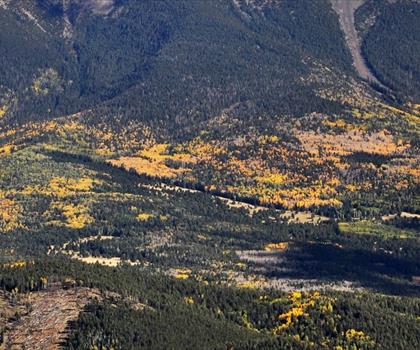
Kendrick Peak
Northern Arizona

Humphreys Peak
Northern Arizona
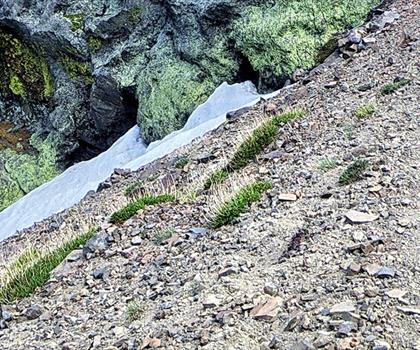
Doyle Peak
Northern Arizona
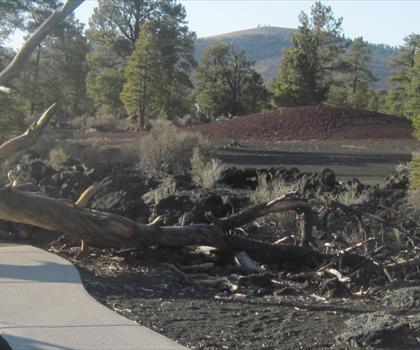
Sunset Crater Volcano
Northern Arizona
Hart Prairie
Northern Arizona
Gran Canyon
Northern Arizona
Hiking near Kelowna
45 trails to explore ~1659 km away
We work hard to provide the most up-to-date and error-free data possible. If something seems incorrect, let us know! Your contribution helps the whole community.
Hikers' opinions
Be the first to review!
No hiker has shared their experience yet. Share your impressions and help other hikers!