
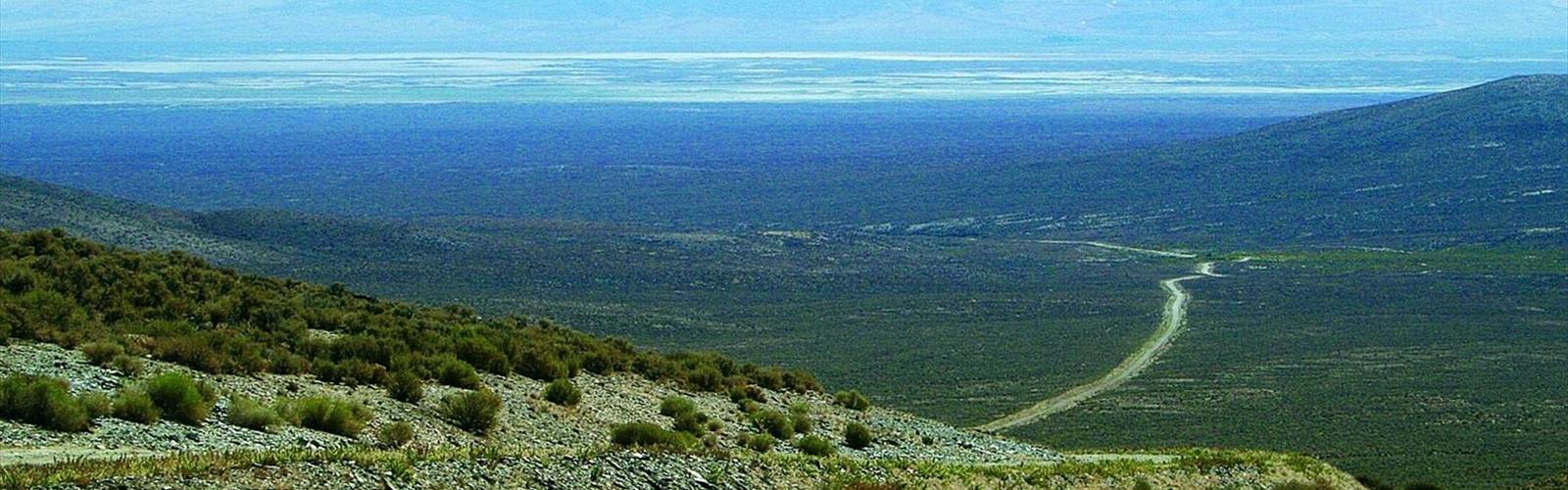

Ready to explore California National Historic Trail? Here's everything you need to know before you go!
Discover the trail
Trail description
The California National Historic Trail is one of the most significant overland routes in American history. Stretching across the western United States, this trail follows the paths blazed by hundreds of thousands of emigrants who made the grueling journey westward during the mid-19th century. In California's Gold Country, the trail takes on a particularly powerful meaning — this is where so many of those journeys ended, where dreams of gold and a new life finally met reality.
Walking any portion of the California National Historic Trail in the Gold Country region puts you directly in the footsteps of the forty-niners and the waves of settlers who came before and after them. The landscape here still carries echoes of that era, from weathered wagon ruts to historic markers that dot the route.
Historical Significance
The California National Historic Trail commemorates the emigrant trails used primarily between 1841 and 1869 — the years before the transcontinental railroad made overland wagon travel largely obsolete. Emigrants followed several main routes westward, converging as they pushed into California. The Gold Rush of 1848–1849 dramatically accelerated traffic along these trails, drawing fortune-seekers from across the United States and beyond.
Gold Country sits at the heart of that story. The Sierra Nevada foothills and the valleys leading into them were the final stretch for emigrants who had already crossed the Great Plains, the Rocky Mountains, and the brutal Nevada desert. By the time travelers reached this part of California, they had been on the road for months. The relief of arriving in the foothills — and the excitement of what might lie ahead — defined this landscape for a generation.
Today, the National Park Service administers the California National Historic Trail in partnership with numerous state and local agencies, land trusts, and volunteer organizations. The trail is not a single continuous path but rather a network of certified routes, auto tour segments, and preserved historic sites spread across multiple states, with significant presence in California's Gold Country.
What to Expect on the Trail
Because the California National Historic Trail is a historic corridor rather than a single groomed hiking path, the experience varies considerably depending on which segment or site you visit. Some sections offer genuine foot travel on preserved or reconstructed trail surfaces, where you can walk on ground that wagons actually crossed. Other portions are best experienced as driving tours connecting historic sites, interpretive centers, and preserved landmarks.
In the Gold Country region specifically, visitors often encounter a mix of open oak woodland, grassy hillsides, and riparian corridors along creek bottoms. The terrain is characteristic of the Sierra Nevada foothills — rolling, with occasional rocky outcroppings and the kind of wide-open views that would have been both reassuring and daunting to 19th-century travelers finally within reach of their destination.
Interpretive signage along certified trail segments provides context for what you're seeing. These markers connect the physical landscape to the human stories that unfolded here — the hardships, the decisions made at key junctions, and the communities that grew up along the route.
Key Features and Sites
- Preserved wagon ruts: In select locations, the original depressions left by thousands of wagon wheels are still visible in the landscape, offering a tangible connection to the emigrant era.
- Historic markers and monuments: The trail corridor in Gold Country is marked with Daughters of the American Revolution (DAR) markers and National Park Service signage identifying significant locations along the route.
- Interpretive sites: Several museums and historic parks in the Gold Country region align with the trail corridor, providing deeper context for the emigrant experience and the Gold Rush period.
- Natural landscape: The foothill terrain itself — blue oak woodland, manzanita chaparral, and seasonal streams — reflects the environment that emigrants encountered and that shaped their final push into California.
Planning Your Visit
Visiting the California National Historic Trail in Gold Country requires a bit of planning, since the trail exists as a network rather than a single trailhead with a parking lot. The National Park Service website for the California National Historic Trail is the best starting point for identifying certified trail segments, auto tour routes, and partner sites in the region that are open to the public.
Some segments cross private land and are not accessible to the public, while others are managed by state parks, county open space agencies, or the Bureau of Land Management. Always confirm access and any applicable fees or permits before heading out to a specific site.
Because Gold Country experiences hot, dry summers, visiting in spring or fall is generally more comfortable for extended outdoor exploration. Spring in particular brings green hillsides and wildflowers to the oak woodlands, making the landscape especially vivid. That said, the historic and interpretive aspects of the trail are worth experiencing year-round.
Who This Trail Is For
The California National Historic Trail in Gold Country appeals to a wide range of visitors. History enthusiasts will find the interpretive content and preserved sites deeply engaging. Hikers looking for a meaningful context to their time outdoors will appreciate walking terrain that carries genuine historical weight. Families with kids interested in the Gold Rush or westward expansion will find the trail a living classroom that goes well beyond what any textbook can offer.
Because the trail network includes segments of varying length and difficulty, it's accessible to most fitness levels. Whether you're spending an afternoon at a single historic site or dedicating a full day to exploring multiple segments of the corridor, the California National Historic Trail in Gold Country rewards the time you put into it.
Leave No Trace and Preservation
The historic resources along the California National Historic Trail are irreplaceable. Wagon ruts, artifacts, and landscape features that survived 150-plus years can be damaged quickly by careless visitors. Stay on designated paths, do not disturb any artifacts or historic features, and follow all posted guidelines at each site. Respecting these resources ensures that future visitors — and future generations — can experience the same connection to this remarkable piece of American history.
The Essential Hiking Checklist
Everything you need for your next hike. Bilingual, printable, 1 page.
Get your free hiking checklistRecommended gear for this trail
As an Amazon Associate I earn from qualifying purchases.


Ready to go?
Everything you need to know before you goWhen?
How much?
As an Amazon Associate I earn from qualifying purchases.
Affiliate links — LGPO may earn a commission at no extra cost to you.
- Hiking shoes Essential
- → Salomon Elixir Tour Mid WP · 203.38 $
- Layered clothing Essential
- Rain jacket Essential
- Trekking poles
- → Black Diamond Trail Ergo Cork · 69.99 $
- Headlamp
- → Petzl Actik Core 625 · 103.95 $
FAQ - Frequently asked questions
Everything you need to knowSimilar hikes nearby
Discover other trails you might enjoy

California Street
Gold Country
Stony Hill, California
Gold Country
Stony Point, California
Gold Country
Sunset Point, California
Gold Country
Union Hill, California
Gold Country
Sky Meadows 2
Gold Country
Hiking near Sydney
22 trails to explore ~7609 km away
We work hard to provide the most up-to-date and error-free data possible. If something seems incorrect, let us know! Your contribution helps the whole community.
Hikers' opinions
Be the first to review!
No hiker has shared their experience yet. Share your impressions and help other hikers!