

Ready to explore millenium park? Here's everything you need to know before you go!
Discover the trail
Oh no! We don't have any photos 😢
This trail hasn't been captured yet. Be the first to share your adventure!Trail description
Millennium Park is one of Chicago's most iconic urban destinations, sitting in the heart of the city along the lakefront. While it may not be a traditional hiking trail, it's a legitimate outdoor destination worth exploring on foot — and a great starting point or add-on for anyone spending time outdoors in the Chicago area. The park is free to enter, open year-round, and packed with things to see at a walking pace.
What to Expect
The park covers a significant stretch of Chicago's downtown core, bordered by Michigan Avenue to the west and the lakefront to the east. Walking through it feels nothing like a typical city stroll. The landscape is intentionally designed to move you through distinct spaces — open plazas, garden corridors, shaded paths, and wide lawns — so there's always something shifting around you as you explore.
The ground is mostly flat and paved, making it accessible for just about anyone. Families with strollers, older adults, and people with mobility considerations will find it easy to navigate. There are no steep grades or uneven terrain to worry about. What you're really doing here is urban exploration on foot, not backcountry hiking — but that doesn't make it any less worthwhile as an outdoor experience.
Key Landmarks and Features
A few specific spots make Millennium Park stand out from any other urban green space in Illinois:
- Cloud Gate — The large reflective sculpture (locally known as "The Bean") is the park's most recognizable feature. It sits in AT&T Plaza and draws crowds throughout the day, but early morning visits give you a much quieter experience with better light for photos.
- Crown Fountain — Two 50-foot glass block towers face each other across a shallow reflecting pool. In warmer months, water flows down the faces of the towers and kids wade in the pool. It's a genuinely fun spot to stop.
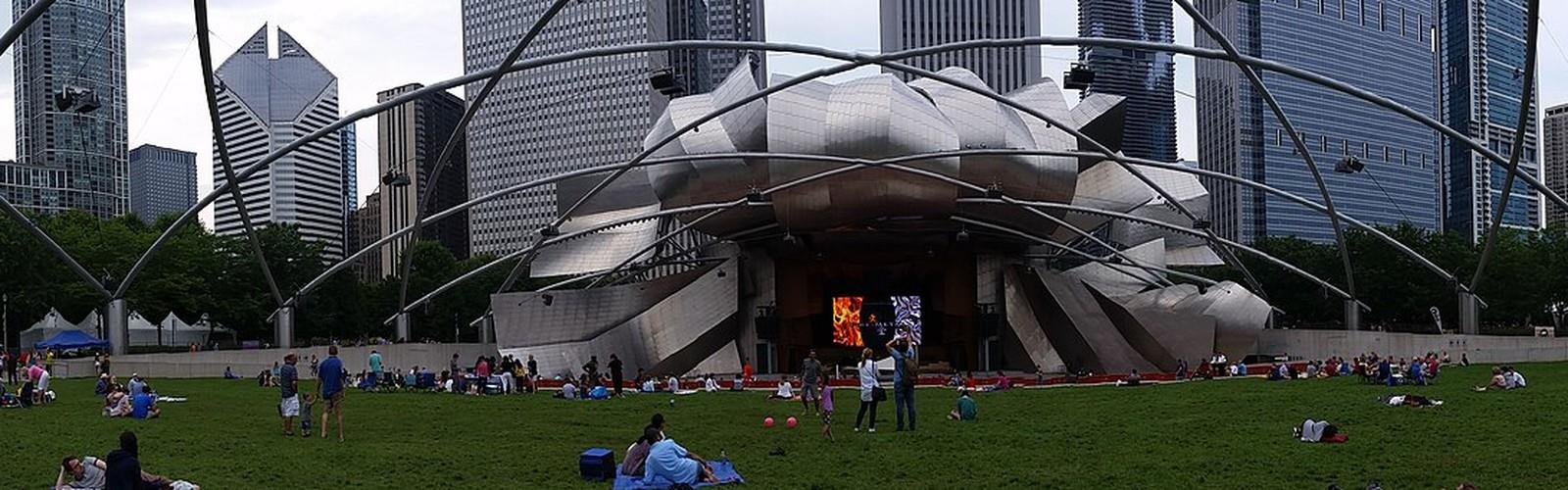
- Jay Pritzker Pavilion — The outdoor performance venue designed by Frank Gehry is hard to miss. The stainless steel bandshell anchors the Great Lawn, where free concerts take place during summer months. Even when there's no event on, the structure itself is worth seeing up close.
- Lurie Garden — Tucked toward the south end of the park, this is the most nature-forward section of Millennium Park. The garden features native Illinois plants, perennial plantings, and a quiet atmosphere that feels removed from the busier plazas nearby. It's a good spot to slow down and actually look at what's growing.
- BP Bridge — Another Gehry design, this winding pedestrian bridge connects Millennium Park to Maggie Daley Park to the east. The bridge itself offers elevated views of the park and the surrounding skyline. It's worth crossing just for the perspective.
The Lurie Garden: The Natural Heart of the Park
If you're visiting Millennium Park with any interest in plants or natural landscapes, the Lurie Garden deserves more than a quick pass-through. The garden was designed around the idea of Chicago's transformation from flat prairie and wetland into a major city — and the plantings reflect that. You'll find grasses, sedges, and flowering perennials that are native to the broader Illinois region, arranged in a way that feels intentional but not overly manicured.
A low hedge called the "shoulder hedge" separates the garden from the rest of the park and creates a noticeably calmer atmosphere inside. There's a wooden boardwalk that runs through part of the garden, and a small water feature that adds some ambient sound. It's one of the few spots in the park where you can actually hear something other than the city.
Connecting to the Broader Lakefront Trail
Millennium Park sits right at the edge of Chicago's extensive lakefront trail system. From the park, it's easy to connect on foot or by bike to the broader network that runs along Lake Michigan. Heading north or south along the lakefront opens up a much longer outing if you want more distance under your feet. The transition from the park to the lakefront path is straightforward — just cross through Maggie Daley Park via the BP Bridge and you're there.
This makes Millennium Park a natural anchor point for a longer urban outdoor day. You can start here, walk the lakefront in either direction, and loop back through the park before heading out.
Practical Information
- Admission: Free. The park is publicly accessible at no cost.
- Hours: The park is generally open from 6:00 a.m. to 11:00 p.m. daily, though specific attractions and facilities may have their own hours.
- Dogs: Dogs on leash are permitted in most areas of the park. The Lurie Garden has specific rules — check posted signage at the garden entrance.
- Bikes: Cycling is not permitted on the park's interior paths, but bike parking is available at multiple entry points. The lakefront trail nearby is fully open to cyclists.
- Restrooms: Available on-site, including accessible facilities.
- Transit access: The park is well-served by Chicago Transit Authority (CTA) rail and bus lines. The closest L stations are Randolph/Wabash and Washington/Wabash on the elevated loop. Street parking in the immediate area is limited — transit or the underground Grant Park garages are the practical options.
When to Visit
The park is open and worth visiting in every season. Summer brings the most programming — concerts at the Pritzker Pavilion, the Crown Fountain running, and the Lurie Garden in full bloom. Winter transforms the park significantly: the McCormick Tribune Ice Rink opens in the plaza near Cloud Gate, and the atmosphere is quieter and more local. Spring and fall offer comfortable walking temperatures and noticeably smaller crowds than peak summer.
Early mornings on any day of the week are consistently the best time to explore if you want space to move around without navigating large groups of visitors.
Who It's Good For
Millennium Park works well for a wide range of visitors. Families with young kids will find plenty to engage with, especially around Crown Fountain and the open lawn areas. Anyone interested in architecture, public art, or landscape design will find the park genuinely rewarding to walk through slowly. It's also a solid option for visitors who want to spend meaningful time outdoors in Chicago without leaving the city core.
It's not a destination for people looking for a physical challenge or a wilderness experience — but as an urban outdoor space, it's one of the best examples of what a city park can be.
The Essential Hiking Checklist
Everything you need for your next hike. Bilingual, printable, 1 page.
Get your free hiking checklistRecommended gear for this trail
As an Amazon Associate I earn from qualifying purchases.


Ready to go?
Everything you need to know before you goWhen?
How much?
As an Amazon Associate I earn from qualifying purchases.
Affiliate links — LGPO may earn a commission at no extra cost to you.
- Hiking shoes Essential
- → Salomon Elixir Tour Mid WP · 203.38 $
- Layered clothing Essential
- Rain jacket Essential
- Trekking poles
- → Black Diamond Trail Ergo Cork · 69.99 $
- Headlamp
- → Petzl Actik Core 625 · 103.95 $
FAQ - Frequently asked questions
Everything you need to knowSimilar hikes nearby
Discover other trails you might enjoy

Hiking near Kitchener
142 trails to explore ~610 km away
We work hard to provide the most up-to-date and error-free data possible. If something seems incorrect, let us know! Your contribution helps the whole community.
Hikers' opinions
Be the first to review!
No hiker has shared their experience yet. Share your impressions and help other hikers!