
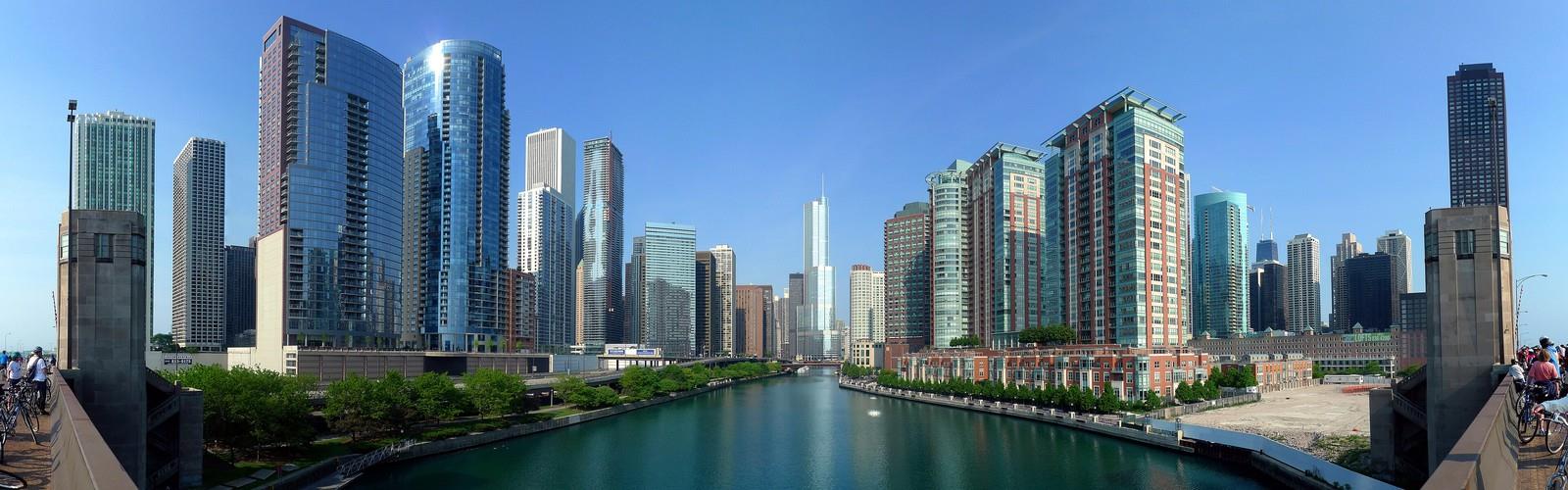

Ready to explore The Loop - Chicago? Here's everything you need to know before you go!
Discover the trail
Oh no! We don't have any photos 😢
This trail hasn't been captured yet. Be the first to share your adventure!Trail description
The Loop is Chicago's beating heart — a dense, walkable urban grid packed with architectural landmarks, public art, transit lines, and street-level energy that you won't find anywhere else in the Midwest. While it's not a wilderness trail, exploring The Loop on foot is one of the most rewarding urban walks in the country. Every block tells a different story, and the sheer density of things worth stopping for makes it a genuinely engaging experience for anyone who likes to move through a city at a human pace.
What The Loop Actually Is
The Loop gets its name from the elevated train tracks — the "L" — that form a rectangular loop around the core of downtown Chicago. That elevated structure is itself a landmark, and walking beneath it gives you a sense of the city's industrial character even as gleaming glass towers rise all around you. The neighborhood is bounded roughly by the Chicago River to the north and west, Lake Michigan to the east, and Congress Parkway to the south.
This is Chicago's central business district, but it functions as much more than an office hub. Museums, theaters, public plazas, and some of the most celebrated architecture in North America are all packed into a walkable area. If you've never explored it on foot, you're missing the best way to take it in.
Walking the Streets
The grid layout makes navigation straightforward. State Street and Michigan Avenue are the two main north-south corridors, and both are worth walking in full. State Street has a more commercial, ground-level energy — department stores, theaters, and the Chicago Cultural Center. Michigan Avenue, particularly the stretch along Grant Park, opens up to sweeping views of the lakefront and gives you room to breathe between the towers.
The Chicago Riverwalk runs along the south bank of the Chicago River and is one of the best stretches of urban walking in the city. It connects directly to The Loop and offers a completely different perspective — water level, looking up at the bridges and the canyon of buildings above. It's worth building into any Loop walk.
Architecture Worth Slowing Down For
The Loop is essentially an open-air architecture museum. Buildings from the late 19th century sit next to mid-century modernist towers and contemporary glass structures. The Chicago Architecture Center, located right in The Loop, offers guided tours if you want context, but even a self-guided walk with a bit of background reading will keep you busy for hours.
A few structures that consistently stop people in their tracks:
- The Rookery Building — One of the oldest standing skyscrapers in Chicago, with a stunning interior light court redesigned by Frank Lloyd Wright.
- Chicago City Hall and Cook County Building — A solid Beaux-Arts block that anchors the civic core of The Loop.
- The Monadnock Building — Half of it is load-bearing masonry, half is steel frame. Walking past it, you're literally looking at the transition point in architectural history.
- Sullivan Center (formerly Carson Pirie Scott) — Louis Sullivan's ornamental ironwork at street level is extraordinary up close.
Millennium Park and Grant Park
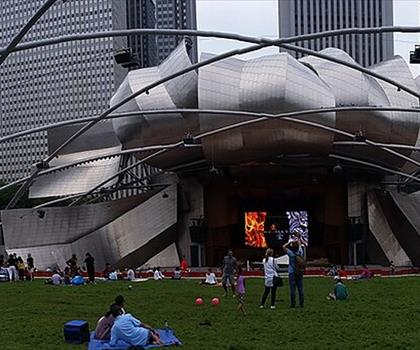
The eastern edge of The Loop opens into Grant Park, and within it, Millennium Park — home to Cloud Gate (universally known as "The Bean"), the Crown Fountain, and the Jay Pritzker Pavilion. These are genuine public spaces that work well, not just photo backdrops. The lawn in front of the Pritzker Pavilion hosts free concerts in warmer months, and the park connects directly to the lakefront trail.
Grant Park itself stretches south and gives you a long, flat green corridor between the city and the lake. It's a natural extension of any Loop walk and worth including if you want to add distance and open sky to what is otherwise a very urban experience.
Public Art Throughout
The Loop has a strong tradition of public art integrated into its plazas and streetscapes. Beyond Cloud Gate, look for:
- Picasso's untitled sculpture in Daley Plaza — a massive Cor-Ten steel piece that's been a Chicago landmark since 1967.
- Joan Miró's "Chicago" — just across Washington Street from the Picasso.
- Alexander Calder's "Flamingo" — a bright red stabile in Federal Plaza that contrasts sharply with the Mies van der Rohe federal buildings surrounding it.
These aren't tucked away — they're right on the street, integrated into daily life. That's part of what makes walking The Loop feel different from visiting a museum.
Practical Notes for Exploring on Foot
The Loop is fully accessible by public transit. The CTA L trains serve multiple stations within the loop itself, and numerous bus lines converge here. If you're coming from outside the city, Millennium Station and Union Station both put you within easy walking distance of everything described above.
Street-level parking exists but is expensive and not the most practical way to arrive. The area is designed for pedestrians and transit users, and it shows — sidewalks are wide, crosswalks are frequent, and the blocks are short enough that distances feel manageable even when you're covering a lot of ground.
The Loop is active seven days a week, though weekday mornings have a different energy than weekends — more commuters, faster pace. Weekend mornings are generally quieter and a good time to walk if you want to look up at buildings without navigating heavy foot traffic.
Who This Walk Is For
Anyone who enjoys urban exploration, architecture, public art, or simply wants to understand what makes Chicago one of the great American cities will find The Loop endlessly interesting on foot. It's flat, it's accessible, and there's no single "right" route — the best approach is to pick a few anchors (the Riverwalk, Millennium Park, a specific building or two) and let the grid do the rest.
It's also a strong option for visitors who want to orient themselves before heading to other Chicago neighborhoods — The Loop gives you the bones of the city, and everything else radiates outward from here.
The Essential Hiking Checklist
Everything you need for your next hike. Bilingual, printable, 1 page.
Get your free hiking checklistRecommended gear for this trail
As an Amazon Associate I earn from qualifying purchases.


Ready to go?
Everything you need to know before you goWhen?
How much?
As an Amazon Associate I earn from qualifying purchases.
Affiliate links — LGPO may earn a commission at no extra cost to you.
- Hiking shoes Essential
- → Salomon Elixir Tour Mid WP · 203.38 $
- Layered clothing Essential
- Rain jacket Essential
- Trekking poles
- → Black Diamond Trail Ergo Cork · 69.99 $
- Headlamp
- → Petzl Actik Core 625 · 103.95 $
FAQ - Frequently asked questions
Everything you need to knowSimilar hikes nearby
Discover other trails you might enjoy

Hiking near Kitchener
142 trails to explore ~610 km away
We work hard to provide the most up-to-date and error-free data possible. If something seems incorrect, let us know! Your contribution helps the whole community.
Hikers' opinions
Be the first to review!
No hiker has shared their experience yet. Share your impressions and help other hikers!