

Ready to explore Jay Peak? Here's everything you need to know before you go!
Discover the trail


Trail description
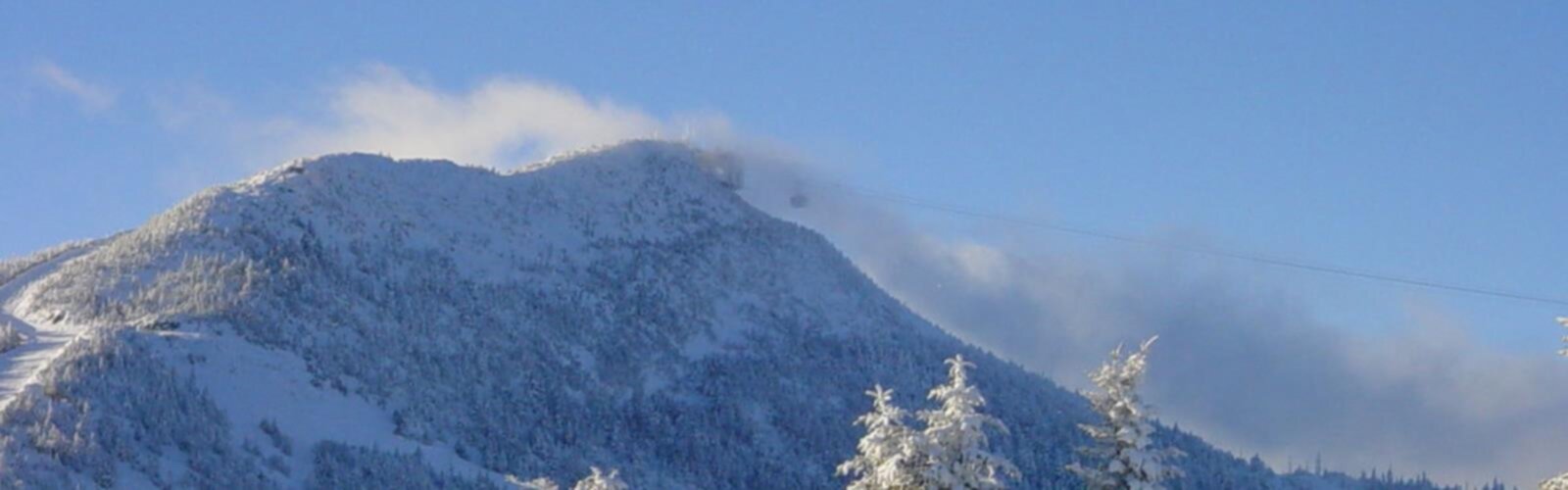
Jay Peak is one of Vermont's most rewarding summit hikes, located in Jay and Westfield near the Canadian border in Orleans County. The mountain is best known as a ski resort, but come summer and fall, it draws hikers looking for a genuine alpine experience without heading to the White Mountains or the Adirondacks. The trail to the summit is a classic Vermont climb — rooted, rocky, and worth every step.
The Terrain
The hiking trail to Jay Peak's summit winds through dense northern hardwood and boreal forest before breaking out into open, windswept terrain near the top. The forest here has a distinctly northern character — balsam fir, white birch, and spruce dominate as you gain elevation, and the understory gets progressively wilder the higher you go. The trail surface is typical of Vermont's Long Trail network: expect exposed roots, wet rocks, and sections of steep scrambling. Trekking poles are genuinely useful here, not just a comfort item.
The upper section of the trail transitions into more open terrain, and the summit itself sits above treeline — a relatively rare feature in Vermont. That openness is what makes Jay Peak special as a hike. You're not just pushing through forest to a wooded top; you actually get sky around you as you approach the summit.
The Summit Experience
The views from Jay Peak's summit are expansive and genuinely impressive. On a clear day, you can see deep into Quebec to the north, across the Green Mountains to the south, and out toward Lake Champlain to the west. The 360-degree panorama is one of the better ones in Vermont, and the elevation gain earns it. The summit tram station and associated ski infrastructure are visible up top — that's just part of the deal at a working ski mountain — but it doesn't take away from the experience once you're standing at the high point looking out.
Wind is a real factor at the summit. Even on warm summer days, it can be significantly cooler and gustier up top than at the trailhead. Bring a layer regardless of what the weather looks like when you start.
The Long Trail Connection
Jay Peak sits directly on the Long Trail, Vermont's iconic end-to-end footpath that runs the length of the state. The summit is a notable waypoint for Long Trail thru-hikers and section hikers alike. If you're approaching as a day hiker, this context matters: the trail is well-maintained and well-marked, but it's a working backcountry route, not a groomed nature path. The Green Mountain Club maintains this section, and their work shows in the trail's condition.
Day hikers typically access the summit via the Long Trail from the trailhead on Route 242. The approach is straightforward to navigate — follow the white blazes and you won't go wrong.
The Character of Jay Peak
Jay Peak reflects the wild character of Vermont's northern frontier near the Quebec border. The area around the mountain feels genuinely wild — there's no sprawling trailhead infrastructure, no interpretive signs every hundred meters, no crowds on a Tuesday in September. What you get instead is a quiet, honest mountain experience with a payoff summit that competes with anything in the state.
The proximity to the Quebec border also gives the landscape a slightly different feel than the rest of Vermont. The boreal forest elements are more pronounced, the climate is harsher, and the sense of being at the northern edge of something comes through clearly on the trail.
Practical Information
- Trailhead access: The primary hiking access point is off Route 242 in Jay, Vermont. Look for the Long Trail trailhead parking area approximately 1.4 miles west of the Jay Peak Ski Area.
- Trail markings: White blazes of the Long Trail mark the route to the summit.
- Conditions: The trail can be muddy and slippery after rain. Vermont's mud season in spring makes the trail particularly challenging and can cause significant erosion — consider waiting until conditions firm up.
- Weather: Summit conditions change fast. The elevation and exposed upper section mean wind and temperature can shift significantly from the base. Check the forecast before you go and pack accordingly.
- Footwear: Waterproof hiking boots with ankle support are strongly recommended. Trail runners work for experienced hikers who know what they're getting into, but this isn't a sneaker trail.
- Leave No Trace: Stay on the marked trail, especially near the summit where alpine vegetation is fragile and slow to recover from foot traffic.
- Dogs: Dogs are permitted on the Long Trail but must be under control at all times.
Seasons and Timing
Summer and fall are the prime seasons for hiking Jay Peak. Late September and early October bring exceptional foliage, and the elevated vantage point from Jay's summit puts you above much of the color — a perspective that's hard to beat. Summer hiking is solid from late June through August, though afternoon thunderstorms are common and the summit is fully exposed when lightning is around.
Winter access is possible for experienced hikers with proper gear, but the upper trail becomes a serious undertaking in snow and ice. The ski resort operates in winter, which changes the dynamic at the summit considerably. Spring hiking is generally not recommended until the trail has dried out — Vermont's mud season is no joke, and hiking wet trails causes lasting damage to the route.
Who This Hike Is For
Jay Peak is a good fit for hikers who are comfortable on rugged, ungroomed terrain and want a genuine summit experience. It's not a beginner trail — the rocky, rooted surface and elevation gain require some fitness and sure footing. That said, it's well within reach for anyone with a reasonable base of hiking experience. Families with older kids who are used to hiking will find it manageable. Those expecting a smooth, well-graded path will want to adjust their expectations before they start.
The reward-to-effort ratio here is high, and the northern Vermont location makes the whole experience feel a little more remote and authentic than hikes closer to Vermont's more-traveled tourist corridors.
The Essential Hiking Checklist
Everything you need for your next hike. Bilingual, printable, 1 page.
Get your free hiking checklistRecommended gear for this trail
As an Amazon Associate I earn from qualifying purchases.


Ready to go?
Everything you need to know before you goStarting Point
To access the hiking trails, you can start at the jay peak Resort parking lot located at 830 jay peak Road, Jay, VT 05859. Another option is to begin from the Long Trail trailhead on Route 242, which is approximately 1.5 miles west of the resort. Both locations provide convenient access to the trail network.
When?
How much?
As an Amazon Associate I earn from qualifying purchases.
Affiliate links — LGPO may earn a commission at no extra cost to you.
- Hiking shoes Essential
- → Salomon Elixir Tour Mid WP · 203.38 $
- Layered clothing Essential
- Rain jacket Essential
- Trekking poles
- → Black Diamond Trail Ergo Cork · 69.99 $
- Headlamp
- → Petzl Actik Core 625 · 103.95 $
FAQ - Frequently asked questions
Everything you need to knowAlternatives and suggestions
Similar hikes nearby
Discover other trails you might enjoy
Echo Lake Trail
Northeast Kingdom
Lake Willoughby
Northeast Kingdom
Bluff mountain hiking trail head
Northeast Kingdom
Owls Head Mt.
Northeast Kingdom
Willoughby State Forest
Northeast Kingdom
Groton State Forest
Northeast Kingdom
Hiking near Stowe
0 trails to explore ~53 km away
We work hard to provide the most up-to-date and error-free data possible. If something seems incorrect, let us know! Your contribution helps the whole community.
Hikers' opinions
Be the first to review!
No hiker has shared their experience yet. Share your impressions and help other hikers!