🥾 Why Does Your Motivation Run Out of Steam on the Trail?
It still happens to me after 15 years of outdoor activities: I start full of energy on a trail, and around kilometer 3, my brain starts negotiating. "We could maybe turn back..." "It's okay, we've already had a nice outing..." If you're looking for the keys to keep your motivation at the summit, whether hiking or in your outdoor projects, you're in the right place. I've tested quite a few tricks over the years — some worked, others left me stranded like a beginner with running shoes in the snow. Here are my 7 strategies that really work to stay motivated, even when it gets tough.
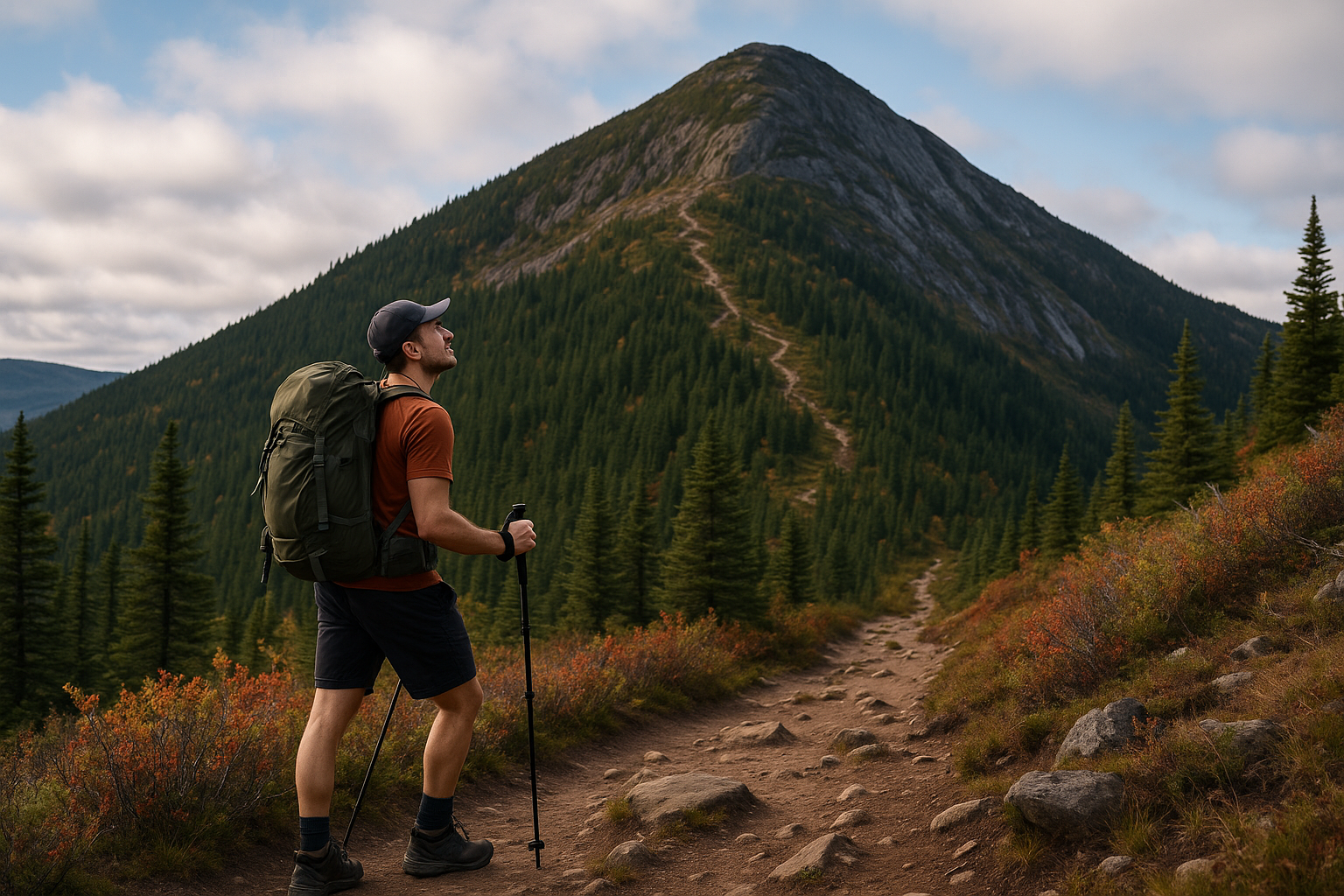
Solo hiker on a mountain trail in Quebec, looking toward the summit with determination, backpack and trekking poles
Motivation is like physical fitness: it needs to be worked on and maintained. Too many people think it's something that happens by itself, like magic. But in reality, hikers who always seem motivated have developed specific habits and techniques. They know how to fuel their inner flame, even when conditions are crappy or the goal seems out of reach.
📌 Good to know — Motivation naturally fluctuates according to seasons, your energy level, and your goals. It's normal to have dips. The important thing is having tools to bounce back quickly.
🎯 How to Set Goals That Really Fire You Up
The problem with most outdoor goals is that they're too vague or too ambitious. "I want to hike more this year" — OK, but what does that mean exactly? My trick is to break down my big dreams into small concrete victories.
Take the example of Mont Yamaska. Rather than telling yourself "I want to climb all the summits in the Eastern Townships," start with "I'm going to climb Yamaska this Saturday morning." Specific, achievable, with a date. Once you've got it under your belt, you can think bigger.
My most motivating goals are always those that scare me a little. Not terrified, but that little thrill that says "Yeah, this is going to require me to push myself." This year, my challenge was to do all the summits of the Hautes-Gorges de la Malbaie in one weekend. Spoiler: I didn't succeed, but damn I had fun trying!
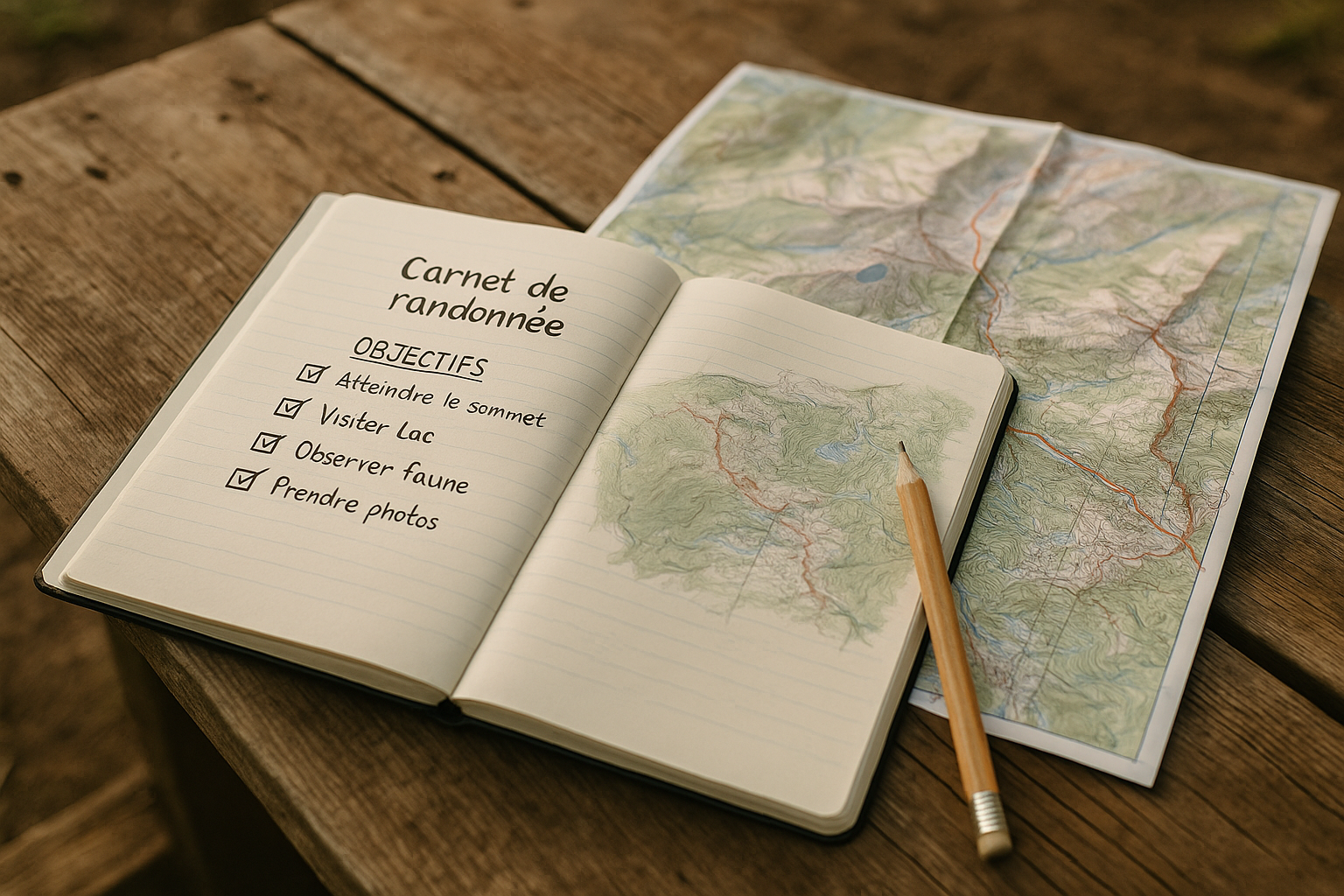
Open hiking journal with checked-off goal list, topographic map and pencil, on a wooden table
The 3-Level Goal Rule
I always structure my goals in 3 levels:
Bronze level: The minimum goal I can achieve even if everything goes wrong (ex: 1 outing per month)
Silver level: My realistic goal if I stay disciplined (ex: 2 outings per month)
Gold level: My crazy dream if the stars align (ex: 1 outing per week)
It removes the pressure of "all or nothing" and gives me several opportunities to celebrate my victories.
Goal Type
Concrete Example
Why It Works
Process goal
Go out 1x per week
You control the action
Performance goal
Climb Yamaska in under 2h
Measurable and motivating
Exploration goal
Discover 5 new trails
Feeds curiosity
Challenge goal
Do my first 3-day trek
Pushes out of comfort zone
🔥 The Power of Small Daily Victories
It's crazy how we underestimate the impact of small repeated actions. My most motivating days aren't necessarily those where I climbed a 1000-meter summit. Often, it's when I did my 30-minute walk in Parc du Mont-Royal despite the rain, or when I took 10 minutes to plan my next outing.
Motivation is like a muscle: the more you use it, the stronger it becomes. And small victories are your daily training. It can be as simple as preparing your pack the night before, checking the weather for the weekend, or reading an article about a new trail.
💡 Pro tip — Keep a journal of your small outdoor victories. Even just 2-3 words per day: "Walked 20 min," "Planned Orford," "Bought new socks." You'll be surprised to see how much it adds up.
Person writing in a small field notebook, sitting on a rock with a view of a wooded valley
My 5-Minute Motivation Routine
Every morning, I take 5 minutes to do one of these actions:
Look at a photo from my last outing
Check the weekend weather
Read a testimonial on LGPO
Mentally plan my next adventure
Do an ankle warm-up exercise
It seems ridiculous, but these 5 minutes keep the outdoors present in my head, even on days when I'm glued to the computer.
🏔️ How to Transform Obstacles into Stepping Stones
The real moments when you test your motivation are when everything goes wrong. Weather that turns, equipment that breaks, partner who cancels at the last minute. I've learned that the most motivated hikers aren't those who never have problems — they're the ones who have developed the art of bouncing back.
Last year, I left to do Mont du Lac des Cygnes with a group. Once there: fog you could cut with a knife, we could see 10 meters. The first reflex is to swear and go back home. But we decided to transform it into a "mystery hike." We explored the closest trails, discovered spots we would never have seen in good weather. One of the best outings of the year!
"The obstacle becomes the path when you change how you look at it."
⚠️ Warning — There's a difference between adapting to conditions and taking stupid risks. Fog on a familiar trail? OK. Snowstorm on an exposed ridge? We'll do it another time.
Smiling hiker in the rain with rain jacket, thumbs up, misty landscape in background
My "Plan B Plus" Technique
For every outing I plan, I always have:
A Plan A: My main objective
A Plan B: An alternative if conditions change
A Plan B Plus: How to transform Plan B into an even cooler adventure
Plan B Plus: Explore the winter trails with snowshoes if it's icy
💪 The Art of Celebrating Your Progress (Even the Small Ones)
We're so focused on the next summit that we forget to celebrate the ground covered. It's a massive mistake for long-term motivation. Your brain needs recognition to continue providing effort.
Me, I celebrate everything: my first 10 km hike, the time I wasn't afraid to cross the stream, the day I convinced my sedentary friend to come with me to Mont Arthabaska. Every small victory deserves to be highlighted.
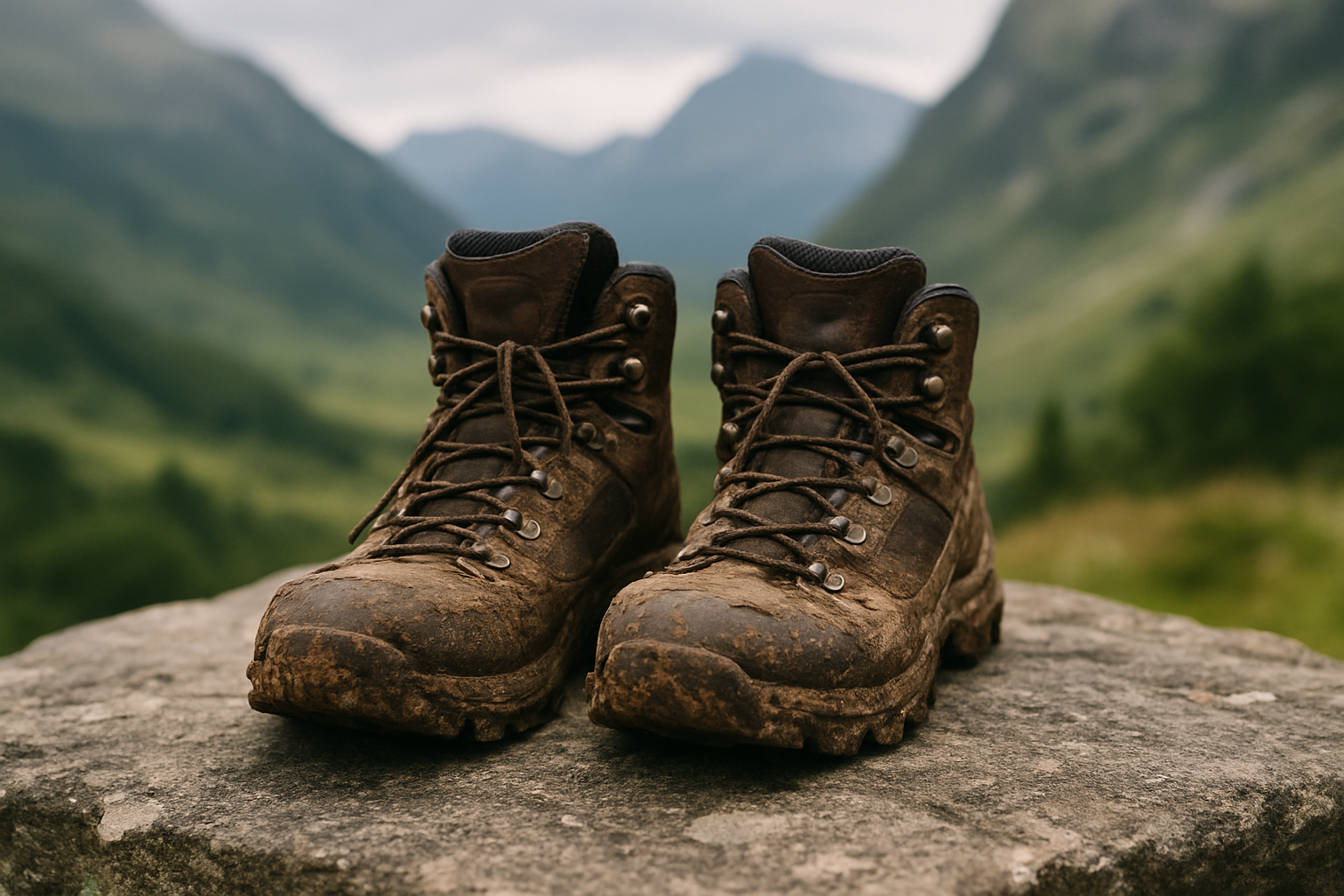
Celebration can be simple: taking a photo of your muddy boots, sharing your GPS track with friends, or just telling yourself "Damn, I'm proud of myself" while looking at the landscape from the summit.
Muddy hiking boots side by side on a flat rock, with blurred mountain landscape in background
📥 Download our free gifts — The complete list of everything to bring hiking, to check before each outing so you never forget anything.
Get my gifts →
My Progressive Reward System
5 outings: I buy myself a new buff or technical socks
10 outings: A new piece of equipment I have on my wishlist
20 outings: A weekend in a new region
50 outings: The big purchase I've been postponing for months (new pack, new boots, etc.)
The important thing is that the reward is linked to your passion. It reinforces the positive connection with the activity.
🤝 How to Surround Yourself with a Community That Lifts You Up
Solo motivation is tough. Even me, who loves my solo outings, I need my gang of enthusiasts to keep the flame burning. Your hiking friends are your motivational fuel.
But be careful, not just any gang. You want to surround yourself with people who share your values, not necessarily your level. Some of my favorite partners are beginners who discover everything with bright eyes. Others are machines who push me to exceed myself. Diversity is richness.
If you haven't found your tribe yet, start with online communities. Quebec hiker Facebook groups, forums, even comments on LGPO. You'll see, outdoor enthusiasts are generally good people who like to share their discoveries.
Diverse group of hikers smiling at a mountain summit, arms raised in victory
💡 Pro tip — Become the person who organizes. Suggest outings, even simple ones. You'll attract motivated people and create your own group dynamic. It works every time.
Types of Partners That Boost Your Motivation
Partner Type
What They Bring You
When to Invite Them
The enthusiastic beginner
Rediscover your passion
Easy outings and discovery
The experienced veteran
New challenges and techniques
When you want to progress
The photographer
See beauty differently
Scenic outings
The athlete
Push you physically
Training and challenges
🎯 The 3-Level "Why" Technique to Stay Connected to Your Real Reasons
When motivation falters, it's often because we've lost sight of why we do this. Not the surface "why" ("to be in shape"), but the real deep "why" that makes you vibrate.
My favorite technique is to dig in 3 levels:
Level 1: Why do you hike?
"To be in shape and see beautiful landscapes."
Level 2: Why is it important for you to be in shape and see beautiful landscapes?
"Because it gives me energy and recharges me."
Level 3: Why do you need this energy and recharging?
"Because it allows me to be the best version of myself for my family and my projects."
Boom! Now you're touching something deep. When you connect your Saturday morning outing to your fundamental values, it's harder to stay in bed.
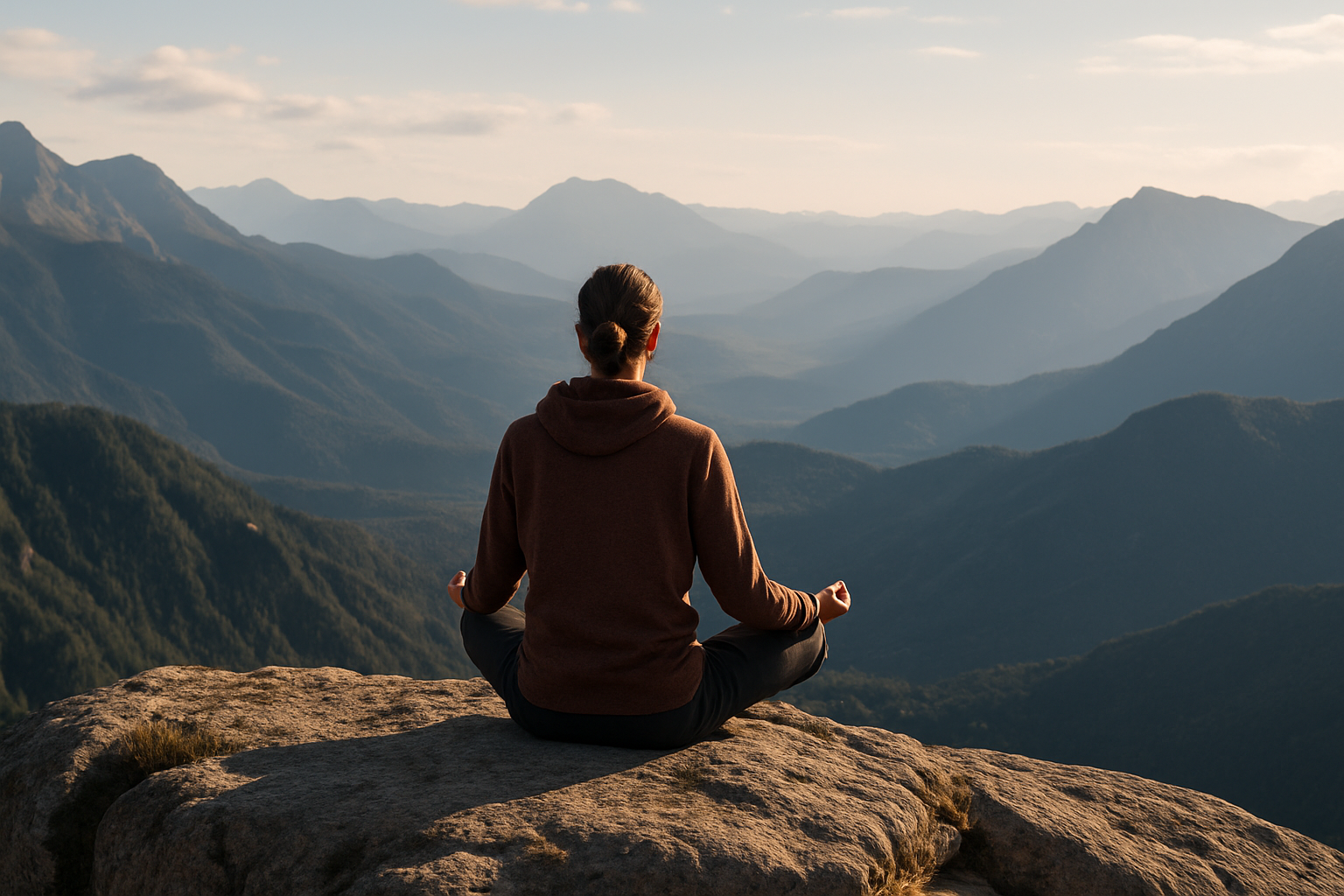
Person alone sitting on a rocky promontory, contemplating a vast mountain landscape, meditative position
📌 Good to know — Your "whys" will evolve over time. What motivated you at the beginning may not be what drives you today. It's normal and healthy to regularly reevaluate.
For me, at the beginning, it was just to disconnect from the office. Today, it's become a way to stay connected to the essential, to test my limits, and to create lasting memories with people I love. Same surface reason, completely different motivation.
🔄 How to Bounce Back After a Motivation Dip (It Happens to Everyone)
Let's be honest: you're going to have periods where you just don't feel like it. Winter that drags on, an injury that lingers, work that eats up all your free time. I had my worst spell last winter: 6 weeks without setting foot on a trail. Zero motivation.
What saved me was accepting that it was temporary and starting ultra small. Not a 15 km hike in the Chic-Chocs, just a 20-minute walk in the neighborhood park. Then 30 minutes. Then a small outing to Mont-Saint-Bruno with my girlfriend.
The key is not trying to get back to your previous level all at once. You rebuild your motivation like you rebuild your physical fitness: gradually, with patience.
⚠️ Warning — Don't put additional pressure on yourself during a motivation dip. This is the time to be kind to yourself, not to beat yourself up.
Simple and inviting forest trail, soft light filtering through trees, no apparent challenge
My 5-Step Restart Protocol
Step 1: Accept the dip without judgment (it's human)
Step 2: Start by looking at nature photos/videos
Step 3: Do a micro-outing (even 15 minutes)
Step 4: Plan something easy and pleasant
Step 5: Celebrate getting back into action
It works every time. Sometimes it takes a week, sometimes a month. The important thing is to trust the process.
📬 One hike or strong idea, every week. Join 12,000+ enthusiasts. Zero spam.
I'm subscribing →
Conclusion: Your Motivation Is Your Inner GPS
After all these years on the trail, I've understood that motivation isn't something that happens to you. It's something you cultivate, that you nourish, that you protect. Like a campfire flame: it can weaken, but if you know the techniques to revive it, it never goes out completely.
Here are your 7 keys to keep your motivation at the summit:
🎯 Set concrete goals that make you vibrate (not just "hike more")
🔥 Accumulate small daily victories to fuel your flame
🏔️ Transform obstacles into unexpected adventures
💪 Celebrate every progress, even the smallest
🤝 Surround yourself with enthusiasts who share your values
🎯 Connect to your real deep "whys"
🔄 Accept the dips and restart gently
The beauty of the outdoors is that there's always a trail waiting for you, no matter where you are in your journey. Whether you're in great shape or rebuilding your motivation, nature is there, patient, ready to welcome you.
So, what's your next outing? Even if it's just 30 minutes in the local park, it's a step toward the version of you that stays motivated, that pushes boundaries, that fully lives their passion for the outdoors.
Sunrise on a mountain summit with silhouette of hiker contemplating the horizon, feeling of renewal and motivation