Figures read from the LGPO trail pages on November 14, 2026. “Not listed” is shown as is.
Going on Adventures with Your Dog: The Best Outdoor Activities to Practice
Does your dog look at you with hopeful eyes every time you take out your backpack? He's right! After fifteen years exploring Quebec's trails with my four-legged companions, I can tell you there's nothing more rewarding than sharing your passion for the outdoors with your faithful friend. The outdoor activities to practice with your dog are numerous and varied, but all require a bit of preparation to make the experience perfect for both of you.
In this guide, I'll share my best discoveries: which activities to choose based on your dog's personality, how to prepare well, and my favorite spots where Fido will be welcome. Ready to transform your companion into a true wilderness adventurer?
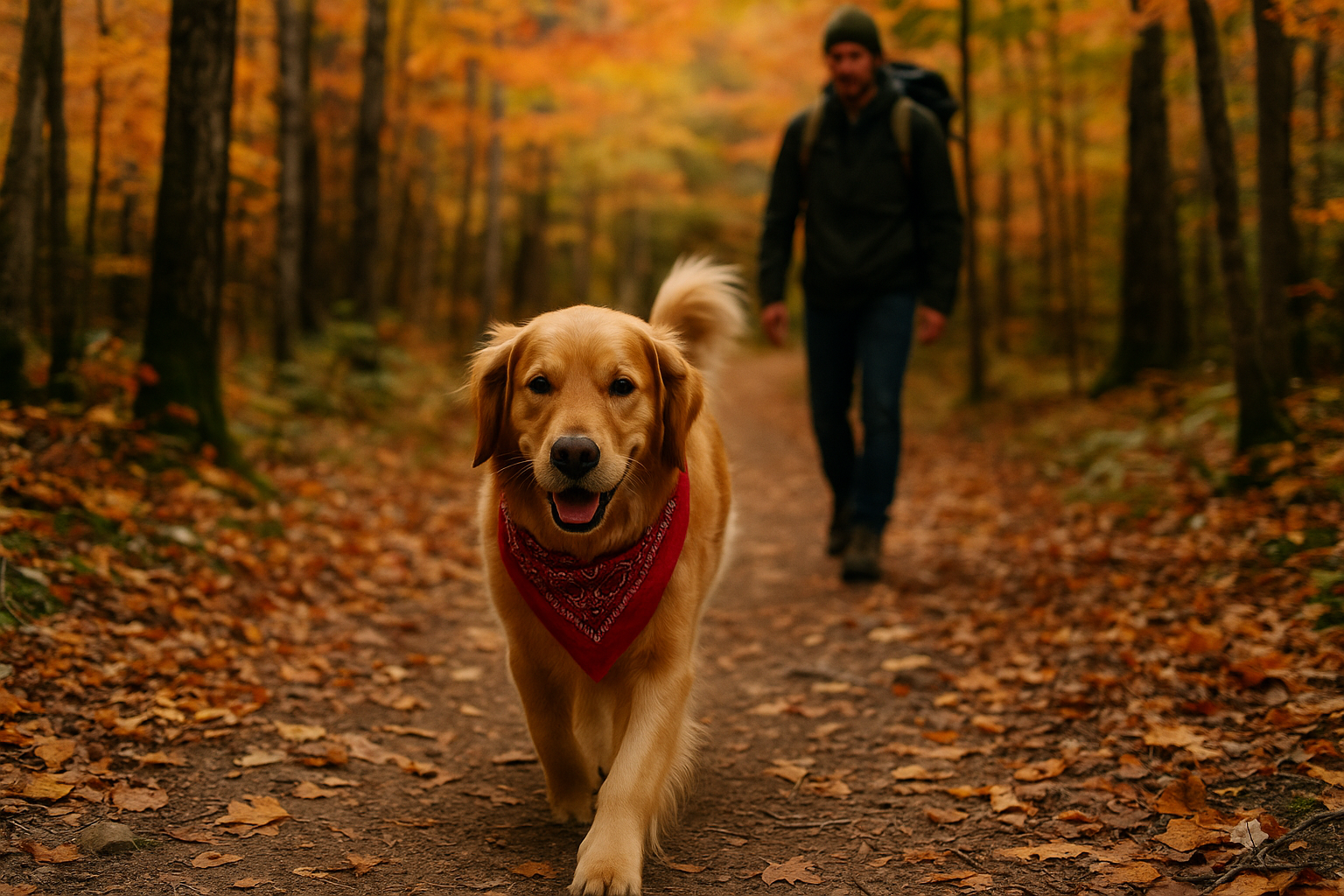
Golden retriever dog with red bandana walking on a forest trail in autumn colors in Quebec, owner with backpack in the background
What are the Best Outdoor Activities to Start with Your Dog?
Let's start from the beginning: not all activities suit all dogs. My first advice? First assess your companion's energy level and physical capabilities.
Hiking: The Essential Activity
Hiking remains the most accessible activity to start with. I've introduced dozens of dogs to the trails of Parc National du Mont Saint-Bruno, and it's perfect for beginners. The trails are well-maintained, not too technical, and your dog can gradually get used to new smells and other hikers.
💡 Pro tip — Start with outings of 30-45 minutes maximum. A tired dog is a happy dog, but an exhausted dog can develop an aversion to the activity.
Canicross: Running Together
If your dog has energy to spare (I'm thinking of huskies, border collies, retrievers), canicross could become your new shared passion. It's trail running where your dog pulls lightly in front of you, connected by a specialized harness.
Swimming and Water Activities
Not all dogs love water, but those who do can't get enough! Quebec's lakes offer perfect spots. Parc du Mont Royal has beautiful water points where your dog can cool off after a climb.
Activity
Required Level
Special Equipment
Best Season
Easy hiking
Beginner
Leash, water
Spring to fall
Canicross
Intermediate
Pulling harness
Fall, winter, spring
Swimming
Beginner
Life jacket
Summer
Snowshoeing
Intermediate
Dog booties
Winter
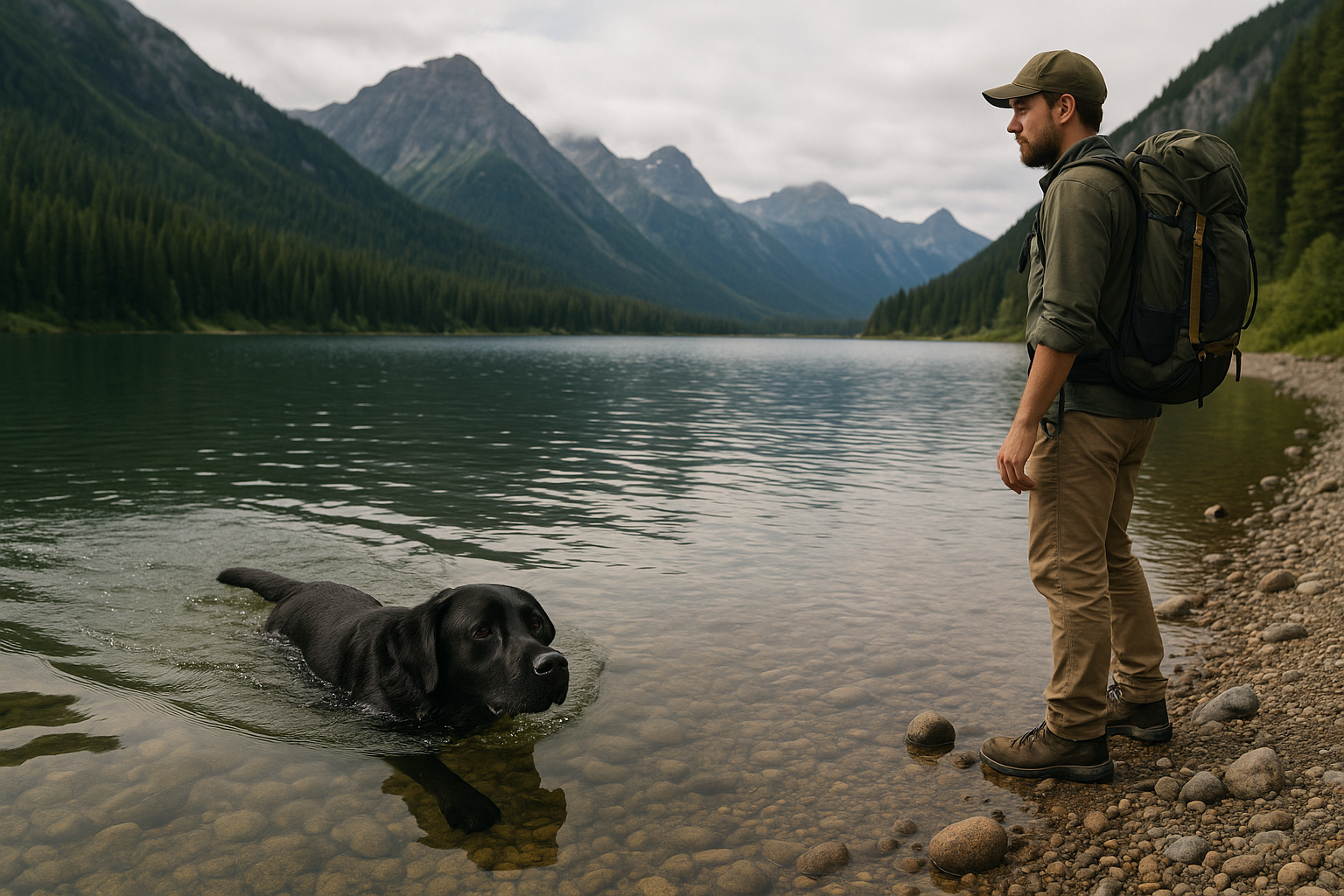
Black labrador dog swimming in a lake surrounded by mountains, owner on shore with hiking equipment
How to Properly Prepare Your Dog for Outdoor Adventures?
Preparation is the key to success! I learned this the hard way with my first dog, Rocky, when we found ourselves caught off guard during a hike at Mont Yamaska.
Progressive Training
Start small and gradually increase. If your dog usually takes 20-minute walks in the neighborhood, don't head straight out for a 3-hour hike! Increase duration and intensity over several weeks.
Here's my typical progression:
Week 1-2: 45-minute walks on varied terrain
Week 3-4: 1h15 outings with light elevation gain
Week 5-6: First real 2-hour hikes
Week 7+: Longer adventures based on capabilities
Socialization and Obedience
Your dog must be comfortable with other hikers, cyclists, and sometimes other dogs. Popular trails like those at Parc Michel Chartrand are perfect for this socialization.
⚠️ Warning — Make sure your dog responds well to basic commands (sit, stay, come) before heading into nature. A dog that doesn't come when called can put itself in danger or disturb wildlife.
Essential Equipment
My basic kit for each outing:
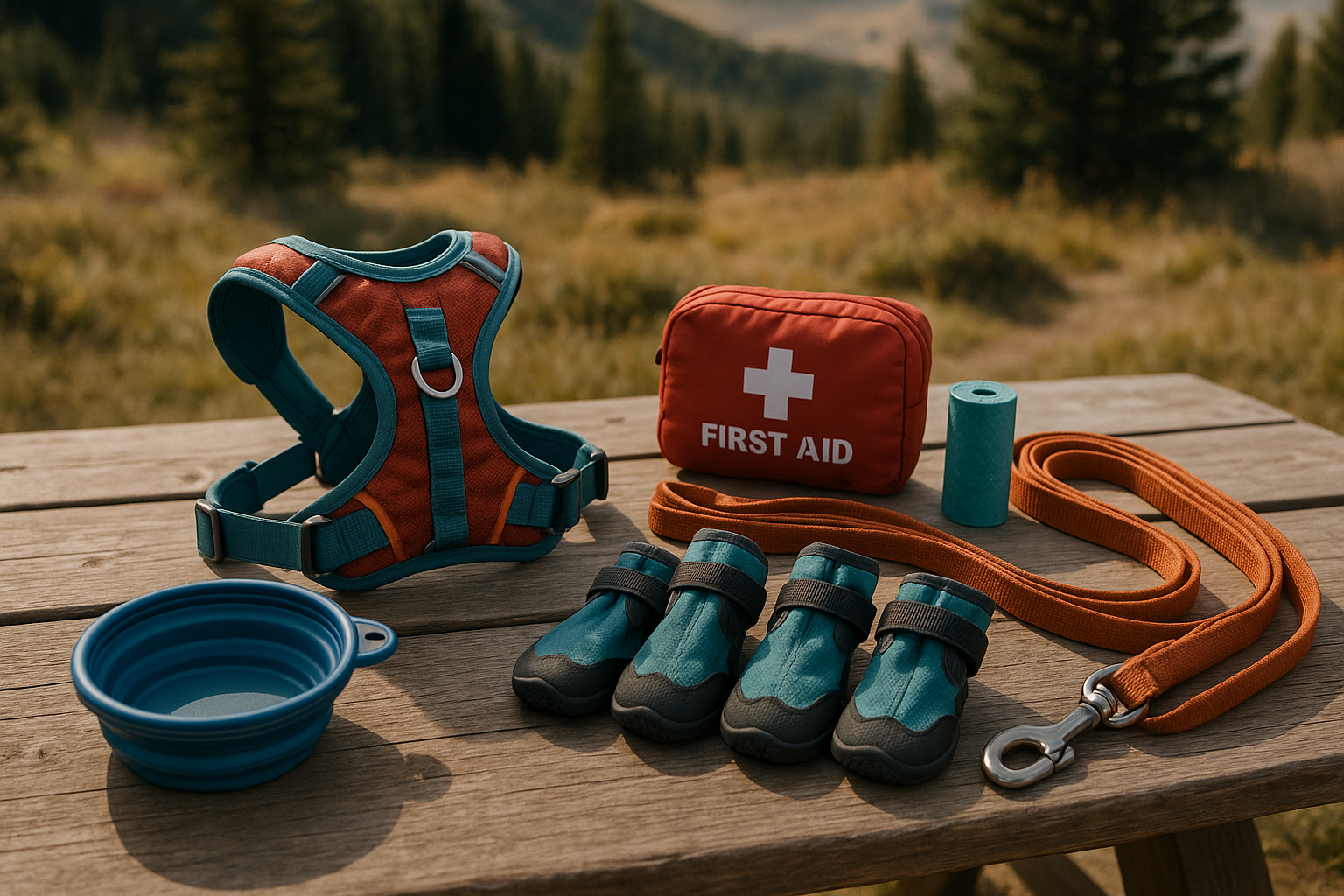
Sturdy leash of 2-3 meters (never a retractable leash on trails)
Harness rather than a collar for comfort
Collapsible bowl and water (1.5x more than for you)
Waste bags (always more than you think you need)
First aid kit adapted for dogs
Reflective vest if you're hiking early or late
Dog hiking equipment laid out on a table: harness, leash, collapsible bowl, booties, first aid kit, waste bags
Perfect Destinations for Adventures with Your Companion
After testing dozens of trails with different dogs, I have my favorite spots based on each one's level and preferences.
For Beginners: Easy and Reassuring Trails
Parc du Mont Arthabaska is perfect to start with. The trails are well-marked, not too busy, and there are several natural water points for your dog to drink.
For Adventurers: Greater Challenges
If your dog and you are ready for more action, Mont du Lac des Cygnes offers breathtaking panoramas. Be careful though: some sections are more technical.
📌 Good to know — Always check the park's regulations before leaving. Some trails have seasonal restrictions to protect wildlife, and some national parks don't accept dogs on all trails.
Spots with Water Access
Nothing makes a dog happier than a beautiful lake to cool off in! Canyon Sainte-Anne combines spectacular trails and magnificent water points.
"A tired and happy dog after a day in nature is worth all the toys in the world. That's true canine happiness!"
📥 Download our free gifts — The complete list of everything to bring for a successful outing with your dog, to check before each adventure.
Each season brings its particular challenges and pleasures when you go out with your dog. Here's what I've learned over the years.
Spring: The Awakening Season
Spring is fantastic but watch out for traps! Snowmelt makes some trails muddy and slippery. Your dog will love all these new smells, but prepare to clean him afterward.
My spring precautions:
Check trail conditions before leaving
Bring towels to clean paws
Watch for ticks that wake up with the warmth
Waterways can be swollen and dangerous
Summer: Managing the Heat
Summer is the prime season, but heat can be dangerous for our companions. Dogs regulate their temperature less well than we do.
⚠️ Warning — If the temperature exceeds 25°C (77°F), leave very early in the morning or late in the day. Always test the ground temperature with your hand: if it's too hot for you, it's too hot for your dog's paw pads.
Fall: The Perfect Season
Fall is my favorite time to hike with a dog. Temperatures are ideal, colors magnificent, and insects are rare. It's the perfect time to explore longer trails like those in the Laurentides.
Winter: The Nordic Adventure
Winter opens up a whole world of possibilities! Snowshoeing, cross-country skiing, winter hiking... But it requires more preparation.
Winter equipment for your dog:
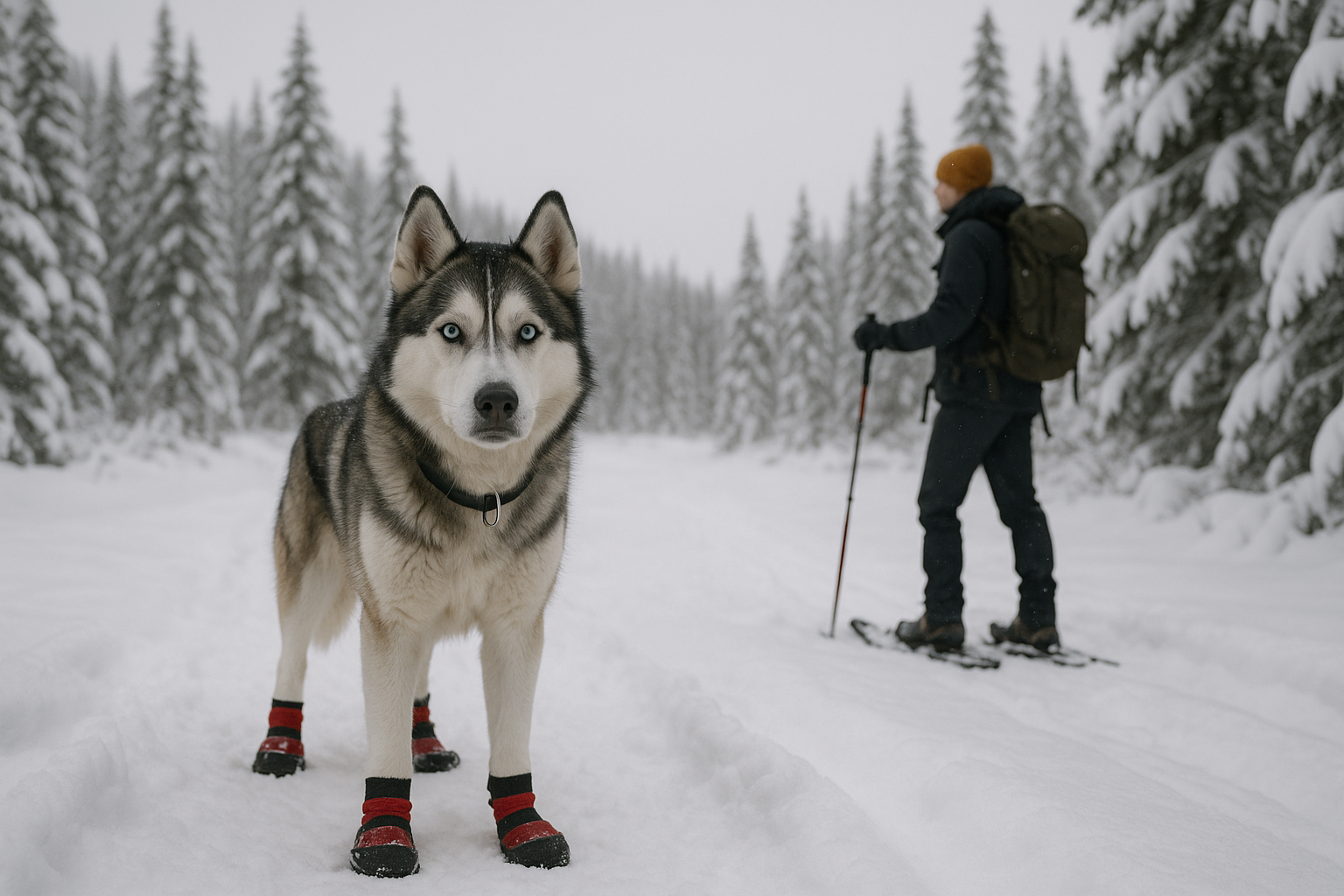
Booties to protect paw pads from salt and ice
Coat if it's a short-haired breed
Increase food rations (he burns more calories)
Watch for hypothermia in small dogs
Siberian husky dog with booties in the snow, Quebec winter landscape with snow-covered firs, owner snowshoeing
Safety and First Aid: Being Ready for Anything
Fifteen years of adventures with dogs taught me one thing: better to be prepared for nothing than caught off guard! Here are the most common situations and how to handle them.
Paw Pad Injuries
This is by far the most frequent problem. Sharp rocks, ice, hot surfaces... paw pads are fragile.
My first aid kit for dogs:
Self-adhesive bandages
Sterile compresses
Alcohol-free disinfectant
Tweezers for splinters
Emergency veterinarian numbers in your phone
Fatigue and Dehydration
Learn to recognize the signs: excessive panting, unsteady gait, very red or very pale gums. Your dog counts on you to assess his limits.
💡 Pro tip — Take breaks every 30-45 minutes, even if your dog seems fine. Offer him water regularly, especially if he refuses to drink, it's often a sign he really needs it.
Wildlife Encounters
In Quebec, we can encounter bears, porcupines, skunks... Your dog must stay close to you and respond immediately to recall. I once experienced a bear encounter near the mountain trails in Charlevoix and believe me, you don't want your dog going to investigate!
Toxic Plants
Some plants are dangerous for dogs. In Quebec, be particularly careful of giant hogweed and mushrooms. If in doubt, consult a veterinarian quickly.
Problem
Signs to Watch
Immediate Action
Heat stroke
Excessive panting, drooling, weakness
Shade, fresh water, wet towels
Paw pad cut
Limping, visible blood
Clean, bandage, carry if necessary
Exhaustion
Refusing to move, trembling
Rest, water, immediate turnaround
Toxic ingestion
Vomiting, diarrhea, lethargy
Emergency veterinarian
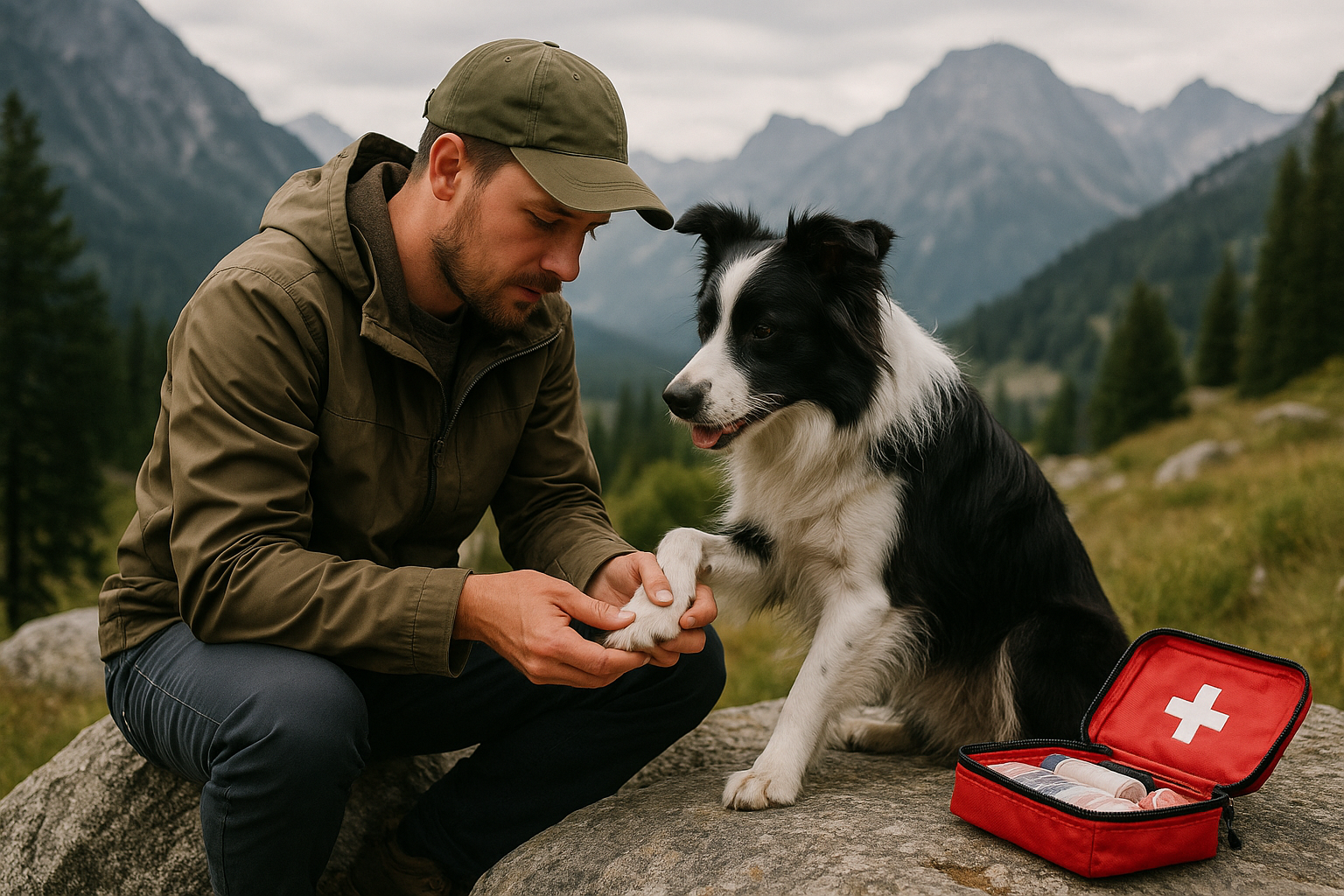
Owner examining the paw of his border collie dog sitting on a rock, first aid kit open beside, mountain landscape
Specialized Activities for Athletic Dogs
If your dog has an athlete's soul, there are more advanced activities that will give you both incredible sensations.
Bikejoring: Bike and Dog
Imagine your dog pulling your bike on trails! That's bikejoring, and it's absolutely fantastic with the right breeds. My friends who practice this activity with their huskies tell me it's addictive.
More intense than traditional bikejoring, mountain cani-MTB combines technical descents and climbs where your dog can help you. I tried this on trails near the Laurentides and it's spectacular!
Nature Agility
Why limit yourself to traditional agility courses? Use natural obstacles: tree trunks to step over, rocks to go around, streams to cross. It's fun and strengthens your bond.
📌 Good to know — These activities require progressive and specialized training. Always start by consulting a dog trainer who knows these disciplines to avoid injuries.
Camping with Your Dog
Camping is the next step when you want to push the adventure further. Several campgrounds accept dogs, and it's magical to wake up in nature with your companion.
My essentials for camping with a dog:
Secure rope or stake
Blanket or mattress for comfortable sleeping
Food for the entire duration + extra
Headlamp with red mode to avoid scaring him
Plan B if weather turns bad
"Camping with your dog means discovering he can be even more clingy than usual... especially at 3 AM when he hears a suspicious noise!"
Here's what to remember for successful outdoor adventures with your dog:
• Start gradually and adapt to your companion's pace and capabilities
• Prepare well with essential equipment and a first aid kit
• Choose suitable destinations always checking local regulations
• Respect the seasons and adjust your outings according to weather and conditions
• Always prioritize safety for both of you and other trail users
Your dog only asks for one thing: to spend quality time with you in nature. Whether it's a simple walk at Parc du Mont Royal or a multi-day camping adventure, what matters is creating these magical moments together.
So what are you waiting for? Grab your leash, fill your water bottle, and go show your faithful companion why you love the outdoors so much. I guarantee he'll understand quickly and you'll have unforgettable adventures!
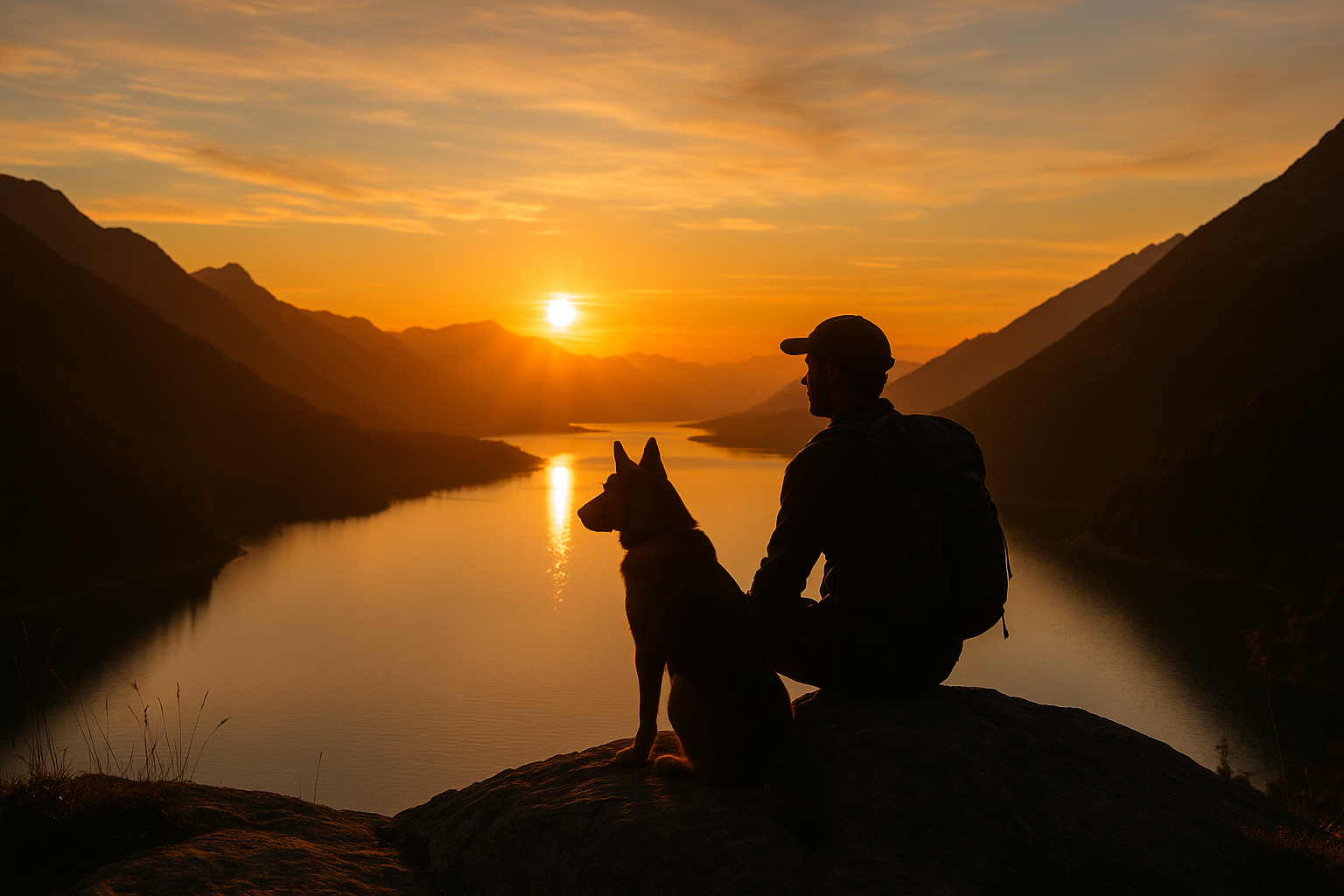
Sunset over a mountain lake, silhouette of a hiker and his dog sitting side by side on a rocky promontory, peaceful and inspiring atmosphere
Durations, distances, dogs: LGPO trail pages for Parc du Mont Royal, Mont Yamaska, Parc Michel Chartrand, Parc du Mont Arthabaska, Mont du Lac des Cygnes and Canyon Sainte-Anne, read on November 14, 2026.
Parc National du Mont Saint-Bruno: park pages, no trail duration published here.