How to Find an EPIC Hiking Trail?
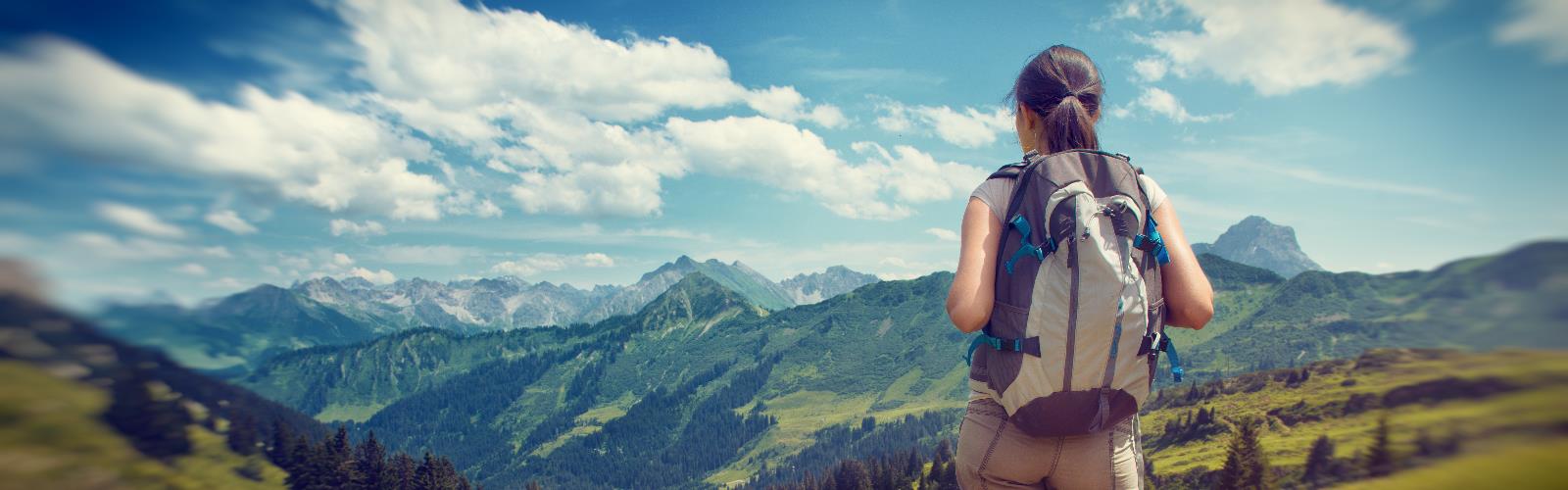
Hiking is one of the favorite sports activities of many travelers for various reasons. On one hand, it's easy to do, although it offers the possibility to do it at different difficulty levels. It's an activity that can be done with company, that allows you to enjoy the outdoors and, most importantly, gives you the opportunity to discover a new nature trail on each outing.
We gather here some recommendations you can follow during your hikes to enjoy the experience and avoid problems.
What you need to know if you're starting to hike
Short or long route, what's the difference?
Some experts claim that a trail becomes "long" when it reaches distances of more than 50 km, although some experienced hikers consider this distance a short walk. Others think the ideal is to cover hundreds of kilometers over several months.
Personally, I would say that the important thing is to know or discover your own limit where your hike becomes perhaps more enjoyable.
The important thing is that, whether the route is short or long, you feel good, strong and satisfied to have reached the goal you set for yourself and that your mental and physical health benefits from it.

Do you need to be an experienced athlete to start hiking?

Not at all. Ideally, you should be a regular walker before starting to hike. However, the most important thing to practice this activity is to have a strong and open mind, solid will and a flexible nature to face different difficulty levels (elevation, elevation gain) and be resistant to take the time to travel your trail.
Very often, we see middle-aged or retired hikers, even elderly people. They often find themselves at a crossroads in life, looking for new challenges, new answers, eager for change and new experiences. Hikers who, for example, do a hike of more than 600 km have one thing in common: they really wanted to do it.
So if you have this motivation, go for it, start now!
Prepare to be away from home for some time
If you've made the decision and your mind has this goal, you can look for classic, well-known routes. Find people in your situation (for example in Facebook groups, on the web, in tourist centers, on mobile apps) who have the same goals as you, people who will accompany and encourage you during the journey. Some trail itineraries can last several months, others will be shorter, it all depends on your goals and desires, the time you have available, the difficulty level (elevation, elevation gain) and the time to get to the trail.
Long-distance trails with elevation gains offer unforgettable experiences, challenges and new places to explore. They can change your life.
Plan your itinerary before leaving home
Do it carefully

You can actually spend more time planning than on the route. You should start researching and planning your itinerary perhaps a year in advance so as not to neglect any detail.
Check the permits you need to collect (depending on the region or country you choose) and save enough money to cover all your needs.
Research maps, trail information, look at photos, visit the official website, you can also ask for more information on hiking Facebook groups or contact the information center of the trail you want to travel. Most popular long-distance hikes are well marked and heavily frequented, so you can easily find information.
If you wish, you can bring a compass or GPS and have trail guides and maps printed.
Make a list of the luggage you'll take with you for your adventure. But in general, don't forget to include:
- A comfortable and spacious backpack (hopefully, you've already tried it).
- A light and warm sleeping bag.
- Trekking clothes.
- Appropriate food to avoid hunger and adequate nutrition.
- Light, resistant and waterproof tent.
- Sufficient hydration; water is ideal.
- Evaluate very well the weight you want and can carry. Many hikers use light or ultralight equipment; they only carry essential things and sleep in tarps or hammocks instead of tents.
- If you have doubts, you can consult information and blogs on the Internet where they will give you many details about essential items in your backpack.
Is it better to go hiking alone, with a friend or be part of a group?
Those who apparently travel the most popular long trails alone usually don't do it alone. A wonderful social scene develops on these trails; a subculture, so to speak. The experience of meeting new and interesting people, creating friendships, bonds of solidarity and companionship while living through moments of adversity and joy, will be very frequent on these trails. So if you go "alone", you'll never really be alone.
Now, if you're considering traveling with friends, relatives or your spouse, think about it. Be very aware and realistic about whether your relationship with that person or your group of friends is strong enough to withstand the trials and tribulations that are likely to occur on the trail for several weeks or even months.
If you decide to go with someone, the long journey will be a reason for success or also a reason for distance. It will be a space to really get to know each other and see all the reactions to unexpected challenges, long days of walking and long nights in unknown places.

Will you have problems walking long distances?
It all depends on how you approach it and the planning you've done. It also depends on your willingness to face the weather, your endurance level, the equipment you have and your attitude.
With these considerations, think that many long trails pass through towns with medical services and all other comforts of civilization. You can always take a break there and spend a few nights in a hotel. Additionally, on some trails, there's a network of something like "trail angels", people who can help you, advise you, cover some of your needs and even offer you "treats" to recover your energy.
How to prepare before leaving?

During the period before the walk (simultaneous with planning the walk), you can train constantly to maintain the pace. It should be well oriented, disciplined and have clear walking goals that can be achieved daily so you can get used to it. Make sure you can do this training with your backpack behind you to measure your resistance and the weight you can carry on the trail.
Other basic tips for practice
1. Route preparation
Although it may seem very obvious, the most important thing before doing a trek is to be well informed about the trail route conditions. We need to know very well where the route starts and ends, how many kilometers we're going to cover and how long it will take, what is the difficulty level of the route and if it's in good condition throughout its course. It's not advisable to undertake a route without all these factors being clear.
2. Weather information
In addition to knowing the general conditions of the territory we're going to transit through, it's very important to know if the weather will be on our side. There are weather conditions that prevent hiking and others that, although they make it difficult, can be overcome if we take appropriate measures in terms of equipment. Let's make sure the walk won't be hindered by lack of visibility caused by dense fog or torrential rains, just as we need to be careful with high temperatures.
3. Hiking shoes and clothing
Not just any trekking shoes. And not only should we avoid heels or shoes by pure logic, but shoes with thin soles will also be very uncomfortable for us. The ideal is to have shoes suitable for the mountains, with a thick sole, that supports the ankle and is waterproof. Ankle sprains and slips are the most frequent accidents during hikes. Similarly, clothing should be adequate, you should wear comfortable clothes that allow good movement and you should be prepared with some warmth in case a weather change surprises you.
4. Map and route
Although we've informed ourselves about the route previously, it's also recommended to take a map for orientation. The cell phone and GPS can do the job, but be careful not to rely on an electronic device, as you risk running out of battery. Paper never fails us. It can also be useful to look at signage and even photograph it for later reference.
Happy reading! :-)
25 hikes under 2 hours from Montreal
Distance, elevation, parking and season for each one. The ones we go back to ourselves.
Get the guide
About the author
François Dumaine
Founder of Let's Go Play Outside
A passionate hiker, photographer and content creator, François has been hiking the trails of Quebec and Alberta since 2014. He founded Let's Go Play Outside to give you the information he wished he had before heading out.
Get our best guides
One article per week to level up your outdoor game. No spam, promise.
You might be interested in
10 Basic Tips for Surviving in the Wilderness
15 Foolproof Tips to Get Your Kids Into Hiking and Make Them Love Nature
5 Amazing Benefits of Hiking

5 Original Activities to Use Wind to Your Advantage

5 Tips to Enjoy the Outdoors on a Budget

6 Options to Enjoy Nature During Your Outdoor Vacation

7 Great Reasons to Try Night Hiking
7 Practical Tips for Taking Stunning Outdoor Photos
7 Reasons Why Hiking is the Perfect Activity for You