You check your watch: 7:30 PM, the sun begins to set behind the trees. While most hikers head home, you lace up your boots and adjust your pack. Destination: the trail, but this time under the stars. Night hiking is calling you, and believe me, after covering hundreds of kilometers in darkness over the years, I can tell you it's an experience that completely transforms your relationship with nature. If you're still hesitating to try this unique adventure, let me share why night hiking absolutely deserves a place in your adventure journal.
Why night hiking completely changes your perspective
The first time I attempted a night outing, it was somewhat by accident. I had left late from Parc du Mont-Royal and darkness caught up with me. Instead of panicking, I turned on my headlamp and continued. What was supposed to be a timing mistake became a revelation.
Your senses multiply when vision becomes limited. You hear every branch crack, every rustle in the leaves. Your sense of smell becomes sharper: you distinguish the humidity of dew, the different fragrances of tree species. It's as if nature is speaking to you in a language you had never really listened to.
The mountain takes on a mystical dimension at night. Familiar silhouettes become sleeping giants, and each turn reveals a landscape totally different from what you know in broad daylight. I've rediscovered trails I thought I knew by heart, as if I were exploring them for the first time.
Concrete advantages you can't imagine
Beyond the magical aspect, night hiking offers very practical benefits that I've discovered through my outings:
No more crowded trails. Have you ever tried to enjoy the serenity of Mont Yamaska on a Sunday afternoon? In the evening, it's your private playground. Silence becomes your trail companion.
The nighttime coolness transforms your performance. No more heat exhaustion and excessive dehydration. In summer, when the mercury exceeds 30°C during the day, night offers you ideal temperatures for exertion. You can maintain a sustained pace without sweating profusely.
| Time | Average temperature (summer) | Comfort level |
|---|---|---|
| Day (2 PM) | 28-32°C | Difficult effort |
| Evening (8 PM) | 22-26°C | Comfortable |
| Night (11 PM) | 18-22°C | Ideal |
Night photography opens an unsuspected creative world. With a bit of technique, you capture shots impossible in broad daylight: star trails, Milky Way, plays of shadow and artificial light. My most beautiful photos come from these nocturnal escapades.
Get my gifts →
Nocturnal wildlife: an exclusive show
If you think the forest goes to sleep at nightfall, you're completely wrong. It's rather the night shift taking over, and the show is fascinating.
Owls and hawks become your sound companions. I was lucky enough to observe a Great Horned Owl hunting near Canyon Sainte-Anne. Its silent flight and majestic presence marked me for life.
Nocturnal mammals come out of their hiding places. Raccoons, skunks, sometimes even foxes if you're lucky. Of course, you must keep your distance and remain respectful, but observing these animals in their natural element is a rare privilege.
The sounds of the night create a unique symphony. The distant hooting of an owl, the rustling of a small rodent in the leaves, the lapping of a stream you now hear clearly. Your ears become your secondary eyes.
How to properly prepare for your first night outing
After years of perfecting my night routine, here's what I've learned in the field:
Essential equipment
Lighting is your best friend. A main headlamp (minimum 200 lumens) plus a backup lamp. I learned this lesson the hard way when my only light source failed me mid-route in the Hautes-Gorges de la Rivière Malbaie.
Reflective clothing isn't just for urban runners. On shared trails, it can save your life if bikes or other hikers come from the opposite direction.
Navigation becomes critical. GPS, paper map, compass: the safety trinity. At night, a wrong turn can cost you dearly. I always use a hiking app with maps downloaded offline.
Choosing the right trail
To start, stick to trails you already know. Mont-Royal or Parc National du Mont-Saint-Bruno are perfect: well-marked, frequented, with multiple exit points.
Magical moments that only night can offer
Certain nocturnal experiences remain engraved in my hiker's memory. Those moments when you realize that night completely transforms your perception of nature.
Moonrise behind a mountain ridge. I was at the summit of Mont du Lac des Cygnes when the full moon slowly emerged, transforming the landscape into a silver painting. No photo can render this emotion.
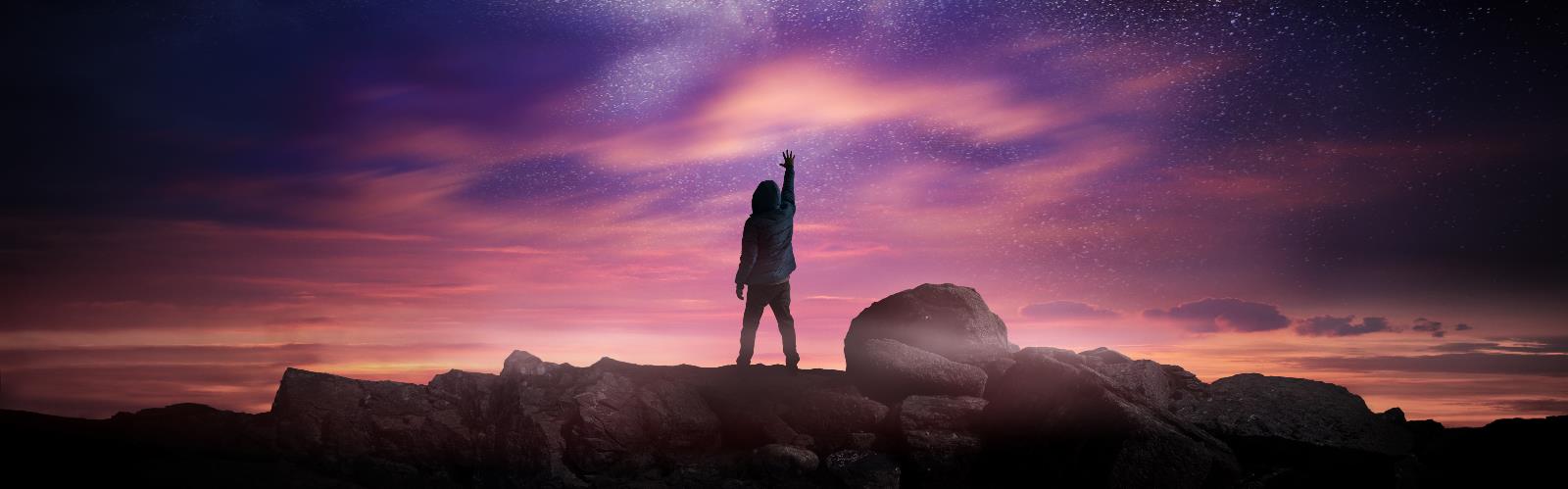
The Milky Way in a sky without light pollution. Far from cities, you rediscover what our ancestors saw every clear night. This cosmic perspective puts things in place and gives a particular humility.
"At night, the mountain doesn't sleep: it transforms. Every rock becomes sculpture, every tree becomes silent guardian." — Reflection after a full night at the summit
Northern lights (if you have this chance) seen from a clear summit. Even in Quebec, they're visible during strong solar activity. I had this opportunity once, and it's the kind of experience that alone justifies all night hikes.
Challenges to anticipate (and how to overcome them)
Let's be honest: night hiking isn't without challenges. But with experience, these obstacles become manageable.
Disorientation
The problem: In darkness, all trees look alike and visual landmarks disappear. I walked in circles for 45 minutes in an area I knew well.
My solution: Multiple reference points (GPS + compass + observation), and above all, stop at the first doubt. Better to take 5 minutes to orient yourself than 2 hours to find your way.
Mental fatigue
The concentration required for night navigation exhausts faster than you think. After 3-4 hours, your brain starts to disconnect.
Unpredictable weather conditions
At night, temperatures drop faster and humidity rises. What was comfortable at 8 PM can become chilly at midnight.
My favorite spots to start night hiking
After testing dozens of night trails, here are my recommendations to start safely:
Parc du Mont-Royal remains my favorite training ground. Close to the city, well-lit at strategic points, with wide and marked trails. Perfect for taming the night without stress.
Parc du Mont Arthabaska offers an intermediate challenge with magnificent night panoramas. The ascent is well-defined, and the summit rewards with a view of the region's lights.
For the more adventurous, Laurentides trails promise total immersion. Less light pollution, more wildlife, but also more technical challenges.
| Trail | Level | Night highlights |
|---|---|---|
| Mont-Royal | Beginner | Safety, accessibility |
| Mont Arthabaska | Intermediate | Panoramas, moderate challenge |
| Laurentides | Advanced | Total immersion, starry sky |
Why you should try this weekend
Night hiking isn't just a variant of classic hiking: it's a discipline in its own right that deeply enriches your relationship with nature. It develops your observation skills, your adaptability, and connects you to aspects of the mountain that few people discover.
Every night outing teaches me something new. About nature, about myself, about my ability to step out of my comfort zone. It's this constant progression that makes this practice addictive.
If you're still hesitating, start small. A 2-hour outing on a familiar trail, on a beautiful clear evening. Bring a friend to share the experience and enhance safety. You'll see: once you've tasted this nocturnal magic, your classic hiking days will seem almost... incomplete.
The mountain awaits you, day and night. You just have to choose your moment to discover its hidden face. So, ready to see your favorite trails in a totally different light?
In summary, here's why you should try night hiking:
- A unique sensory experience that multiplies your senses and transforms your perception of nature
- Ideal conditions: coolness, tranquility, deserted trails
- Discovery of nocturnal wildlife and landscapes under totally different lighting
- A personal challenge that develops your navigation skills and mountain confidence
- Unforgettable magical moments: moonrise, Milky Way, absolute silence
Night transforms every trail into exploration territory. It reveals hidden aspects of places you thought you knew and reconnects you with that primitive part that sleeps in every hiker. So next time you hesitate between going home or continuing the adventure when the sun declines, choose adventure. The nocturnal mountain has so much to offer you.

About the author
François Dumaine
Founder of Let's Go Play Outside
A passionate hiker, photographer and content creator, François has been hiking the trails of Quebec and Alberta since 2014. He founded Let's Go Play Outside to give you the information he wished he had before heading out.
Newsletter
Content that makes you want to go outside
Every week, a trail idea, a reflection on nature, or a tip worth the detour. Zero spam. Only the essentials.
Joined by 12,000+ outdoor enthusiasts
Read next
Continue the journey