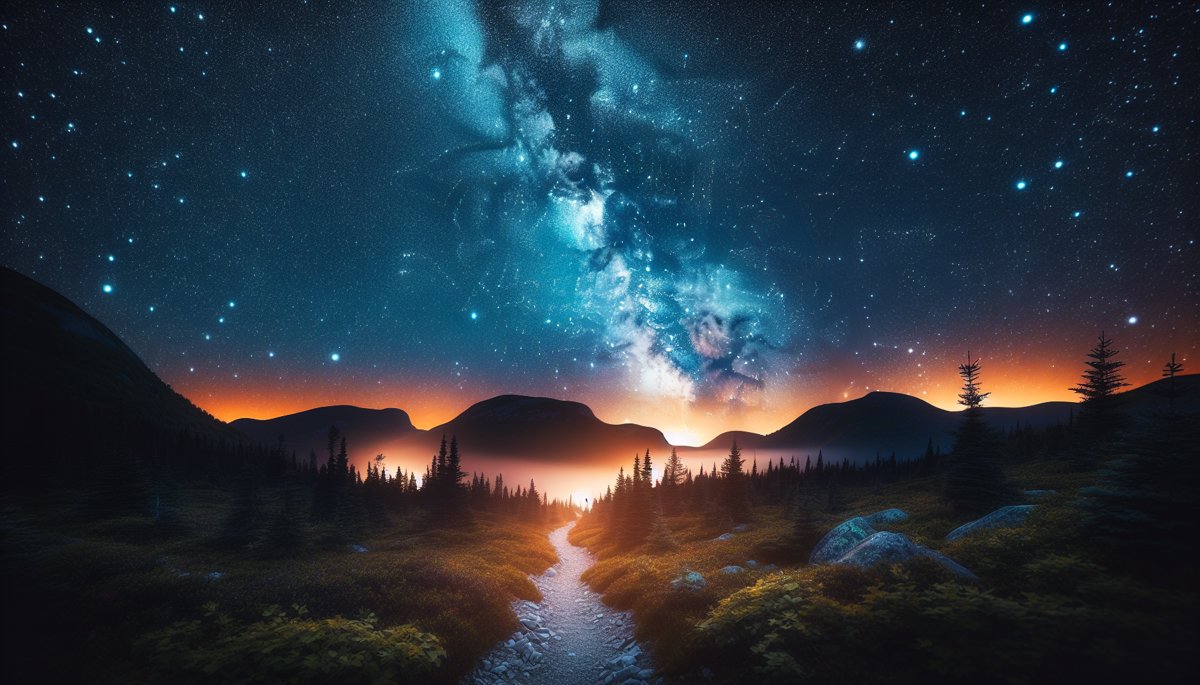
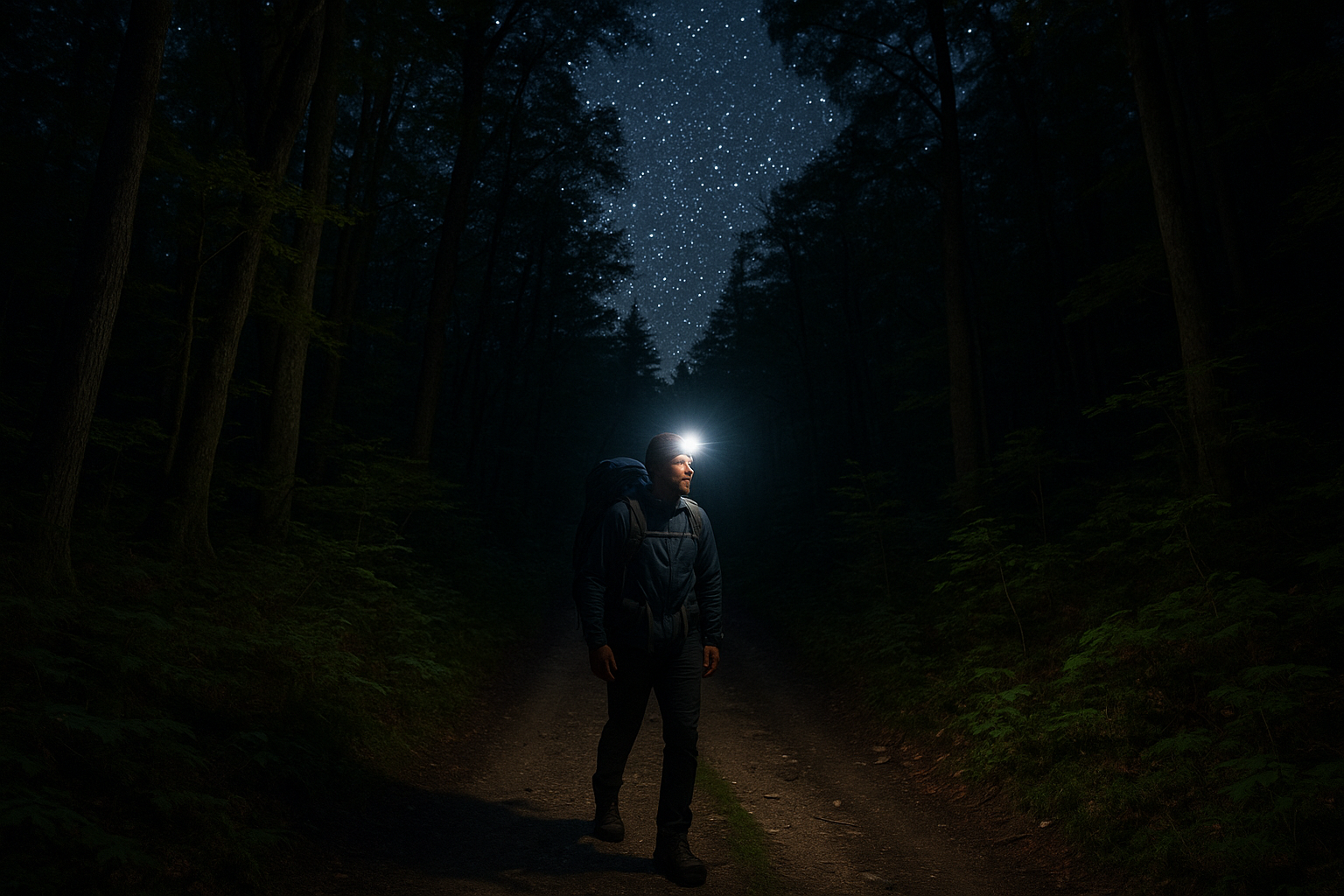
I've always been fascinated by the magic of the forest when the sun disappears. The first time I went night hiking, it was somewhat by accident — I had left too late and darkness caught up with me on the trail. Instead of panicking, I slowed my pace, turned on my headlamp, and discovered a completely different universe. The sounds change, the smells intensify, and each step becomes a small adventure. If you're looking to experience something unique in nature, night hiking will make you see your favorite trails from a totally new angle. I'm going to share everything I've learned in 15 years of night outings so you can explore safely.
Get my gifts →
Why Try Night Hiking?
Night hiking completely transforms your experience in nature. I discovered sensations I never would have imagined during my first daytime outings.
The sensory experience changes completely. Your ears become your best allies — you hear the slightest crack of a branch, the breath of wind in the leaves, maybe even the hooting of an owl in the distance. Your sense of smell sharpens too: the humidity of the earth, the scents of conifers, everything seems more intense.
It's also a great way to avoid crowds. While everyone is sleeping warmly, you have the trails to yourself. The silence of the forest at night is something you have to experience at least once.
And then, there's that particular pride in conquering your fears. The first time, it's normal to be a little nervous. But once you realize that the forest at night isn't more dangerous than during the day, you gain enormous confidence.
Essential Equipment for Night Hiking
Equipment makes all the difference between a memorable outing and a monumental hassle. After testing quite a bit of stuff over the years, here's what really works.
Lighting: Your Absolute Priority
A quality headlamp is non-negotiable. I emphasize "quality" because I once had a cheap lamp that failed me right in the middle of an outing. Not fun at all.
| Type of Lighting | Use | Recommended Duration |
|---|---|---|
| Main headlamp | Constant trail lighting | 8-12 hours minimum |
| Backup headlamp | Backup in case of failure | 4-6 hours |
| Flashlight | Auxiliary lighting, signaling | Variable |
Always bring a backup light source. A small flashlight in your pack is lightweight and can save your evening. And don't forget spare batteries — I always bring double what I think I need.
Clothing and Protection
At night, temperatures often drop more than we think. Even in summer, it can be surprisingly cool in the forest after sunset.
- Extra layers: a fleece or lightweight down jacket in the pack
- Reflective clothing: especially if you cross roads or encounter other hikers
- Hat and gloves: even in summer, they can be useful early in the morning
- Appropriate shoes: with good grip, because nighttime humidity makes everything more slippery
How to Choose Your First Night Trail
Choosing the trail for your first night hike will determine whether you fall in love with this activity or never want to do it again.
Start with a trail you already know by heart. That's my number one advice. If you've already done Parc du Mont-Royal twenty times during the day, it's perfect for a first nighttime experience. You already know the obstacles, the sharp turns, the more technical sections.
Criteria for Good Selection
- Easy to moderate trail: save technical challenges for later
- Loop rather than out-and-back: more varied and less monotonous
- Not too long: 3-5 km (1.9-3.1 miles) max to start
- Close to civilization: in case you need help
- Well marked: markers are your friends in the dark
Avoid trails with stream crossings, exposed passages on ridges, or sections where you have to climb with your hands. At night, everything becomes more complex.
"The mountain will still be there tomorrow. Better to turn back and return than be forced to call for rescue."
Places like Parc national du Mont-Saint-Bruno or Mont Yamaska are perfect for beginners — well-maintained trails, not too technical, and frequented enough so you don't feel completely isolated.
Night Hiking Safety: My Golden Rules
Safety in night hiking isn't just a matter of common sense — it's a completely different approach. After 15 years of walking night trails, I've developed some habits that have saved me from many problems.
Before Leaving
Always inform someone of your itinerary. I give my girlfriend the departure time, the exact trail, and the expected return time. If I don't give news within 2 hours of my expected return, she knows to worry.
Check the weather, but also the moon phases. A full moon night completely transforms the experience — you see much better and the atmosphere is magical. A moonless night is more challenging but equally rewarding.
On the Trail
Go slower than usual. It's hard on the ego at first, especially on trails you know well, but it's essential. Your reflexes are less good in darkness, and a sprained ankle at 2 AM is really not the time.
- Stay on the marked trail: no shortcuts or off-trail exploration
- Take regular breaks: to listen, look around, readjust your equipment
- Conserve your batteries: use low intensity mode when possible
- Mark your reference points: mentally note important intersections
Managing the Unexpected
If you lose the trail, stop immediately. Don't continue hoping to find it further ahead. Retrace your steps to the last marker you saw, even if it takes 20 minutes.
In case of bad weather developing, don't hesitate to turn back. I once experienced a thunderstorm at night on a ridge — not an experience I recommend.
My Techniques to Fully Enjoy the Experience
Night hiking is much more than just a walk in the dark. It's a completely different way to connect with nature.
Developing Your Senses
Learn to listen to the forest. Every sound has its meaning: the crack of a branch can indicate an animal passing, the rustling of leaves tells you about wind direction. At first, all these sounds can seem worrying, but with experience, they become reassuring.
Use your peripheral vision. In darkness, we often see better from the corner of our eye than by looking directly. It's a trick I learned from an indigenous guide: let your eyes scan naturally rather than fixing on one point.
Night Navigation
Even with a headlamp, navigation changes completely. Visual landmarks disappear, distances seem different, and it's easy to miss a junction.
| Technique | Description | When to Use |
|---|---|---|
| Step counting | Count your steps on known sections | Poorly marked trails |
| Sound landmarks | Stream, road, power line | Auxiliary navigation |
| Compass and map | Traditional navigation | Always as backup |
| GPS | Precise geolocation | Emergency or fog |
Observing Nocturnal Wildlife
This is where it gets really magical. I've been lucky enough to encounter deer, raccoons, even a lynx once (at a respectful distance). Nocturnal wildlife is much more active than we imagine.
If you want to maximize your observation chances, move slowly and silently. Stop regularly and turn off your lamp for a few minutes — your eyes will adjust and you might have nice surprises.
Planning Your First Night Outing
Now that you have all the theory, let's get practical. Planning your first night hike requires a bit more preparation than a day outing, but it's not rocket science.
Perfect Timing
Start with a twilight outing. Leave 1-2 hours before sunset, so you can gradually get used to darkness. It's less intimidating than diving straight into total darkness.
The best periods in my opinion:
- Late summer/early fall: pleasant temperatures, fewer insects
- Full moon nights: maximum visibility, magical atmosphere
- Clear evenings: to see stars and avoid rain
- Weekends: less stress if it ends later than expected
Departure Checklist
I've developed a routine that I follow religiously before each night outing. It prevents me from forgetting important things.
Verify that someone knows your itinerary, confirm the weather one last time, and make sure you have cell service at the starting point to send a confirmation message.
Experience Feedback
After your first outing, take time to note what worked well and what could be improved. I keep a small notebook where I write my impressions — it helps me progress and plan my next adventures.
To deepen your preparation, I recommend reading our guide on essential questions to ask before leaving. And if you want to start with easier trails to get your bearings, check our top 15 easy trails around Montreal.
Conclusion: Your First Night Adventure Awaits
Night hiking will transform how you see nature. Here are the key points to remember to start safely:
- Equip yourself properly: quality headlamp + backup, warm clothes, reliable navigation
- Choose a familiar trail: start with a place you already know well during the day
- Inform someone: itinerary, departure and expected return times
- Go slowly: take time to tame this new experience
- Trust your senses: listen, smell, observe differently
I still remember the emotion of my first real planned night hike. It was at Mont du Lac-des-Cygnes, and when I reached the summit under the stars, I understood I had discovered something special.
The nocturnal nature has its own rules, its own beauties, its own challenges. It pushes you to slow down, to be more attentive, to develop a different confidence. It's a form of meditation in movement that will enrich all your future outdoor adventures.
So, what are you waiting for? Choose a trail you know well, prepare your equipment, and go discover the magic of your favorite mountains under a starry sky. The Quebec night has so many wonders to offer you!

About the author
François Dumaine
Founder of Let's Go Play Outside
A passionate hiker, photographer and content creator, François has been hiking the trails of Quebec and Alberta since 2014. He founded Let's Go Play Outside to give you the information he wished he had before heading out.
Newsletter
Content that makes you want to go outside
Every week, a trail idea, a reflection on nature, or a tip worth the detour. Zero spam. Only the essentials.
Joined by 12,000+ outdoor enthusiasts
Read next
Continue the journey