🏃♂️ Beginner trail running: your first trail run awaits
Dreaming of trading asphalt for dirt paths? Of feeling roots under your feet instead of concrete? I get it! After running my first kilometers on roads, I discovered trail running about ten years ago, and it completely changed my vision of running. Gone was the boredom of the same urban routes — hello adventure, natural challenges and those magical moments when you find yourself alone facing a breathtaking panorama. Trail running for beginners can seem intimidating at first glance. That's normal! But let me reassure you: with the right advice and a progressive approach, you'll quickly develop a taste for this discipline that combines the pleasure of running with escaping into nature. In the next few minutes, I'm going to share everything I wish I had known before my first trail outing.
📥 Download our free gifts — Checklists, PDF guides and trail maps to get your trail running adventures in Quebec off to a good start.
Get my gifts →
Get my gifts →
🤔 What makes trail running so different from road running?
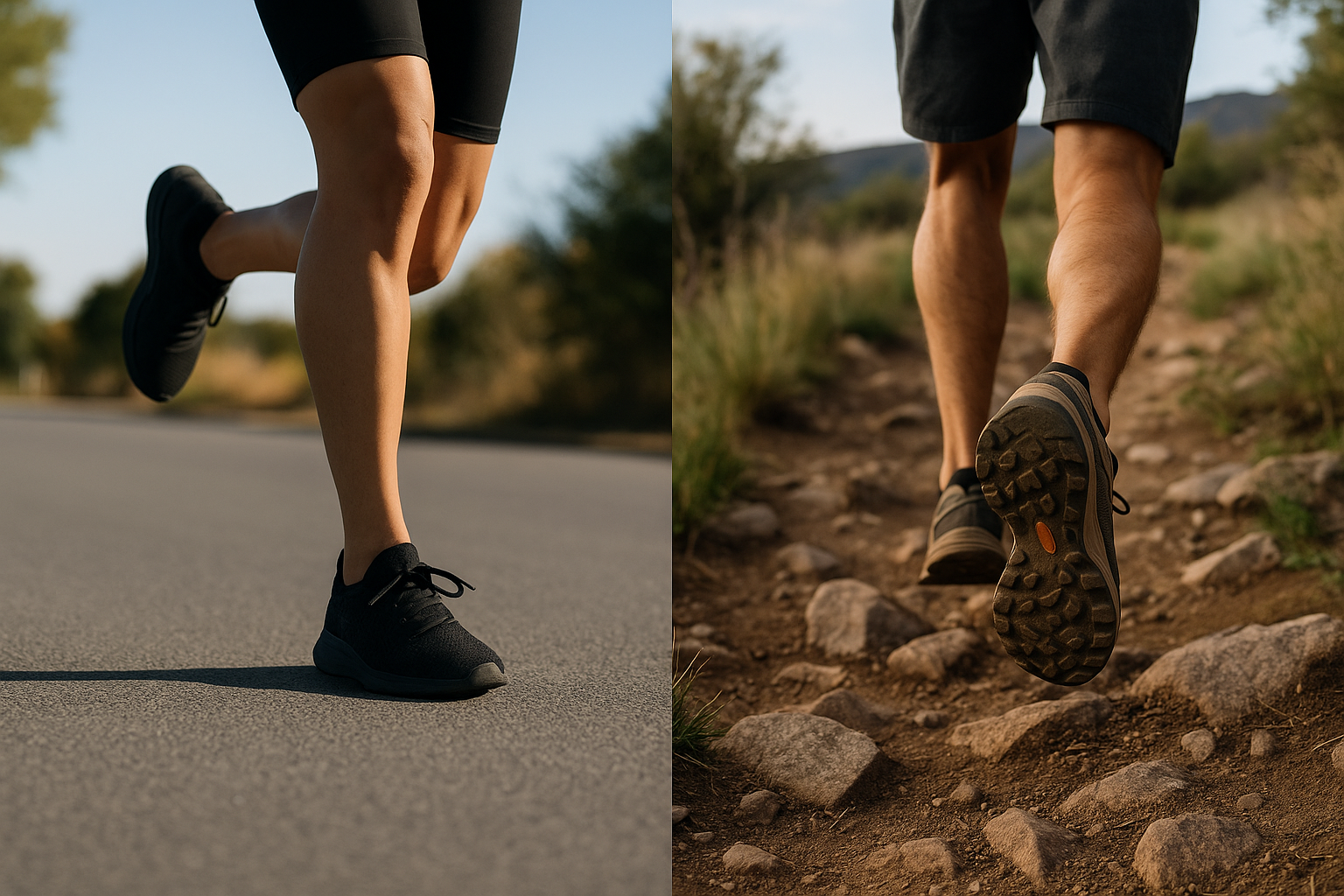
Before lacing up your running shoes and charging ahead, you need to understand what distinguishes trail running from your usual running. It's not just "running, but in the forest"! The terrain changes everything. On roads, your pace is constant, your strides identical. On trails, you must constantly adapt: a protruding root, a slippery rock, a steep climb followed by a technical descent. Your body works differently, your stabilizing muscles are engaged like never before. The effort becomes variable. I learned this the hard way on my first outing! I had kept my road pace on a trail at Mont Yamaska. Result? I was completely drained after 2 km. In trail running, you naturally alternate between running, fast walking and even normal walking on steep climbs.
📌 Good to know — A 6 min/km pace on roads can easily become 8-10 min/km on trails depending on elevation gain. It's normal and it's perfect!
Navigation becomes a game. Unlike roads where you mindlessly follow the straight line, trails demand attention. You must spot markers, choose your path, anticipate obstacles. This is what makes the experience so mentally engaging.
The benefits? They're enormous:
Specific trail challenges for a beginner
Let's be honest: trail running will take you out of your comfort zone. Terrain irregularity will tire your legs faster than expected. Climbs will force you to walk (and that's OK!). Descents will test your courage and your knees. But that's exactly what makes this discipline so addictive. Each outing is unique, each trail brings its share of surprises and challenges to overcome.🥾 How to choose your first trail running trail?
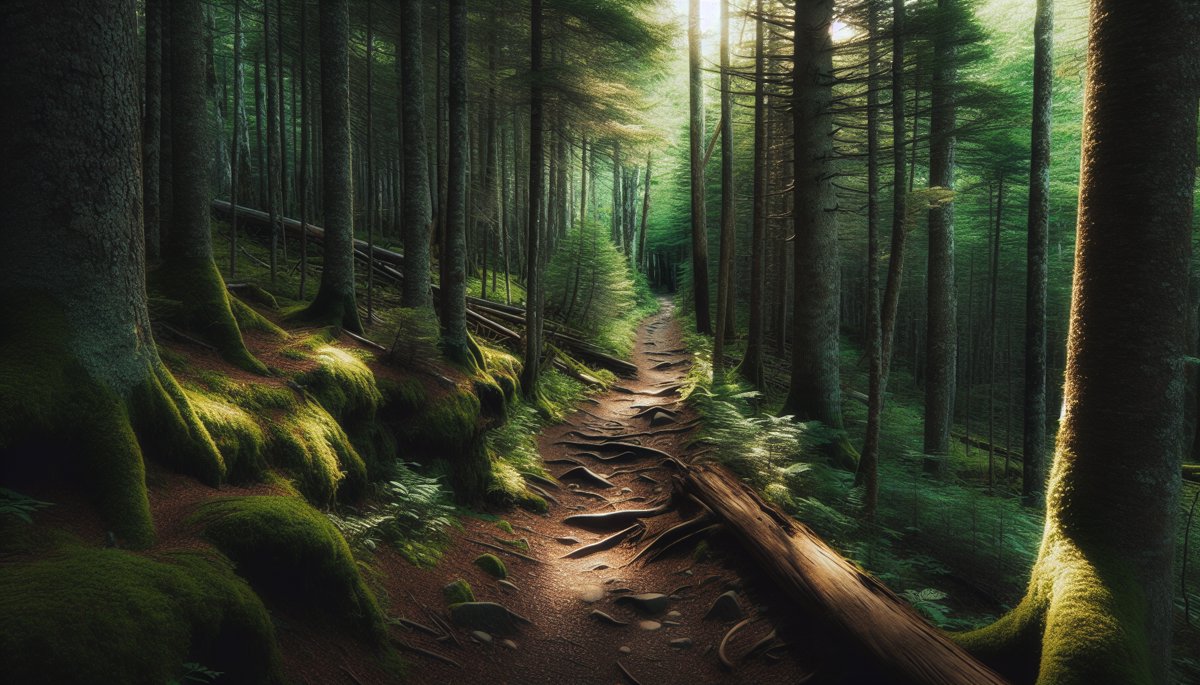
Choosing your first trail can make the difference between a magical experience and a nightmare that puts you off trail running for a long time. Believe me, I've seen too many beginners get discouraged after tackling an overly ambitious trail. Start with wide, well-marked trails. Urban park trails like Parc du Mont-Royal or Parc Michel-Chartrand are perfect for beginners. You have the safety of being close to civilization with the pleasure of running in nature.| Trail type | Advantages for beginners | Points of attention |
|---|---|---|
| Urban park | Accessible, well maintained, safe | Can be crowded |
| Easy hiking trail | Marking, terrain variety | Check trail width |
| Nature bike path | Regular surface, known distances | Watch for cyclists |
| Technical trail | Challenge, spectacular scenery | Avoid for beginners |
💡 Pro tip — Start with loops rather than out-and-backs. You avoid the boredom of the same scenery and can cut short if necessary by taking a shortcut.
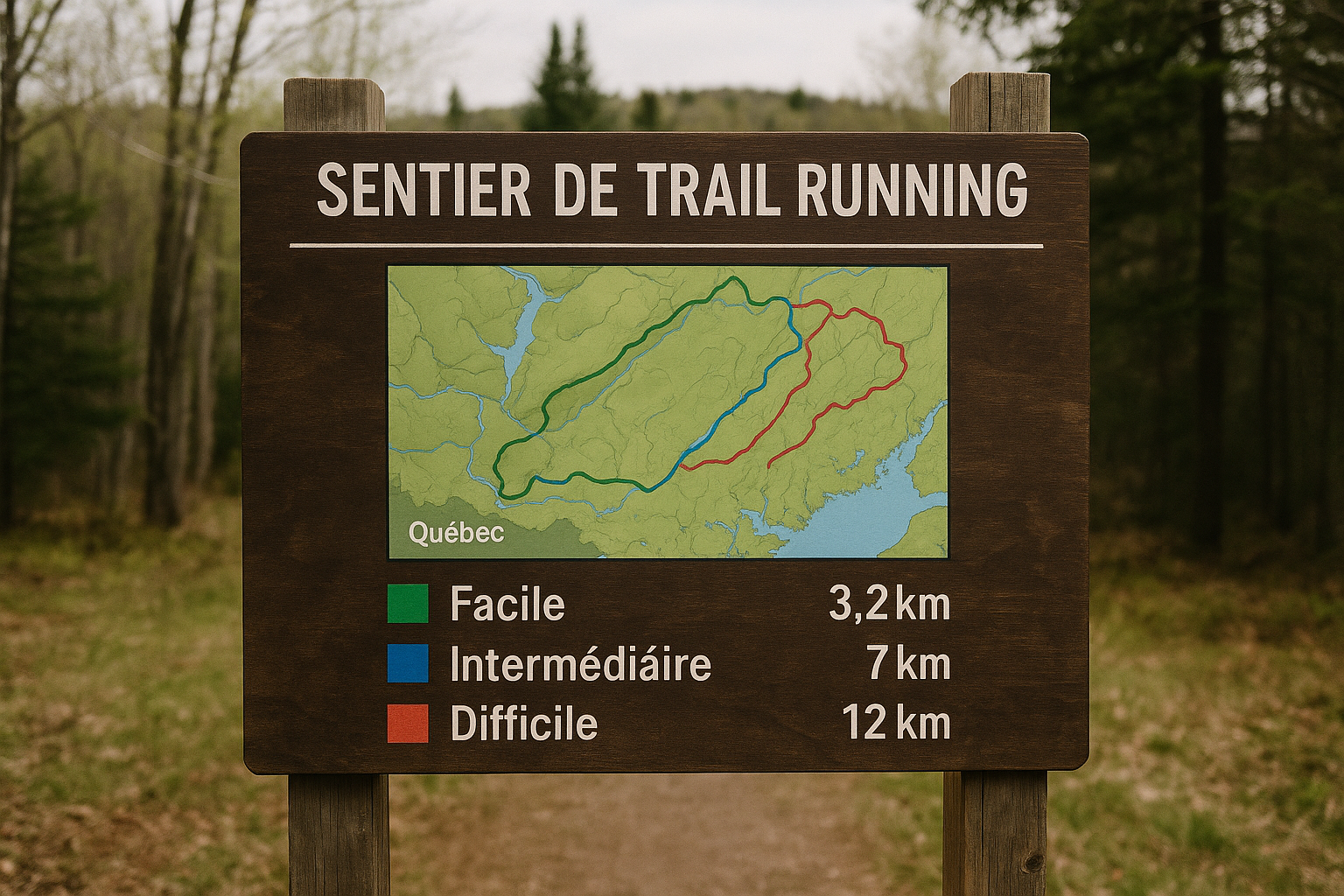
My favorite trails for beginners
After testing hundreds of trails, here are my recommendations for your first outings: Montreal region: Parc National du Mont-Saint-Bruno offers perfect trails for beginners. Lac Seigneurial and Lac des Bouleaux offer 4-6 km routes with just enough elevation gain to make you feel like you're doing real trail running. Quebec City region: The trails around Canyon Sainte-Anne are beautiful and well maintained. You can adapt your distance according to your level. The important thing is to start close to home. An accessible trail will make you want to return regularly, and it's regularity that will make you progress.⚡ What physical condition do you need to start trail running?
Good news: you don't need to be an Olympic athlete to get started! But let's be realistic, trail running requires a minimum base that I'll help you evaluate. If you already run on roads, you have a huge advantage. An ability to run 30 minutes continuously on asphalt will allow you to manage 20-25 minutes on easy trails. The difference? You'll walk on climbs, and that's perfectly normal. If you're completely new to running, don't panic! Start by alternating walking and short running on flat terrain for 4-6 weeks. The goal: sustain 20-30 minutes of continuous activity before tackling your first trail.
⚠️ Warning — Don't skip the preparation step! Trail running engages different muscles. Even experienced runners can get injured by neglecting progressive adaptation.
Simple test to know if you're ready: Can you climb 3 flights of stairs without being completely out of breath? If yes, you can attempt your first 20-30 minute trail outing with lots of walking.
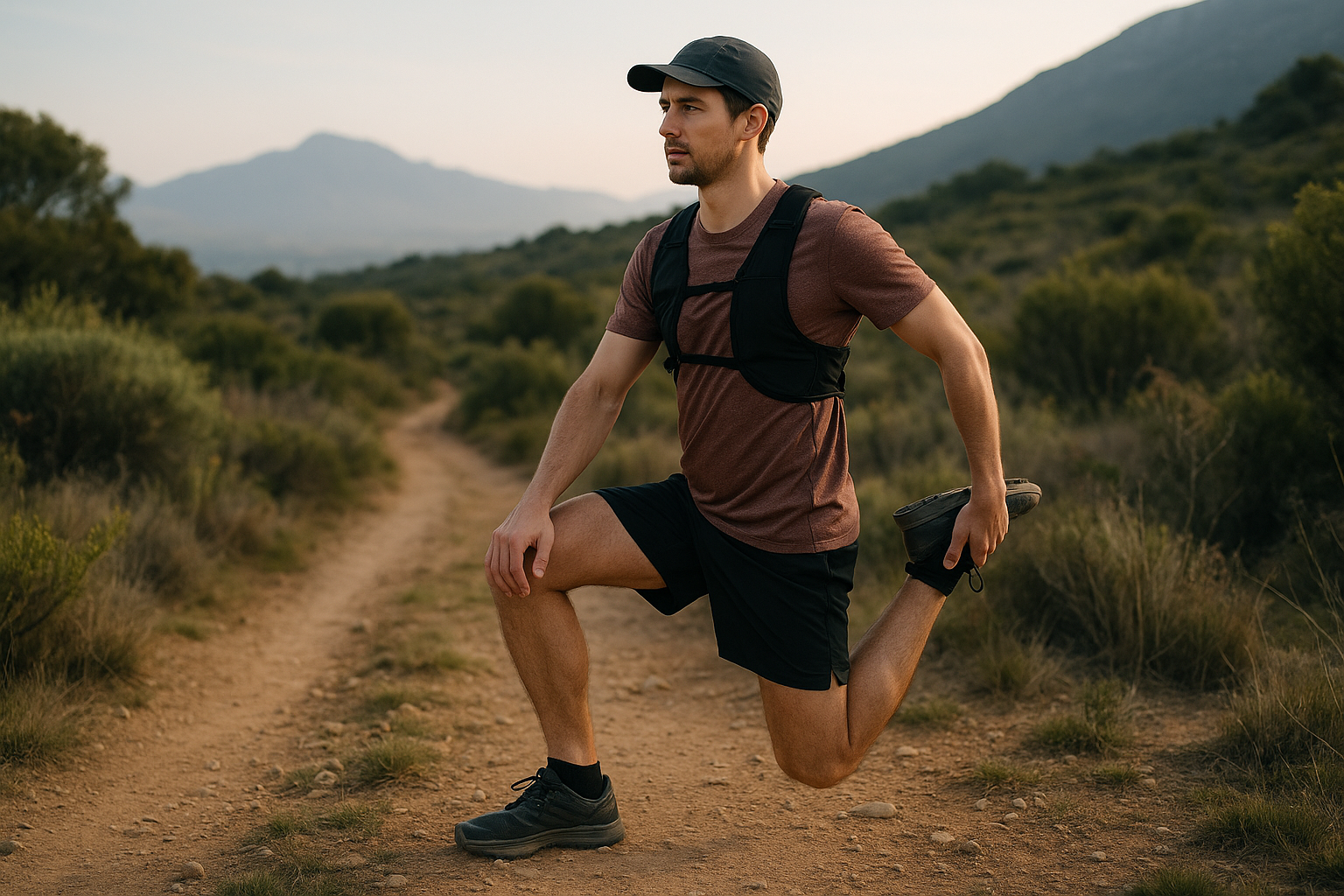
Express preparation program (4 weeks)
If you're starting from zero or almost, here's my flash program to prepare you: Week 1-2: Alternate brisk walking (2 min) / light running (1 min) for 20 minutes, 3 times per week. Add 2 strengthening sessions (squats, lunges, core work). Week 3-4: Alternate walking (1 min) / running (2 min) for 25-30 minutes. Include one outing on rolling terrain (urban park with hills). Week 5: Time for your first real trail! Start gently, listen to your body, and above all... enjoy! The mistake I often see? Wanting to go too fast. I have a friend who wanted to accompany me on a 15 km trail when he had never run more than 5 km. He hated the experience and never tried again. Too bad!👟 What equipment for starting trail running without breaking the bank?
Ah, the eternal equipment dilemma! Between those who say "you don't need anything" and salespeople who would equip you like an ultra-trailer, the truth is somewhere in the middle. Shoes: your only real mandatory investment. Regular running shoes can work for testing, but if you want to continue, invest in real trail shoes. The difference in grip and protection will change your life. I've detailed my recommendations in my guide to the best shoes for beginners. Hydration: depending on distance. For outings under an hour, a small handheld bottle or hydration belt is sufficient. Beyond that, a hydration pack becomes interesting.| Equipment | Essential? | Beginner budget |
|---|---|---|
| Trail shoes | Yes | $100-150 |
| Technical clothing | Recommended | $50-80 |
| Hydration | Depends on distance | $15-40 |
| Trail pack | Optional | $60-100 |
| GPS watch | Optional | $150-300 |
💡 Pro tip — Start with the minimum and add equipment as you identify your real needs. I have a drawer full of "essential" gadgets that I never use!
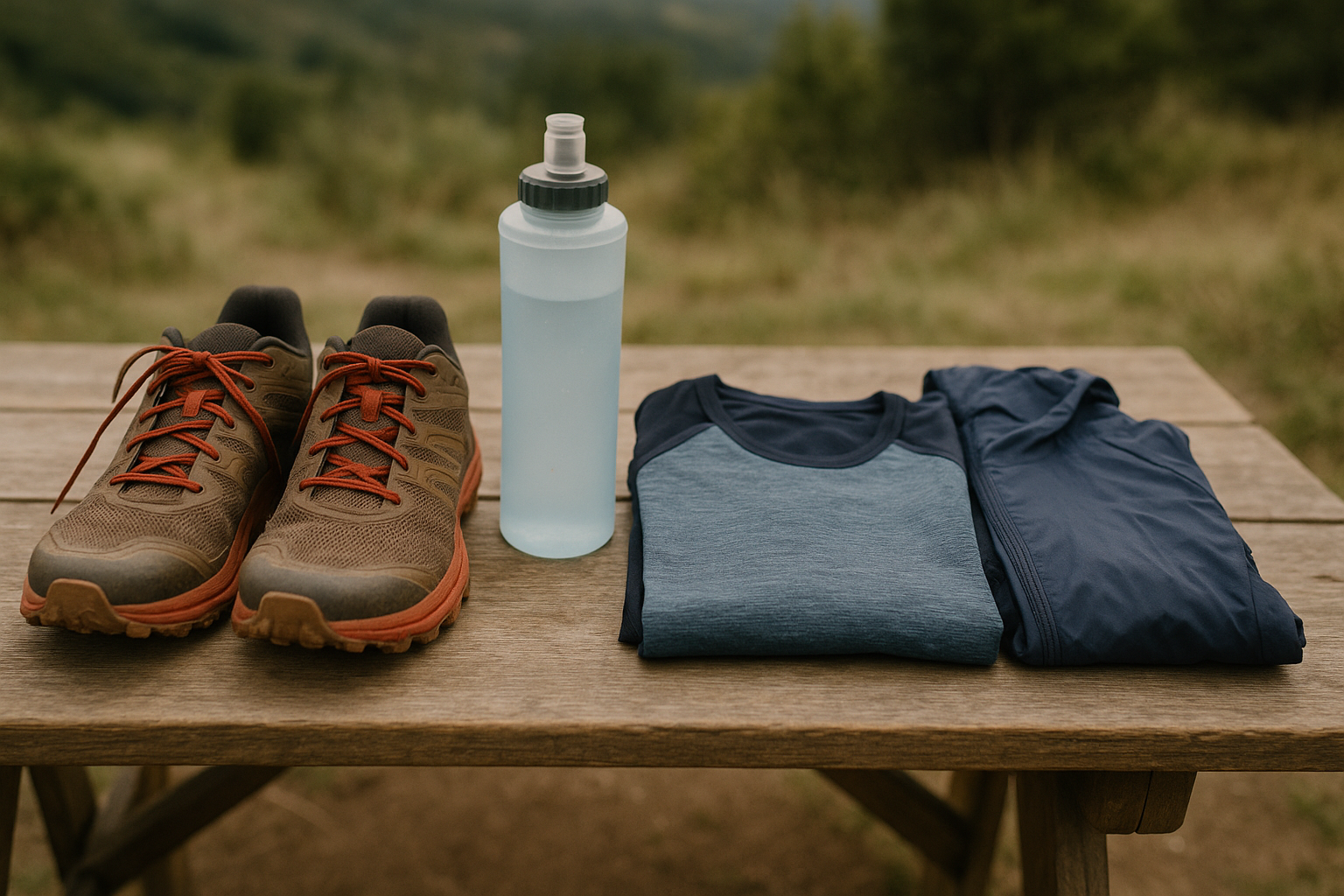
Equipment mistakes to avoid
Mistake #1: Buying shoes that are too technical. Ultra-technical models with aggressive lugs are uncomfortable on easy trails. Mistake #2: Neglecting socks. A technical pair prevents blisters and chafing. Invest $15-20 in good socks, your feet will thank you. Mistake #3: Leaving with nothing for long outings. Even on easy trails, having a minimum of water and a snack can save your outing. To avoid these classic traps, I recommend reading my article on the 10 mistakes every beginner makes — several also apply to trail running.🏃♀️ Your first trail outing: step-by-step guide
The big day has arrived! You've chosen your trail, you have your shoes, and you're more motivated than ever. But how do you approach this first experience well so that it's successful? Before leaving: Check the weather and adapt your equipment. Inform someone of your route and expected return time. Download a trail app or take a photo of the trail map. Warm-up: 5-10 minutes of brisk walking followed by some dynamic movements (knee raises, butt kicks). In trail running, warming up is even more important than on roads. Running strategy: Forget your usual pace! Start very slowly, slower than you think necessary. The goal of your first outing is to finish with a smile and the desire to do it again.
📌 Good to know — In trail running, we measure effort in time, not speed. Aim for 20-30 minutes of activity for your first time, regardless of distance covered.
Managing climbs: As soon as it climbs seriously, switch to fast walking. It's more energy efficient and avoids cardiac explosion. Even pros walk on big climbs!
Managing descents: Resist the urge to charge! Control your speed, watch where you place your feet, use your arms for balance. Falls often happen on descents.
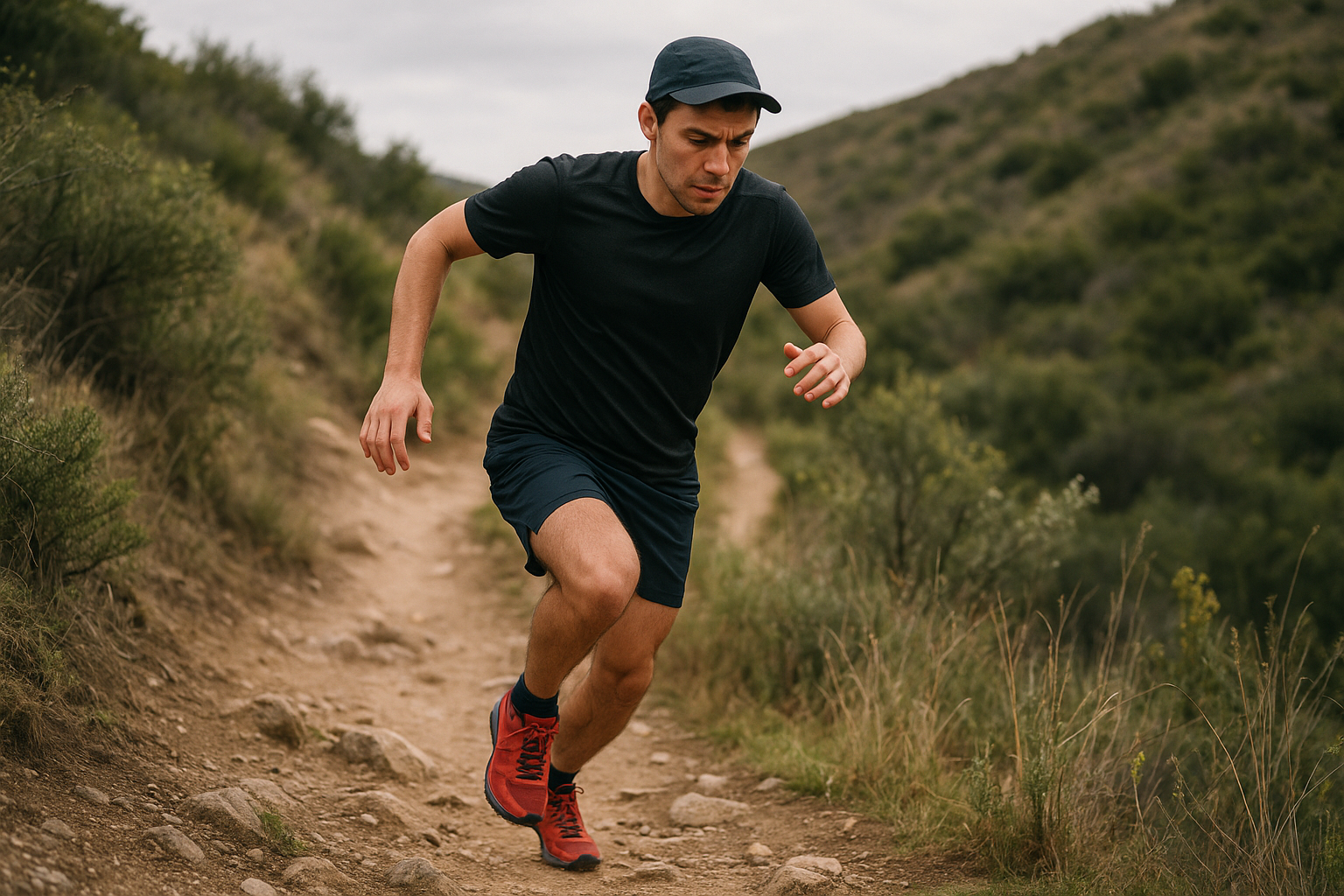
Warning signals to listen to
Your body will talk to you during this first outing. Learn to distinguish normal effort discomfort from warning signals: Normal: Moderate breathlessness, muscle fatigue, minor soreness the next day. Warning: Sharp joint pain, extreme breathlessness, feeling unwell, pain that persists after effort. If you feel a warning signal, stop, catch your breath, and don't hesitate to cut your outing short. Better a short and positive first time than a bad experience that puts you off.📈 How to progress intelligently in trail running?
Your first outing went well? Congratulations! Now, how do you build on this success without burning stages? Progression in trail running requires patience and strategy. The 10% rule: Never increase your weekly volume by more than 10% from one week to the next. If you ran 60 minutes this week, don't exceed 65 minutes next week. Vary your terrain progressively. Start by mastering wide, rolling trails before tackling technical singles. Each type of terrain brings its lessons:
💡 Pro tip — Keep a log of your outings: distance, duration, feeling, weather. You'll identify your progress and the conditions that suit you best.
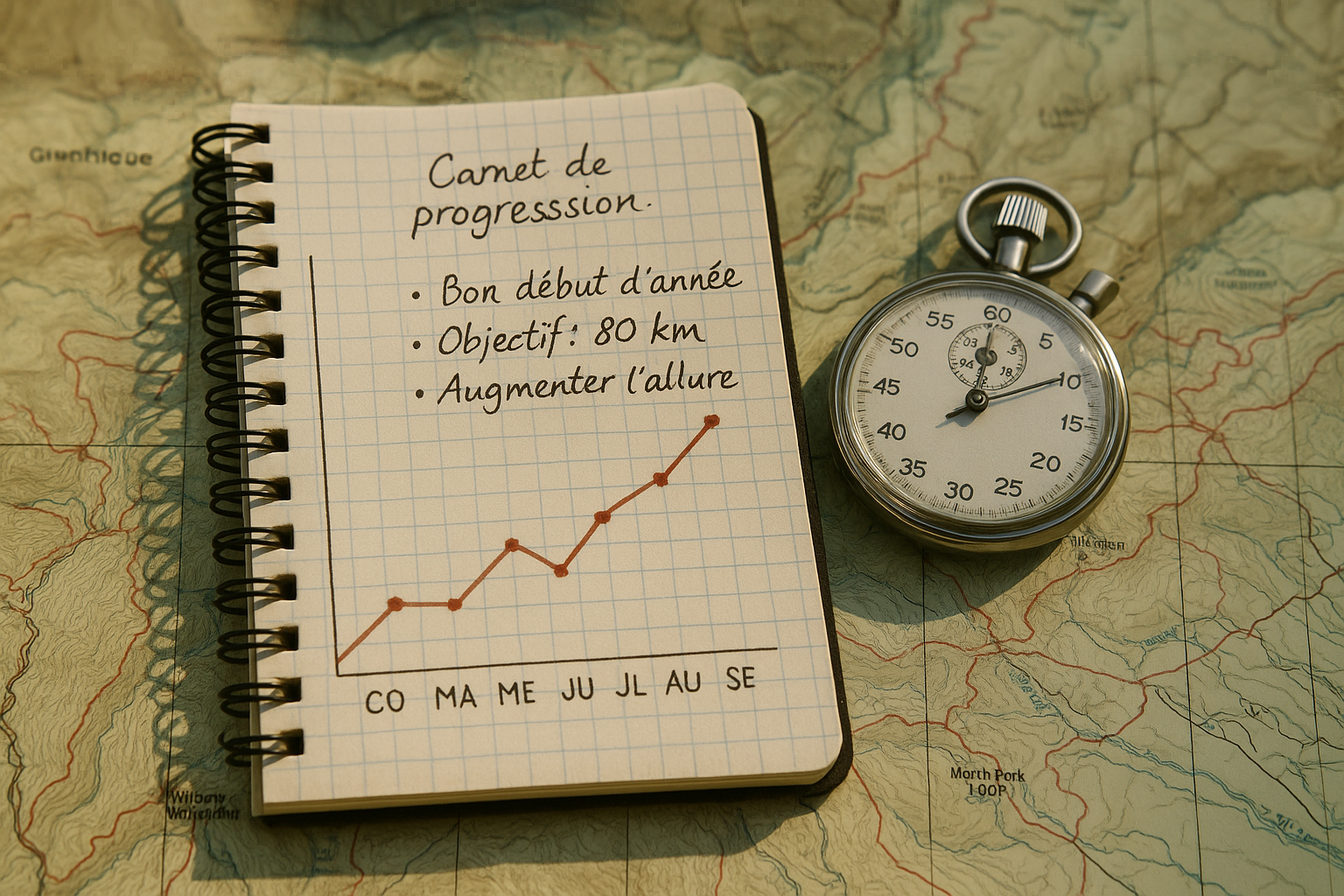
3-month progression program
Month 1: The basics🌟 The unsuspected benefits of trail running
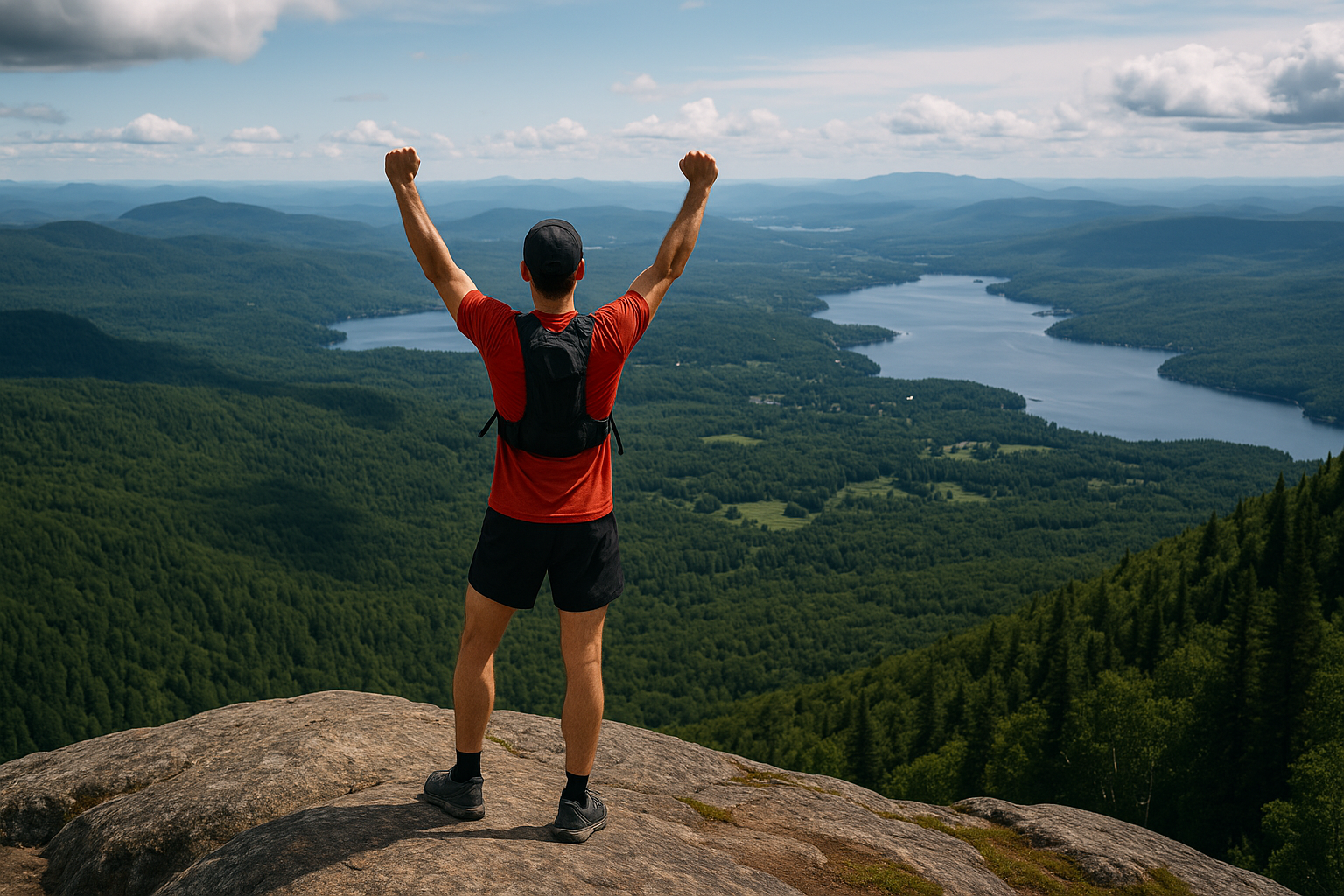
Beyond the obvious physical aspect, trail running will transform your relationship with sport and nature in a way you might not yet imagine. Your mind becomes your ally. Unlike roads where you can mentally disconnect, trails demand constant attention. This forced concentration becomes a form of active meditation that evacuates daily stress. You discover magical places. How many times have I discovered viewpoints, hidden lakes, secret trails while running? Trail running is exploration in its purest form. Each outing can hold its surprises. The trail community is unique. More benevolent than the traditional road running scene, it values adventure and personal achievement rather than pure performance. You'll meet fascinating people who share your values."Trail running is 10% running and 90% discovery. You leave to run, you come back grown."Your adaptation abilities explode. Changing weather, unexpected terrain, navigation... Trail running develops your ability to adapt, a valuable skill in all aspects of life.
🎯 Your next steps toward trail adventure
There you have it, you now have all the keys to start trail running in good conditions! Let's recap the essential points: • Start progressively with easy trails and short outings (20-30 minutes) • Invest in good trail shoes — it's your only truly indispensable equipment • Listen to your body and don't hesitate to walk on steep climbs • Vary your terrain gradually to develop all your abilities • Progress by 10% maximum per week to avoid injuries and overtraining Trail running is much more than a sport: it's a gateway to adventure, self-discovery and deep connection with nature. Each outing holds its surprises, challenges and moments of grace. So, what are you waiting for? Choose a trail near you, lace up your shoes, and go live your first trail adventure! In a few months, you'll thank me for giving you this initial push. And who knows? Maybe we'll cross paths on a Quebec trail, sharing this passion that unites us all: the call of nature and the simple pleasure of putting one foot in front of the other. The mountain awaits you — your turn to play! 🏔️
About the author
François Dumaine
Founder of Let's Go Play Outside
A passionate hiker, photographer and content creator, François has been hiking the trails of Quebec and Alberta since 2014. He founded Let's Go Play Outside to give you the information he wished he had before heading out.
Newsletter
Content that makes you want to go outside
Every week, a trail idea, a reflection on nature, or a tip worth the detour. Zero spam. Only the essentials.
Joined by 12,000+ outdoor enthusiasts
Read next