

Ready to explore Dinosaur Provincial Park? Here's everything you need to know before you go!
Discover the trail
Trail description
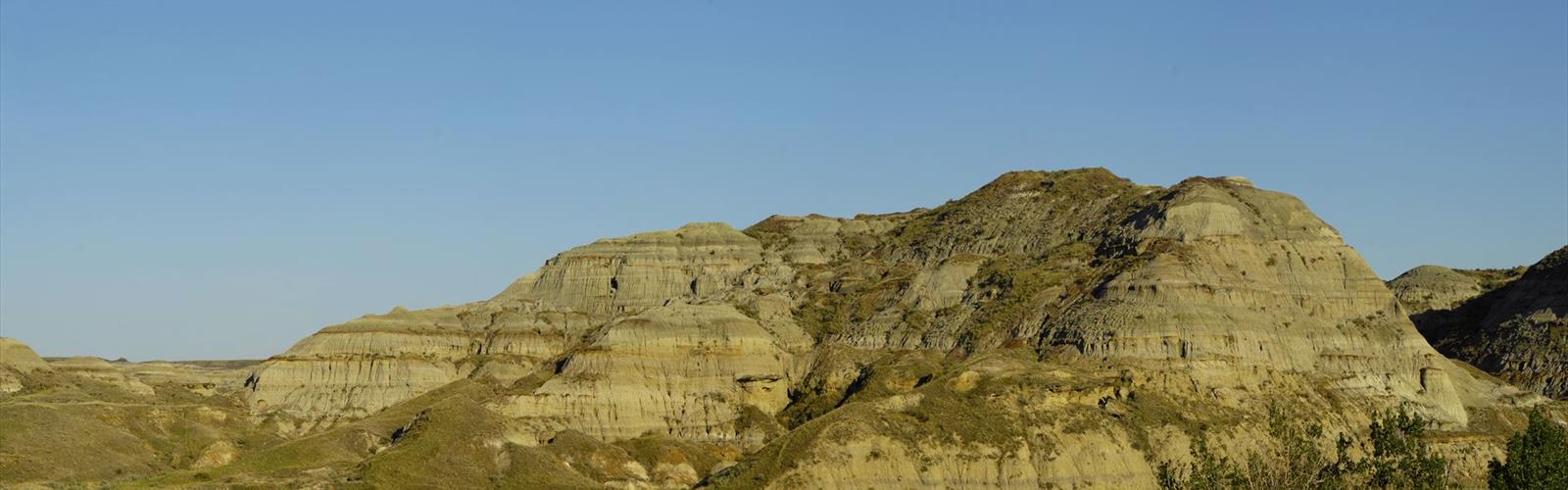
Dinosaur Provincial Park sits in Alberta's badlands, about two and a half hours southeast of Calgary, where the Red Deer River has spent millions of years carving one of the world's most important fossil sites into a landscape that looks more like Mars than the Canadian prairies. This UNESCO World Heritage Site protects 73 square kilometers of eroded coulees, towering hoodoos, and exposed rock layers that tell the story of life 75 million years ago — and hiking through it feels like walking through a natural history museum that has no walls and no ceiling.
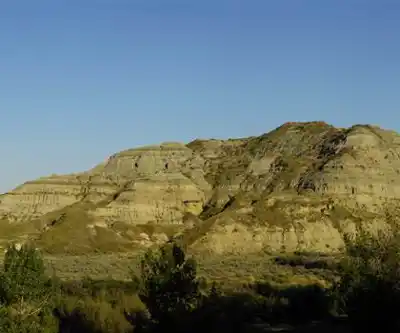
The terrain here is unlike anything else in Alberta. Forget forests and mountain peaks. What you get instead is a maze of sculpted sandstone and mudstone formations rising from the valley floor like ancient monuments, layered in shades of cream, rust, and deep red. On clear days, the contrast between those barren slopes and the green ribbon of the Red Deer River below creates some of the most striking scenery in western Canada. The badlands stretch in every direction, and the scale of it — the silence, the openness, the sheer geological drama — hits you in a way that photos never quite capture.
Trail Network and What to Expect on the Ground
The park's trail system covers a range of abilities, from easy interpretive walks near the visitor center to more demanding routes that push into the heart of the badlands. The shorter, flatter trails along the river valley are well-suited for families and casual visitors, with interpretive signs that explain the geological forces at work and the creatures that once roamed this landscape. They give you a genuine taste of the badlands without requiring any serious hiking experience.
The longer, more challenging routes are a different story. At 6.9 kilometers with an estimated time of one hour and forty-five minutes, the main trail is rated hard — and that rating is earned. You'll navigate steep coulees, scramble over exposed rock faces, and deal with footing that demands your full attention. The clay-rich soil is notoriously slippery when wet, turning what would otherwise be a manageable trail into something genuinely treacherous after rain. Check conditions before you go, and if it's been raining recently, consider waiting a day.
The elevation change across the trail is minimal at just 1 meter of net gain, but don't let that fool you. The difficulty here comes from the terrain itself — the loose rock, the uneven surfaces, the exposed scrambles — rather than from sustained climbing. It's the kind of hike where your legs feel it less than your ankles and your focus.
What makes hiking here genuinely special is the sense of moving through deep time. Every step takes you past rock layers that preserve moments from the Late Cretaceous period, and the interpretive signage helps you understand what you're actually looking at rather than just walking past it. The exposed geology tells the story of ancient river systems, coastal plains, and a subtropical climate that existed here when Alberta sat much closer to the equator.
Fossils and Paleontology
Dinosaur Provincial Park has produced some of the most significant dinosaur discoveries anywhere in the world, with over 40 different species found within its boundaries. The diversity is remarkable — from massive horned dinosaurs to large predators like Albertosaurus, the fossil record here represents an entire ecosystem frozen in time. Interpretive displays along the trails give context to what the landscape once looked like and who was living in it.
The park offers guided tours into restricted areas where active paleontological research is ongoing. These programs provide access to fossil beds and dig sites that are off-limits to independent hikers, and they fill up fast during peak season — booking ahead is strongly recommended. Even on the self-guided trails, keep your eyes open. While removing anything from the park is strictly prohibited, spotting fossil fragments in the exposed rock faces is a real possibility and adds a layer of discovery to every outing.
Wildlife
The badlands look harsh, but they support a surprising range of wildlife. Prairie falcons nest in the cliff faces and ride thermals above the coulees, while great horned owls hunt from perches among the hoodoos. Mule deer are common, especially in the early morning and evening when they come down to the river. Coyotes are a regular presence, and you'll often hear them calling across the valley at dawn and dusk.
Rattlesnakes are also part of the picture — they bask on sun-warmed rocks during warmer months, so watch where you step and where you put your hands when scrambling. Ground squirrels are everywhere, adding movement and noise to an otherwise quiet landscape. The plant life shifts noticeably as you move from the river bottom up into the drier badlands, with native grasses, prairie roses, and wild bergamot creating bursts of color against the neutral tones of the rock, particularly in late spring and early summer.
Planning Your Visit
Summer is the busiest season, and the heat during midday hours can be significant. Starting early gives you cooler temperatures, better light for photography, and a better chance of seeing wildlife before it retreats into shade. Bring more water than you think you'll need — the exposed terrain offers little shelter, and the dry air pulls moisture out of you faster than you expect.
Spring and fall offer more comfortable hiking temperatures, though weather can shift quickly and you should be prepared for sudden changes. Winter is possible for experienced hikers, but the combination of snow, ice, and clay soil makes the more technical sections genuinely dangerous.
The park also offers camping, and spending a night here is worth considering. The lack of light pollution in this part of southern Alberta makes for exceptional stargazing, and the experience of falling asleep to coyotes calling across the coulees is one you won't forget quickly.
Wear sturdy hiking boots with solid ankle support and good traction, bring sun protection, and leave the trail shoes at home — the terrain here rewards footwear that can handle loose rock and unpredictable surfaces.
The Essential Hiking Checklist
Everything you need for your next hike. Bilingual, printable, 1 page.
Get your free hiking checklistRecommended gear for this trail
As an Amazon Associate I earn from qualifying purchases.


Ready to go?
Everything you need to know before you goStarting Point
The dinosaur provincial park is located in Alberta, Canada. The easiest way to get there is to fly into Calgary and rent a car. From Calgary, take Highway 2 east to Brooks. The park is located about 60 kilometers (37 miles) west of Brooks.
When?
How much?
As an Amazon Associate I earn from qualifying purchases.
Affiliate links — LGPO may earn a commission at no extra cost to you.
- Hiking shoes Essential
- → Salomon Elixir Tour Mid WP · 203.38 $
- Layered clothing Essential
- Rain jacket Essential
- Trekking poles
- → Black Diamond Trail Ergo Cork · 69.99 $
- Headlamp
- → Petzl Actik Core 625 · 103.95 $
FAQ - Frequently asked questions
Everything you need to knowSimilar hikes nearby
Discover other trails you might enjoy
Horsethief Canyon
Canadian Badlands
Midland Provincial Park
Canadian Badlands
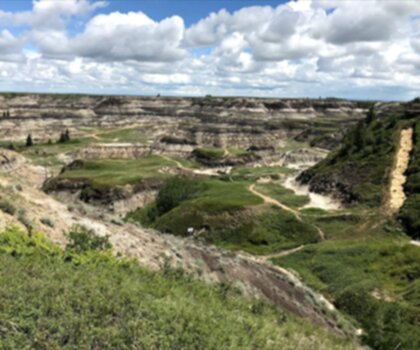
Horseshoe Canyon
Canadian Badlands
Kinbrook Island Provincial Park
Canadian Badlands

Drumheller HooDoos Trail
Canadian Badlands

Cabin Lake
Canadian Badlands
Hiking near Calgary
120 trails to explore ~185 km away
We work hard to provide the most up-to-date and error-free data possible. If something seems incorrect, let us know! Your contribution helps the whole community.
Hikers' opinions
Be the first to review!
No hiker has shared their experience yet. Share your impressions and help other hikers!